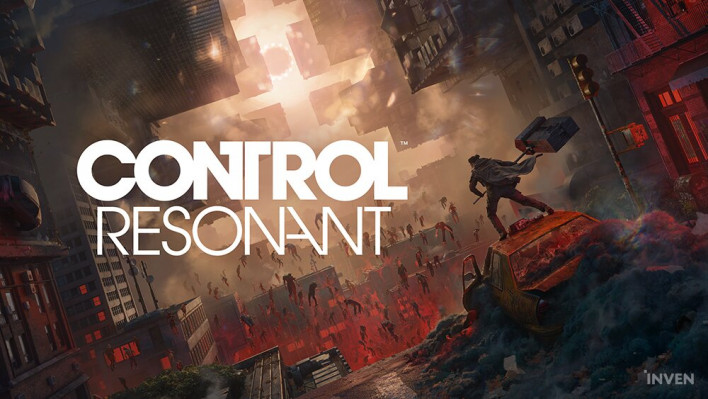
Ahead of SGF, an exclusive hands-on event for 'Control: Resonant'—the latest entry in the Control series that retains Remedy's signature uniqueness—was held at Annapurna Studios in Los Angeles.

The three-hour event included both a demo and an interview, allowing us to play through the game's opening 'Act 1: Wake Up,' the 'Evacuation Zone,' and a story mission called 'Sinkhole.
Control: Resonant is a sequel that plays entirely differently from its predecessor. While it maintains the series' characteristic atmosphere and tone, everything from the protagonist to the combat, movement, and narrative has been overhauled. Jesse, the protagonist of the first game, returns, but she is not a playable character. Instead, we experience the game through the eyes of Dylan, who spent most of the first game in confinement.
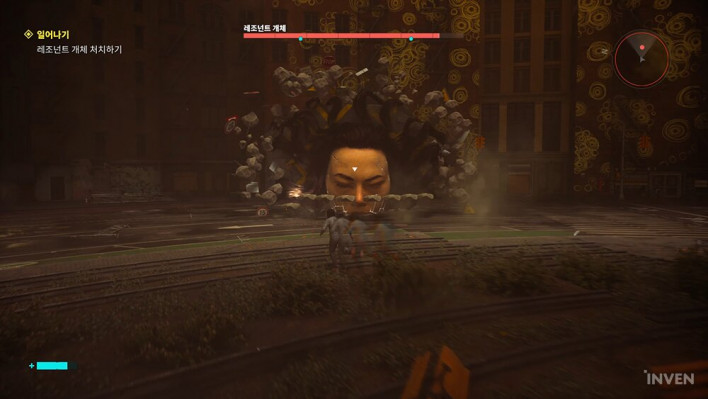
Broadly speaking, the game involves hunting a powerful monster called a 'Resonant' in Manhattan. However, as a Remedy title, it is layered with complex, cinematic direction. Before the demo, the developers explained that the game is not an open world, but rather a sandbox that offers various opportunities.
New Protagonist Dylan and New Combat Mechanics

What impressed me most during the three-hour demo was Dylan himself—or, more specifically, his movement and combat mechanics.
In this game, Dylan fights using special melee weapons. You choose one of three core weapons, and can subsequently upgrade various skills, including secondary weapons, combos, and supernatural abilities. Since each skill has unique properties, it was fun to experiment with different combinations to suit the combat situation.
This is made possible by the 'Rift,' an alternate dimension. Outside of combat, you can enter the Rift at any time with the click of a button to adjust Dylan's abilities or test out new skill combinations in the Training Ground.
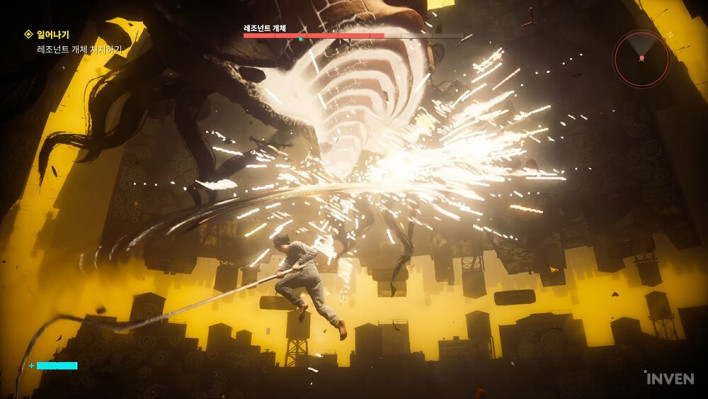
Combat is divided into basic combo attacks using common weapons and secondary weapons, and combat abilities that consume resources. Combat abilities are unlocked by performing eliminations on Resonants, which also enhances the effectiveness of your overall abilities.
Depending on the ability used, you can cause enemies to stagger. Once the stagger gauge is full, you can press L3 to trigger an execution. Executions provide talent-based bonuses, and since most combat abilities are highly effective at building stagger, it is crucial to focus these abilities on mid-sized enemies or bosses to trigger execution animations.
While not all weapons and features are linked, some can be used in tandem. Because there are elements specialized for different combat scenarios—such as single-target, area-of-effect, or back attacks—you need to adjust your loadout accordingly.
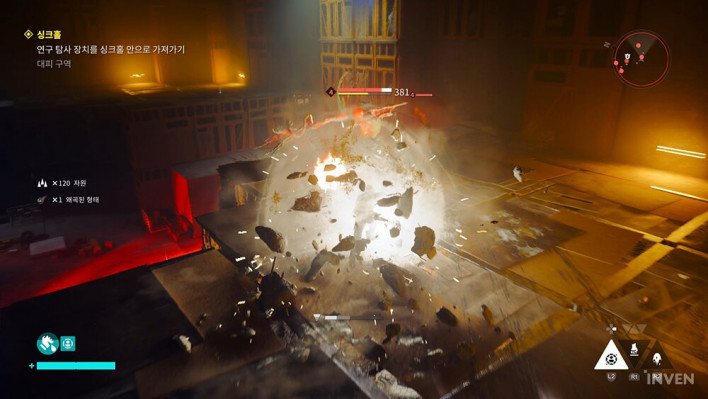
Despite the variety of options, the combat system is not as complex as it might seem. While I needed some time to adapt after jumping into a session with all features unlocked immediately following the Act 1 tutorial, I quickly grew accustomed to the flow and was able to dive into the story missions. This speaks to the well-balanced nature of the combat flow and skill synergy.
The system doesn't force you to memorize complex key combinations; common and secondary weapons simply use different inputs for continuous combo attacks, and combat abilities are triggered with simple button presses.
Resources for combat abilities are replenished through basic attacks, creating a smooth loop of basic combos, ability usage, and back to basic combos that is easy to grasp.
Aerial Movement and Verticality: Jump, Levitate, and Dodge
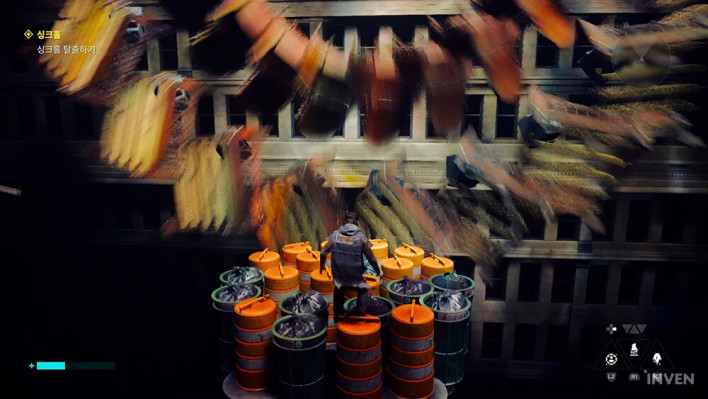
The combat is designed to be efficient and simple, likely because the movement mechanics demand so much of the player's attention. In this demo, movement was the most surprising, challenging, and fun aspect of the game.
Dylan possesses a double jump, a double dodge, and a levitation feature triggered by holding the jump button, allowing him to stay airborne for quite a long time. This opens up the map vertically, requiring players to be mindful of the entire space—up, down, left, right, and mid-air—during combat.
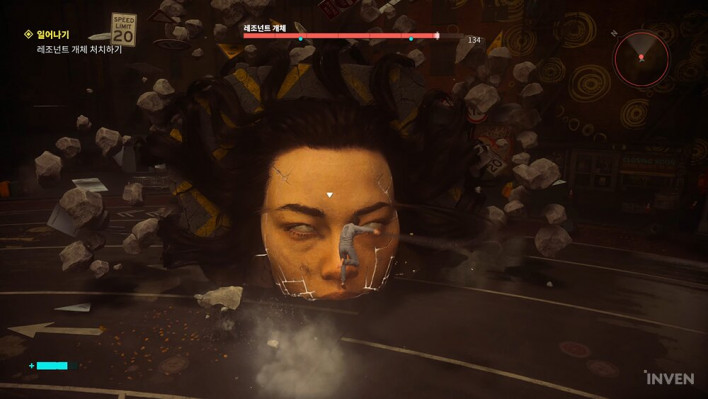
Whether facing tutorial bosses, story bosses, or mid-sized enemies, the core of combat lies in utilizing Dylan's spatial awareness rather than just dodging and counterattacking.
For instance, dodging isn't just about avoiding an attack; it often involves jumping to a safe spot to attack from, or using environmental objects to climb onto an enemy's back to destroy a specific part and negate their attack. Movement and combat are frequently fused into a single action.
While the combat controls are simple, combining movement and combat in real-time was quite tricky at first. Fortunately, the camera pulls back during combat, so visibility remains clear even when moving rapidly across the map. I didn't experience any motion sickness or issues with losing track of the character during the demo.
Remedy's Unique Cinematic Flair

That said, the gravitational anomalies encountered during the game were both impressive and, at times, the most frustrating and difficult elements.
The 'floor' Dylan stands on constantly shifts, requiring you to find and defeat hidden enemies before returning to the original gravity. It felt like solving a puzzle, but one that relied more on spatial sense than logic. As someone with a poor sense of direction, it was so difficult that I almost wanted to give up.
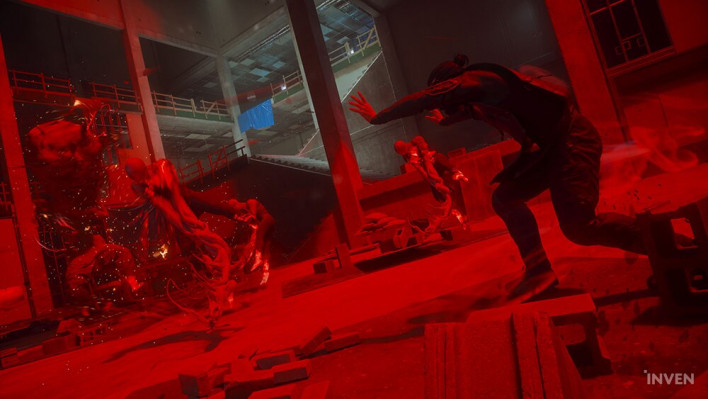
However, this sequence was filled with Remedy's signature stylish direction. With shifting floors, moving objects, enemies highlighted in red, and an intense, eerie soundscape, the horror-like atmosphere and immersion were so strong that I forgot I was in a demo room.
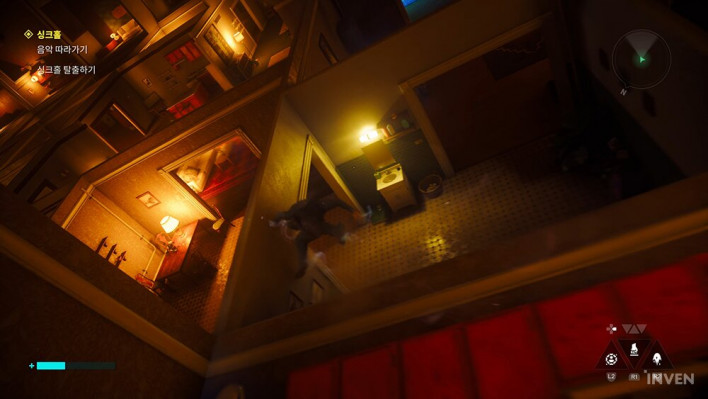
There was another scene where spatial awareness, sound, and controls were perfectly synchronized; it was so impressive that I wondered how a supernatural 'phenomenon' could be captured so well in a game.
I was also struck by the 'weight' of Dylan's movement. Despite the fast-paced jumping and levitation, his movement feels remarkably light—almost as if that lightness is transmitted directly through the controller.
Conversely, in moments requiring impact—such as charging and swinging a massive hammer, slamming down from the air, or dashing while encased in stone—you can feel a distinct, heavy weight that contrasts sharply with his usual agility.
Personally, what I find most regrettable is that the unique vertical control feel—a blend of combat and movement—simply cannot be fully conveyed through text or video. After experiencing these unique controls for the first time during this demo, I found myself blurting out a 'wow' in genuine surprise; it is a control scheme that feels both completely new and fascinating.
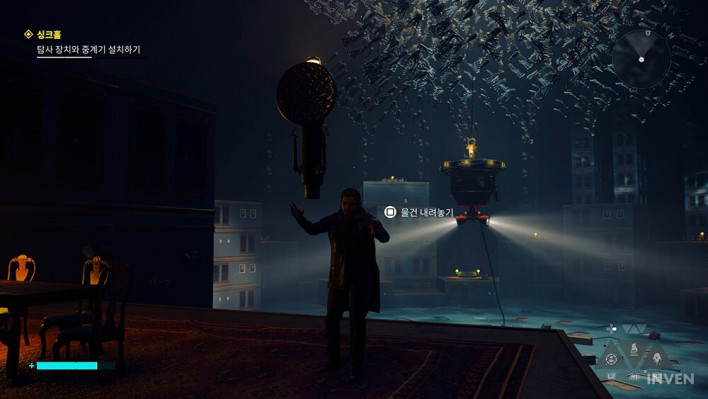
It is difficult to discuss the narrative or story based on this demo. While Dylan, as the protagonist, surely has his own secrets, I only played three separate parts, so I couldn't see much of the overarching plot.
What is certain is that neither Dylan nor the key character, Joey, are fully aware of the events of the first game. This makes it easy for players who haven't played the original Control to empathize with Dylan's situation. The developers noted that this was one of the reasons they chose Dylan as the protagonist.



The direction in Control: Resonant is, as expected, unique, mysterious, and ingenious. While the game is not yet finished, Remedy's signature bizarre cinematic techniques are woven into every cutscene and gameplay moment. Personally, the final combat section of the 'Sinkhole' story mission was the most impressive in terms of direction.
With a glowing red background, a map teeming with monsters, objects at varying heights, and a massive mid-sized boss, the combination of speed, combat, visuals, and sound created a scene so intense it was almost breathtaking.
One more thing: the demo was in Korean, and the translation quality was quite good. As the game is still in development, there were some typos or untranslated segments, but nothing that broke immersion. Of course, since this was only a small portion of the game, the overall quality of the localization will be fully apparent only upon the official release.
Control: Resonant, another intense title from Remedy, is scheduled for release on September 24 this year for PC, PS5, and XSX|S.

Sort by:
Comments :0