At a hotel club a few blocks from Moscone, Klang Games is trying to show off a world that never really goes to sleep.
On one screen, a character in SEED—Klang’s long-gestating social simulation MMO—drinks dirty water and edges closer to a stomach bug. On another, a more advanced society hums with apartments, job listings, public transit, market deliveries, and the low-grade political tension that seems to emerge any time enough people are asked to live together. Somewhere in between, one of the developers jokes about the bad internet, another clicks through a romance interaction between two “Seedlings,” and the pitch for the game comes into focus: not just a massively multiplayer world, but a living society simulator where life continues whether or not the player is watching.
It is an enormous thing to promise. Klang knows that.
For more than a decade, the Berlin-based studio has been building toward SEED, a “shardless” online world set on the planet Avesta, where players guide AI-driven inhabitants called Seedlings as they work, form relationships, get sick, build homes, earn salaries, start companies, and participate in governments that can rise or fall based on player sentiment. The most immediate comparison points are familiar management and life-sim games—The Sims, RimWorld, SimCity—but Klang’s founders are after something far more unruly: the social scale and emergent storytelling of a shared MMO space, fused with the systems-heavy intimacy of a simulation game.
That ambition can sound abstract until you see the game swing between survival hardship and civic administration in real time.
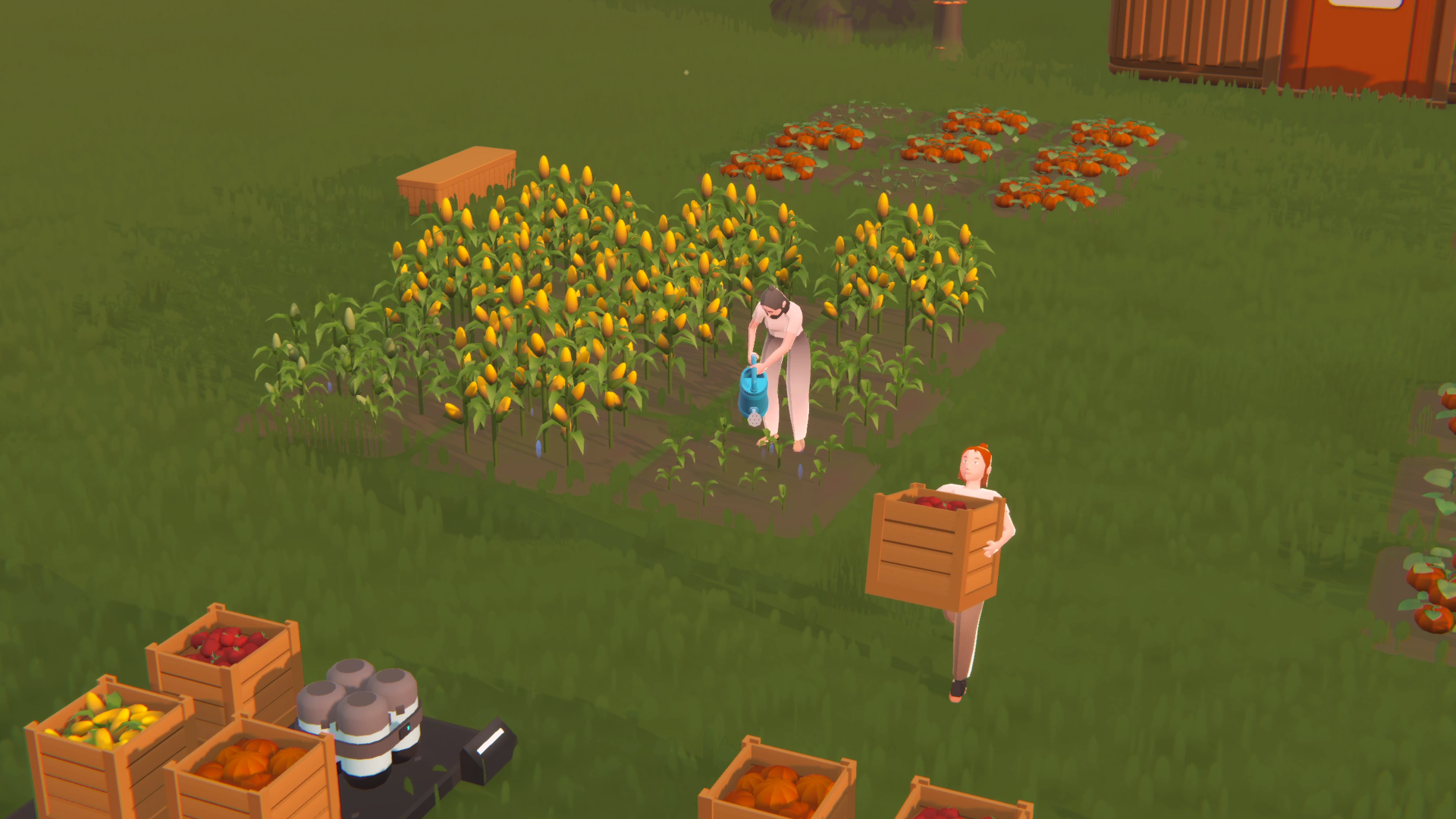
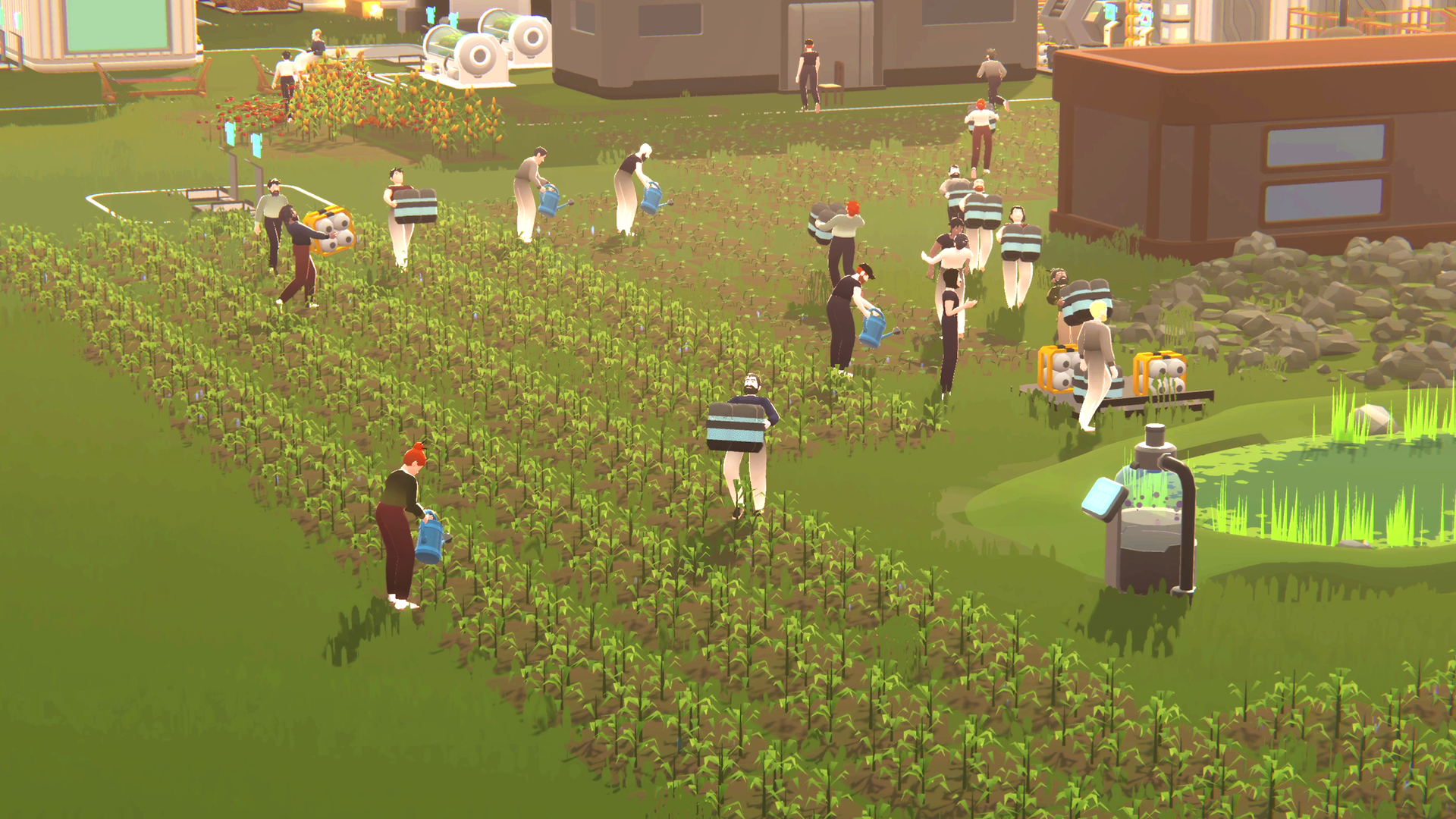
In one moment, the demo begins from scratch in a rough patch of wilderness. The player’s Seedlings need the basics first: shelter, water, food, fire. Mushrooms can be gathered. Trees can be chopped down. Tents can be pitched. Water can be fetched, but if it is not filtered, the consequences are not cosmetic. Each character has a surprisingly granular health model, with injuries, illnesses, and physiological needs that can spiral into broader problems if neglected. The opening hours look intentionally demanding, less like a guided theme park and more like being dropped into a difficult systems sandbox and told to learn how to survive.
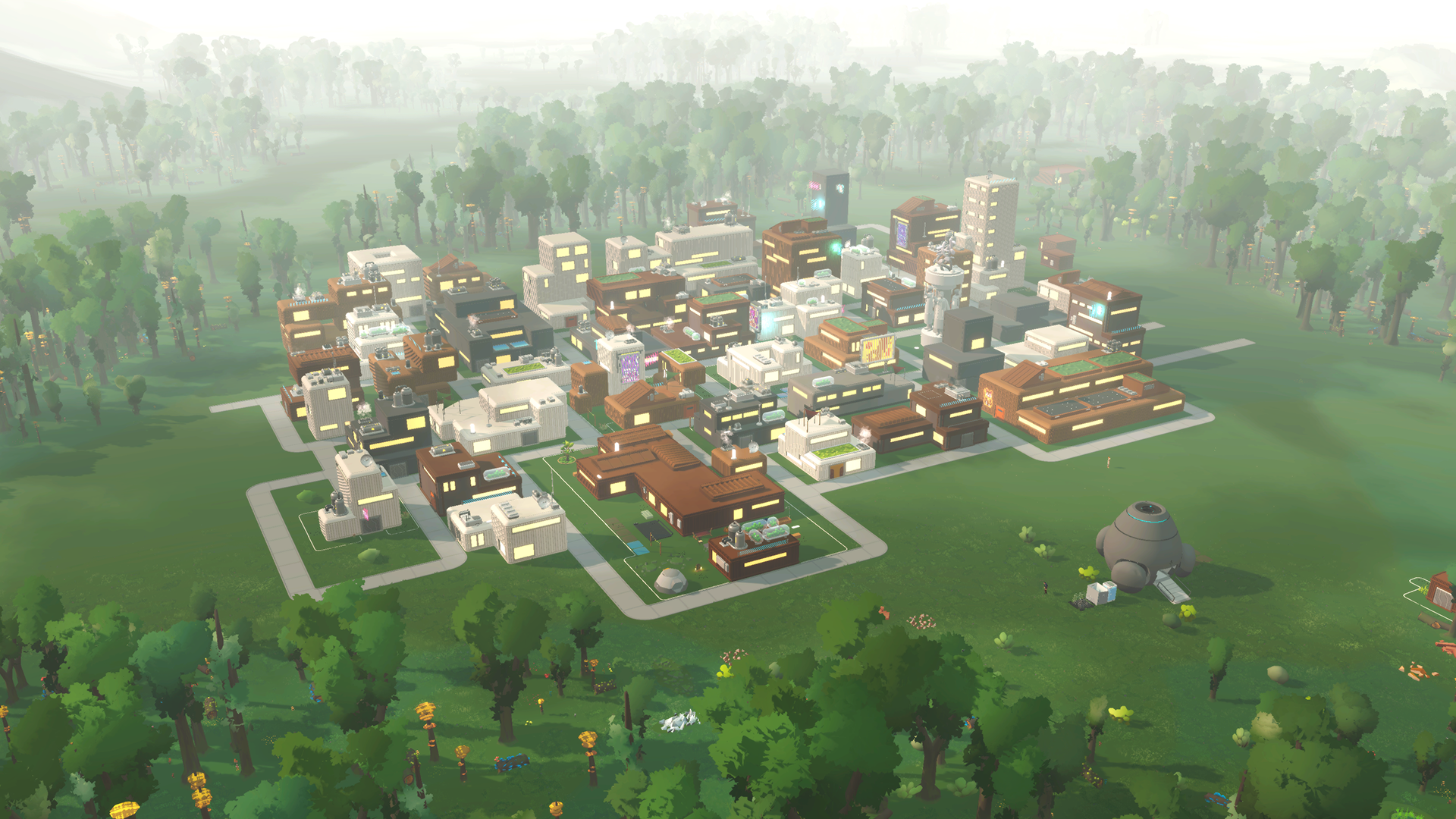
In the next moment, Klang jumps to a more advanced city built by players. Suddenly the primitive struggle gives way to something closer to urban routine. There are jobs posted by player-run businesses. There is a real estate market with plots sold off and furnished homes changing hands. There are rentals. There are salaries, qualifications, and routines set by employers. A Seedling can take the subway across town to clock into a woodworking job and continue earning while the player is away. Houses are not simply placed into existence; they must be designed, funded, supplied with materials, and physically built over time.
That contrast appears central to what makes SEED feel distinct. Klang is not merely chasing scale for its own sake. The studio is trying to create a world that feels inhabited at every level, from the first campfire to the late-stage city block.
The company’s founders trace part of that philosophy back to EVE Online, the famous single-shard MMO whose scale and player-driven conflicts helped produce some of gaming’s most memorable emergent stories. But where EVE often remains forbiddingly hardcore, Klang’s leaders say they saw an opportunity in making that style of social depth more legible and more human. If traditional MMOs can feel like curated attractions and classic sandbox worlds can feel empty once the player-built structures go quiet, SEED is attempting to solve both problems at once: build a persistent sandbox, then fill it with simulated life.
That is why the Seedlings matter so much.
Rather than functioning as passive avatars, the characters in SEED are meant to live on a 24/7 rhythm. They have moods, needs, personalities, relationships, and routines. During the demo, a simple social exchange becomes a small example of the game’s wider ambitions. Two characters introduce themselves and learn one another’s names. A flirtatious message nudges a romance score. The system reads for context, personality, and familiarity. Elsewhere, the developers describe characters growing tired of repetitive food, feeling the effects of isolation, or reacting differently to dirty or unpleasant environments depending on who they are. A laid-back Seedling might tolerate disorder. A more fastidious one might not.
These details are easy to laugh at in isolation—especially in a demo where a character can be nudged into awkward flirting a few minutes after arriving in town—but they speak to Klang’s broader thesis. SEED is not built around heroic power fantasy. It is built around interdependence.
That interdependence extends into the game’s economy. Goods move through player activity. Labor has value. Delivery can become a business. Housing can be flipped or rented. Industrial expansion requires planning, land, and social coordination. The developers describe the market as fully player-driven, with studio-controlled fallback trading intentionally priced badly enough that dealing with other players remains the better option. Even in the city shown during the demo—still relatively young after a recent world reset—the outlines of a functioning society are already visible. A settlement of roughly 30 to 40 players controlling more than 50 Seedlings has jobs to fill, transport infrastructure to use, and the beginnings of class distinction in who can access which roles.
But perhaps the most unusual part of SEED is not economic. It is political.
Klang talks about governance in SEED with the intensity of a studio that genuinely believes politics can be a compelling game mechanic rather than just decorative worldbuilding. Players can create constitutions, taxes, policies, and formal governments. If confidence collapses, those governments can be dismantled and rebuilt. In one anecdote shared during the demonstration, a player attempted to corner the bread market badly enough that the government intervened with taxation—only for the backlash to help cost that government its next election.
That sort of story is exactly what Klang seems to want.
The studio has worked with legal scholar Lawrence Lessig as an adviser, using workshops to think through the “atomic” components of governance and how different systems might emerge when players are given real social tools rather than superficial choices. The point is not simply to let people vote on tax rates. It is to see what forms of power, corruption, compromise, and civic structure take shape when thousands of small societies are allowed to experiment. Klang talks about SEED almost like a playable laboratory: a place to test how institutions hold up under pressure, how economies and laws interact, and what happens when people with competing values are asked to build a world together.
That academic streak runs through other parts of the project too. The team describes collaborations and workshops connected to institutions like CERN, which helped inform some of the game’s harsher survival and disease simulation ideas. In a medium where “simulation” often means approximation at a distance, SEED aims for something denser and stranger—an online world where disease transmission, sanitation, research, logistics, and governance are all part of the same societal fabric.
All of that helps explain both the fascination of the project and the time it has taken to build. SEED has spent years carrying the burden of its own premise. A game trying to simulate not just a world, but society itself, does not get to hide from complexity. Every system seems to create the need for three more. If characters work, they must also eat, rest, socialize, and break down. If cities function, they must also distribute space, labor, housing, and law. If politics exist, they must have consequences.
What Klang showed at GDC did not feel like a polished sales pitch pretending everything is solved. Some rough edges were obvious. The camera misbehaved during the demo. Performance still appears to be a work in progress, though the team says mobile optimization is pushing rendering improvements across the game. Interfaces occasionally looked dense. Even the developers acknowledged that throwing players directly into the simulation had once proven overwhelming enough that the onboarding had to be reworked into clearer progression goals.
Yet those rough edges almost reinforced the point. SEED does not look like a game with small ambitions trying to appear bigger. It looks like a game wrestling openly with the consequences of its own scale.
That is what made the demonstration compelling. Not that Klang has already solved the problem of building a massively multiplayer life simulator where politics, labor, housing, survival, and relationships all matter at once—but that, after all these years, the studio can finally show the shape of the thing it has been trying to make.
Most online games promise community. SEED is promising society, which is messier, more fragile, and far more interesting. Whether Klang can fully deliver on that vision remains the looming question heading into its next public playtest. But after seeing the game in motion, the more important takeaway may be this: SEED is not just trying to give players a world to inhabit. It is trying to give them one to maintain, disrupt, govern, and live inside even when they are gone.
-

I write. I rap. I run. That’s pretty much it.

Sort by:
Comments :0