


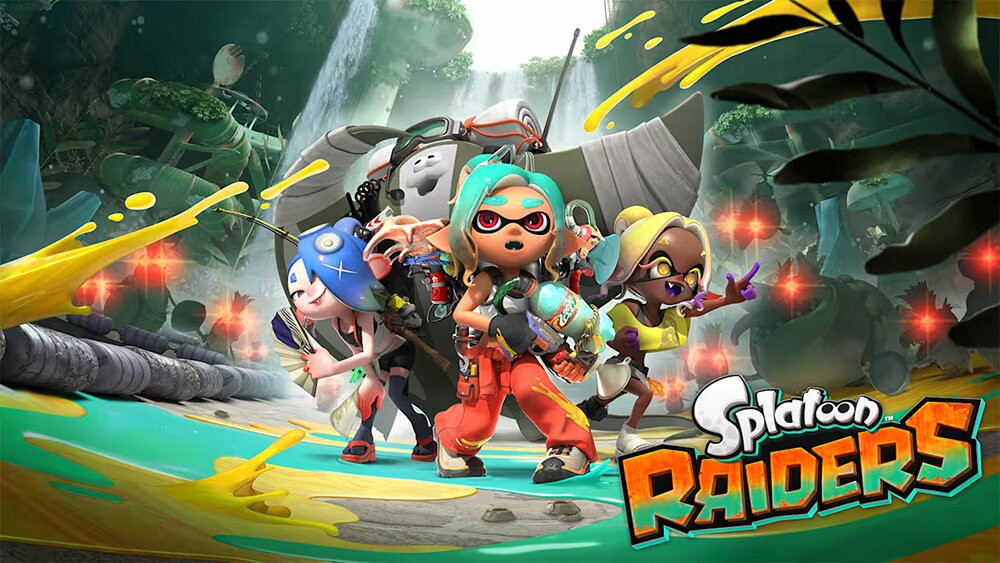
Nintendo has released a developer interview detailing the behind-the-scenes story of Splatoon Raiders, the first spin-off in the Splatoon series, ahead of its launch. The interview, published in three chapters, covers the game's planning intent, development changes, the protagonist, Deep Cut, and various gameplay elements.
Splatoon Raiders is the first spin-off to maintain the series' core controls while focusing on single-player action rather than competitive multiplayer. The development team wanted to create a title that allows players to experience Splatoon's action in a new way, aiming to turn non-competitive content like Salmon Run and Hero Mode into standalone games to provide an entry point for new users. However, as they plan to continue developing competitive-focused games, they produced Splatoon Raiders as a spin-off rather than Splatoon 4.
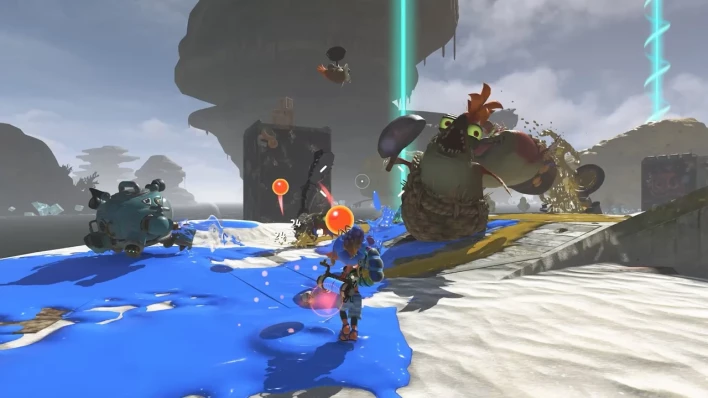
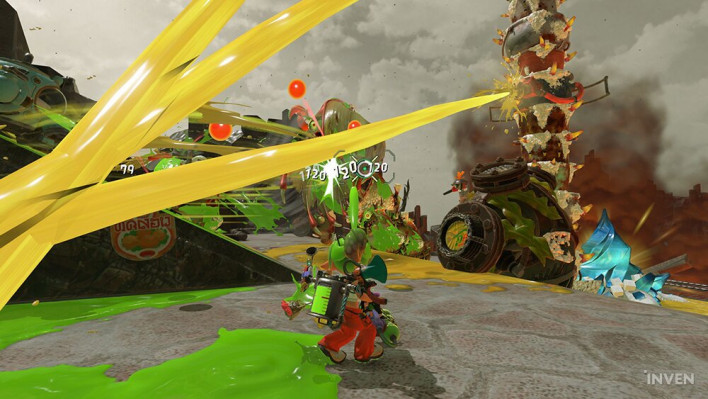
The starting point was creating a game where players could enjoy Salmon Run solo. The developers determined that while Salmon Run is designed for four-player cooperation, playing it alone could offer a frantic yet highly satisfying experience. They aimed to leverage the performance of the Nintendo Switch 2 to spawn more Salmonids for the player to face. Players equip two gadgets alongside their weapon, alternating between them to handle the constant waves of enemies, creating an immersive flow where the body reacts before the mind thinks.
Initially, the game used a tower defense style where players placed devices on the fields to block enemies, but this failed to capture the unique feel and strengths of Splatoon. The direction was shifted to have players dive directly into the action, leading to the introduction of gadgets—equipment that expands player actions. Since gadgets can be upgraded with parts and materials obtained by defeating Salmonids, the design ensures that equipment growth and the player's skill improvement go hand in hand.
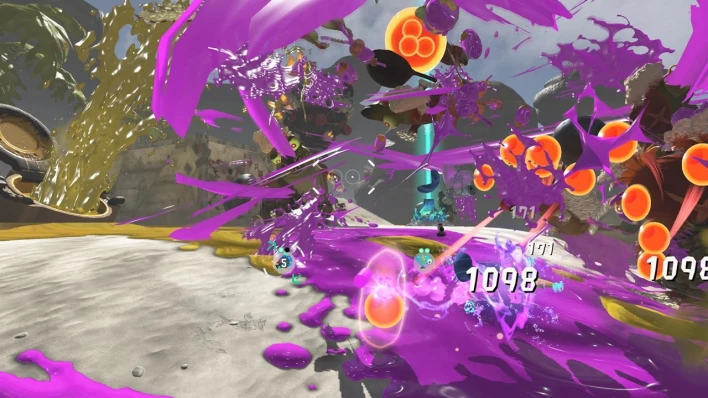
As a spin-off, the game's setting had to be geographically distinct from previous titles. This led to the creation of the Saltspire Archipelago, a remote location that fits well with various settings. The developers utilized the enhanced rendering and processing power of the Nintendo Switch 2 to actively implement curved terrain and natural elements like grass, even allowing players to ink over the grass.
The initial design for the Sockeye Station stage was a bright, cheerful, resort-like island, but problems arose once it was implemented in the game. It looked as though players were attacking peaceful Salmonids and stealing their treasure, and playtesters frequently remarked that they felt sorry for the Salmonids. In response, the development team redesigned the entire island around the core concept of 'you've wandered into a dangerous place.' This resulted in the mysterious, unsettling, and ominous Sockeye Station we see today.
The special salt of the Saltspire Archipelago makes Salmonids ferocious. As the game progresses, the Salmonids become stronger, coated in more salt, and eventually begin to resemble salt-grilled fish. The title, Raiders, stems from the word raid, signifying the player's intrusion into the unwelcome territory of the Salmonids.
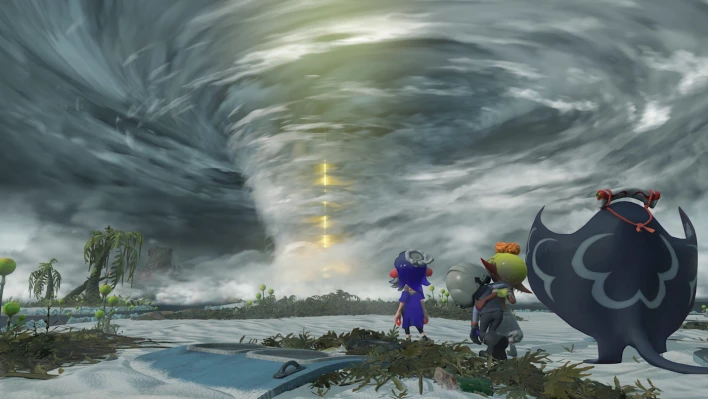
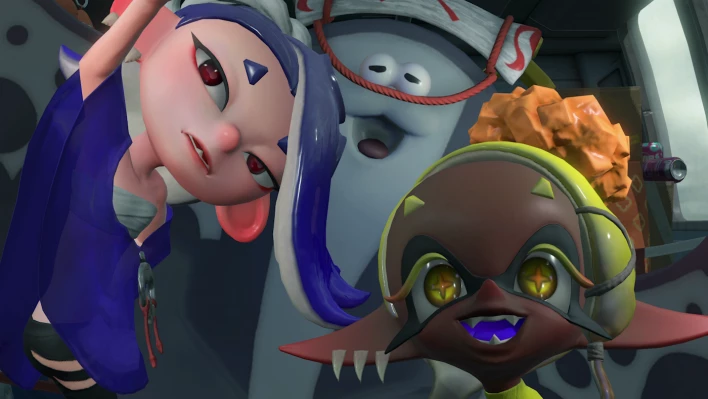
The story puts the spotlight on Deep Cut. In the lore, Deep Cut are treasure hunters who engage in combat themselves. The developers utilized this trait to build a story where the protagonist, the Mechanic, and Deep Cut set out on a treasure hunt together. Players can check background information on Deep Cut through files collected in the game, allowing for a deeper understanding of the group.
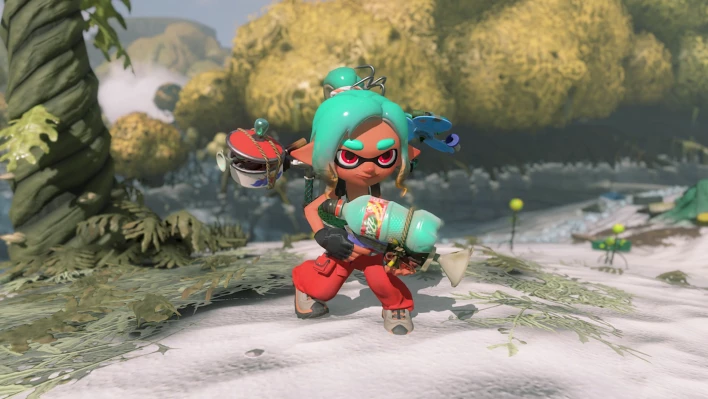
The new protagonist, the Mechanic, was designed to fit the game's premise of crafting various gadgets. The Mechanic is a character of few words—a master craftsman capable of building anything even in harsh environments, yet also a person of action who fights fiercely with self-made gadgets. As the game progresses, the Mechanic's attack power and health increase, and the range of available actions expands, leading to highly dynamic visuals in the later stages.
Splatoon Raiders was designed to be relatively easy for newcomers or returning players to pick up. It is not a competitive game, features a structure where the character grows stronger, and offers the series' first difficulty selection. The difficulty levels are divided into three tiers: Traveler, Raider, and Survivor. The developers balanced the game so that players can feel the unique characteristics and the sense of achievement from growth regardless of the difficulty chosen.
When progress is difficult, players can use the Help Signal to request assistance from others. Even if players have different progress or levels, the stats of enemies and characters are adjusted to match each individual. This allows beginners and veterans to feel a sense of cooperation when playing together. Additionally, players can create rooms with friends to progress through the story together or use in-game chat to share screens while playing.
The development team stated that Splatoon Raiders is "a title that inherits elements of the existing series while incorporating diverse ideas and new experiments." They hope players will experience the changes firsthand, as the game was crafted to be enjoyed at each player's own pace, from beginners to experts.
Splatoon Raiders, a new spin-off in the Splatoon series featuring the new protagonist, the Mechanic, and Deep Cut on a treasure-hunting adventure, will be officially released on the Nintendo Switch 2 on July 23.
![]()
- Soojin "Eonn" Kim
- Email : eonn@inven.co.kr


Sort by:
Comments :0