


The Entertainment Software Association (ESA), which represents the U.S. video game industry, has stated that while it supports the intent of the 'NO FAKES Act'—a U.S. federal bill aimed at regulating unauthorized AI-generated digital replicas—certain provisions must be amended to better reflect the realities of the gaming sector.
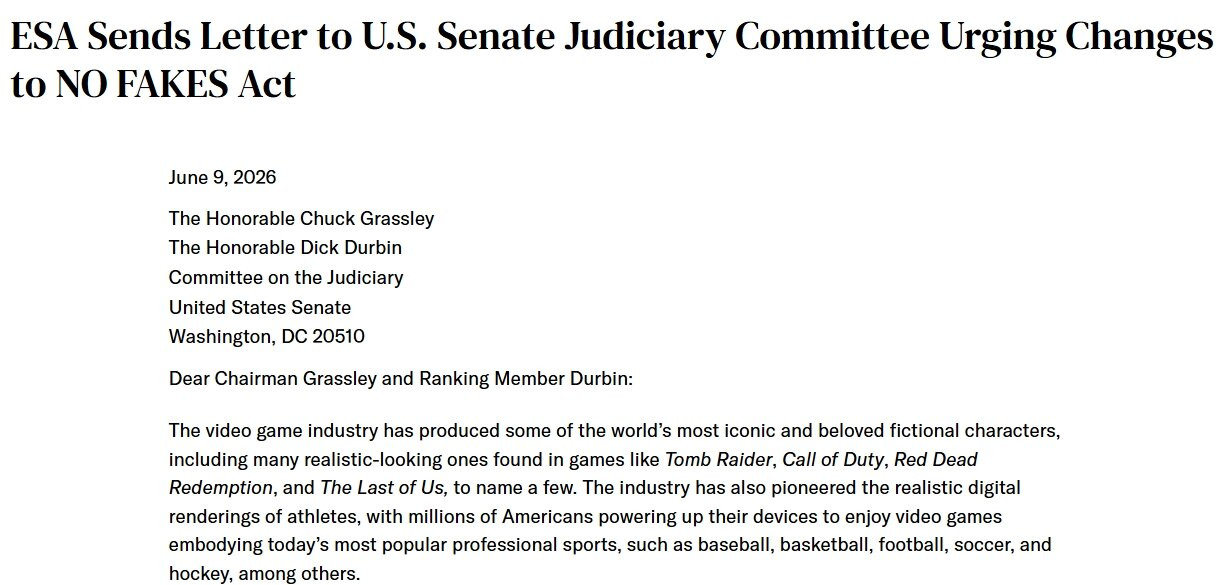
In an official letter submitted to the U.S. Senate Judiciary Committee on June 9, the ESA stated, "We support the bill's goal of protecting creators' rights and preventing the malicious use of AI-generated deepfakes." However, the association pointed out that some provisions in the current draft fail to adequately account for the production environments and technical characteristics of the game industry. The ESA argued that if passed in its current form, the bill could impose a significant burden on both existing games and future game development in the U.S.
The 'NO FAKES Act,' currently under review in the U.S. Congress, is a bipartisan bill designed to regulate 'digital replicas'—unauthorized copies of an individual's face or voice created using generative AI. The bill aims to prevent the non-consensual use of a person's likeness or voice in AI content, covering everyone from actors and singers to private citizens, and seeks to impose legal liability on individuals and platforms that produce or distribute such content. First introduced in 2024, the bill was resubmitted as an amended version in 2026 following the end of the legislative session and is currently being reviewed by the Senate Judiciary Committee.
The ESA's primary concern lies in the bill's definition of a 'digital replica.' The association worries that the current definition is overly broad, potentially exposing not only malicious AI deepfakes but also legitimately created game characters to legal disputes. It explained that modern games often feature hundreds or even thousands of NPCs and realistic character models, making it difficult to rule out the possibility of lawsuits simply because a specific character happens to resemble a real person.
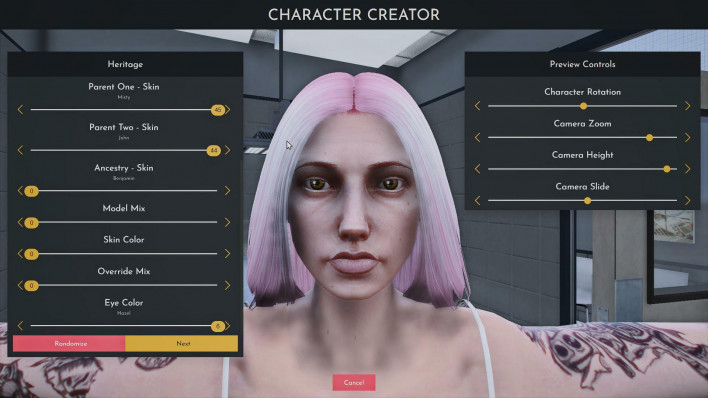
The ESA also noted that various character creation tools and editing features used in game development could be affected. Many modern games offer systems that allow users to create their own avatars or customize faces in detail, and developers themselves utilize various digital production technologies, including AI, to create realistic characters. The ESA argues that the current bill fails to sufficiently distinguish between malicious deepfake services and standard game development tools, potentially leaving developers and service providers vulnerable to unintended legal liability.
The ESA emphasized that even if a game company were to ultimately win such a lawsuit, the immense costs and time involved would place a heavy burden on the development process. Consequently, the association has proposed that the bill be amended to clarify the definition of a digital replica and to distinguish between services intended to infringe on rights and general-purpose production tools used in game development.
This position paper is significant in that it highlights the game industry's stance: it is not opposed to AI regulation itself, but rather advocates for a more refined regulatory framework that balances creator protection with industrial innovation. As generative AI is rapidly being integrated into all aspects of game development, the final version of the 'NO FAKES Act' currently under discussion in the U.S. Congress is expected to have a substantial impact on future standards for character creation and AI usage.





Sort by:
Comments :0