


In 2021, Smilegate invested $100 million (approximately ₩114.6 billion at the time) into 'That's No Moon,' a studio staffed by veterans from Naughty Dog, Infinity Ward, and EA. As a team composed of the key figures behind AAA masterpieces like 'The Last of Us,' 'Uncharted,' and 'Call of Duty,' the project garnered significant anticipation from the start. Five years later, the result was finally unveiled at 'Summer Game Fest 2026.'
INVEN attended a media briefing session hosted by That's No Moon, where we heard an overview and key features of the new title from directors Taylor Kurosaki and Jacob Minkoff.
![[댓츠노문 신작] 크로스파이어, '액션 어드벤처'로 재탄생하다](https://static.invenglobal.com/upload/image/2026/06/05/r1780696229876847.png)
A 'Single-Player Narrative Game' Built on Top-Tier Quality
![[댓츠노문 신작] 크로스파이어, '액션 어드벤처'로 재탄생하다](https://static.invenglobal.com/upload/image/2026/06/05/r1780696232389699.jpeg)
Director Kurosaki introduced the new title as a fresh reinterpretation of the 'CrossFire' IP, which has been enjoyed by over a billion players worldwide. The studio's core goal is to 'develop a single-player narrative game based on the highest quality.' He explained that meticulously crafted characters, sophisticated scripts, innovative systems, and the overwhelming quality that supports them must serve as the game's foundation.
In line with this development philosophy, the game excludes multiplayer and live-service elements. Director Kurosaki suggested that they removed features that might detract from a cohesive narrative experience, stating, "The satisfaction a player feels when they control a compelling character and complete a journey from beginning to end is what matters most." Regarding the storytelling, he added, "We believe in the power of a tightly woven narrative," and plans to drive the plot through a meticulously crafted, single-path story rather than one with multiple choices.
Details on character construction aimed at enhancing immersion were also revealed. The characters are depicted as realistic, multi-dimensional individuals who are neither purely good nor evil.
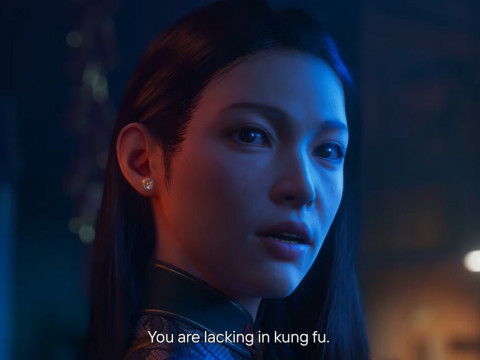
The two protagonists leading the story are 'Layla Qassem' and 'Delroy Cross.' Layla, a mercenary and contractor, holds a firm belief that the world's unequal systems must be dismantled and replaced with a fair society. Conversely, Delroy is a character who believes that if the existing system collapses, chaos and anarchy will ensue, and he seeks to protect it.
Amidst extreme external threats, including a bizarre infection phenomenon, the two individuals with opposing beliefs form an uneasy, temporary alliance to survive. Director Kurosaki noted, "As the story unfolds, the true nature of both characters will be revealed, and players will also find an opportunity to reflect on themselves." He added that this dual-protagonist system was inspired by the conflict structure between the two core factions of the original CrossFire: 'Global Risk' and 'Black List.'
Emphasizing Realistic Gameplay, Surpassing the Limits of Existing TPS.
![[댓츠노문 신작] 크로스파이어, '액션 어드벤처'로 재탄생하다](https://static.invenglobal.com/upload/image/2026/06/05/r1780696235011050.jpeg)
As a strategic action-adventure game, the gameplay mechanics have become significantly more realistic and sophisticated. The development team implemented a vivid battlefield through collaboration with films, literature, and military advisors. Reckless charges lead to character death, requiring thorough tactical planning.
Director Minkoff, who designed the gameplay mechanics, cited Unreal Engine 5's 'Nanite' and 'Lumen' technologies as the solution to overcoming the limitations of existing TPS action. By moving past the frustration of box-shaped cover objects caused by past technical limitations, they have implemented the surrounding environment organically through new technology.
The 'Adaptive Cover' system, devised after referencing films like 'Triple Frontier' and conducting actual outdoor cover-and-concealment tests, is particularly noteworthy. Much like how a real human hides behind irregular rocks or terrain, this system provides limited protection only for the parts of the body hidden by an object. Since it does not provide a perfect safe zone like traditional systems, players must constantly assess the situation and move their bodies, leading to extreme tactical tension.
Adaptive Cover is a feature that protects the player only where they are obscured by an object, just like real-world cover. Unlike box-shaped cover that always protects the entire body, irregular rocks or objects only cover parts of the body, forcing players to constantly judge safe zones and move. Director Minkoff stated that the goal of Adaptive Cover is to make players feel advanced tactical gameplay and to provide constant pressure and tension.
Combat is also strictly based on realism. It is designed so that survival is difficult through frontal assaults alone, requiring the use of various guerrilla tactics such as distraction, stealth, and positioning using Adaptive Cover.
'CrossFire' Reborn as a Strategic Action-Adventure
![[댓츠노문 신작] 크로스파이어, '액션 어드벤처'로 재탄생하다](https://static.invenglobal.com/upload/image/2026/06/05/r1780696218594907.jpeg)
Director Kurosaki shared his thoughts, saying, "It was a very exciting challenge to reimagine CrossFire, synonymous with FPS, as an action-adventure game to deliver an immersive story." He also expressed gratitude to Smilegate for trusting That's No Moon as 'masters of the genre' and providing full support without unnecessary interference.
Finally, Sebastian, Brand and Marketing Manager, concluded the briefing by stating, "What this title ultimately aims to convey is the perfect combination of realistic, lethal stealth combat and high-quality storytelling," and asked players to "look forward to the cinematic tension created by characters contrasting with tactical freedom."
Meanwhile, the new 'CrossFire' being developed by That's No Moon with investment from Smilegate is scheduled for official release on PS5, Xbox, and PC platforms.
Media Q&A
Does this new title have continuity with the existing CrossFire IP's world and story, or can it be seen as an independent spin-off?
" This work is not a sequel that replaces or directly continues existing CrossFire titles. It is a premium AAA work with a new story. We have tried to maintain the core DNA that the CrossFire IP has built over many years: the intense conflict between two hostile factions and the tension of tactical combat.
What aspects of the new title do the developers consider to be in line with the previous 'CrossFire'?
" The strength of CrossFire is the extreme tension between the two factions. In this work, that tension is expressed as an 'uneasy alliance' between two agents who cannot trust each other but must work together. An alliance maintained for survival rather than trust, and the anxiety that it could break at any moment, permeates the narrative. Constant tension in every battle and tactical experiences where every choice has unique meaning are what the development team considers to be the 'CrossFire' identity.
How did you construct the sci-fi elements and the era of the virtual world?
" This work aims for 'realistic sci-fi.' It is based on actual scientific concepts and unfolds within a persuasive fictional worldview. We combined sci-fi threat elements on top of a thorough sense of reality, such as precise reproduction of real weapons, vivid sounds of gunfights, and detailed environmental design.
What was the most important focus and the most difficult part in reinterpreting this work as a single-player narrative game?
" We founded the studio to create a narrative-focused experience from the start. We believe the DNA of CrossFire—tactical tension and the conflict between two factions—naturally aligns with the single-player narrative format. Our goal was not to replace the existing multiplayer experience, but to expand the CrossFire IP into a new category it had not yet explored. That's No Moon's development philosophy is that narrative and gameplay should be organically connected, and that gameplay itself should be part of the storytelling.
What are the differentiators in gameplay compared to cinematic action games like Uncharted or The Last of Us?
" The game design and narrative built through The Last of Us are assets we are very proud of. In CrossFire, we have taken a step further, adding an innovative Adaptive Cover system that no other game has attempted to a deep, character-driven narrative. While existing cinematic action games relied on designated cover points and snap animations, CrossFire has completely removed those constraints. It is the world's first system where users can naturally take cover anywhere in complex terrain. This ensures that cinematic immersion is never broken even during combat, allowing players to feel an experience where narrative and gameplay are one.
Could you introduce Adaptive Cover in more detail? What is the biggest difference from existing cover shooters, and how are you preparing for issues like terrain clipping or judgment mismatches?
" 'Adaptive Cover' is a newly defined cover and movement system that allows the user's posture to be adjusted in real-time according to the surrounding terrain and the enemy's line of sight. Players will feel that the way they play has fundamentally changed based on the environment. It also allows for more tense and strategic combat. Existing shooter games with cover functions operate with fixed cover states. They are divided dichotomously, such as low or high posture while in cover. In contrast, Adaptive Cover automatically takes the appropriate posture for the situation, just like a real person, in response to the cover object.
Existing shooter games use rectangular cover and very limited criteria, so combat spaces tend to be angular and stepped. This method has been used for over 20 years, and players already intuitively know what combat spaces look like and where enemies will appear in third-person cover shooter games.
Through Adaptive Cover, we have created the most complex and organic environment in the history of the shooter genre without these constraints, and we intend to provide a much more immersive gameplay experience. In CrossFire, you will feel like you are navigating an actual battlefield through Adaptive Cover.
What is the ratio of stealth to combat?
" In CrossFire, you can avoid combat and proceed using only stealth and Adaptive Cover in certain situations. On the other hand, there are times when combat is inevitable. Users can choose which method to take depending on the environment where the battle takes place and the placement of enemies. We designed it so that there is a balance between the two elements.
How did you balance emphasizing realism without losing the fun?
" Realism is a means for immersion, not an end in itself. The core criterion for development is to ensure that tension is never broken for even a single moment. We designed it so that while it demands strategy and patience from users, the experience of suppressing enemies by utilizing the terrain with the character also feels natural. Players can immerse themselves in the game through all tactical choices, such as stealth, attack, repositioning, and flanking.
It seems that the constant tension and the many factors to consider in combat situations might cause excessive fatigue for users. What are the countermeasures?
" Our goal is for narrative and gameplay to connect naturally. Players will not only experience tense combat but also 'static' narratives where they can better understand the relationship between Layla and Cross and their respective perspectives. Our goal is to provide a balanced experience by properly distributing tension and relaxation.
Is it a method of alternating between the two characters, or is it fixed to one perspective?
" Players can only control Layla. Users can build a deep bond with Layla through the story. Her partner, Cross, acts completely independently and reacts appropriately to the player's actions. For example, if a fierce gunfight breaks out, Cross will distract the enemy and provide suppressive fire to help Layla escape. Ultimately, we hope there will be an emotional resonance between how the player feels about Cross and how Layla treats Cross during their interactions.
What is the know-how for eliciting empathy from all users in storytelling?
" We believe that the process of two people with different ideologies gradually accepting each other's perspectives under extreme pressure will resonate with users. We always think character-first, and we will elicit user empathy by connecting narrative and gameplay, making the act of playing a way to experience the story.
What was the motivation for constructing the story of 'Layla' and 'Cross'? Which faction do the two protagonists belong to, and who are they fighting?
" Layla and Cross are agents from mutually hostile factions who are forced to join hands in the face of an overwhelming threat. A story about two people from opposing factions traveling together is a theme that has been loved in all media for a long time. Their journey is a very human relationship that contains numerous possibilities for development in both narrative and gameplay. CrossFire shows what it means to see the world through someone else's eyes and how narrative is directly connected to the play experience.
What is the approximate play time?
" We cannot disclose the specific play time at this moment. Our goal is to be a complete, premium single-player game without paid DLC, with innovative gameplay and top-tier quality.
Is it a linear progression? What is the size of the map?
" The game follows a single story. We believe the best narrative has both 'twists' and 'inevitable flow.' By focusing on a linear narrative, we can realize delicate emotional expressions that can only be achieved through top-level motion capture and character models in every scene. While the game's narrative unfolds linearly, players can try various choices and creative combat methods during play. The scale of the combat space varies for each battle; some are wide-open spaces, while others are narrow and dense.
I would also like to know the level of the NPCs.
" Enemy NPCs are intelligent, lethal, and act in an organized manner. They use squad-level tactics, provide suppressive fire, and maneuver toward the player or flank them. Players must use Adaptive Cover to block line of sight, change positions, or retreat, and counter-flank. Enemies may also continue to track the player by searching for their last known location.
Are there difficulty levels? If so, is the highest difficulty unlocked from the start? The difficulty seems high; what is the level of difficulty felt by the developers, and are there plans for future adjustments?
" CrossFire will provide difficulty adjustment options from the time of release. Players will be able to feel appropriate tension, such as having to analyze the environment for every engagement and being required to make tactical choices. CrossFire is not a game where you just run and gun. It is intentionally designed so that players can utilize all means, including Adaptive Cover. It might feel difficult at first, but we hope that more players can experience the fun of tactical combat without burden through the Adaptive Cover system that automatically adjusts posture.
Why did you decide on the title 'CrossFire' without a subtitle?
" CrossFire is an IP with a solid global fandom that has connected players around the world for nearly 20 years. Keeping the title as is signifies respect for the strengths of the IP's long legacy while declaring the evolution of the franchise. It is a work that expands the CrossFire universe into a premium cinematic single-player experience for both existing fans and new players, rather than replacing the existing competitive shooter genre game.
What are the main target markets and user demographics for this work, and what is the strategy for the Korean market?
" Rather than a specific market, we produced it with a focus on universal stories and characters that can appeal equally to both Eastern and Western players. With the two characters at the center, the target users are not only existing CrossFire fans but anyone who enjoys premium single-player narrative games. Our goal is to create an experience that players around the world, including Korea, can deeply empathize with.
What is the meaning of the developer name 'That's No Moon,' and how does it relate to the company's vision and philosophy?
" It is a name that symbolizes the moments in storytelling that evoke surprise and wonder in the audience. It contains our passion to create the best narrative adventure, and it can be said to be the reason for the studio's existence and its core.
CrossFire is an IP with great significance to Smilegate as well. What kind of feedback or advice did Smilegate give during the development process, and what kind of support was there?
" The collaboration with Smilegate was very special. Above all, it was impressive that Smilegate trusted our creative direction and left it entirely to us. Both companies shared the common value that we must deliver not only the fun of the game but also a meaningful story to the user, and I believe that Smilegate's global publishing capabilities and TNM's narrative-focused game development experience are creating powerful synergy.
While Adaptive Cover functions most effectively in complex terrain, it seems that combat in relatively orderly urban areas might not be much different from existing games. Please tell us how you set CrossFire as a stage optimized for Adaptive Cover.
" The core principle of Adaptive Cover—adjusting the character's posture in real-time according to the enemy's line of sight—can be applied in any environment. Basically, anything in the environment around the character can be cover. In the game, there are battles that take place in the most complex organic environments in the history of the third-person cover shooter genre, as well as battles that take place in indoor spaces with general architectural structures. Thanks to Adaptive Cover, designers and artists were able to break free from the constraints of the existing shooter genre and freely create more beautiful, complex, and interesting environments.

Sort by:
Comments :0