


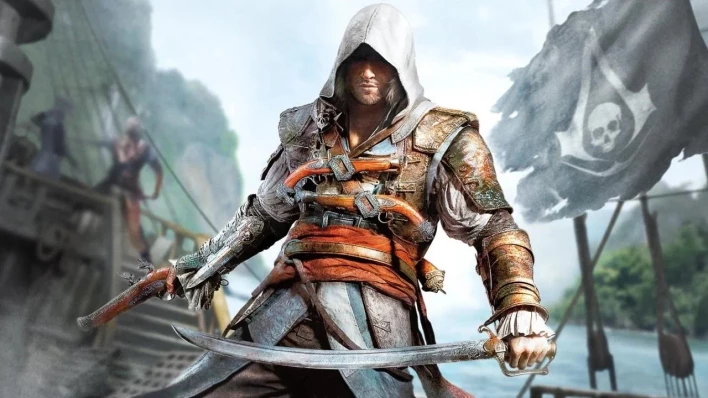
There are countless titles in the Assassin's Creed Series, but if you were to ask, "Which one did you enjoy the most?" opinions would likely be divided, even among long-time fans. Some might point to the recently released Myth trilogy or Shadows, and there would certainly be a minority who favor Unity or Mirage. However, the two undisputed heavyweights of the series are arguably the Italy-based Ezio trilogy and Black Flag.
If the Ezio trilogy established the identity of the Assassin's Creed series, Black Flag represents a rather unique direction. With a complex protagonist who is both an assassin and a pirate, a fully realized naval combat and sailing system—which was only teased in the third installment—and an open world set across the vibrant, intricate Caribbean archipelago, Black Flag was something fundamentally different from the Assassin's Creed games that came before it.
For me, Black Flag is a monumental title. It was the subject of my very first article after joining INVEN, and it is the Assassin's Creed game I have played the most. I can still vividly recall the thrill of taking down each of the four legendary ships one by one.
And so, I found myself at Ubisoft Singapore to revisit Black Flag. I was there to get hands-on with the title, which has been resurrected 13 years later under the name 'Resynced'.
Between Remake and Remaster
When I first learned of 'Resynced', the biggest question on my mind was whether it leaned closer to a 'remaster' or a 'remake'. While they may seem similar, every gamer knows they are distinct concepts. Generally, a 'remaster' focuses on visual improvements, whereas a 'remake' goes a step further. A typical 'remake' involves not just a visual overhaul, but also a complete reworking of the game's systems and internal mechanics.
The problem is that the game was released with the ambiguous label 'Rethinked.'
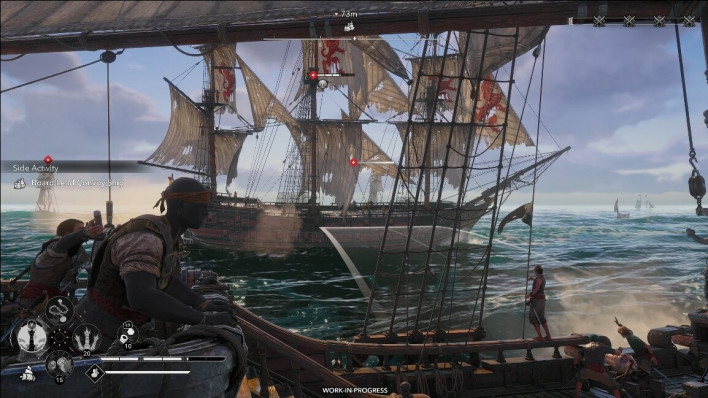
After flying to Singapore and playing it myself, my impression is that it sits in a very strange middle ground, not firmly belonging to either category.
'Rethinked' exists exactly between a remaster and a remake. It’s more than just a visual update, as the game systems have been overhauled, but it’s not a complete ground-up reconstruction either. It still feels like Black Flag, just with a fresh coat of paint. It’s like restoring a classic luxury car but replacing the entire engine and interior. I can now understand why they chose a third term instead of calling it a remaster or a remake.
The most significant internal change is the 'combat.' Much like the Myth trilogy that followed Origins, Rethinked has introduced 'skills' triggered by combinations of R2 and L2. While you don't assign skills from a menu like in the Myth trilogy—the skills are fixed—it adds a new layer of tactical variables to combat.
The assigned skills include pistol fire, throwing knives, and two types of kicks. You can pull out your pistol for a surprise shot mid-fight or pull distant enemies toward you with throwing knives. The two kicks consist of a front kick to push enemies back and a sweep kick to trip them; the sweep kick is particularly useful as it leads directly into an execution.


The flow of combat has also changed significantly with the introduction of 'parrying' instead of the old counter system. When the original game was released, combat was largely about waiting for enemy attacks to land counters, which was overwhelmingly efficient. If you were lucky, you could even pull off stylish multi-counters.
Now, the combat flow feels more standard—or, to put it differently, more modern. You break guards by depleting enemy posture, parry at the precise moment to trigger an execution, or dodge unblockable attacks. It’s a very familiar style of action.

However, that doesn't mean the game has become something entirely different. While the flow has changed, the difficulty remains relatively easy, similar to the original. Since there isn't a strict leveling system, you won't encounter enemies that are impossible to defeat without grinding, as seen in recent titles. Many things have changed, but it still feels like Black Flag. That’s exactly the extent of it.
Everything revolves around 'Edward.'
Surprisingly, one of the biggest changes in Rethinked is the 'narrative,' or more specifically, the 'center of gravity' of the story.
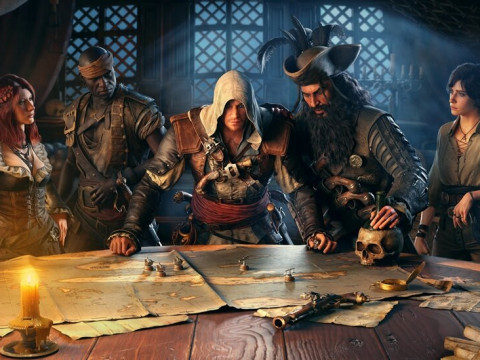
The structure of the story remains the same. Edward Kenway, after enduring all sorts of hardships and turning to piracy, happens to meet the shady-looking assassin Duncan Walpole. He steals Walpole's identity and begins his journey as an accidental assassin. The difference is that while the original focused on 'the story of Edward, the Brotherhood, and those around him,' this version focuses entirely on 'Edward's story.'

The most noticeable change here is that you can no longer use the 'hidden blade' as your primary weapon in combat. In the original, while dual swords were standard, you could technically fight using only the hidden blade. In Rethinked, dual swords have taken the role of the primary weapon, and the hidden blade is reserved for executions or specific animations.
When I asked the developers why, they explained that by focusing on Edward himself, they felt keeping the dual swords was the right choice. They noted that while fighting with a hidden blade looks cool, it felt somewhat distant from their vision of 'Edward-ness.'
There are no plans to include 'Freedom Cry', which features Adéwalé as the protagonist. Including it would have diluted the focus. Instead, the developers addressed that gap by weaving the stories of Adéwalé and Edward directly into the main campaign of Resynced.
Additionally, Rethinked adds a new 'lieutenant' system and extra content and chapters that were not in the original, all of which are designed to keep 'Edward' at the center of the action. For example, the quest to recruit 'Lucy Baldwin' shows Edward personally saving her and bringing her onto his ship.

This 'Edward-centric narrative' was consistently emphasized by the developers I met on-site, and it was a change I could feel even during the limited hands-on session. Of course, whether this change will work in favor of the game's overall structure remains to be seen until the full game is released.
Visuals are 'fully modernized'
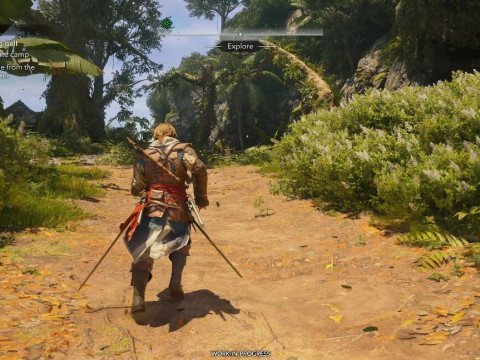
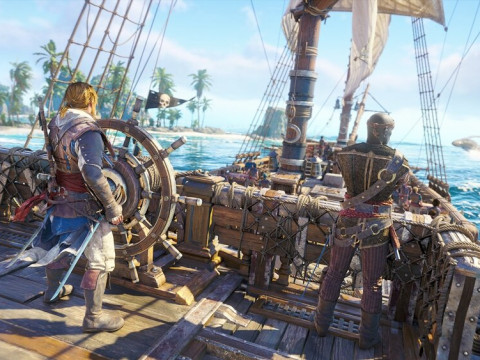
If the game systems and narrative maintain a balance between 'preserving the original' and 'changing,' the visuals are a generational leap. The quality is so high that it almost completely erases the feel of a 13-year-old game. The use of light, reflections, and shadows is top-tier. Ubisoft games always maintain a high visual standard, but Rethinked stands out even among them.

The dynamic weather system is also fully integrated. During the demo, I could see the ground turn to mud when it rained and dry out into sand when the weather cleared. When the weather gets severe, waterspouts can form, and lightning can strike—which can actually deal damage. I didn't experience it myself, but some other players were struck by lightning and died.

In any case, the visuals are beyond reproach. The only concern is 'optimization.' The developers officially stated that they designed the game to maintain a locked 60 FPS in performance mode on all platforms. While I did notice some frame drops in a 4K environment during the demo, it wasn't the final build, so I can't say for sure how it will perform at launch.
In summary, 'Black Flag Rethinked' is a game in a complex, nuanced position—it is the same as its predecessor, yet it has achieved clear progress. The Edward-focused narrative, modernized combat system, and stunning visuals are definite improvements, but it isn't quite a 'remake' in the sense of a total overhaul. The story remains identical, starting from the journey to Havana with Stede Bonnet after meeting Mr. Walpole.
However, if you asked me which one I would play, I would choose Rethinked.

Sort by:
Comments :0