


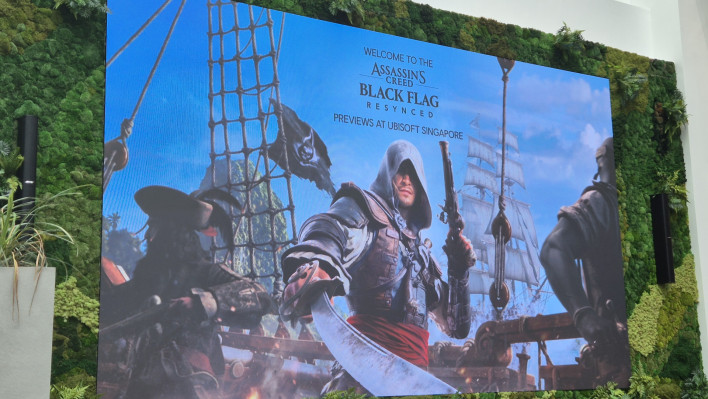
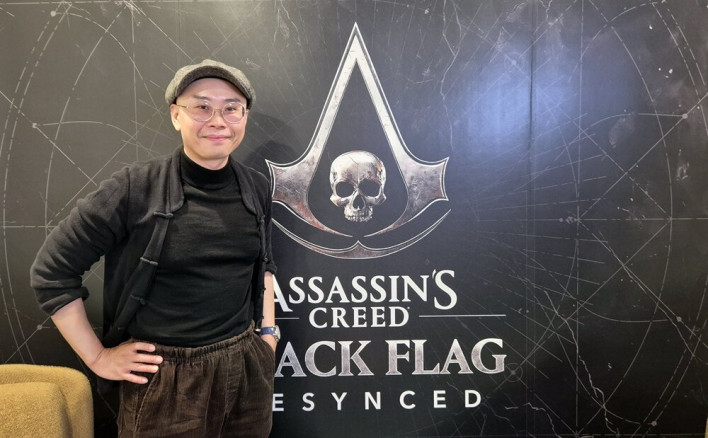
In May 2026, I interviewed Paul Fu, creative director of 'Black Flag Resynced,' at Ubisoft Singapore. As the developer who led the initial announcement of the original 'Resynced,' Fu is considered a key figure for this project, and our interview focused primarily on the narrative shifts in 'Black Flag.'
The event was held for gaming media and creators from Korea and Japan, featuring a limited build demo and interviews with key developers.
The announcement trailer suggests a reduced focus on the modern-day segments. With recent entries in the series also scaling these back, what is the direction for the modern-day portions in 'Resynced'.
"It’s more accurate to say the direction has shifted rather than the scope being reduced. This title focuses on naturally continuing the modern-day story established in 'Shadows.' However, we aren't just focusing on elements like industrial espionage. We’ve added new scenes for fans who enjoyed the original modern-day segments, including entirely new sequences involving Olivier Garneau. It was a story many fans found significant in the original, and we felt it couldn't be overlooked.
Since this is a remake with significant system changes, I’m curious about shifts in the narrative or world-building. Edward Kenway’s story is linked to Connor Kenway’s—are there any notable changes there.
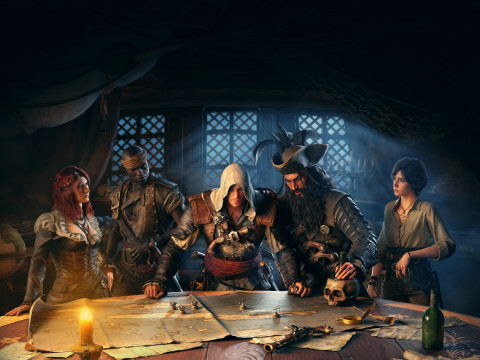
"I never wanted to change the original story itself. The first thing we did when starting the project was play through the original from start to finish to determine what to change and what to keep. We conducted extensive analysis and review, and the conclusion was that we must remain faithful to the original story. That said, we did expand upon the existing narrative. We added new dialogue, scenes, and cinematics to almost every mission, and further fleshed out character relationships.
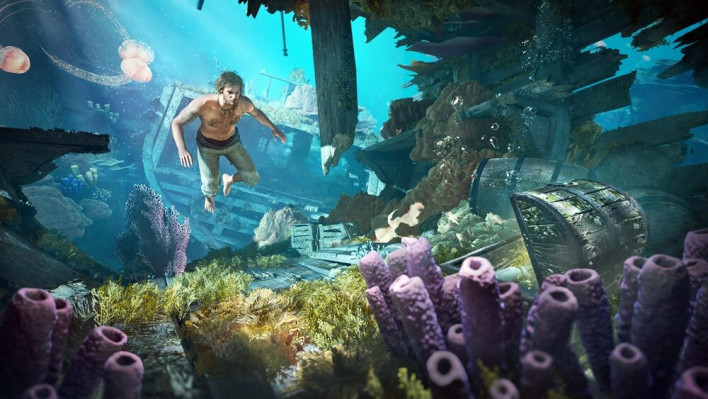
Edward Kenway is portrayed as a very human and desire-driven character within the series. Have there been changes to character expression or direction in this remake.
"From the early stages, we worked closely with the narrative team to explore how to expand Edward’s emotional arc. The key was adding new scenes without compromising the original. In fact, the original writer, Darby, participated in the development process and personally wrote two new scenes. We added scenes dealing with his relationship with his family in London, which we believe is a crucial pillar of Edward’s emotional journey.
The original captured a sense of free, romantic pirate adventure alongside themes of downfall, betrayal, and loss. Looking back, what core themes did the development team prioritize.
"The most important themes for this project were greed and friendship. Edward left his family in London for the Caribbean in pursuit of gold, but in the process, he lost many friends and comrades. Looking back at the original, I felt the core of 'Black Flag' was that sense of loss and the evolution of relationships. We structured the new scenes and chapters to connect with those emotional threads.
You mentioned that original chapters are being added for 'Resynced.' Without revealing specific details, are these an extension of the main story or side content.
"They are a direct extension of the main narrative. The length and production quality are on par with existing chapters. The new chapter is titled 'A World Without Gold,' and it centers on Edward’s associates and Robert Maynard. Fans of the original will likely grasp the significance just from the title. It’s not just a simple side mission; it’s a chapter produced as official canon.
Is the original content in 'Resynced' just fan service, or does it hold significance for expanding the lore.
"I believe it holds significance beyond simple fan service. The new officer characters and figures like Robert Maynard are all integrated into Edward’s official canon. Characters like Milo, who were only mentioned by name in the original, now appear in person with full modeling and events. These elements are official expansions that connect with the original lore.
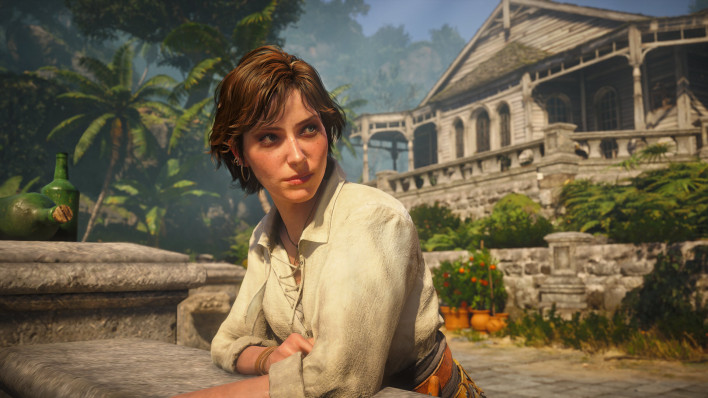
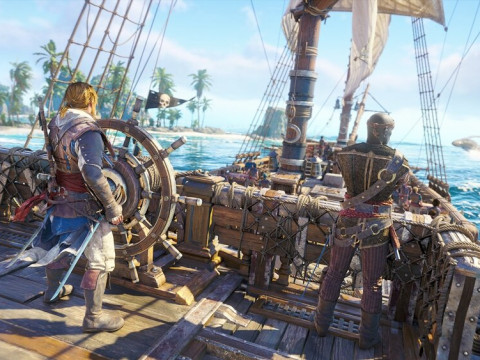
One of the elements that defined the original's atmosphere was the sea shanties and the sailing experience. How have you reinterpreted this for a modern audience.
"We knew sea shanties were vital to the fans. We re-recorded some tracks and produced new ones. Some include lyrics and lore directly connected to the new content. Working with our audio director, we approached this by maintaining the original vibe while tying the music more closely to the characters and narrative.
With major changes to the game systems, I imagine the world structure and quest progression were also adjusted. Could you share a representative example.
"The basic structure hasn't changed much. The story still progresses through 13 sequences, and content like assassination contracts and Templar hunts remains. We didn't want to turn this into an RPG. Instead, we added new mission structures that can be completed naturally within the open world. A prime example is the officer-related side quests, some of which connect directly to the new chapters. We also added new collectibles and world events that unlock new stories and cinematics rather than just being simple pickups.

Is the legendary ship content from the original still there? Also, are there any new end-game elements.
"The legendary ship content remains. It’s a part of the game I personally put a lot of effort into, and it still serves as the most difficult challenge. Additional end-game content is centered around the new chapters and officer quests. Specifically, the 'A World Without Gold' chapter is designed with a higher difficulty than the base story.
I’m curious about the total playtime. How much has it increased compared to the original.
"The original was roughly 20–40 hours; we’ve added about 6 hours of content. We expect the total playtime to be around 26–46 hours.
It’s a shame 'Freedom Cry' is excluded, but are relationships with key figures like Adéwalé being reinforced.
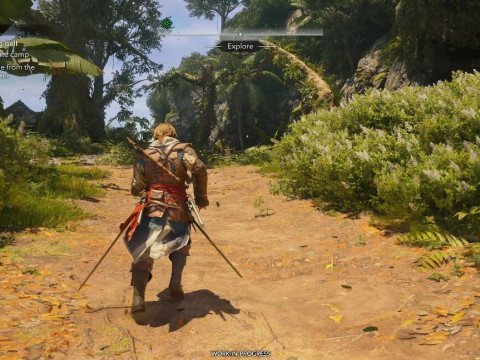
"While 'Freedom Cry' itself isn't included, we added new scenes and interactions with Adéwalé. For example, there are new mission stages where you travel through the jungle together and new dialogue events. We didn't just reuse existing scenes; we worked to deepen the portrayal of their relationship.
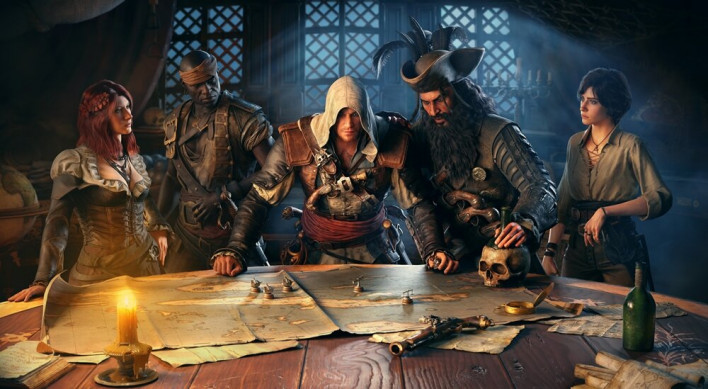
The map structure didn't seem to change much from the original. What changes were made to the world composition.
"The world size is the same as the original, but the density is much higher. We added new islands and handcrafted areas, and expanded some major cities. Some islands that were DLC areas in the original have also been integrated into the Caribbean world.
Were there any ideas you wanted to include during development but couldn't implement.
"Of course, there were many. I had the ambition to add more story, systems, and combat elements. However, over the past three years of development, I was reminded of how much weight goes into polish and refinement. Ultimately, we decided that maintaining an appropriate scope was the most important factor for this project.
Lastly, do you have any words for your Korean fans.
"I personally have a very special connection to Korea. I visited Seoul in 2013 for an awards ceremony related to 'Black Flag,' and I still remember how warmly the Korean fans and industry professionals welcomed me. I believe it was at COEX.
Interestingly, a few years ago, when we were in the early discussions for 'Resynced,' I happened to be in Seoul and received a call about the project near COEX, where I had visited before. It’s a very memorable experience for me. I hope this game resonates well with our Korean fans.

Sort by:
Comments :0