


Netmarble's new title, 'Monster Taming: STAR DIVE', is set to launch on April 15 after a long period of refinement.
'Monster Taming= STAR DIVE' is a title drawing significant attention, even among Netmarble's own portfolio. It captured the interest of many gamers from its first reveal, both as a successor to the long-running IP 'Monster Taming'—which served as the face of Netmarble for a decade—and for its transformation from a traditional collectible RPG into an action RPG in line with current trends.
However, there were concerns. The 10-year gap between titles was a point of contention. During the G-STAR 2024 demo, there was considerable negative feedback regarding the clumsy narrative progression and dated presentation.
Fortunately, the development team did not ignore this feedback. Through several rounds of testing, 'Monster Taming: STAR DIVE' showed improvement each time. While the bright, cheerful atmosphere and tag-action combat system were further polished, the humor and presentation that felt somewhat childish were boldly trimmed to enhance overall quality.
After a long period of refinement that incorporated user feedback, 'Monster Taming: STAR DIVE' is finally on the verge of release. I checked it out firsthand ahead of the official launch to see how it turned out.
※ Please note that this article is based on a pre-release build and may differ from the final version.

A Story Refined into a Classic Adventure, Without the Childishness
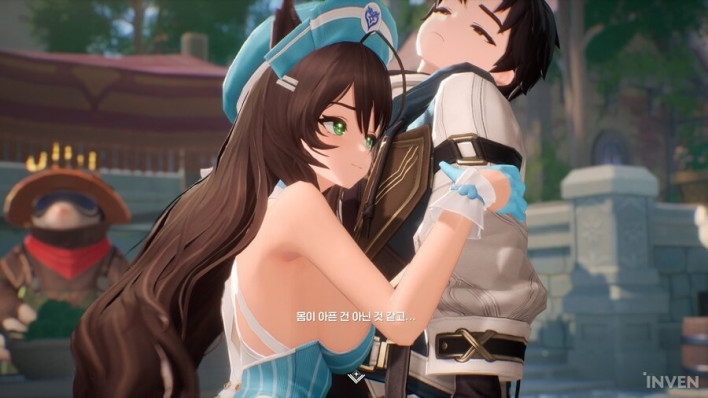
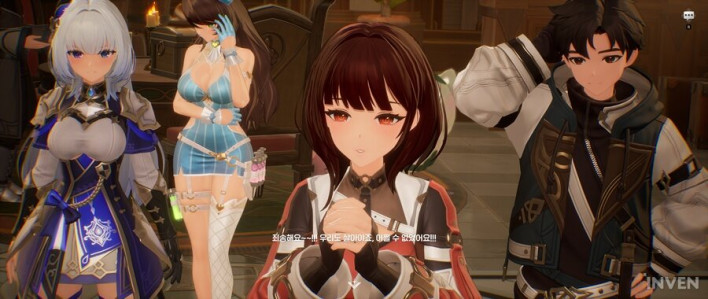
At the time of its first reveal, the story and presentation of 'Monster Taming: STAR DIVE' were, to put it mildly, difficult to praise. While a bit of comedic flair to complement a cheerful atmosphere is fine, the constant reliance on gags ended up undermining immersion. The characterization of the protagonist, Cloud, suffered from the same issue. In a game featuring a large cast, having the player's avatar act in a silly manner throughout served as a barrier to connecting with the story and the character himself.
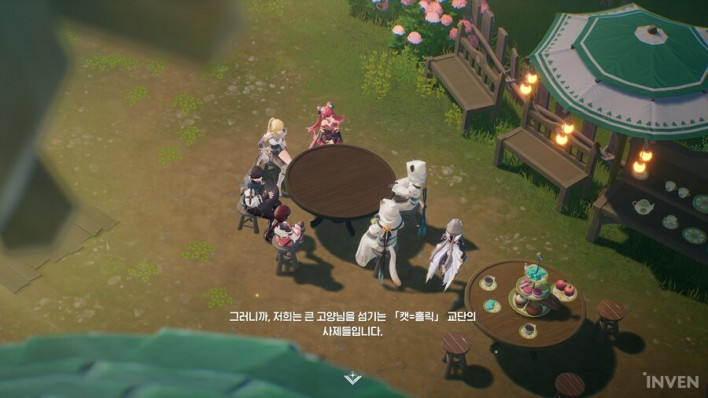
These issues have been significantly smoothed out through various tests. This is most evident in the opening cutscene. The heavy, serious tone of the introduction, which contrasts with the bright and cheerful atmosphere of the main game, shows that the story is not just a lighthearted romp filled with gags.

That said, the overall atmosphere of the game hasn't changed. The adjustments were limited strictly to the excessive comedic elements. While the opening hints at a weightier narrative, the overall story remains bright and cheerful, as do the personalities of the characters.
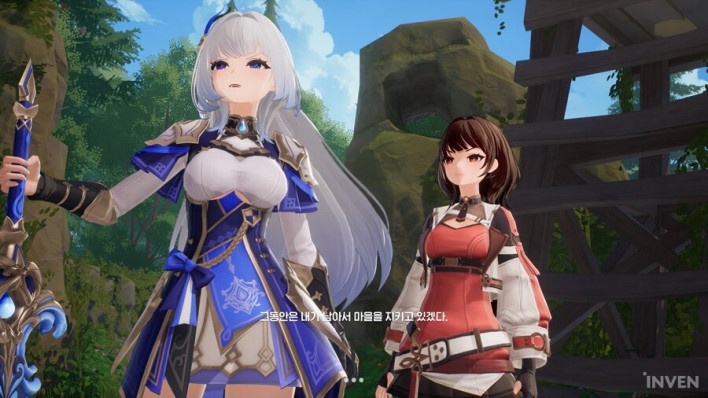
Cloud still acts a bit oblivious while seemingly understanding monsters, his partner Verna remains the 'only sane person' in the group who is constantly stressed, and Francis is as sly as ever. These characters fit the game's overall vibe perfectly. The difference is that the excessive acting and presentation have been reined in. It is a clear sign of the developers' efforts to erase the negative impression of 'childishness' and craft a bright, cheerful adventure.
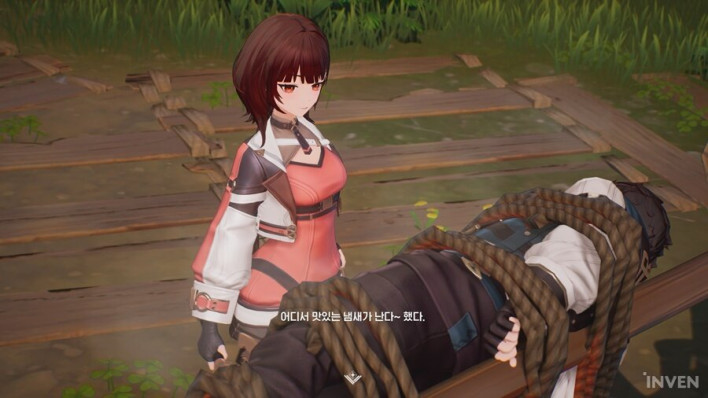

In addition to the refined presentation, the storytelling structure has also changed. The basic skeleton of the story remains the same: a classic adventure where ordinary adventurers Cloud and Verna meet 'Yaong-i,' encounter a mysterious phenomenon called the 'Seed of Void' while investigating a guild request, and eventually find themselves thrust into a much larger conflict. However, the plot, which was previously somewhat scattered, has been much better organized.
The flow of encountering events related to the Seed of Void, naturally approaching the truth, and meeting various characters along the way is much smoother than before. It is safe to say that both the context and the quality of the story have improved.
This narrative progression shines particularly from the Bahrain region, which corresponds to Episode 2. Up until Episode 1, the story flows lightly as the duo tackles requests, but from Episode 2, weight is added to the narrative. Of course, this weight remains within the bounds of the existing cheerful atmosphere; the story does not undergo a 180-degree shift.
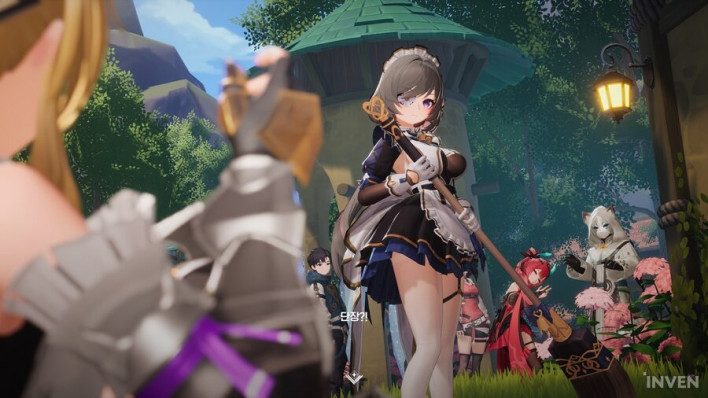
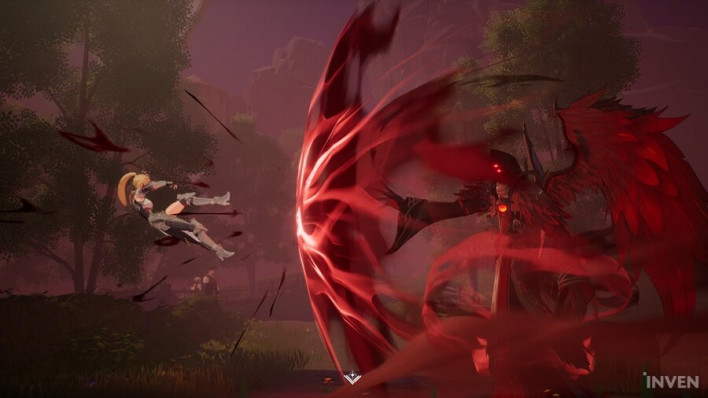
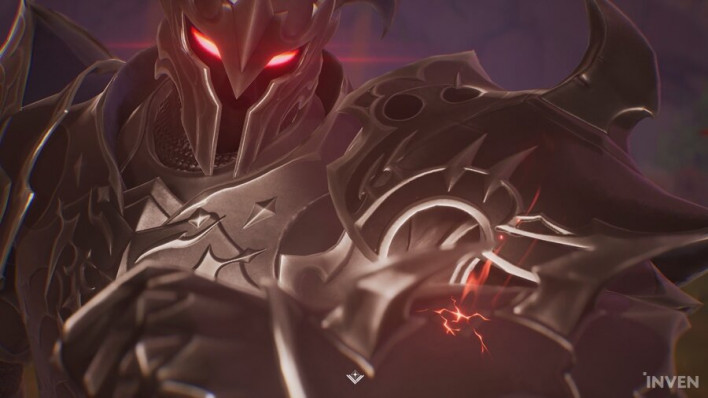
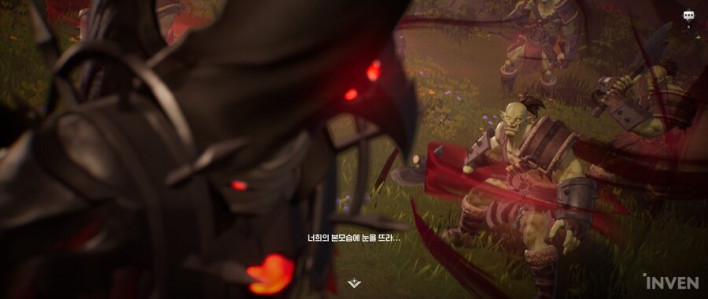
The climax is the reveal of the Void forces, the game's primary antagonists. Unlike the previous enemies, which were somewhat cute, the Void forces exude an aura that makes it immediately clear they are villains. Their appearance naturally foreshadows the journey ahead for the protagonists. This is the point where the game truly takes on the form of a classic adventure, where ordinary adventurers must stand against an evil that threatens the world.
The story of 'Monster Taming: STAR DIVE', which adds weight by interspersing crises and adversity into a cheerful adventure, was satisfying in many ways. The initial story and presentation felt somewhat childish and off-putting, but in this pre-release build, it has been polished enough that most gamers will likely find it perfectly acceptable.
Simple Yet Flashy: An Action System That Captures Individual Personalities
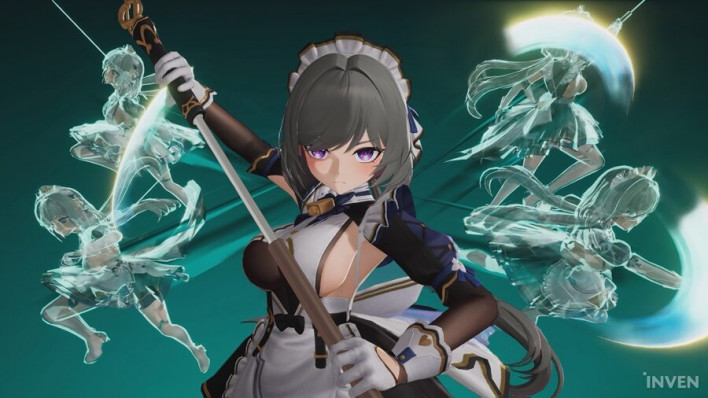
As an action RPG, the combat system of 'Monster Taming: STAR DIVE' can be summarized in three points: simple controls, tag action, and diversified action. Compared to recent action RPGs, the action in 'Monster Taming: STAR DIVE' might feel somewhat simple. The key configuration for combat consists of only five inputs: basic attack, skill, ultimate, dodge, and tag.
However, this cannot be dismissed as a disadvantage. Recent action RPGs tend to increase control complexity to differentiate their combat, which can easily lead to an impression of being overly complicated. In that sense, the key configuration of 'Monster Taming: STAR DIVE' contains exactly what is needed.


The element that brings these solid fundamentals to life is the tag action. While a common system in other action RPGs, 'Monster Taming: STAR DIVE' has refined it so that the tagged character doesn't just swap out, but participates in combat for a short time. Instead of one character dominating the fight, characters take turns through tags, continuously chaining skills, combos, and ultimates.
Parrying adds depth to this combat. When a boss uses a special attack that glows yellow, inputting a dodge or tag at the right moment triggers a parry, blocking the attack and launching a counter. This is a key element that shifts the flow of battle, as it deals damage to the boss while significantly filling the Groggy Gauge.
Naturally, there is a cooldown for these tags, and in 'Monster Taming: STAR DIVE', it is quite long. Since it can be over 10 seconds, spamming it recklessly can lead to situations where you cannot tag when you need to, breaking the tempo of the battle.

'Monster Taming= STAR DIVE' offsets this with the aforementioned parry. Successfully parrying a boss' special attack immediately resets the tag cooldown. This forces the player to make strategic decisions. Considering the high stamina consumption, it encourages players to save stamina and keep a character ready for a tag even while fighting the boss.
Based on this, the direction of the action in 'Monster Guild: STAR DIVE' is clear: rapidly tagging characters at the right moments to chain skills and combos without pause. This is the essence of the tag-based action that 'Monster Guild: STAR DIVE' aims to deliver.
Of course, tag action alone could feel monotonous, as it might seem like just alternating between basic attacks, skills, and tags. To alleviate this, 'Monster Taming: STAR DIVE' designed the action direction differently for each character. For instance, the protagonist Cloud accumulates points through skills and ultimates, then holds the basic attack button to consume the gauge for an enhanced attack.


However, this is just a feature unique to Cloud. Some characters have an additional input system that allows for consecutive skill use, while others charge separate gauges for basic attacks and skills to unleash powerful attacks. It is designed so that players can enjoy a completely different combat feel for each character, rather than just having different appearances and attributes. It felt positive in that it allows for easy yet diverse action.
Adding to this, various boss gimmicks further elevate the fun of combat. Part destruction and the Counter Gauge are prime examples. Some bosses have destructible parts; destroying them incapacitates the boss and accumulates a large amount of Groggy Gauge at once. In other words, to defeat bosses quickly, you need to go beyond just dodging and attacking, and target their weak points.

The Counter Gauge is an advanced version of this part destruction. Some bosses use powerful attacks separate from parryable special attacks; by attacking with the weak-point attribute to deplete the Counter Gauge, you can incapacitate the boss and accumulate a large amount of Groggy Gauge, just like with part destruction. These gimmicks encourage players to cultivate various characters rather than just pulling for one strong one. It is a factor that does not overlook its identity as a collectible game before being an action RPG.
While the combat system was generally satisfying, there was one drawback: the 'Yaong-i' skill triggered during a groggy state. Filling the gauge allows you to use the Yaong-i skill to put the boss into a groggy state, which is fine in itself, but the fact that you have to use a QTE for the Yaong-i skill every time you fill the gauge was disappointing. It didn't happen all the time, but it felt like an element that broke the flow of combat, so I personally hope this is refined in the future to be less disruptive.

A Standard Growth System, with 'Monster-Ring' as the Key Differentiator
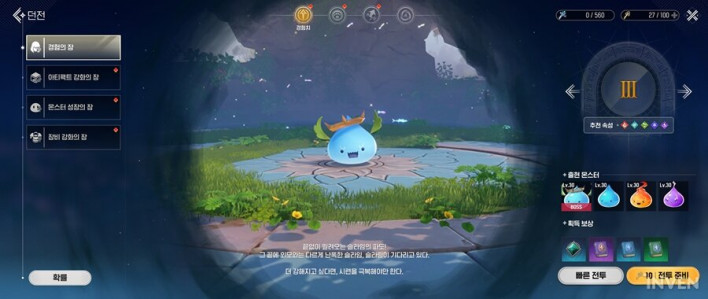
The growth system is not significantly different from existing games. The growth system in 'Monster Taming: STAR DIVE' can be broadly divided into two types: those that consume stamina and those that do not.
Growth content that consumes stamina is limited to dungeons where you obtain growth materials needed to raise character levels or skill levels. Experience books, skill books, and breakthrough materials fall into this category. As this has become a standardized convention, there is no need to explain it further.
The problem is what to do afterward. What do you do after consuming all your stamina? 'Monster Taming: STAR DIVE' fills this with gathering. While dungeons require stamina, exploring the in-game field does not. By leaving room for growth through this, it is designed to influence character development beyond just killing time.
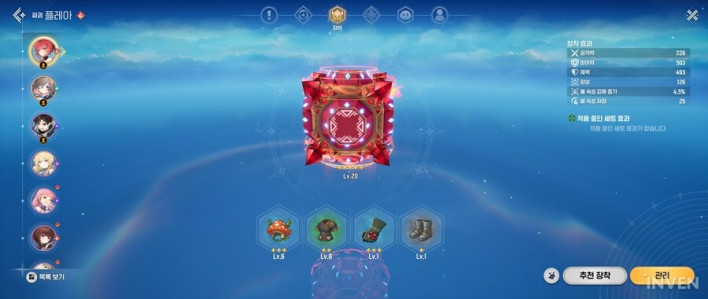
This is where equipment and 'Monster-Rings' come in. Equipment in 'Monster Taming: STAR DIVE' consists of an Artifact, which is a dedicated piece of gear, and four parts. The latter is related to gathering. Artifacts are obtained through gacha, but the remaining parts can be crafted with materials obtained by gathering in the field or defeating monsters. While this method may be polarizing, it felt positive in that players can naturally acquire top-tier parts just by consistently playing the game, regardless of stamina.
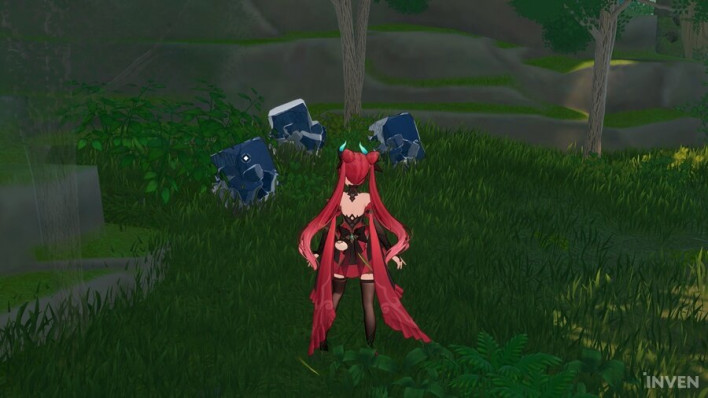
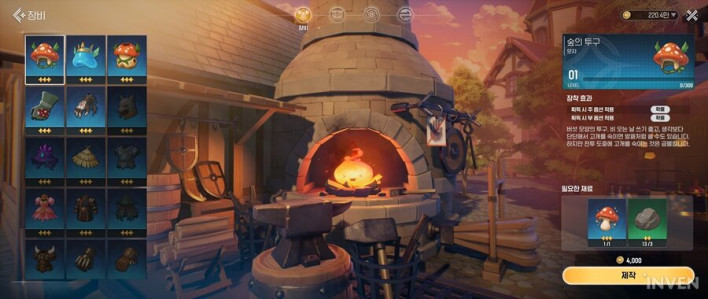

Monster-Rings are definitely a unique element of 'Monster Taming: STAR DIVE'. It is an arrangement of the capture system from the original 'Monster Taming' tailored for 'STAR DIVE', which increases the stats of the equipped character while also granting a special skill. This is expected to lead to various builds.
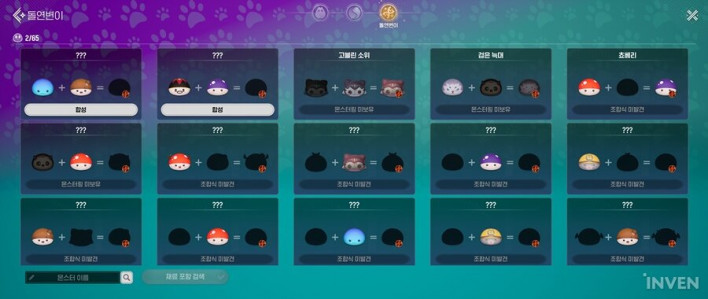
While 'Monster Ring' is a core system in 'Monster Guild: STAR DIVE,' obtaining them is straightforward. As mentioned earlier, they are not acquired through gacha, but rather naturally through field hunting. When you hunt monsters in the field, there is a chance to capture them; you can then strengthen or synthesize these captured monsters to create the optimal Monster Ring.
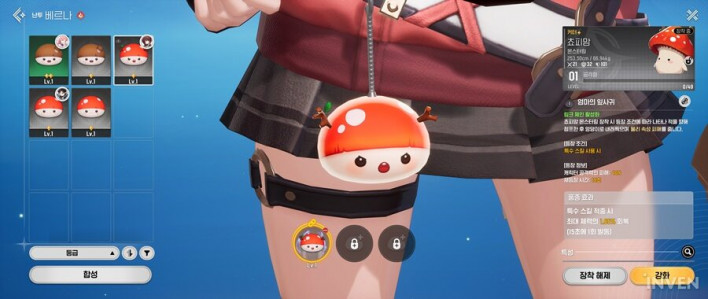
Even excluding the unique options per monster called 'Breed Effects', the grade, attack, defense, health, and traits are all different, so it seems like it will be a consistent element for players to delve into, just like equipment. In the pre-release build, time was too tight to delve that deep, but I was able to confirm that Monster-Rings with unique skills called 'Link Chains' provide practical help in combat.
However, this variety of content didn't feel entirely positive. I hope there is no misunderstanding. It was generally positive, but the 'bonsai-fication' (stagnation) problem, which is difficult to avoid in this type of game, weighed on my mind. As a game is serviced, stagnation inevitably arrives at a certain point, and a structure that requires players to manually roam the field every day after consuming stamina can, in some ways, be a factor that increases player fatigue.
In this pre-release build, I couldn't reach the stagnation stage, and there is still quite a long time until that point, but as it is a problem that will inevitably arise, it seemed that countermeasures or supplementary measures were needed.
Action RPG and 'Monster Taming' Identity= The Foundation for a Long Run is Set
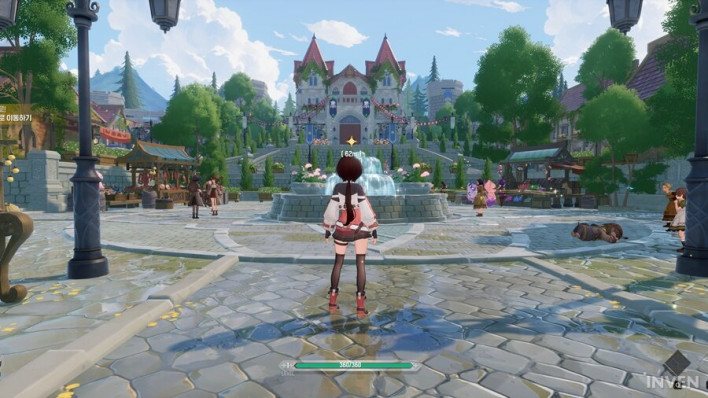
Looking back, 'Monster Taming: STAR DIVE' was a game with difficult homework in many ways. First, there is the IP itself. Reinterpreting the element of monster collecting into an action RPG is not as easy as it sounds. In fact, they can be considered completely separate elements. However, 'Monster Taming: STAR DIVE' successfully reinterpreted this through the Monster-Ring element. While its share of the gameplay has certainly decreased, it has struck an excellent balance between monster collecting and action RPG.
In a situation where countless games are pouring out—especially with action RPGs or action adventures being the most popular genres recently—it is rare to find a game that not only possesses such a powerful IP but also successfully inherits and reinterprets it. In that sense, 'Monster Taming: STAR DIVE' has certainly laid the foundation for a long run. The key is what comes next. Looking at recent games, even if they achieve good results early on, it is rare for that to continue to the end. Because all sorts of new games are pouring out, players tend to leave quickly if their interest wanes even slightly.
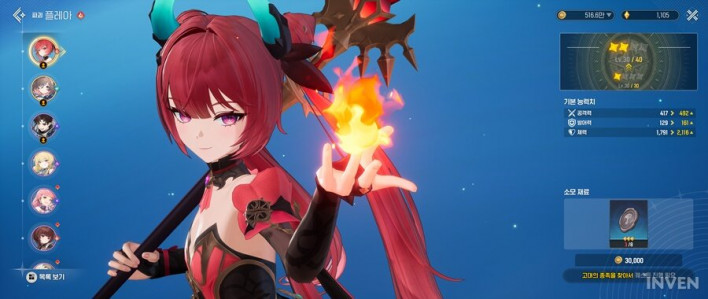
'Monster Taming= STAR DIVE' cannot avoid this either. In that sense, the work to be done in the future is clear: making the journey a little lighter so that players can continue to enjoy it. Making players immerse themselves with a high-quality story could be one way, reducing fatigue in growth could be another, or significantly lowering the threshold for monetization could be a third.
'Monster Taming= STAR DIVE', having finished all preparations, is now ready for launch. On April 15, 'Monster Taming' is finally scheduled to return in a completely transformed form. I look forward to seeing how far this game, which possesses both the fun of an action RPG and the identity of 'Monster Taming', will go.
![]()
- Hongman "Nowl" Yoon
- Email : nowl@inven.co.kr

Sort by:
Comments :0