The Spring and Autumn period. Spanning roughly 800 years from the 8th to the 3rd century BC, this era is considered one of the most dynamic turning points in Chinese history. It was a time when the slave system was reorganized into feudalism, and thinkers like Confucius, Mozi, and Han Fei opened the floor for the 'Hundred Schools of Thought.' Yet, in the gaming market, this era has long been overshadowed by the Three Kingdoms period.
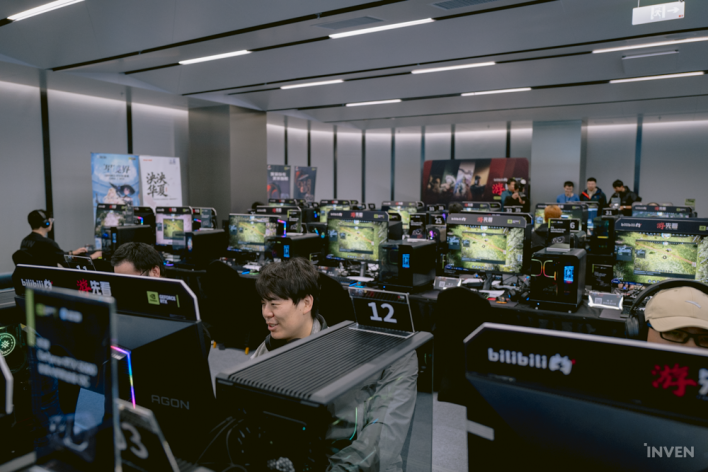
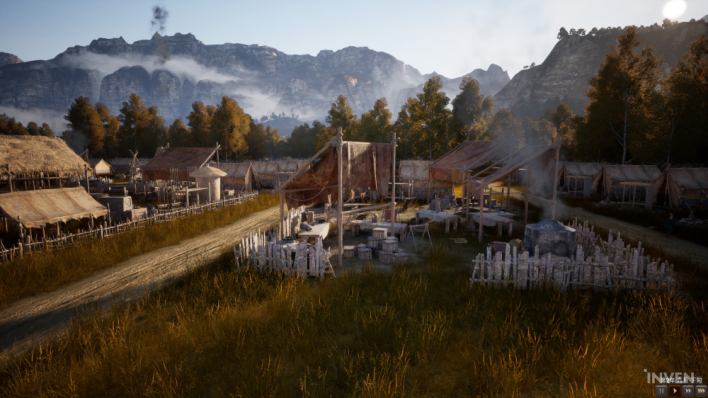
'Mandate Order,' currently in development by a small team based in Chengdu, China, is a 28-person effort aimed squarely at filling this void. While they cite 'Manor Lords' as an explicit inspiration, they have layered Mozi’s philosophy of 'Universal Love' (Jian'ai) and 'Non-Aggression' (Feigong), the retainer system of Lord Xinling, and large-scale real-time battles onto the city-building loop. Development has been underway for one year, with a Steam Early Access launch planned for this July.
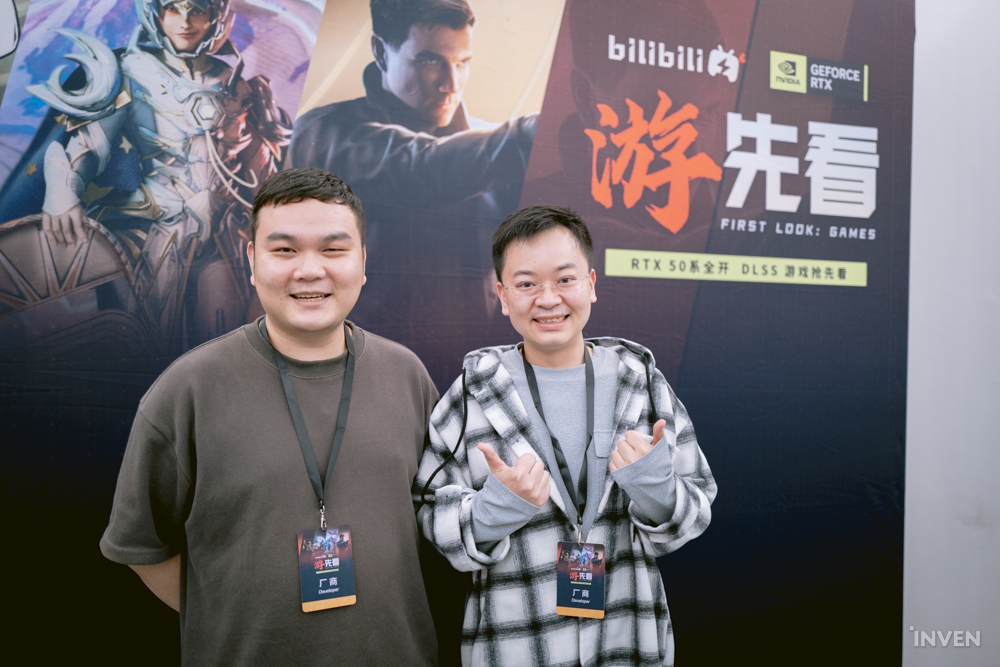
Niko, a producer I met at the 'Bilibili First Look' event in Shanghai, was candid throughout our conversation. From the games that inspired him and the urgency of the development schedule to his expectations for overseas markets and memories of a Korean roommate from his time living in Australia, he shared the deeper story behind how a small 28-person team came to develop a city-builder set in the 'Spring and Autumn and Warring States' period.
I’m curious why you chose the Spring and Autumn period. Other eras like the Three Kingdoms are commercially proven; was there a specific reason you chose this less-explored period.
" First, the city-building and management simulation genre is quite rare in China. And most games that do exist are based on the Three Kingdoms. We felt that players have already played so many Three Kingdoms games that they’ve developed a certain immunity to them. We decided the Spring and Autumn period could be a great alternative.
Also, the era itself is incredibly fascinating. It was a time when Chinese society was transitioning from slavery to feudalism, and it was the age of the 'Hundred Schools of Thought,' where numerous schools proposed different visions for the future of the state. We believed this combination could create a different kind of simulation game.
I’m curious about the specific timeframe of the game’s setting.
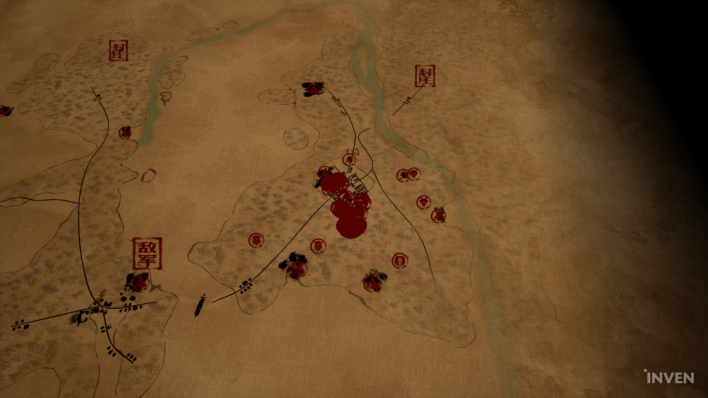
" Since the Spring and Autumn period spans over 800 years, we didn't pin it to one specific moment but rather covered the whole era comprehensively. We haven't announced the campaign details yet, but you can think of it as centered around the 'Battle of Changping,' which we mentioned as DLC. It’s a famous battle between the Qin and Zhao states, occurring around 260 BC.
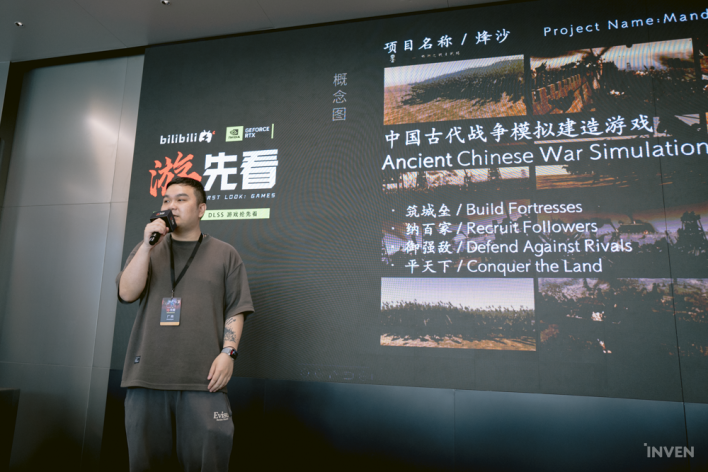
In your presentation, you identified management, defense, and war as the three pillars. What did you focus on most to balance these three elements
" Traditional city-builders focus only on the building part. But we wanted players to experience combat as well. In the mid-to-late game, you face beasts or hostile factions, which is the other pillar of the game. Both elements are important; it’s not about weighing one over the other.
For the defense system, we were inspired by Mozi’s "Chengshou" (Defense of Cities). The Mohist school was known for its superior defensive tactics, and we tried to translate the Mohist philosophy—that "city walls are the monarch’s shield and the people’s refuge"—into the game’s structure. This is why we prioritized Eastern-specific elements like rammed-earth walls (Panchu) and beacon fire alarms rather than European medieval castles.
What is the size of your development team and the production timeline?
" There are about 28 of us. It took about a year to build the current version.
Are there any specific games or media that inspired you.
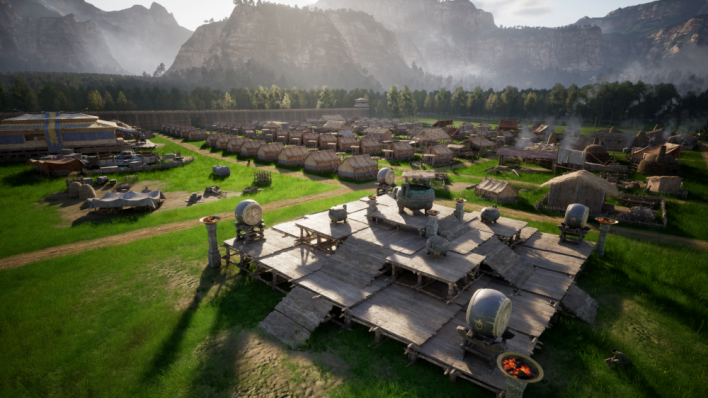
" Actually, many outlets have asked this, so it’s an important point. I won’t deny it: this game was inspired by 'Manor Lords.' It’s our biggest source of inspiration. I’m a huge fan of that game myself, though I felt the first two hours were the best part.
So, while we were creating a Chinese-style version of 'Manor Lords,' we wanted to try moving in a better direction. I hope that doesn't sound rude (laughs). The core construction loop is similar to 'Manor Lords,' but we wanted to strengthen the character elements. We sought to differentiate the game by adding features like the retainer system, defense system, combat system, and national system.
Games based on ancient Chinese history might have cultural barriers for overseas players. Do you have an approach for the global market.
" I had the same worry at first. I thought overseas players might not like our game. But the data changed my mind. We currently have over 60,000 wishlists, and nearly 90% are from overseas users. I realized there’s a larger fan base abroad than I thought, which was a surprise to me.
Secondly, we don't approach this with a heavy sense of responsibility to spread Chinese culture or educate overseas players. It’s the same as when Koreans or Chinese play European games. When you play a Viking game, you think, "Vikings are cool," but you don't necessarily need to understand their origins or culture. That’s the level of feeling we want to convey to overseas players.
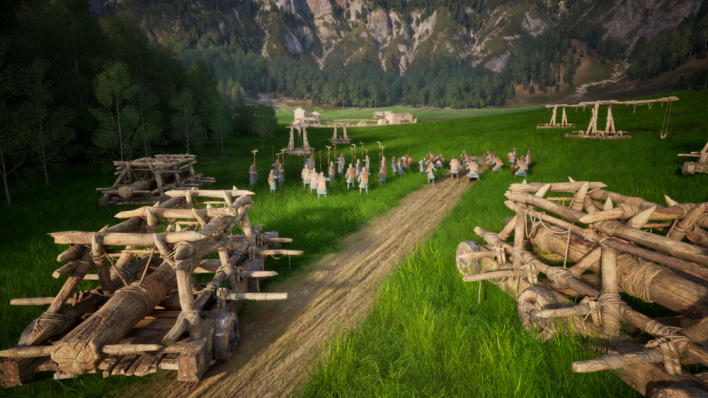
The tutorial was quite dense, which made the game feel deep. How long does it take to finish one playthrough.
" For a building/simulation game like ours, I think it takes at least 10 hours. It’s different from an ARPG or action game. It’s a genre where players keep restarting to learn the mechanics. To be honest, the current tutorial isn't perfect. There are translation errors and parts that might lead overseas players in the wrong direction. Some parts are also too complex. We plan to fix this in the weeks leading up to the Early Access launch.
It seemed like there were multiple victory conditions. I think there were four or five; could you explain them in more detail.
" Actually, this genre doesn't usually have a set ending. But players wanted clear goals. So we added four main objectives.
The first and most important goal is "Chengwang" (Declaring Kingship). Because of the unique nature of the Spring and Autumn period, this needs explanation. At the time, there was a real Son of Heaven, the Zhou royal family. If a player declares themselves king, neighboring states will send massive armies to invade. Of course, there are goals for peaceful players, too—like winning by growing your population to a certain size, or an economic victory by collecting a certain amount of knife money (Daobi).
The chariot system was impressive. Could you explain other unique combat mechanics.
" Starting with chariots, they were symbolic entities that only nobles could operate during the Spring and Autumn period. The battlefields back then were surprisingly "civilized." In reality, they would talk to each other in the middle of battle and try to avoid war through negotiations. We wanted to capture that atmosphere.
The combat mechanics are also diverse. The current version supports battlefields with thousands of units. When you summon troops, you can change formations, and the control system we put the most effort into is "Quick Line-Drawing Formation." You can draw formation lines with your mouse cursor to issue precise commands for flanking, breaking through, charging, or defending. We wanted to solve the clunky controls of existing strategy games, and it also supports joint formations for multiple units. For example, you can use tactics like placing weak archers in the center and surrounding them with shield bearers while moving.
We also added characteristics based on elevation using 'fake physics.' If you place archers on high ground, they deal more damage to enemies below. The reverse is also true. And this is a bit unusual, but we added a mechanism in sieges where you can drop hot excrement on the enemy's heads. It’s a tactic that actually existed in history (laughs). It doesn't just kill enemy soldiers; it causes plague for additional damage. These are elements based on real history.
Also, we didn't want to make this game too serious. There’s a retainer system, which you can understand as a hero concept. It was inspired by the story of Lord Xinling (Wei Wuji), one of the Four Lords of the Warring States, who kept 3,000 retainers. Each retainer has their own personality, and deploying them creates fun effects. For example, soldier models might double in size, or you might gain knife money when killing enemies.
And there are pandas, too. Very big ones.
Wait, there are pandas?
" Yes. People ride pandas and smack enemies with them. As I said, this game is set in the Spring and Autumn period, but we didn't want to make it too serious. We wanted to include meme-like elements.
Pandas don't die in the game. It’s a special design. Many of our staff love pandas, and they warned me that they didn't want to see pandas dying in the game (laughs). Our studio is in Chengdu, the home of the panda. By the way, in ancient China, they weren't called "pandas." They were called "iron eaters' (shitie), meaning a beast that chews on iron. They weren't considered cute back then like they are now.
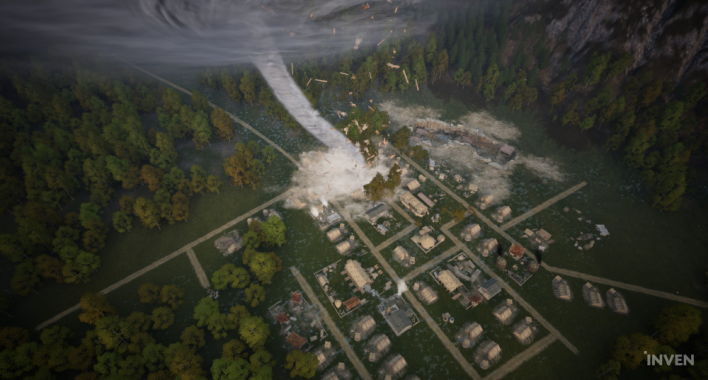
In Chinese history, 'rule by virtue' (Dezhi) is a very important virtue, but there doesn't seem to be a victory condition for being a virtuous monarch. Could settings for 'good' play or 'ruthless' hegemony be included?
" We intentionally left that out. We felt we couldn't judge that era by today’s moral standards. People back then considered it normal to kill others as a sacrifice to the king. Different eras have different standards. So we chose not to clearly divide good and evil.
In terms of the background, the player is a small, nameless faction. You are oppressed by three randomly generated kingdoms in the game. The only language they understand is force. You have no choice but to fight back. It’s not a question of being a good king or a bad king; it’s a situation where you have to survive first.
However, there is a design with a similar vibe. The retainer system reacts to your actions. If you kill many people, the Legalist school (Bingjia) enters; if you expand farmland, the Agricultural school (Nongjia) enters. But we don't use a system that "punishes' the player. We only reward them.
To add, the minimum unit of combat in the game is the "Wu" (伍). It refers to the five-man squad, the smallest unit of the ancient Chinese military system. It’s not a family unit.
I played it for a couple of hours, and after 20-30 minutes, all the trees in my territory disappeared. Do I have to live a nomadic life, moving to areas where trees remain?
" Actually, there is a building next to the logging camp where you can replant trees. You can recreate the forest. This means the tutorial didn't convey that properly. The tutorial is an area we are currently improving.
I’m curious if you have plans for multiplayer options.
" We don't have plans for that. For a small team like ours, internet connectivity is always a big problem. Providing stable servers for players around the world is technically very difficult.
And personally, I don't think multiplayer suits this game. I believe this game should be a 'relaxing' experience. A game where you can sit alone, drink a cup of tea, and play for five, six, or ten hours until you get sleepy while it rains outside. I don't want that feeling to be interrupted by other players. It’s not a genre like an FPS or action game where you have to kill someone together, is it.
However, we do plan to actively support the modding community.
That’s an interesting point. Could you explain more about your support for the 'modding community'?
" We really welcome it. We want the modding community to be able to do anything with our game. I won't name names, but many companies refuse to let the modding community participate. We don't want to be that kind of company. On the contrary, we want to actively support them.
I’ve already talked to some modding community members, and they said that just not intentionally creating barriers is a huge help to them. So we plan to add hooks to the game so the modding community can easily access it. However, no pornographic content. You can make it privately, but please don't upload it. Please.
How will the 'Battle of Changping' campaign mode mentioned in the presentation be implemented? Should we think of it as a scenario campaign?
" The Battle of Changping is a very famous battle in Chinese history. It was a battle between the Qin and Zhao states, and it became the catalyst for Qin to unify China. You might have encountered it while learning Chinese history in Korea, too.
There are many reasons why this battle is famous, but I think many people know it as the historical event where Qin buried 400,000 surrendered Zhao soldiers alive. We want to convey this historical weight to the player. However, since we are a small team, it will take some time to develop.
I’m curious if you are preparing Korean localization. Will Korean be supported from the Early Access launch, and given the nature of management simulations with a lot of text, are you considering aspects beyond translation, such as UI or fonts.
" To be honest, the only languages we can guarantee quality for right now are Chinese and English. I can speak a little English, so I can proofread the English version myself. Other languages, including Korean, are currently being translated using AI, and I know very well that AI translation isn't perfect.
In fact, I confirmed that there were errors in the sandbox mode translation in the demo version. So we desperately need the help of the Korean player community. If you point out parts where the translation is strange via email, we would love to actively reflect that. I don't want to call in so-called "professional translation companies." They don't play games. We want help from people who actually play this game.
I’d like to use this space to appeal to Korean players. If you have any translation errors or suggestions for improvement, please send them to us via email at any time. You are welcome.
You announced a schedule of a July Early Access launch and a December DLC release. 28 people going to Early Access in one year seems like a very tight schedule; I’m curious about your plans for community reception and the schedule after that.
" To be honest, financial issues are always a concern for a small team like ours. It’s not that we want to release Early Access in July, but that we have to. We need to secure development funds for the next stage with Early Access revenue. If we could get support from other large publishers, funds, or VCs, I would want to delay the launch and make it higher quality. Actually, I’m not completely satisfied with the current version.
There is still so much to fix. We need a better tutorial, optimized entry experiences for beginners and those inexperienced with simulations, and graphics optimization. You might have been fine playing for only two hours, but if you play for four or five hours, the frame rate drops to an unbearable level. If we had more funds, we could have time to solve these parts. Right now, we are rushing the launch just to survive. I hope players will support us so we can continue development.
Lastly, a word for Korean gamers and simulation game fans, please.
" We value players from any culture equally. The identity of being a 'player' is enough. Whether you are Korean, Chinese, or American, it doesn't matter; everyone is just a player.
Actually, I’m personally quite familiar with Korean players. I lived in Australia for almost 10 years, and I had a Korean roommate back then. That friend taught me 'StarCraft.' It’s a game considered part of the Korean identity, but this friend was really, really good. He hated 'StarCraft 2' and only played the first one (laughs).
As far as I know, many Korean players seem to focus on competitive games like 'StarCraft,' 'League of Legends,' and 'Valorant.' But I believe there are definitely Korean players who love simulation games and city-builders. I want to make games for those people.
The game industry right now is focused on big titles like AAA, ARPG, and FPS games from large companies. But I think there is still room to make games for the minority of players. I have one thing to say to Korean players: "Please wait just a little bit." We are here, and we sincerely value your opinions and reviews. Whether it’s a translation error or a suggestion to make the game better, we would be grateful if you could send it to us via email at any time.

Sort by:
Comments :0