
If you were born in the 80s or 90s and loved games, you might remember this ‘Tomb Raider’. Starring Angelina Jolie, a box office hit in the summer of 2001. At the time, this film achieved unusual global success for a movie based on a video game. In Korea, more people encountered the movie through video or TV rather than in theaters, but the film itself is remembered as a well-made masterpiece.
This film was special to me, a teenager at the time. I remember sitting side-by-side with parents who usually had little interest in games, watching a movie featuring the protagonist from a game I used to play. Angelina Jolie on screen was a brave and charming character. After watching the entire movie, my parents sat next to me and watched me play 'Tomb Raider' for quite a while.
The biggest reason for the success of the movie 'Tomb Raider' was undoubtedly the unique charm of its protagonist, Lara Croft. First appearing in 1996, Lara Croft was a new character unlike any seen before. Her trademark dual pistols, sunglasses, and tight attire, as she single-handedly navigated dangerous places, conveyed an active and proactive spirit, and she was attractive enough to break through the limitations of old polygons.
The success of the game 'Tomb Raider' was not solely due to its protagonist. As a game, 'Tomb Raider' had a high degree of completeness in its own right. Both the classic and reboot versions of the 'Tomb Raider' series left significant marks on gaming history, allowing it to remain an icon in the gaming world to this day.
The Tomb Raider series, which perfected the grammar of 3D action-adventure

▲ Solve puzzles in the game and

▲ 'Tomb Raider' Lara Croft leaps over perilous traps
In fact, the greatness of Tomb Raider is not solely due to its character. The first 'Tomb Raider' game, released in 1996, was a monumental achievement in gaming history. At a time when 3D technology was still in its infancy, Tomb Raider pushed it to its limits, bringing three-dimensional ancient ruins to life on screen. Furthermore, it is no exaggeration to say that the mechanics of the '3D action-adventure' genre—leaping across square platforms, solving puzzles, and finding paths—were perfected in 'Tomb Raider'.
This innovation is also evidenced by the accolades from prominent overseas media outlets at the time. In a 1996 review, American gaming webzine IGN awarded the game a score of 9.3 out of 10. IGN praised Tomb Raider's visuals as "the best graphics ever seen in a console game" and hailed Lara Croft as "a more compelling character than Indiana Jones," announcing the birth of one of the most powerful female heroes in gaming history.
The sequel, released the following year, also received positive reviews. It expanded its scale by introducing a vehicle system, allowing players to race through Venice's canals by boat or traverse snowfields on a snowmobile. Lara's trademark ponytail hairstyle also appeared from this point on. With the consecutive success of the first two installments, 'Tomb Raider' solidified its position as a series.

▲ 'Tomb Raider 2', which introduced the vehicle system
From a formidable warrior to an inexperienced survivor: the rebooted Tomb Raider (2013)
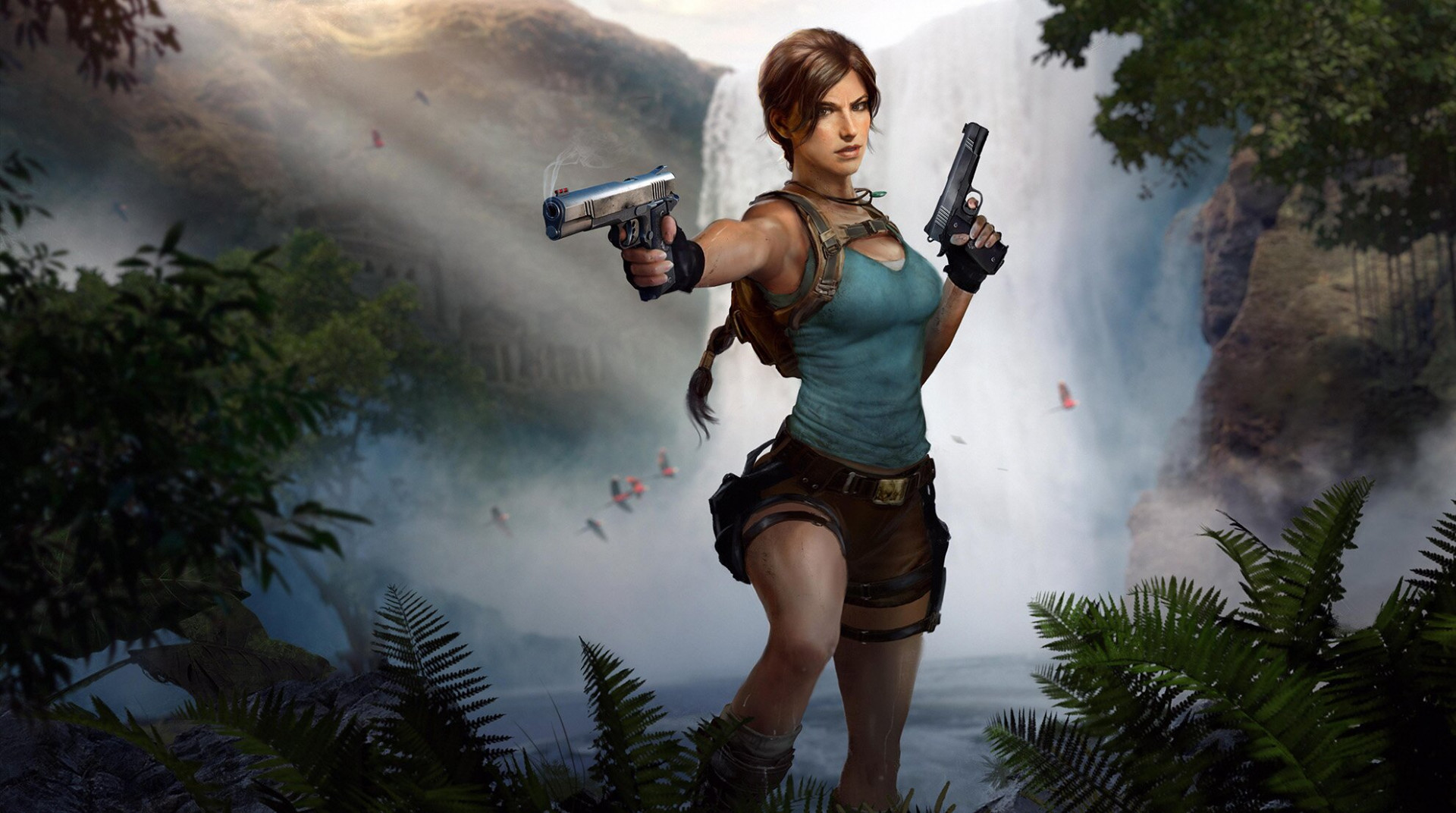
The Tomb Raider series continued to release various titles after the success of its first two installments. However, despite over ten subsequent games, none matched the completeness of the original series. In 2013, as the power of the 'Tomb Raider' name gradually faded, the series boldly succeeded in a spectacular comeback through a reboot.
With its 2013 reboot, Tomb Raider was reimagined from the ground up. In the classic series, Lara Croft was a fearless, fully-fledged warrior. However, the reboot tells the story of Lara Croft's awakening as she gradually finds herself, starting as an inexperienced survivor.
The 2013 reboot was not merely a graphical overhaul; it was a fundamental reimagining of the 'Tomb Raider' world. The most significant change was the protagonist, Lara Croft. While the Lara of the classic series we remember was a superhuman warrior, fearless and already possessing all her abilities, the Lara in the reboot was the exact opposite.
Fresh out of college and embarking on her first expedition, she was still inexperienced, a mere human, wounded and suffering before the harshness of nature. To survive, she desperately drew her bow, overcoming adversity and gradually growing into the true 'explorer' we know. The survival narrative of Lara Croft awakening into a true 'Tomb Raider' elevated a forgotten game of old memories back into a masterpiece of the present.

▲ Barely surviving a shipwreck

▲ Lara Croft, shivering from the cold,

▲ Overcoming hardships and adversity

▲ Grows into the true 'Tomb Raider' we knew
Tomb Raider Reboot's Visuals: From TressFX to Seamless Direction
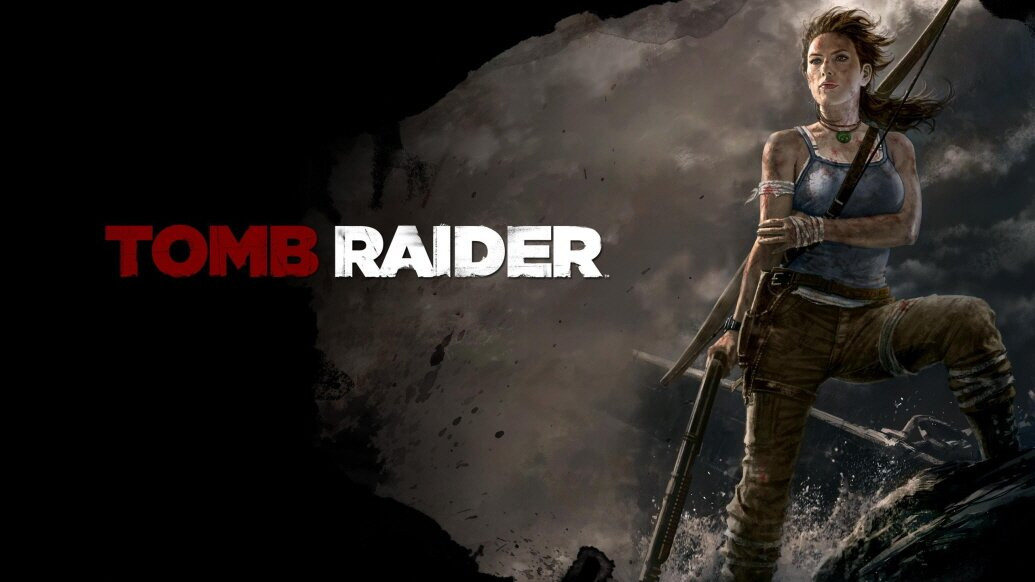
The 2013 reboot brought about significant advancements not only in its narrative but also in its technical aspects. The first thing that caught attention was Lara's hair, which was the first to incorporate the new 'TressFX' technology. The way each strand of hair swayed and shimmered according to the wind direction, humidity, and the character's intense movements was impressive.
The character depiction, which visually completed the desperate theme of survival, was also excellent. Lara's pristine appearance at the beginning of the game became stained with mud and blood as the story progressed, and her clothes were torn in various places. Lara's realistic portrayal, suffering from injuries, in pain, or shivering from the cold, allowed the player to visually experience her hardships and become deeply immersed.
The 'seamless' presentation, which did not interrupt the flow of the game, was also excellent. High-quality, cinematic cutscenes and actual gameplay footage flowed naturally without loading screens or blackouts, maintaining the game's tension until the very end. The dynamic camera angles used during urgent escape situations or intense combat maximized immersion, earning praise for elevating the action-adventure genre to a new level.
Driven by these bold changes and technological innovations, the 2013 'Tomb Raider' surpassed 1 million units sold within 48 hours of its release, marking the fastest sales pace in the series' history. As a result, it not only achieved the highest sales in the series, perfectly reviving an IP that had fallen into a slump, but also became a technological and directorial milestone for subsequent releases.
In 2025, Lara Croft returns

Lara Croft's journey, which has continued for nearly 30 years, will take another leap forward in 2025. At 'The Game Awards (TGA)' held on December 11th local time, Amazon Game Studios and Crystal Dynamics simultaneously unveiled two upcoming titles that are set to thrill gamers worldwide.
The first thing that caught attention was 'Tomb Raider: Legacy of Atlantis', slated for release in 2026. This title, a complete remake of the 1996 original using Unreal Engine 5, revives Lara with current-generation technology. Players will once again embark on a journey to explore exotic, time-forgotten locations in search of fragments of the powerful artifact, the 'Scion'.
The newly unveiled major title, 'Tomb Raider: Catalyst,' is an ambitious work that showcases the future of the series. Aiming for a 2027 release, this game, set in North India, depicts Lara's narrative as she competes with treasure hunters worldwide over ancient secrets awakened after a Mythic catastrophe. The modern exploration action, presented through the series' largest world to date and new Equipment called 'Adventure Tech,' foreshadows Lara's transformation from a 'survivor' to a 'pioneer.'
Notably, both works feature Alix Wilton Regan, acclaimed for her voice acting in 'Cyberpunk 2077' and 'Mass Effect 3', as the voice of protagonist Lara Croft, which is also a point of anticipation. Her voice, set to portray the most three-dimensional and emotional Lara in the franchise's history, is expected to bridge the nostalgia of the past with the innovation of the future.
This article was translated from the original that appeared on INVEN.


Sort by:
Comments :0