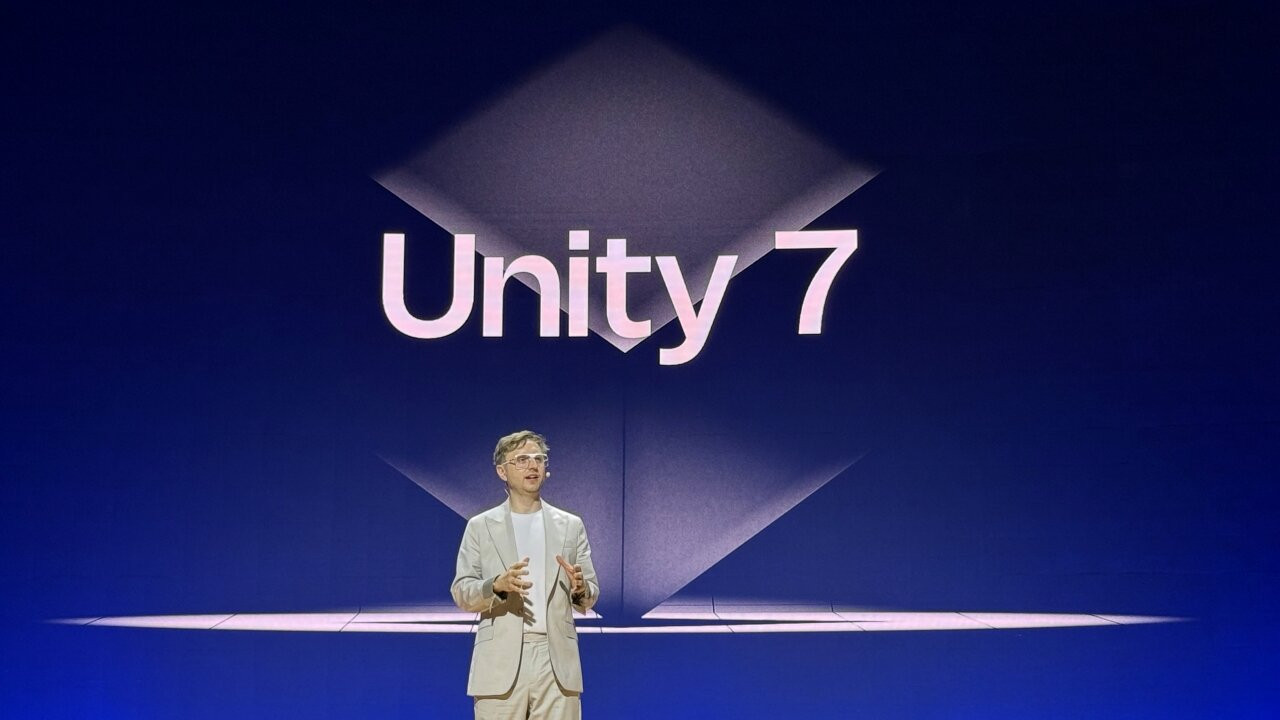
Unity unveiled its latest engine, 'Unity Engine 7' (hereinafter 'Unity 7'), today (the 21st) at Unite Seoul 2026, held at the COEX Grand Ballroom in Seoul. While building on the technology of the existing Unity Engine 6, Unity 7 is a next-generation engine modernized to align with current development trends. It is slated for comprehensive updates to boost development efficiency, including technology for easier optimization of high-quality graphics, 'Live Code Reload' for real-time modifications in Play Mode, and a Command Line Interface (CLI) that allows developers to work via terminal commands without launching the editor.
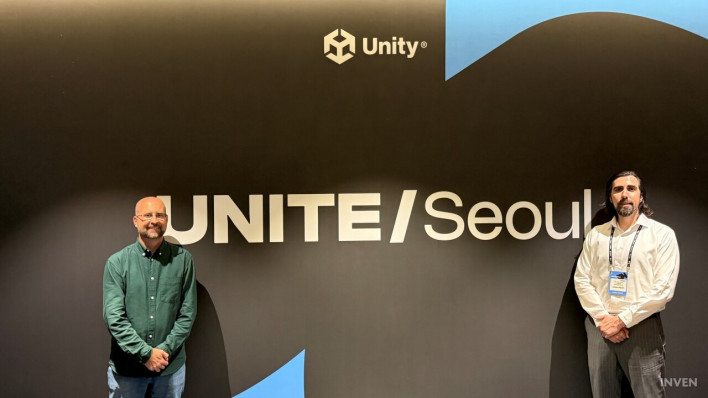
Following his keynote session at Unite Seoul 2026, we sat down with Unity SVP Adam Smith to discuss the philosophy behind Unity 7, which is set for an official release in Q1 2027, and the conveniences it will offer developers.
Unity has maintained a focus on stability for the two years since Unity Engine 6. Now that you are moving to Unity 7, what distinguishes this as a new generation, and how will your strategy change.
" I have served as the head of Unity Engine for the past two years, but I have been with Unity for 12 years now. Before joining, I was a user myself, starting back with Unity Engine 1. Having used the engine and then working here to communicate with partners and studios, I have always listened closely to the voices from the field.
When we aggregate the requests from development studios, they often differ from what people might expect. One might assume developers primarily want features for photorealistic graphics or AAA blockbusters. However, they have expressed a greater need for features that facilitate seamless collaboration on large-scale projects, the ability to apply workflows flexibly, and technology that allows them to iterate and test ideas as quickly as possible.
That is why, in our meetings over the past two years, the most frequent requests were to integrate coding agents into their workflows and to ensure we do not compromise Unity's stability. We have prepared Unity 7 with those priorities in mind.
One of the things we are most proud of over the last 20 years is the diverse success stories we have helped create across studios of all sizes—from Valheim, created by a one-person team, to large game companies like 2K Games with the AAA title PGA Tour 2K25. Furthermore, there are hundreds of Unity games that have been successfully operating live for over a decade, spanning every genre from solo developers to AAA studios. We believe no other game engine can claim such achievements, and we take great pride in that. As we have always done, we will continue to focus on everyone, from a single developer with a big dream to large-scale studios.
We also see that the game market is evolving, and so are the methods developers use. Iteration speeds must increase, and team collaboration styles are evolving as well. Providing features and services tailored to these shifts is the core value of Unity 7.
You previously announced a transition from Mono to CoreCLR after Unity 6.7 LTS. This structural change requires a migration, which is difficult for live-service games. What should developers check when transitioning to Unity 7, and what support does Unity plan to provide?
" I would like to answer this with an example from 2015. Some may remember that Apple announced at WWDC that 64-bit conversion would be mandatory, and any game not using a 64-bit architecture would be removed from the App Store.
At the time, all Unity games were running on the Mono scripting backend. However, in response to that mandate from our platform partner, we designed and released the IL2CPP compiler, which complied with 64-bit standards. This not only allowed developers to update their Unity games to the new backend but also provided an alternative for non-Unity developers who needed compatibility because their own engines did not support 64-bit.
It feels like the same question from back then is being repeated in 2026: "Can you provide a path for developers to continue their live games from this generation to the next?" To answer that, hundreds of Unity games, including Pokémon GO, have been operating successfully for over a decade. Our promise remains the same in the era of Unity 7. We will provide the same sustainability, and we have years of track record to prove it.
Just as we have supported all games from Unity 2, 3, 4, 5, and 6, we will continue our dedicated support model for the Unity 7 generation. The 6.7 LTS, a multi-year support version, will be released this December. As studios migrate to 7 and move toward next year's 7.3 LTS, we will support them with the same support system we have always provided.
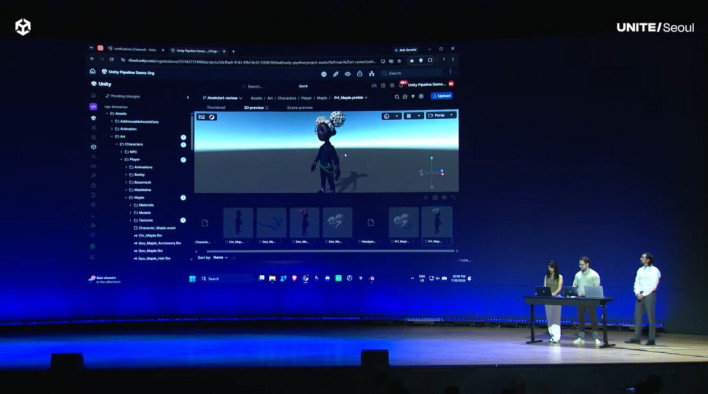
(Jason Mann, VP of Technical Product Management at Unity) As part of our roadmap, we have also introduced new features like 'Project Auditor' in the editor. This feature statically analyzes the current project and provides proactive alert messages. By providing notes before migration, it will help developers identify in advance which parts need to be changed when applying the Unity 7 and CoreCLR environment.
Unity 7 has positioned 'AI-native' as its core. How do you foresee development methods changing, and what do you think will be the first change developers experience? Also, how have you integrated AI into the engine, and what challenges have you faced in implementing performance and optimization?
" One of the things we announced at last year's Unite event was the importance of Unity remaining an 'assembly point' for technology in terms of AI tooling.
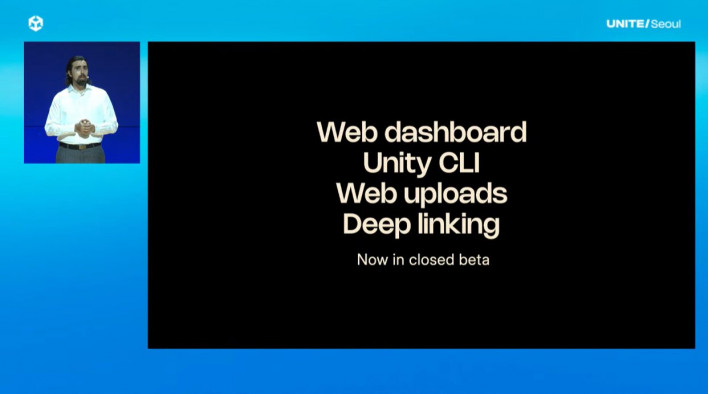
What we realized afterward was that many developers want to work in a command-line environment. So, we announced a new CLI (Command Line Interface) feature that allows access to editor and engine functions without having to launch the Unity Editor directly on a local PC.
By combining the CLI with their own development environments, developers can easily implement logic and gameplay into their projects with the assistance of their preferred agent-based AI via the command line. Our goal is to make these coding agent features completely optional for developers who embrace modern workflows. In other words, we are not forcing this on developers who do not want it; those who do can use it in their own way.
Regarding engine integration, we are first going to revamp Unity Hub with a new interface that provides prompt-based workflows for new game developers and creators. This means an interface will be provided to realize ideas even before entering the Unity Editor. We are working on improvements that allow you to execute your ideas the moment you decide to make a game, while also delivering iteration and impact. We will announce more details on this later.
Actually, performance optimization was not a major issue. It was trickier to figure out what kind of AI elements developers actually wanted. We found that developers primarily wanted acceleration in programming and coding. That is why we are focusing most on this area, and why we emphasized coding agent workflows over generative assets in the keynote.
It is surprising that Unity 7's platform expansion includes Fortnite. What strategic intent is behind this? And since you are moving into an entirely different engine ecosystem, were there any technical limitations or conflicts?
" Personally, I actually made games with Unreal Engine early in my career. As such, I am honored that a partnership between Unity and Epic Games—something the world might find surprising—has been realized.
In fact, Unity and Epic Games are companies with similar goals. We both respect the craftsmanship, vision, and creativity of developers. And we want to support them in achieving their dreams. The partnership was possible because we shared that goal and vision. Our ultimate goal is to help developers create the best possible games and deliver them to players, regardless of where or with what tools they build them.
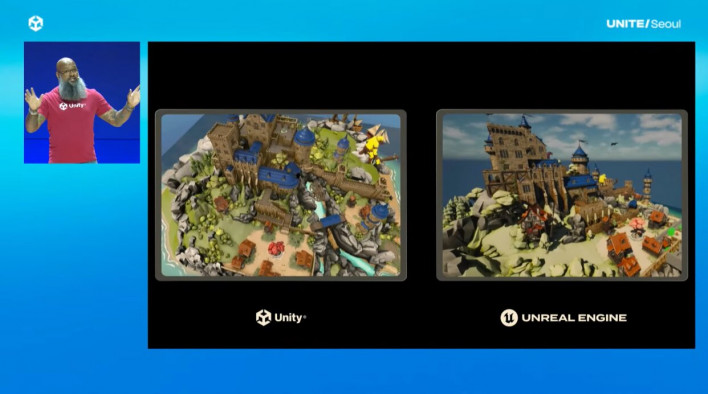
Furthermore, Unity is an engine capable of high-performance runtime in any environment. Take Genshin Impact as an example; it runs well in every environment, from mobile to PS5 Pro. Going further, our goal is to make it run in places that are not Unity-native, like Fortnite.
As shown in the demo just months after the partnership announcement at Unity Barcelona last November, we have already secured the technology to make this possible. So far, we have not encountered any concerning limitations, but we are checking for issues in actual production environments through private tests with our partners. We plan to reveal more as progress continues.
You say Unity 7 accelerates every stage of development. What is the driving force behind Unity 7 that makes this possible?
" At last year's Unite Barcelona, we said that the game development lifecycle had changed dramatically. Traditional game development involved numerous stages: concept, prototype, approval, pre-production, production, publishing, and live operations. But now, developers want much shorter development cycles. We see it as consisting of three main stages: 'Develop', 'Deploy', and 'Grow'.
Especially in the development stage, the publisher's pre-production or approval processes are gradually decreasing. Because studios now have the capability to self-publish, they can enter the production stage as soon as they write the logic. As a result, there are cases where development cycles that used to take 3 to five years are being shortened to one year or less. Many of these games are achieving amazing success.
Also, as developers can now create more games in a shorter time and in a more lightweight way, they can also make more creative attempts. This has increased the success rate for studios, and we see this change as positive for developers.
Furthermore, a fundamental change with Unity 7 is that it enables collaboration in ways that were previously impossible. By utilizing the CLI, review cycles are shortened, rapid iteration becomes possible, and you can work jointly with the coding agent of your choice.
Also, the hassle of having to compile, redeploy, and test every time to check changes is gone. The 'Hot Code Reload' feature we showcased on stage today enables rapid iteration from code modification to device reflection without rebuilding or redeploying.
(Jason Mann, VP of Technical Product Management at Unity) The reason we are pushing for this acceleration is that it is what the community and developers have requested. They want to release more games in less time, and they want to shorten time to reduce costs. We believe we must help with this, and we intend to provide various foundational technologies accordingly.
Unity has built an ecosystem that goes beyond the engine, including Ads, Vector, and IAP 5.4. What is the intent behind this expansion strategy.
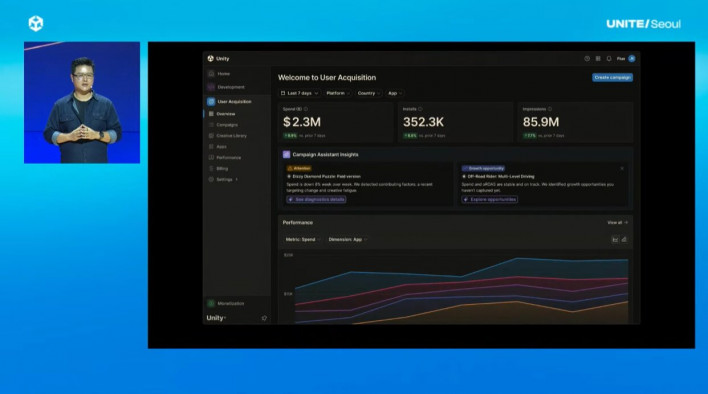
" It is simple. We do not view the Unity Editor as a standalone product. We define it as an integrated platform that bundles the Unity Editor at its core with surrounding services, CLI, and monetization tools.
It is also our policy to help developers, as well as publishers, with everything they experience in live services. Currently, if you want to monetize outside of the App Store payment system, you have to perform individual integration work for each payment gateway (PG). However, we plan to support the management of a single item catalog that applies commonly to all payment providers.
This allows developers to reach user segments they previously could not access, according to their desired conditions. It is like having access to global users with a single integration point. This not only saves significant development time but also allows for a much more advantageous revenue structure when operating live games.
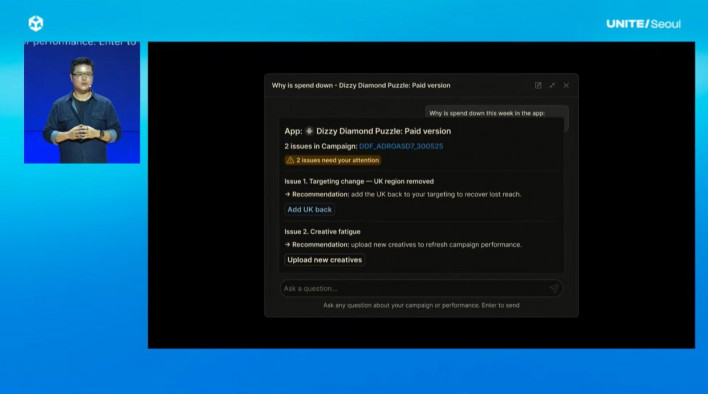
The integrated nature of the Unity platform also provides an additional 'Developer Data Framework' that developers can use if they agree. Through this, developers can gain data-driven insights into each player and better understand what they enjoy and want in the game.
In addition, the 'Unity Vector Framework' optimizes this data to help achieve monetization more effectively than ever before, not only in terms of In-App Purchase (IAP) placement but also in ad placement.
There is a perception that it is difficult to make high-quality AAA games with Unity, but on the other hand, AAA games themselves are struggling recently. What do you think is the way to overcome this situation?
" Currently, AAA games are experiencing tremendous growing pains, not only in the West but globally. I feel for the developers who are going through these difficulties.
On the other hand, the Unity community is achieving amazing success despite the difficulties across the industry. What I want to convey to the game industry through this is that user behavior patterns have changed.
A long time ago, when I was young, there were leaps in graphics development—8-bit, 16-bit, 32-bit, 64-bit, and so on. Developers and users alike were enthusiastic about that. But younger generations of users do not seem to view games and the industry in that way.
That is why we take pride in development success stories like MINTROCKET’s 'DAVE THE DIVER.' Even though it was not a AAA title, it achieved AAA-level success. The same can be said for 'Hollow Knight: Silksong,' one of the most successful games of 2025.
Our goal is not just to implement truly realistic, AAA graphics. The URP we announced today focused on securing flexible rendering capabilities that work with high performance across the most diverse genres and platforms. Through this, we want to help developers reach as many players as possible and succeed.
Of course, we also support developers who dream of creating high-quality AAA graphics. That is why we announced a multi-game partnership with 2K at Unite Barcelona last year. Through our initial collaboration, we were able to implement the high-end graphics requirements of 'PGA TOUR 2K25' for the Nintendo Switch 2 environment, demonstrating the capabilities of our High Definition Render Pipeline (HDRP).
In other words, we will remain committed to supporting everyone, from the smallest teams with big ideas to large enterprise studios with massive goals.
Lastly, please say a word to the developers who use Unity.
" As I said in the keynote, before Unity, it was almost impossible for aspiring creators who had good ideas but lacked the tools or capabilities to turn their dreams into reality.
Over the past 20 years, I believe we have made game development universal, and I take great pride in that. But now the generation has changed, and the definition has changed. Accessibility to game development tools is no longer the issue. We have already solved that part; now the challenge remains to find and attract the right users in the live operation stage and provide them with continuous satisfaction so they can enjoy the game for years.
This is why we are trying to build the Unity product ecosystem into a single 'Unity Platform'. We want to help developers of any proficiency, including aspirants who have not yet made their first game, to go beyond game development, distribute to the user base that suits them, and thereby grow their games.
Actually, to add a personal story, I had a dream of making games when I was young, but at the time, there were no tools or operational/monetization means to realize it. So I buried it for a while, but it became possible later because of tools like Unity. If you are hesitating and wondering, "Can I do it?", I want to tell you that you can. Unity will help you realize your dreams, and I sincerely wish you success.

Sort by:
Comments :0