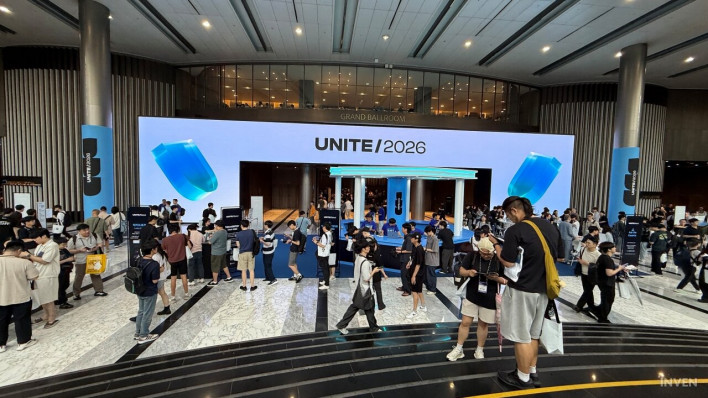
Unity hosted its developer conference, 'Unite Seoul 2026,' today (the 21st) at the COEX Grand Ballroom in Seoul. The event served as a platform for Unity and game developers from around the world to share expertise and insights, while also covering the recent Unity 6.5 update and the company's future roadmap. Notably, Unity CEO Matthew Bromberg and key executives attended the event to unveil the next-generation engine, Unity 7, for the first time globally.
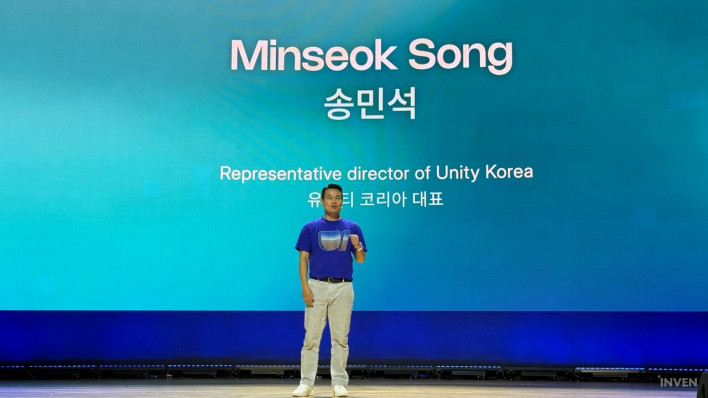
Ahead of the keynote, Song Min-seok, head of Unity Korea, remarked, "This year's Unite Seoul is the first stop in our global Unite series, making it the venue where we debut all new information regarding Unity to the world. The Korean developer community is composed of early adopters and innovators; Unite Seoul is more than just a conference—it is a festival where developers with shared dreams can exchange new technologies and move forward together."
Unity CEO Matthew Bromberg described the current state of the game industry as both a crisis and an opportunity. He noted that we live in an era where various technologies, including AI, make it easier than ever to realize ideas and turn them into games. He also pointed out the rise of games that gain popularity through creative ideas rather than AAA-grade graphics, adding that this is an era where passion, ideas, and finding the right players matter more than team size.
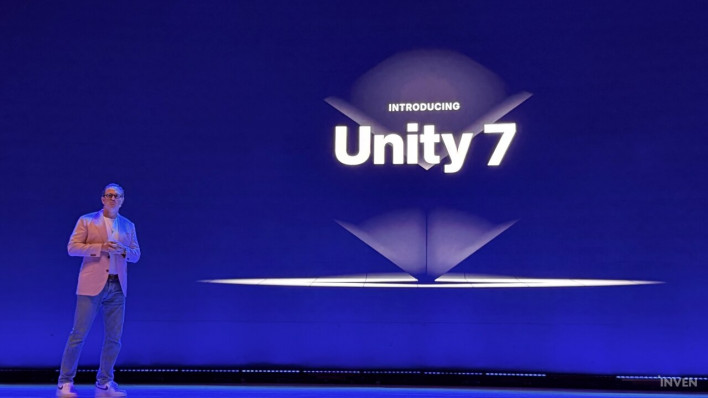
To keep pace with these trends, the company determined that incremental updates were insufficient and announced that 'Unity 7' will launch in alpha this December, with a full release scheduled for the first quarter of next year. Unity 7 will move away from the editor-centric structure of the past to become a more flexible, collaboration-based platform. It will feature accelerated performance based on Core CLR, support for a wider range of platform deployments, and a unified catalog for revenue tracking, marking a significant leap forward in every stage from development to launch and growth.
Maximizing Development Productivity Through Faster Iteration
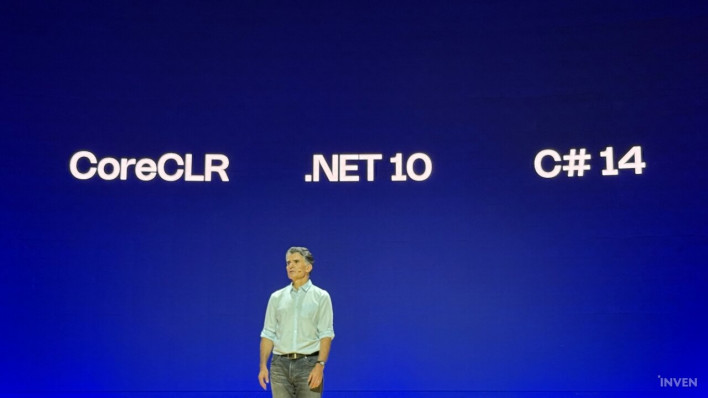
Joe Valenzuela, Senior Director of Engineering, explained how Unity 7 is changing to reduce wait times that hinder productivity and allow developers to focus on creation. Notably, Core CLR, .NET 10, and C# 14—features long discussed within the Unity community—will be implemented starting with Unity 7.
Built on this modernized core, Unity 7 accelerates every aspect of the development pipeline. Specifically, the time to enter Play Mode has been reduced by approximately four times. Furthermore, live code editing allows developers to modify code in real-time while the game is running on a device. A live demonstration showed that developers can replace texture materials, adjust movement speed, jump height, or modify method code—such as double-jump logic—and apply changes immediately without stopping Play Mode or undergoing lengthy rebuilds.
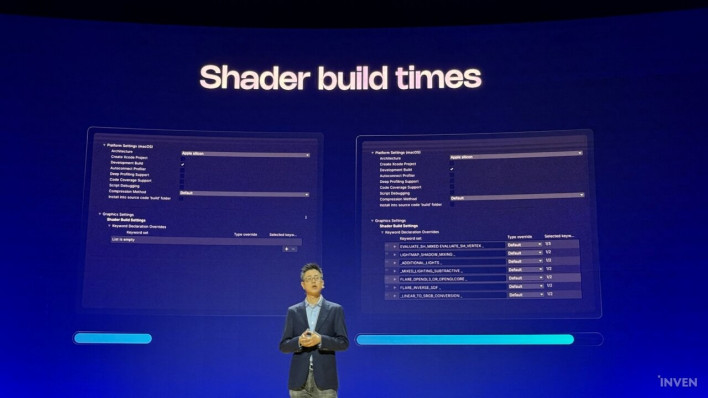
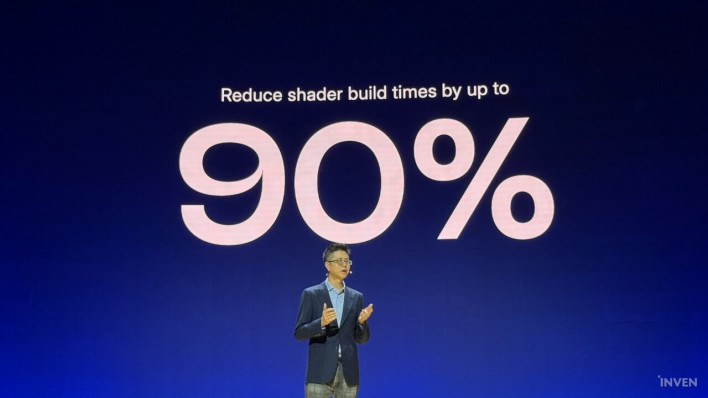
Shader build times have also been reduced by up to 90% through the new 'Dance Gilt' profile (introduced in Unity 6.7), dynamic branching for static variants, and keyword exclusion options, all of which maximize build pipeline efficiency. Additionally, a Command Line Interface (CLI) and MCP server will be provided for free, allowing developers to work via terminal commands without running the full editor. A scene preview feature will also be available via a web dashboard, enabling developers to view actual game scenes—complete with lighting, shaders, animation, and physics—in a browser without the editor.
Beyond High-End: Efficient Rendering for Everything from 2D to 3D
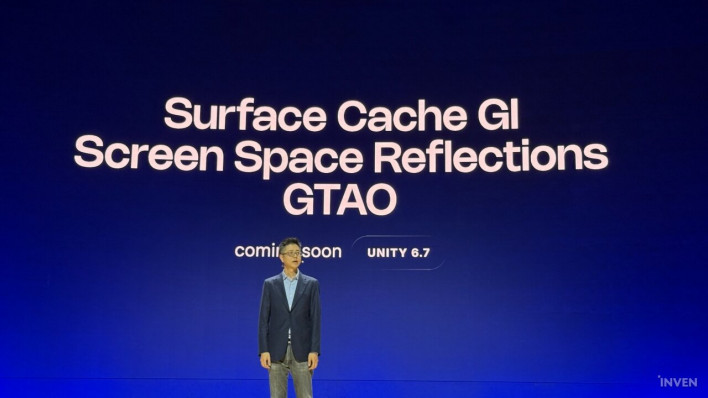
Charles Saenglimsuwan, VP of Graphics Engineering at Unity, explained that graphics remain a priority in Unity 7. However, he emphasized that the goal goes beyond high-end quality to encompassing everything from 2D and 2.5D to all types of content and styles. While maintaining the existing focus on the Universal Rendering Pipeline (URP), the company unveiled 'Surface Cache GI' for next-generation lighting at Unite Seoul. This lighting pipeline supports fast iteration and dynamic content, providing high-quality lighting without the need for extensive light probe or lightmap setups; it is available as a preview in Unity 6 and the Unity 7 alpha.
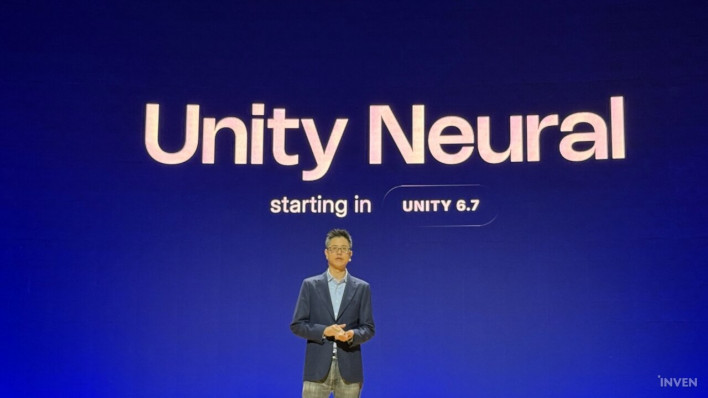
Starting with Unity 6.6, the engine will support DX12 and DXC-based shader compilation settings, enabling the use of the latest HLSL, Shader Model 6 features, and meshing APIs. Furthermore, the neural inference rendering pipeline, 'Unity Neural,' was unveiled. This pipeline runs on local devices without server communication. It includes features like 'Neural Upscaler,' which reduces artifacts and provides sharper details compared to existing upscalers, and 'Neural Texture Compression,' which uses learned models to compress textures, reducing memory usage by 50% and disk space by 70%. These features will be rolled out in stages starting from Unity 6.7.
WebGPU will also be available for production starting in Unity 6.6. On mobile, on-tile processing has been expanded for Metal and Vulkan, allowing tone mapping and color grading to be processed in a single pass, thereby reducing memory bandwidth. These optimizations allow for high-quality graphics across all platforms without the burden of optimization concerns.
Unity is also adding advanced technology for 2D and 2.5D. For 2D, the company is introducing 'CRE 2D,' a multi-threaded physics engine based on the latest Box2D v3, and the 'Render Sprite API.' This allows for rendering thousands of sprites at a stable 60 FPS even on older mobile devices without game object overhead. Additionally, 'Rendering 3D as 2D' has been enhanced, providing a workflow that allows 2D and 3D elements to be easily merged and linked within a single unified world, sharing the same 2D lights, masks, and shaders.
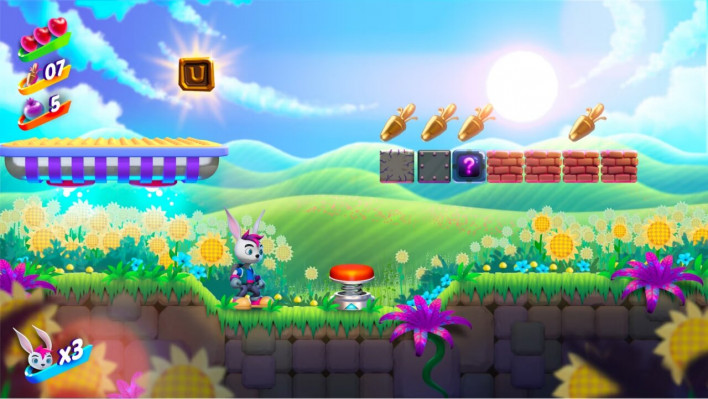
Alongside these updates, a new 2D sample game, 'Bunny Blitz,' which utilizes the latest 2D and Rendering 3D as 2D features, and a 2D profiler for sprite monitoring have been released on the Asset Store. Both are available for download and testing starting today.
Rendering in Unreal Editor for Fortnite? Breaking Platform Boundaries
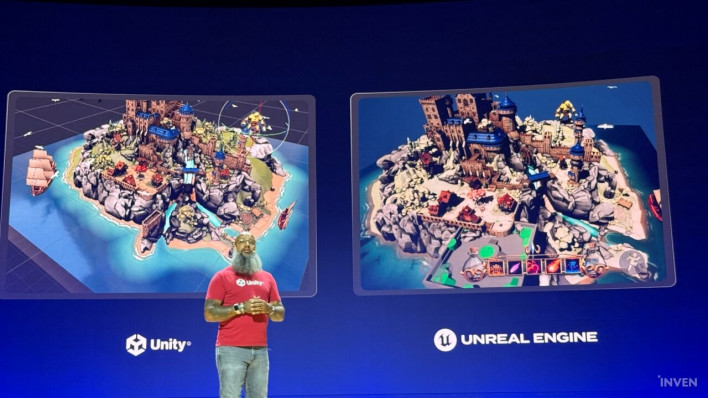
James Stone, Senior Director of Technical Product Management, introduced Unity's flexible platform support and outlined a direction to strengthen it further. He reiterated the collaboration with Epic Games announced at last year's Unite Barcelona and demonstrated how games created with the Unity engine can be rendered in real-time natively within the Unreal Editor for Fortnite. He explained that physics, lighting, and multiplayer information are synchronized in real-time between the two engines based on the PolySpatial protocol, adding that an early access release is planned for 2027.
Unity is also expanding support for the Meta and Android ecosystems. Through integration with Meta, an AI guide will be provided to assist with project setup, input systems, and performance optimization for Quest VR development. Additionally, the company announced support for Google's Android XR-based wired XR glasses, 'Xreal OURA,' making it easier to extend existing content into XR environments.
The company also explained that it will integrate LTS technology from Unity 6.1 through 6.7 to support stable, compatible upgrades to Unity 7 without disrupting existing Unity 6 workflows.
Unity 7 Enables Industry-Scale Collaboration Without Editor Dependency
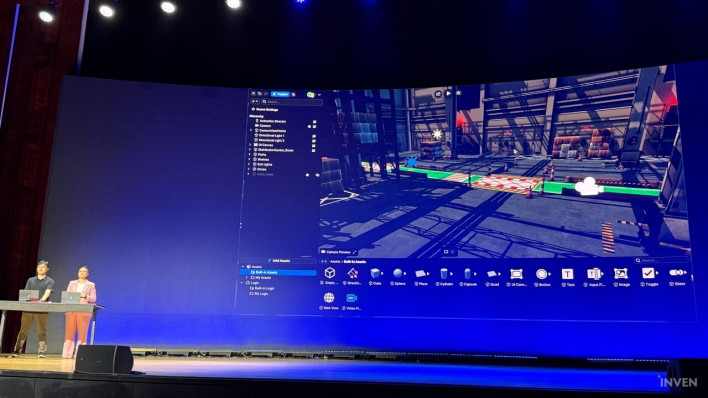
Sarah Lash, SVP of the Industry division, explained that it is now possible to share work and collaborate across various industries without relying solely on the editor. While Unity Engine has historically been editor-based, Unity 7 is moving toward reducing this dependency. Although this approach to easing development methods has existed for some time, it was previously difficult to implement for large-scale projects.
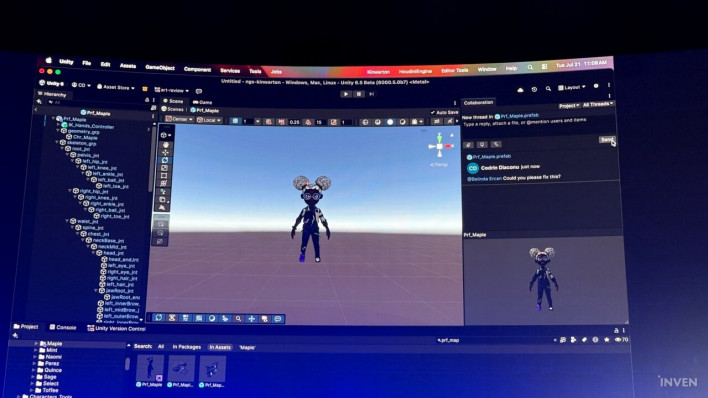
However, the company is now providing technologies for large-scale collaboration, including pipeline automation that automatically collects, converts, and optimizes massive industrial 3D data—a process that previously took days of compatibility work—as well as self-hosted cloud integration and the web-based 3D editor, 'Unity Studio.' Unity Studio provides a seamless collaborative environment where colleagues can connect via a browser without installation or coding, viewing and editing 3D scenes in real-time while leaving feedback comments.
Source control has also been integrated, strengthening connections with preferred management systems like GitHub, Unity VCS, and Perforce, while deep-link support prevents workflow interruptions between teams.
AI for More Than Just Development: Unity's Solutions for Sustainable Revenue and Operations
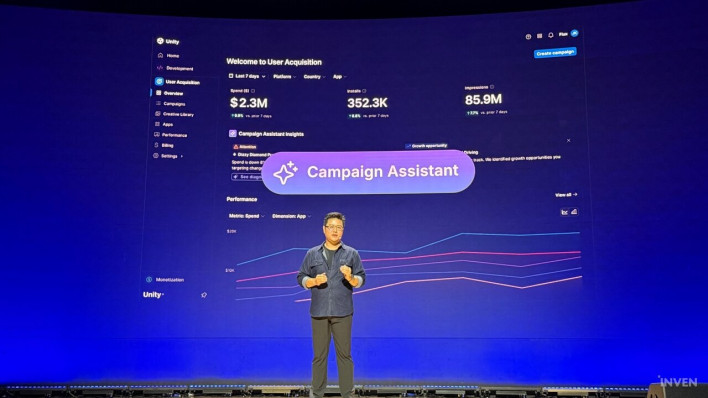
Sean Sheng, SVP of Unity Vector, emphasized that Unity is a service platform that assists with game development, launch, and monetization. Unity Vector, which he leads, is a service that uses AI to analyze user behavior data and support monetization. He announced that advancements in Unity Vector's AI have enabled more optimized behavior data analysis, and that the Unity IAP 5.4 SDK, which allows for direct-to-consumer (D2C) sales, has been updated as of today.
The Unity IAP 5.4 SDK officially introduces D2C commerce features, allowing developers to sell products directly to users on platforms beyond app stores. It provides in-game web payments and a no-code web shop builder at no extra cost, with web shop designs that can be instantly reconfigured to match the game via an AI chatbot. It also integrates with global payment partners like Stripe and Coda to handle potential payment errors.
Furthermore, moving away from managing payment system revenue separately, the Unity IAP 5.4 SDK allows for managing both existing in-app purchases and D2C revenue in one place using a unified catalog and dashboard. Additionally, the Unity IAP 5.4 SDK charges 0% in additional fees, allowing for smoother revenue management while retaining full earnings.
D2C commerce data collected via the Unity IAP 5.4 SDK flows into Unity Vector, making it easier to target high-value users and drive growth. The addition of a conversational AI assistant and DRS MCP allows for the analysis of complex data via natural language prompts, as well as diagnosing causes, preparing countermeasures, and forecasting figures, making game operations and monetization management much easier.
The Unite Seoul 2026 keynote can be rewatched on the Unity Korea YouTube Channel, and other sessions will be released sequentially through the same channel.

Sort by:
Comments :0