There is a unique Chinese vision of the afterlife that differs from the hell we typically know. It is a landscape from Chinese mythology where the dead pass through the Ghost Gate (Gui Men Guan), walk along the Road to the Yellow Springs (Huang Quan Lu), drink Meng Po Soup (Meng Po Tang) on the Naihe Bridge, and return to the cycle of reincarnation. This world, somewhat unfamiliar to Korean players, now serves as the stage for a new Metroidvania action game.
'Karma Exorcist' is an Eastern fantasy action game built upon the foundation of the Chinese mythological underworld, enhanced by original settings developed by the team. Developed by a small team of eight over the past two years, the game features 11 major zones, a system of over 20 types of Dharma Treasures (Fa Bao), and a unique movement mechanism inspired by the Soul-Hooking Chains (Gou Hun Suo) used by Yin Messengers (Yin Cha) to capture souls.
INVEN met with the producer of 'Karma Exorcist' at the 'Bilibili First Look' event, held ahead of the Steam demo release from April 27 to May 5, to discuss the game's world-building and development process.
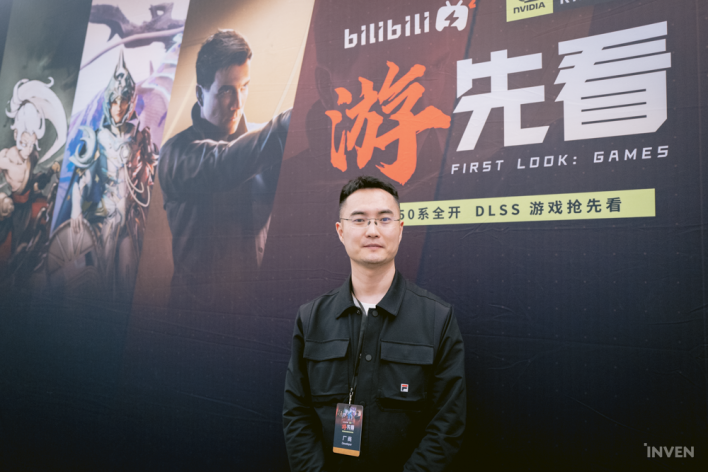
Could you briefly introduce the development background? What is the team size and how long has it been in development.
" Our team currently consists of eight people, and we have been developing the game for a little over two years now.
For Korean players, the narrative based on Chinese underworld folklore might be quite unfamiliar. Could you explain more about these ancient Chinese legends and why you chose them as the setting for your game?
" Ancient Chinese mythology posits a world divided into the human realm (Yang Realm) and the underworld (Yin Realm). In some ways, it shares similarities with the Western concept of hell. While there is a vast amount of literature and material regarding Chinese mythology, the content is also incredibly complex and intertwined. To adapt this into our game's world, we had to add original settings to fill in the logical gaps inherent in the myths themselves.
Furthermore, the underworld is a space that embodies a significant portion of Chinese folklore. It is a realm filled with various superstitions from remote regions, giving it a deeply mysterious quality. Since the Metroidvania genre is inherently focused on exploration, we believed this mysterious atmosphere would amplify the fun of discovery.
Beyond simply using these folkloric elements as a backdrop, what efforts were made to expand them into actual in-game content?
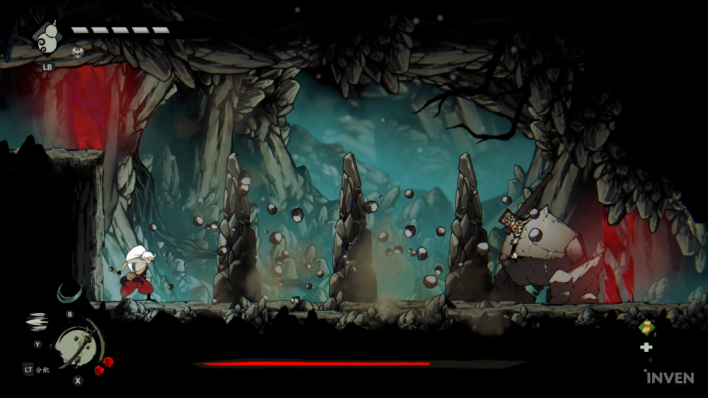
" To give an example, there is a folk legend that when a person dies and returns to the cycle of reincarnation, they drink 'Meng Po Soup' on the 'Naihe Bridge' to erase their memories. In addition to this, there is a story that says, "If a couple from a past life wants to continue their bond, they can choose not to drink the soup and jump off the bridge instead. They will suffer from the countless evil spirits in the river, but if they wait until their partner makes the same choice, they can be reincarnated together and continue their bond from the previous life."
These types of folk tales are packaged as side quests in our game. One NPC actually made that choice but ultimately failed to reunite with their wife. We use this structure to expand fragments of folklore into compelling stories.
Games in this genre tend to have a high difficulty level. How do you balance the sense of achievement given to players with the frustration that comes from repeated failure.
" A sense of achievement is the positive feedback that comes from completing a challenge itself. Successfully overcoming a challenge provides corresponding content rewards, which motivates players to explore and retry boss fights. Since the game contains not just numerical growth but also the interesting stories I mentioned, these elements provide a reason for players to keep trying.
Regarding the issue of frustration, to be honest, we have prepared several measures. However, this demo is a relatively early build, and there are areas where the overall polishing is not yet sufficient. Another factor is that in the demo section, players do not yet have many combat strategies available, which can make certain situations feel more difficult.
As development progresses, the polishing will improve, and as the available tools become more diverse, the ways to solve problems will also expand, significantly reducing frustration. That process itself is part of the player's learning and growth.
From my experience, I felt there were somewhat few save points. The repetition of travel paths became tiring; was this sparse placement intentional.
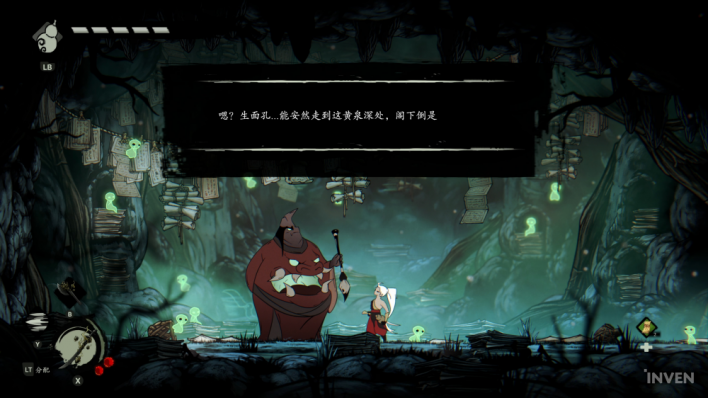
" This is a very important point in level design. If this were a linear game, we could place save points at regular intervals, like every 10 minutes. However, because we are creating a non-linear game with a high emphasis on exploration, the placement of save points changes accordingly.
For example, a save point in one area might be difficult to reach at first, but later, when you return via a different path, you might utilize a device like an elevator to access that point again. Our focus was on ensuring that these save points provide non-linear level design and freedom of exploration, while also being effectively helpful when players discover them on their own.
However, if a player fails to find those points, it can certainly be painful. To mitigate this, we placed temporary resurrection points called 'Hidden Soul Lamps' (Yin Hun Deng) in front of every boss. Note that these lamps do not have a teleportation function.
In the presentation, it was mentioned that the protagonist was born from the finger of Houtu. There was relatively little explanation about the heroine, who was born from a different finger. Could you tell us more about her? Also, when does she make her full appearance.
" While the heroine shares the same goal of solving the problems of the underworld, she has chosen a completely opposite path. The protagonist takes the approach of "purifying all evil karma," which is a dangerous method that could actually produce more evil karma. It is a complex explanation, but I hope you can understand it that way.
The heroine has chosen the path of the goddess Houtu: "suppression and extinction." Her approach is to restrain evil karma rather than purify it. Because of this, the two characters are portrayed as being in conflict when they meet early in the game. They are in a state where they cannot acknowledge each other's methods.
Players will gradually realize that the heroine was also trying to solve the same problem in a different way. Later, it is revealed that her method also does not work. For reference, the so-called "fake ending" is the conclusion reached if you continue the conflict without cooperating with her, while the "true ending" can only be reached by cooperating with her.
Can players control the heroine directly.
" According to our current plans, she will be playable in some content. It is not a case where you can choose to play as her throughout the entire game, but she will become playable in certain parts after the point in the story where you cooperate with her.
Is the map revealed in the presentation close to the final version, or is it planned to be expanded.
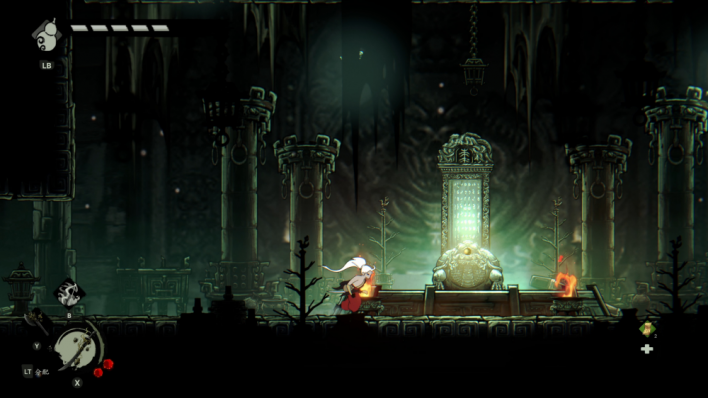
" The revealed map is a draft. It doesn't necessarily mean the map will just get bigger, but there will be significant adjustments ahead.
There is also a space called the 'Eighteen Levels of Hell' (Shi Ba Ceng Di Yu); how does one enter it.
" That is late-game content. It exists as an independent zone, the concept is already clearly defined, and development is underway. However, it is not a mandatory section for the main story; it is designed as a significant hidden element. We hope players will discover it themselves through exploration. You can understand it as content related to the perfect ending.
Are the paths or bosses there more difficult than the main story.
" Yes. The difficulty will be set higher. It is a form of ultimate challenge content.
How long do you expect the playtime to be until the ending.
" If you only follow the main story, we are currently planning for about 20 hours. Including all collectibles, it will likely be 30 to 40 hours.
Is there additional content to enjoy after the ending.
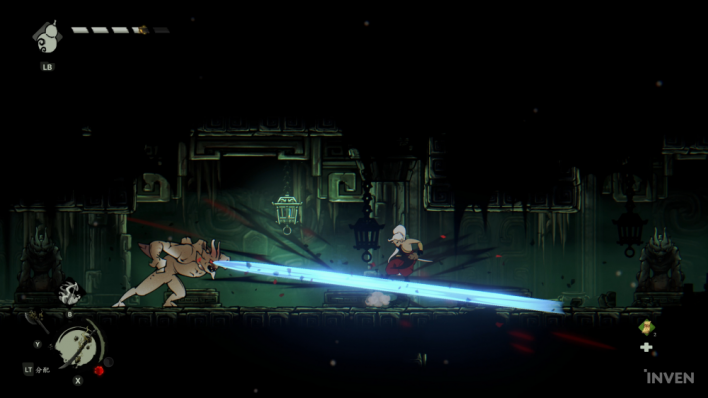
" Of course. One part involves elements that require repeated exploration to achieve different perfect endings. Another is side quests; many of these are not essential for the main progression, so you can return to explore them after the ending. Some of this content contains additional explanations that allow for a deeper understanding of the world, as well as interesting side stories.
For reference, the content you experience by the time you reach the ending is less than half of the total volume. The other half is all content that can be enjoyed after the ending.
The structure allows for 8 Dharma Treasures to be equipped at once, with 3 of them quickly switchable via quick slots. Do you have any recommended combinations? Are certain treasures more advantageous for specific boss fights.
" The logic we designed is that, fundamentally, all combinations should be possible. Each Dharma Treasure has its own unique combat module, created to respond to different combat situations. The choice of combination depends on which combat style you prefer. We do not intend to create something like an "optimal build" that we force upon players.
There are certainly treasures that are advantageous against specific enemy types. For example, a treasure with tracking attacks is well-suited for fast-moving, small enemies, while a treasure that rotates around you and deals continuous damage is suitable for large, slow-moving enemies. In the latter case, you can maintain close proximity to the enemy and fight stably. To add, the reason we designed 3 of the 8 slots to be quickly switchable is that we wanted players to be able to flexibly change their combat style in different environments.
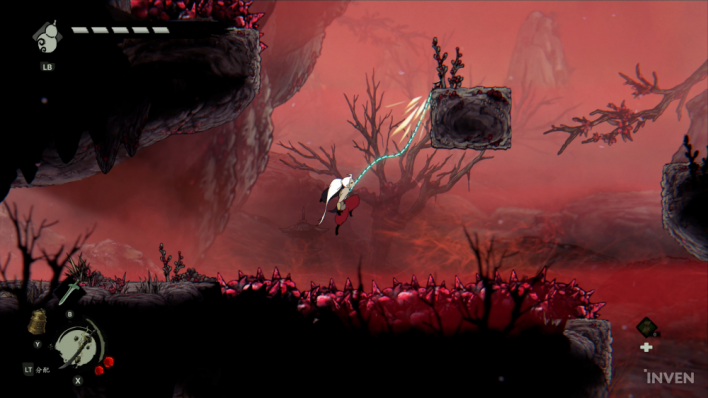
The Soul-Hooking Chain (Gou Hun Suo), which acts as a grappling hook, seemed very useful in boss fights and general exploration. How do you define the role of this tool.
" The Soul-Hooking Chain is a core tool that runs through the entire game. In terms of exploration, there are many areas where progress is impossible without it. In combat, while not mandatory, it becomes a very effective countermeasure against certain enemies. It is used to quickly approach enemies and can also be used to pull down enemies that are in the air and difficult to attack directly.
A small team of eight is small even by indie standards. Were there any particularly difficult parts during the development process.
" This project is the first single-player package game our studio has ever made. However, each team member is an experienced professional who has worked in the industry for a long time. Our technical staff, including programmers, is solid, so there were no major difficulties in the actual production process. The part that took the most time was world-building. To create a proper world, we had to research vast amounts of material related to ancient Chinese mythology and organize the parts that lacked structure ourselves. This work took a significant amount of time.
Another challenge was the art style direction. We wanted to capture the feel of Chinese mythological themes while simultaneously implementing visuals that global players could accept. If the style was too Eastern, like ink-wash painting, global acceptance might drop, but we couldn't completely remove those colors either. We went through several iterations of the art direction before arriving at the current style.
As a developer, which is more rewarding: seeing a player get defeated by a boss, or seeing them die from thorns or traps while moving.
" Personally, I enjoy it most when a player discovers the devices we have painstakingly designed. (Laughs)
Will there be Korean language support? Is an official release in Korea also planned.
" Both are planned.
If there is any information you can share regarding the official release timing and external testing plans, please let us know.
" Personally, I want to release it as soon as possible, but I believe it is more important to release a result that we are satisfied with. Based on my personal plan, I am keeping the end of this year or early next year in mind. However, since there is a process of conducting external tests and receiving feedback in between, adjustments may occur, so it is difficult to say it is a confirmed schedule.
External testing will definitely take place within this year. The demo running from April 27 to May 5 is one of those schedules, and we plan to conduct multiple tests in stages. We are accepting test applications through our Steam store page.
Will the difficulty of the demo currently being played be maintained at the time of the official release.
" It will not be significantly different from now at the time of the official release. There will be some adjustments, but we do not expect any major changes.

Sort by:
Comments :0