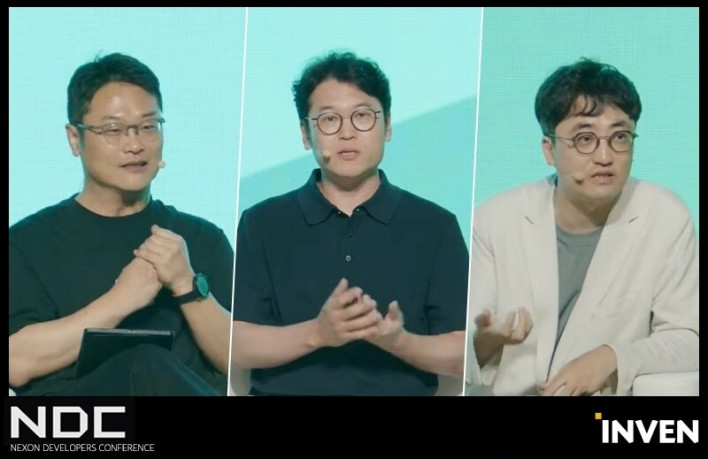
Topic: The Era of Connection: Where Is Gaming Headed? - Connecting to the Gamer's Daily Life Speakers: Chae Jung-won, Director at Nexon Korea; Kim Sung-hoe, YouTuber (G-Sik Baekgwa); Cha Woo-jin, CEO of Cha Woo-jin Entertainment Culture Research Institute Field: Business / Marketing Recommended for: Planners, marketers, and operators concerned with the touchpoints between games and users
Tags: #NDC26 #Business #Marketing
[🚨 Lecture Topic] Games no longer take place solely 'within the game.' Users play, watch, talk, and play again. Streaming, communities, creators, and fandoms are creating new touchpoints between games and users. This discussion brings together three perspectives: Chae Jung-won from Nexon, representing the 'creators' of games; Kim Sung-hoe from G-Sik Baekgwa, representing the 'promoters' of games; and Cha Woo-jin, an observer of the entertainment industry 'outside' of gaming. In an era of 'time-efficiency wars,' how should game companies, creators, and fans connect? We explore the question, "How can we deliver games to more people together?" through the voices of these three stakeholders.
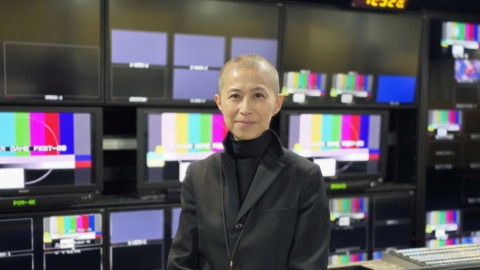
Games no longer take place solely within the game. Users play, watch, talk, and play again. The session 'The Era of Connection: Where Is Gaming Headed?', held on the final day of NDC 26, featured Nexon Director Chae Jung-won, G-Sik Baekgwa representative and creator Kim Sung-hoe, and moderator Cha Woo-jin, director of the Entertainment Culture Research Institute, who has long observed the entertainment industry from the outside.
The three discussed the 'time-efficiency' era, where games compete with Netflix, YouTube, and Shorts for users' time. They explored the shift from 'making' to 'nurturing' games, the reality of creators becoming catalysts and partners for game companies, lessons from the K-pop and entertainment industry, and the double-edged sword of AI. The conclusion converged on one word: in an era of excess, the remaining weapons are narrative, context, and the trust built upon them.
The Era of Connection: What Has Changed? - The Time-Efficiency War
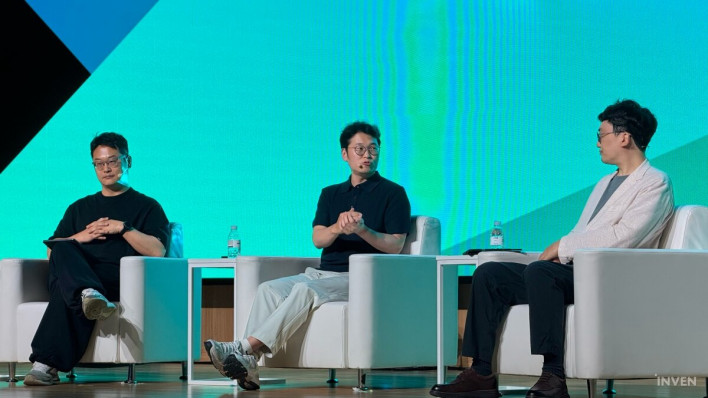
Cha Woo-jin (Moderator): I am not exactly from the game industry; I view it from the perspective of the music-based entertainment industry, including K-pop. Honestly, I don't know much about games. I find it hard to beat bosses, so I don't play much, but I love watching games. Today, we have gathered people who watch, make, and critique games.
The core theme I set for this session was 'time.' In the past, content quality and completeness were paramount; now, it's a battle over how to occupy—or, to put it more aggressively, how to steal—the user's time. Therefore, a game's competitor isn't another game, but Netflix, K-pop, YouTube, or music videos. Director Chae, how do you view this change from within the game industry?
Chae Jung-won = Rather than making games directly, my role is to connect Nexon's finished games to many users and ensure they enjoy them. The change you mentioned is frequently cited in recent research and columns. Gamers are spending less time playing, and we need to know where they have gone to bring them back to games.
In the past, it was very difficult to feel a sense of achievement in daily life. Achieving good grades, earning money, or beating someone in sports required immense training. I believe games became popular because anyone, regardless of their background, could sit in front of a PC at home and feel a sense of achievement from an equal starting line with little time investment.
The problem is that content that provides achievement more easily and lightly than games has emerged. For those watching Shorts or Netflix, I've started to think that games might now have a high barrier to entry, much like how I viewed sports when I was young.
That's why I think a lot about what elements to put into games and how to connect them with platforms or creators. I've been at Nexon for just over a year, and I've spent that entire time grappling with these concerns.
Kim Sung-hoe = I used the term "time-efficiency" in my videos. It's not cost-effectiveness, but time-effectiveness. In the past, there wasn't much to do, so people asked, "What should I play?" They ask the same question now, but because there is too much to do. It's an era of "play-excess," like nutritional excess, and it's all free. With a Netflix subscription for around ₩10,000, everything else is practically free.
No matter how much humanity advances, the 24 hours in a day do not increase. It's a 'Time Spent' competition where games must secure their own slice of the pie. Previously, there was a logic that games were addictive because they were simple and accessible, providing easy achievement. Now, it's the opposite. Shorts are so convenient that games have become the difficult content.
Cha Woo-jin = Every type of content, whether music or webtoons, faces similar concerns. To speak like a critic, while we used to worry about 'making' content, now we worry about 'nurturing' it. In the past, you just made it well and threw it into the market, but now we have to worry about what happens afterward.
Chae Jung-won = Nexon is a company that excels at live games, and our flagship IPs are serviced for a very long time. While old games were finished once released, I believe Nexon has changed that flow significantly. By maintaining a game as a live service, the users who enjoy it, the company that makes it, and the creators and platforms that produce secondary content all combine to form a community. Just as people feel a sense of belonging in a village, school, or group chat, games like MapleStory or FC Online have become communities where people feel that same sense of belonging.
So, while it used to be enough to make a game well and update it, it has now become important to explain how it is shown, the intent behind updates, and the future roadmap. It's like a village head explaining things to the residents. Users will continue to enjoy the game only if they feel the village is worth living in after hearing that roadmap. The required competencies for the package game era and the live game era are that different.
The Creator's Perspective - A Catalyst in the Era of Time-Efficiency
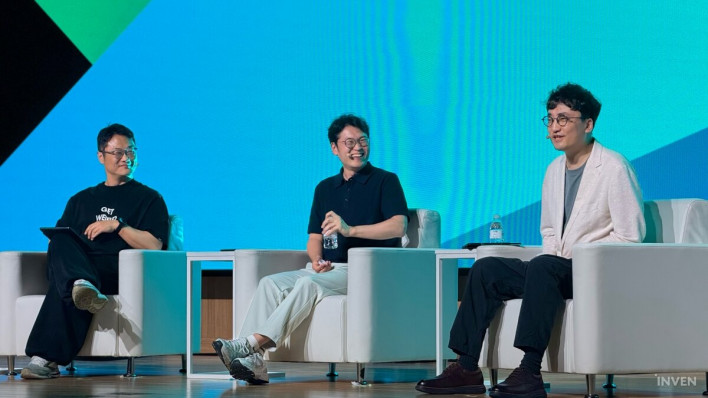
Cha Woo-jin = I believe the role and existence of creators within communities are becoming incredibly important. Director, what do you think?
Chae Jung-won = They are becoming immensely important. Beyond just 'important,' I consider them partners. People have a tendency to trust and follow those they like, not necessarily those who are 'right.' Creators are people others like, they possess a lot of good information, and they resolve the information asymmetry that viewers face. I don't think any industry can stand without creators. But Kim Sung-hoe hasn't been able to speak for 20 minutes now.
Kim Sung-hoe = Director Cha said he "doesn't know much about games," but after talking in the waiting room, I realized that whether it's truck protests or the scope of indie games, the entertainment industry already went through all the problems we are facing 10–20 years ago and even knows the solutions. I want to give a shout-out to him as someone the game industry needs to learn from the most.
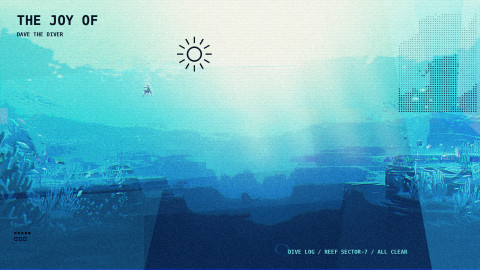
And the question that should have come to me was: "Game companies have started to acknowledge the influence of creators, but how do creators view game companies?" I feel a sense of generational change. In the past, former Nexon Vice President Kim Dae-hwon appeared on G-Sik Baekgwa and shouted "Nexon Seed Germination," meaning that Nexon had been planting seeds, including indie games, since the era of CEO Jung Sang-won, and those seeds were now sprouting into MINTROCKET's DAVE THE DIVER, ARC Raiders, and the upcoming Nakwon. It was a pun that sounded like profanity.
What vice president of a company with nearly 10k employees would use such an expression in the media? But they do it on a creator's channel. It means they have started to communicate more honestly with creators than they ever could with the press. When I was on OGN 20 years ago, our status was so low that it was hard to even get a coupon, but thanks to many seniors including Daedodseo, we have come this far. I must remain humble and not become arrogant.
As another example, Director Hwang Jae-ho and Business Team Leader Kim Gyu-man of DAVE THE DIVER were interviewed on G-Sik Baekgwa before the game became a hit, and it reached 800k views. The reaction, "It's Nexon, but maybe we can trust them this time," was positive, and they actually rewarded that trust. Later, Director Hwang even cited G-Sik Baekgwa's survey results in an official setting. That is the world where the status of creators has risen. I spent over 10 years developing games without a decent hit, and I believe my current success is due to the rise in the status of creators.
Cha Woo-jin = It's similar in K-pop. Companies, artists, and fans are in a strange, tense triangle where they are uncomfortable with each other and sometimes hate each other, but at the same time, they have no choice but to acknowledge one another. To fans, the company is an entity that hinders the artist's free activities, but without the company, the artist wouldn't exist. To the company, fans are grateful but burdensome, and the artist is stuck in the middle for a while. It's similar in gaming, but the addition of the 'creator' variable is interesting. YouTube is now performing the roles of information delivery, evaluation, and public opinion formation that game magazines or media used to handle.
Kim Sung-hoe = Let's connect time-efficiency to the role of creators. Even if we have the right to watch Netflix indefinitely, we often just scroll through thumbnails and end up watching nothing, eventually turning to Shorts. The hurdle for the 'will to enter' has become higher.
But if someone says, "Director Park Chan-wook says that's good," you click on it immediately. It's the same for games. There are countless games to install, but the barrier to entry—not knowing what to play—is high. Creators help people cross that hurdle just by playing or introducing the game in an entertaining way. That's why we can act as a catalyst for game companies.
There are many real-world examples. Bennett Foddy's Getting Over It, and Suika Game, which an unknown company made as an internal program and couldn't sell on the Nintendo eShop for a year and a half, became massive hits after streamers played them, selling over 10 million copies. Slay the Spire also sold 300 copies a month at first with promotional videos getting fewer than 1k views, but after a Chinese streamer played it, it got 2 million views and sold in the millions. The explosive popularity of Hearthstone and PlayerUnknown's Battlegrounds was also largely due to streamers and BJ broadcasts.
Game information YouTubers contribute just as much. I personally enjoyed GTA RP servers and worked with the National Assembly and the Asian branch of GTA to resolve issues for those who received suspended sentences due to private server laws. Since then, users have been able to play with peace of mind. It was also rewarding to see Nexon's MapleLand boom thanks to streamers, and to see indie game developers who were only eating ramen make money after I promoted games like Teamfight Manager for free.
There is a metric called ROAS (Return on Ad Spend). Usually, 0.4 is considered a success, but I've hit 3. However, I don't blindly praise Nexon games. I criticize what needs to be criticized and praise what deserves it. Only with the trust built that way does a recommendation like, "This fits my taste, try it if you have similar tastes," carry any weight.
Chae Jung-won = I completely agree. While some still believe a game is only a game if you play it yourself, auto-hunt or "raising" games are now recognized as games, and even just watching without playing connects you to the community, lowering the barrier to entry. Due to technological advancements, the number of people a single creator can reach has grown to hundreds of thousands, millions, or tens of millions. An influencer who used to tell a dozen people in a village, "This game is fun," now possesses incomparable power.
So, we create content that can be enjoyed as a 'watching game' and build a funnel that connects it to a 'playing game.' Now that we can click links on platforms and measure metrics like ROAS, we have started to measure the influence of creators in a sophisticated way. The very act of measuring it means we acknowledge its effectiveness. I believe maintaining the tension of that partnership will be the relationship between IP holders and creators that will not change in the future.
The Perspective from Outside Gaming
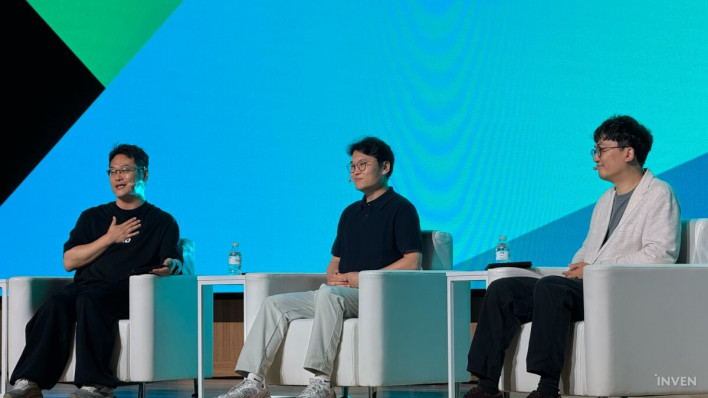
Cha Woo-jin = The reason the entertainment industry seems a bit ahead isn't because it's more advanced, but because the music market is the first to get hit whenever changes occur. The internet first touched music, and in Korea, album sales plummeted with the launch of Soribada, Bugs, and the official launch of Melon in 2002. For the next 20 years, we struggled with 'how to make money from music,' and honestly, we didn't succeed; we came this far through repeated failures.
Selling singles, spending money on music videos, making albums almost like tickets by including photocards... The industry began using those photocards as a serious money-making tool in 2015, peaking around 2022. With offline events blocked by COVID-19, companies had to raise the average revenue per user, leading to structures like 'buy 30 albums to go to a fan meeting,' which has become a major issue recently.
However, in K-pop, it is almost taboo for a company to send messages directly to fan communities. If the company's presence is revealed, the artist's popularity drops. Companies announce their vision to investors, economic journals, or at events; they never send messages to fans except for apologies. My point is that the entertainment industry has been actively responding to media environment changes for a long time, and the process of the game industry reorganizing around creators and fan communities is very similar to what I saw 10–15 years ago.
So, what will happen in the future? As of 2026, the essence of the music industry is ultimately offline—performances. You have to structure global tours to make the business work. But the performance market is saturated, ticket prices keep rising, and K-pop fans are limited, so you can't squeeze them indefinitely. That's why the biggest concern right now is IP business. We are looking for ways to expand IP into merchandise or brands to survive for 5, 10, or 20 years. That stage will come to the game industry, and games have a much greater advantage in that they do business with digital IP, not people.
Chae Jung-won = That's a great insight. Just as K-pop star IP goes into merchandise, photocards, and performances, game IP can also be expanded. However, game IP is much freer in terms of copyright when made into digital goods or merchandise, and since the game company has 100% authority, it is advantageous for horizontal expansion. Nexon is also actively pursuing such IP expansion strategies.
Cha Woo-jin = The fact that games are not people is decisive. K-pop contracts are limited to seven years, so you must make a profit within that time, but game IP has no such restrictions, so its growth potential can be infinite.
Kim Sung-hoe = I hope creators can also contribute to IP expansion. I believe a symbiotic relationship is possible where we learn from the entertainment industry's prior experiences—like offline events where people enjoy wearing mushroom hats, similar to MapleStory's orchestra or KINTEX events—as a 'future mirror' and apply that know-how to horizontal expansion.
The Double-Edged Sword of AI
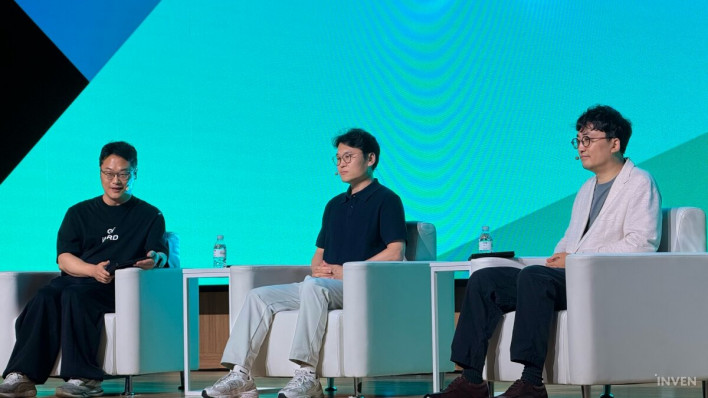
Cha Woo-jin = If you ask how much AI is used in music, no one says anything, but everyone is using it. An A&R team at an agency did a blind test for a director, mixing AI songs and composer songs, and the ones they picked as "made by a human" were all AI. The quality has risen that much. Until two or three months ago, I thought, 'AI is a useful tool and how you use it is important,' but my mind changed in three months. It's not about how to use AI, but that AI will replace almost every area. Then, it won't be about what AI can't do, but what users can't get from AI that will become more important.
Chae Jung-won = I see AI as a tool. Anyone can make things now, but that doesn't mean anyone can make them well. With 'vibe coding' (natural language coding), anyone can make a 60-point product, but consumers ultimately choose the 80–90 point ones. To get there, you still need a certain level of planning and production knowledge. However, it has the advantage of allowing one person to do what used to require a team.
So, it's clear that the barriers to entry—Nexon's production staff, capital, and publishing channels—are lowering. AI has developed enough for individual or small-scale developers to cross those barriers, so we cannot be complacent. As content overflows, discovery becomes difficult, and that's when whose judgment you trust becomes important. Therefore, creators must also possess expertise that people recognize, not just simple promotion, and ultimately, recommendations from people with similar tastes to mine will become more important.
Kim Sung-hoe = As the hurdle for development lowers and the importance of curation grows, I believe the role of creators will actually expand. Creators will extend into the realm of game developers. With vibe coding, you can make a flash game like the old "Jujeonja.com" in 5 minutes, and soon you'll be able to make commercial-level games in a week. This isn't an exaggeration; if you talk to AI developers, they talk about 6 months ago as if it were 30 years ago, saying, "That was really hard back then."
Then, an era will come where game developers upload one indie game a week like YouTubers, and users subscribe, saying, "This person's games are fun." In fact, business models like MDN (Multi-Developer Network), similar to MCNs, could emerge, where developers are gathered to handle administration and procedures while sharing profits. It's not that the status of creators is lowering, but that people with only one skill can use AI to amplify their abilities and make games alone.
The same goes for large-scale games. Suspicions of AI-generated content were raised for Call of Duty starting with Black Ops (the zombie Santa in the loading screen had six fingers), and new titles are announcing their use of AI-generated content from the start. If a giant game company says they will use it openly, it means they can inspect it more thoroughly and make it faster and better. Of course, rights issues like unauthorized learning and unauthorized reproduction must be solved together. I want to say that in the AI era, both large and small companies can benefit, and it won't just have a dystopian, dark side.
I am reminded of what a KAIST brain science professor said: "I don't know if the future AI will create is a dystopia or a utopia. But I am certain it will be a tsunami that is higher and faster than anyone expects." If it's an unstoppable tsunami, it's important to increase your chances of surviving afterward. As a consumer, I didn't play games for about three months after AI came out. AI satisfied the game's strengths: interactivity and the desire for responsiveness. It didn't need installation, and it always praised me with words that hit the mark.
But it only lasted three months. It turned out it had a strong 'flattery bias,' and since it praised me no matter what I did, it became like an 'easy mode' cheat code and lost its fun. AI cannot give the thrill of hand-shaking after beating Malenia (Elden Ring). So, as a consumer, I don't think we need to worry too much about competition with AI.
Cha Woo-jin = I heard two impressive things at an AI conference last week. One is that there is only one definition of an "AI-native" organization: "Does the company or content run or not when AI is removed?" Also, developers are divided into two types. Mid-level developers with about 10 years of experience view AI as something untrustworthy and keep verifying and approving it, while the AI-native generation in their late teens to early 20s open all permissions, including bank account passwords, and close them only when a problem arises. It's the opposite direction. They don't build by stacking details; they throw it out there first and then carve away what's unnecessary.
Another is the problem of discovery. Spotify announced five years ago that 120k songs were uploaded daily. 20 years ago, only about 30k songs made it to Billboard in a year. But AI, which has only been commercialized for a year, is now uploading 70k songs a day. Adding 70k AI songs to 120k–150k human songs makes over 200k songs a day. How will you be discovered in this pool? The conclusion reached that day was that it 'must be cool.' To be precise, it must have a narrative. It's not about flashiness, but uniqueness and personality that make it stand out. The reason I subscribe to Kim Sung-hoe is the same. He's entertaining but trustworthy, does a lot of research, and tries to stick to the fundamentals by admitting when he doesn't know something.
Chae Jung-won = That is exactly the same context that CEO Kang Dae-hyun mentioned in his keynote on the first day of NDC. In an era where handmade items are becoming rare, even if made with the same "AI click," people choose things made by someone with a narrative. They follow their tastes, like following someone on Instagram, thinking, "That person must have a reason, their philosophy is cool."
If we expand this to the corporate level, "What philosophy and roadmap does Nexon use to communicate with users?" is the narrative, context, and philosophy. That's why it's become a trend for directors to come out and communicate directly. It's because users want to see not just the game as content, but the tastes of the person making it.
Ultimately, the rarest resource is time, and the second is attention. Industries like agencies, MCNs, and MDNs that amplify that attention will emerge. Within that, Nexon and creators must build context well and earn trust to lead to the next work. When there is too much to choose from, people eventually choose what they can trust.
Kim Sung-hoe = In an era of content oversupply, the conclusion is trust in the director on stage. So, the name I dare to call out on this NDC stage is Shin Chang-seop—that is, MapleStory Director Kim Chang-seop. He comes out directly to explain patch details and probability calculations, even drawing charts. In the past, game directors were viewed like film directors—people like Will Wright, John Carmack, or Shigeru Miyamoto—but now they have become like a close older brother or someone who explains the games I like in an easy-to-understand way. The trust given that way is incredibly important, and such a director is a great asset to Nexon.
On-site Q&A
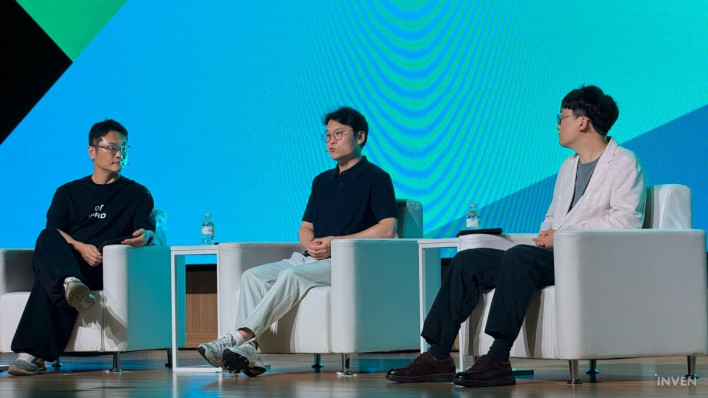
Q. With limited time, fewer people are playing directly, and even those who love games seem to be increasingly watching streamers play instead, finding vicarious satisfaction. What strategies is the game industry considering?
Chae Jung-won = I share the same concern. That's why we are strategically collaborating with 'watching' content platforms like Chzzk, Naver, and AfreecaTV (SOOP). Watching a game means at least having an interest, which is a much lower barrier to entry than for new users. We are creating devices for them to return to our games through creators, and collaborations with SOOP and Chzzk have actually begun. Secondly, I am considering whether a genre where watching itself becomes the game is possible.
Q. Games and K-pop seem to be at opposite ends of the spectrum in terms of consumer demographics, such as gender. So, even the same meme can work on one side and cause backlash on the other, which makes me think game company employees need to be careful. Should the company make separate efforts to revitalize game culture?
Chae Jung-won = Ultimately, a game is a community, and I believe it's important to create content that fits the TPO—that is, content that fits the context.
Cha Woo-jin = To add one thing, fans will become more important in the future, and the key is how you define 'fans.' In business, fans are often seen as targets to follow, but fandom-based business only works if you embrace fans as colleagues. Only when you view fans not as a market to sell goods to, but as equal beings who create culture together, can you determine how to communicate.
In fact, almost no one in the world has properly grasped this structure, so it's a challenge worth taking. Listening to the stories of people who love games will itself be a major task in a changing environment. I would like to conclude today's session by saying that how you define fans and what kind of relationship you build with them will become as important as how you expose and connect games.

Sort by:
Comments :0