Topic: In the Age of AI, How is Nexon Preparing with Data Speakers: Han Woon-hee (CEO, TRS INSIGHT), Ryu Cheong-hoon (Director, Nexon Korea), Bae Jun-young (Director, Nexon Korea), Lim Jin-sik (General Manager, Snowflake Korea) Field: Artificial Intelligence, Data Recommended for: Those considering how to build a data infrastructure optimized for the AI era Tags: #MonoLake
[🚨 Session Topic] In the AI era, corporate competitiveness is once again defined by data. This session explores how Nexon is implementing 'MonoLake 2'—an AI-Ready Data platform that allows AI to read and utilize data—building upon 'MonoLake 1,' which broke down data silos and laid the foundation for company-wide data democratization. The panelists, who have witnessed various corporate data transformations firsthand while building data platforms and applying AI, share their vivid experiences and insights.
The importance of data goes without saying. Generative AI, the face of modern AI, is built on Large Language Models (LLMs) trained on vast amounts of data. As AI technology advances rapidly, the value of data continues to grow. The amount of data secured and the effectiveness of its utilization have become core factors determining corporate competitiveness.
The gaming industry is no exception. We are in an era where service competitiveness and future growth potential depend on how effectively a company utilizes AI and data. How, then, is Nexon preparing for these changes.
Nexon has already built and operates 'MonoLake 1,' an enterprise-wide data platform. While 1 focused on creating an environment where any employee could easily utilize data, the 'MonoLake 2' currently in development envisions a further step: building an 'AI-Ready Data' environment where AI can understand and utilize data.
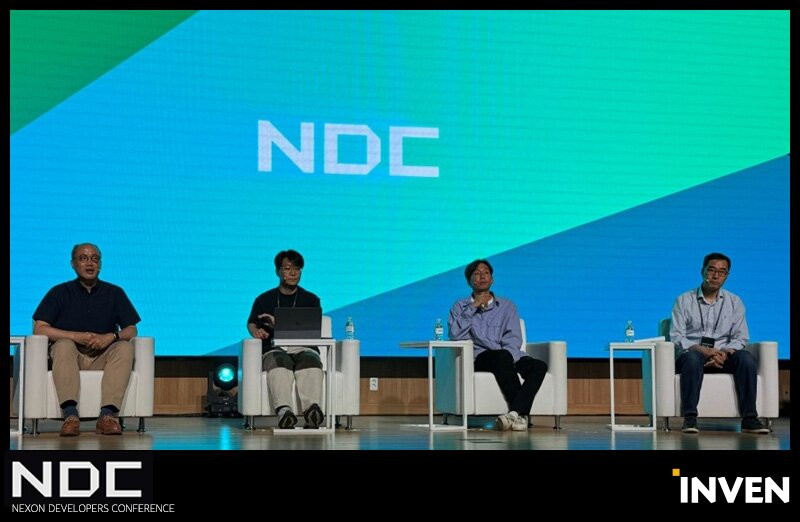
On the second day of NDC 2026, a session titled 'In the Age of AI, How is Nexon Preparing with Data?' was held to discuss Nexon's data strategy. The session was moderated by Han Woon-hee, CEO of TRS INSIGHT, with Nexon Korea Directors Ryu Cheong-hoon and Bae Jun-young, and Snowflake Korea General Manager Lim Jin-sik in attendance. The participants discussed the process of building MonoLake, operational experiences, and the data strategies Nexon is preparing for the AI era.
※ This article has been edited into a Q&A format based on the session for clarity.
In the Age of AI, Why is Data Becoming a Core Asset Again
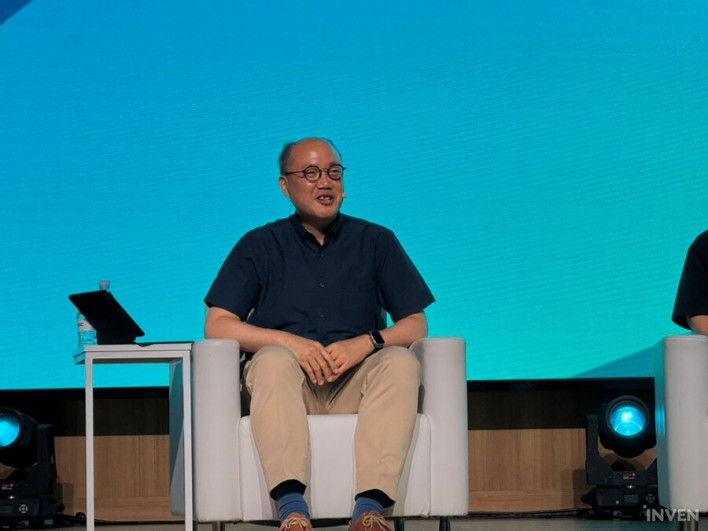
Han Woon-hee = Why must we talk about data in the age of AI?
Ryu Cheong-hoon = Because AI performance is so impressive, there is a strong perception that AI will solve everything in the future. People think that if AI advances, data will naturally follow, but the reality is the opposite. According to one survey, 67% of companies using AI stated that their data is not yet 'AI-ready.' This is true for Nexon as well. Data containing the context of games and services is irreplaceable. In that sense, we focused on data pipelines and ontology refinement rather than the AI models themselves.
Bae Jun-young = It might be easier to understand with a real-world example. LLM versions are being updated frequently these days, and I've seen many startups shut down every time a new version comes out. This happens because they try to overhaul their entire system to match the new version, which leads to problems. Seeing that, we wondered where we should focus. After considering what our unique elements were, we concluded it was data. Creating data that contains context, rather than just collecting it—this is an area that cannot be outsourced, so we focused on it.
Lim Jin-sik = No matter how much AI advances, if the underlying data isn't properly structured, the results will be meaningless. In fact, the importance of data grows even more during such a transition period.
Han Woon-hee = What exactly is MonoLake?
Ryu Cheong-hoon = In short, it is 'a lake where all of Nexon's game data is gathered.' More precisely, it refers to an enterprise data platform that collects Nexon's data in one place so that anyone can safely utilize it under the same standards. Technically, it is a data lake based on Snowflake, but the key is not the technical specs, but the fact that all Nexon employees use data from the same source.
Han Woon-hee = Isn't data usually gathered in one place? How is Nexon's integration different?
Ryu Cheong-hoon = Data is generated from a wide variety of sources, from databases built during gameplay to data accumulated during work processes. Loading such structured and unstructured data into a single space and utilizing it with a single view is not as easy as it sounds. Beneath it lies a complex data pipeline, and it only becomes usable once field experts assign meaning based on their own criteria. Even simple integration is difficult, but Nexon solved this with a single platform. The solution that served as the foundation is Snowflake.
From MonoLake 1 to 2: What Has Changed and What Does It Enable
Han Woon-hee = What were the specific difficulties in gathering data, and how were they resolved?
Ryu Cheong-hoon = The goal of MonoLake 1 was to 'make it easy for anyone to use data.' The most urgent problem at the time was that important data was scattered in various places with different standards, so if you needed data, you had to ask the responsible department and wait a long time. However, creating integrated storage doesn't automatically make these silos disappear. There were three key factors that helped Nexon resolve these silos.
First, we integrated various databases that were separated by game and function into a single Snowflake-based platform, and built MonoLake itself to provide standardized data pipelines and integrated governance. Finally, we proved the results—cost reduction and performance improvement—with numbers and encouraged voluntary participation by letting people experience the benefits firsthand.
As a result, all employees gained access to data, and various innovation cases continue to emerge. If MonoLake 1 was about making it easy for humans to use data, 2 aims for 'AI-Ready Data'—enabling AI to understand and utilize data on its own.
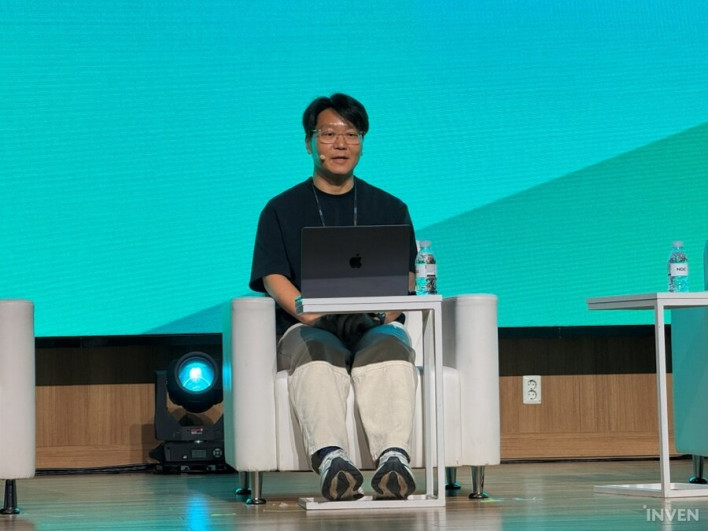
Han Woon-hee = Having seen cases from various companies, what was different about Nexon's MonoLake?
Lim Jin-sik = The starting point was different. Usually, companies have an executive suggest adopting an integrated solution because data is siloed, and then teams push for it. Nexon, however, set the direction to 'gather everything' based on strong leadership sponsorship, shared that process across the entire leadership, and managed organizational change internally.
Also, they didn't just stop at gathering data; they thought about how the organization would use it, how to provide it as a product from the supplier to the consumer (employees), and even considered the AI-Ready Data of the 2 stage in advance. That was significantly different from other companies.
Han Woon-hee = How was enterprise-wide decision-making possible, and how did the need to combine and use data explode?
Bae Jun-young = Even before adopting Snowflake, internal work on the importance of data, such as standardizing game Logs, was ongoing. However, silos between game data and platform data clearly existed. Although we had been accumulating standardized game Logs, there was a limitation in real-time capability due to the nature of Log data, and we were reviewing various solutions and costs for replication because it was difficult to touch live data directly. Once MonoLake was built, this point was resolved at once, and the pent-up need to combine and use the two types of data exploded. I believe the company-wide decision and the preparation process were more important than the adoption of the solution itself.
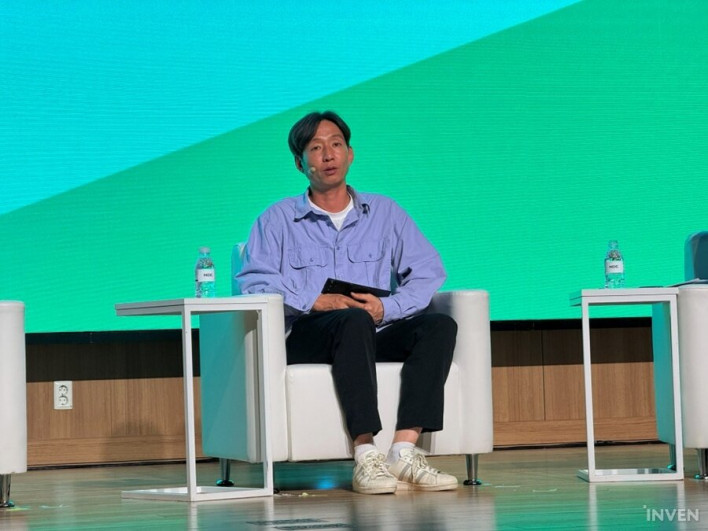
Han Woon-hee = Is there a case where MonoLake was used to brilliantly solve data needs?
Bae Jun-young = Even before MonoLake, we provided tools like Query Builders that non-engineers could handle directly, which had a significant effect on work performance. For example, operations and CS organizations previously had different ways of accessing data, so when a customer request came in, they couldn't look it up themselves and had to request extraction from the development or data teams. This caused significant delays. As data literacy improved, non-engineer organizations were able to handle data themselves, and processing speed increased significantly as domain experts looked at the data directly. I heard that as a result, there was a reaction in the user community saying, "Nexon has started working."
Han Woon-hee = Did these success stories spread to other organizations?
Bae Jun-young = The organizational culture has many venues for sharing achievements and cases, so the information-sharing system is well-equipped to the point where we even know about cases from other subsidiaries. As other organizations see this, they ask many questions, and it is spreading naturally.
Lim Jin-sik = Nexon held hackathons and internal training to spread how to use MonoLake, and they opened it to the entire company rather than designating specific departments. When we guided non-SQL-savvy staff on how to use 'Cortex Code,' a flood of cases emerged where they used data in unexpected ways.
Han Woon-hee = What is 'AI-Ready Data' emphasized in 2, and why is it important?
Ryu Cheong-hoon = The core value of MonoLake 2 is creating a system that AI and humans can use together. AI-Ready Data means data that AI can understand the context of. While 1 focused on digitizing data into a form easy for humans to read and interpret under the catchphrase of digital transformation, AI-Ready Data focuses on changing data into a form where AI models can not only analyze but also predict. Through this, we aim to create a system where AI can autonomously judge, predict, and derive insights.
Han Woon-hee = How did you actually put context into the data?
Ryu Cheong-hoon = Since MonoLake is based on Snowflake, we organized and provided training data so that the Cortex AI engine provided by Snowflake could understand Nexon's data. Afterward, we repeated the process of verifying whether the desired results were derived, making the AI gradually understand the work context.
Han Woon-hee = How did you train the AI on the field's judgment criteria (tacit knowledge)?
Ryu Cheong-hoon = We named this task 'Ontology Factory' and are conducting it company-wide. The part we pay the most attention to is how accurately the field's judgment context is incorporated into the ontology. Most of the field's judgment criteria are tacit knowledge known through experience, so the more veteran they are, the harder it is for them to explain it as clear rules. How well we extract and structure this tacit knowledge determines the quality of AI data. It's not something the technical team can do alone; collaborating with the field to perform this task is key.
Han Woon-hee = How did you get busy field and business organizations to cooperate with this work?
Ryu Cheong-hoon = A task force sponsored by management collects know-how through established procedures with the field, and then we go through a process of applying it to AI and verifying it again. It doesn't end once ontology data is accumulated; the entire feedback loop—where the field uses it, provides feedback on what's right or wrong, and re-enters incorrect parts for the AI to learn and calibrate—has become a single work process.
Han Woon-hee = When did the field actually start feeling the efficacy?
Ryu Cheong-hoon = We developed and operate a service called "AI Search" internally as one pillar of MonoLake 2. It's a service that automatically generates reports or derives analysis results when asked in natural language. The effect of data learned through the Ontology Factory leads to practical efficacy in the process of answering questions like, "How is today's revenue?" or "It's raining today, does it affect revenue?" AI gives the correct answer most of the time, but if it gives an incorrect answer, we improve it through reinforcement learning via feedback so that it produces more accurate results next time.
Han Woon-hee = Which organization operates AI Search, and what is the utilization rate?
Ryu Cheong-hoon = It is operated by the organization that creates the data. At first, we applied it to MapleStory Mobile, half-doubting whether AI could pinpoint the correlation between weather or news and revenue/concurrent users, but it actually worked well, and now we are expanding it to other Nexon games. As it expands, more requirements are coming in.
Han Woon-hee = What is needed to elicit internal efficacy when introducing a new system?
Lim Jin-sik = The specialized form differs for each company. For example, in one large corporate project, we built an app and prompting pipeline as an automation pattern so that AI functions would produce results of the same quality repeatedly. However, since the desired results could waver if the model or data changed, it was necessary to continuously provide samples so that the customer could maintain a consistent pattern.
Han Woon-hee = I heard that as AI is integrated, there are cases where employees create data applications themselves. What kind of change is that specifically?
Bae Jun-young = In the past, the platform organization played the role of developing or extracting data directly. Recently, as AX (AI Transformation) became an enterprise-wide mission, the limitation that it is difficult to obtain the expected level of results without a semantic layer was revealed. So, instead of implementing it directly, the role is changing to providing standardized information that anyone can refer to, such as design system guides, in formats like Markdown. In other words, we are changing from direct implementers to enablers who provide the materials needed for implementation.
Lim Jin-sik = Similar changes are observed at other client companies. In the past, the business department defined the problem by asking to create such a report, and the data organization played the role of solving that homework. As they started gathering data in one place and extracting insights with AI models, the mindset changed toward the data organization itself thinking about what can be done with this data. It is a flow of establishing oneself as a total solution provider that discovers problems and provides solutions, rather than just a problem solver.
Han Woon-hee = How does MonoLake 2 specifically connect to live game operations and development?
Ryu Cheong-hoon = A recently notable trend is active AI agents. Instead of humans having the will to infer data, it is a method where AI detects and notifies abnormal data first according to pre-defined context. Simply put, it can be applied to monitoring. It is a briefing service form where AI notifies of abnormal signs in advance based on learned patterns, rather than fixed thresholds like 'notify me if CPU exceeds 90%.'
From a game business perspective, hyper-personalization is key. Through MonoLake 2, we can grasp more precisely what actions a specific Character takes or which Boss they particularly struggle to defeat, and based on this, we are researching and preparing services and functions internally that point out what each individual needs.
Han Woon-hee = Has the candidate IP for hyper-personalization been decided?
Ryu Cheong-hoon = It is currently in the internal testing stage. The live application schedule has not been decided yet, but internal test results show high accuracy in terms of user care, so I think we will be able to reveal it soon.
Han Woon-hee = Do you have plans to provide Nexon's know-how to other industries or companies in the form of a solution?
Ryu Cheong-hoon = We are making various attempts in the AX transition period, and after accumulating success experiences, we intend to create opportunities to share them with other industries and the same industry. In fact, efforts to productize game-based platforms and services internally are underway, and one of them is 'Game Scale.' It is a service that collects and provides what is needed for game launch and operation, and I believe the functions created in MonoLake 2 will gradually develop in a direction where they are loaded into Game Scale.
Bae Jun-young = However, since it was centered on in-house development, more friendly documentation, security, and infrastructure supplementation are needed to provide it externally. I would like you to see it as a stage where we are preparing a structure that can do so, rather than saying when it will be released.
Data Infrastructure for AX: What Should Be Prepared
Han Woon-hee = If you could go back to the early days of the project, what would you want to do first?
Ryu Cheong-hoon = In the past, I think we were too focused on the act of accumulating data itself. If we had defined the meaning together from the moment we started accumulating data and built ontology data, we would have secured AI-Ready Data much faster. If we had designed the meaning together from the moment we started accumulating data, I think we would be one or two steps ahead of where we are now.
Bae Jun-young = In the process of creating standardized Logs, not only the data organization but also the game development organization experienced great difficulties. It is regrettable that we proceeded without syncing on the question of 'What are we going to do with this later?' If we had accumulated experience with AX like we have now, we would have pushed it more confidently, but it is regrettable that it was difficult to push forward with conviction at the time.
Han Woon-hee = Is there anything else to pay attention to when doing such projects?
Lim Jin-sik = Each organization has a different perspective on data, so for example, if there is data A, B, C, and D, and department 1 thinks A is important and department 2 thinks B is important, it is easy for conflict to arise over whether to bundle them together or split them. Therefore, data standardization must come first. On top of that, as AX proceeds, the next task is how to implement the context and meaning between data as metadata and a semantic layer.
To give one example, when one industry grows 3% per year and another grows 10% per year, the 10% side looks better if you look at the simple figures. However, if the former was an industry that was growing 1% every year and the latter was an industry that was growing 20% every year, 3% growth could be a more meaningful achievement considering the baseline. If this context is missing, it is easy to reach the wrong conclusion. Therefore, it is most important that data standardization and a semantic layer are equipped together.
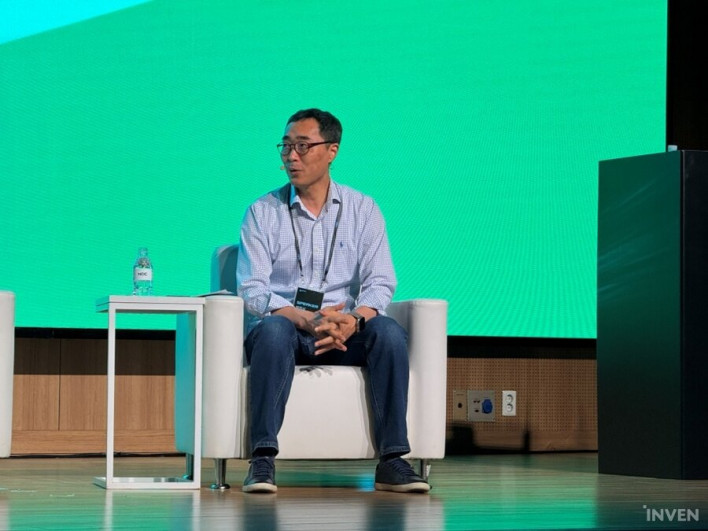
Han Woon-hee = How should companies that find large-scale investment and partnerships like Snowflake difficult get started?
Lim Jin-sik = Many customers worry, "I know we need to gather data and AI is important, but we don't have the budget." In this case, I recommend selecting one or two pieces of data that clearly exist within the company and are helpful for business. It is good to start small and expand by first identifying how that data affects revenue, what the effect would be if we supplemented it or extracted deeper insights, and then applying AX after upgrading and standardizing that data. Some places choose a "big shot" approach of gathering everything at once if they have enough budget, but that is not a common case.

Sort by:
Comments :0