For the first time in about three years, KRAFTON is overhauling the Blue Zone, a core system in 'PUBG: Battlegrounds.' The key to this update is moving beyond simple numerical adjustments to differentiate the rules for Normal and Ranked matches, which have shared the same mechanics until now.
KRAFTON unveiled the direction of the Blue Zone overhaul in its official dev log for Update 42.1. The Blue Zone, which deals damage outside the safe zone and constricts the play area, is the very rhythm of the battle royale experience, dictating when players move, where they position themselves, and what risks they take.
The current Blue Zone rules have remained largely unchanged since April 2023, meaning both Normal and Ranked modes have operated on essentially the same structure. However, player movement and combat patterns have evolved, and KRAFTON's data analysis shows that the overall game flow and combat tempo have become significantly faster than in the past.
The problem was that while the game sped up, the rules did not. Furthermore, as Normal and Ranked modes developed distinct identities over time, the shared rules failed to reflect their differences. Instead of forcing a single set of rules, KRAFTON has chosen to analyze the flow of each mode separately, adding time where it was lacking and reducing it in sections that felt too leisurely.
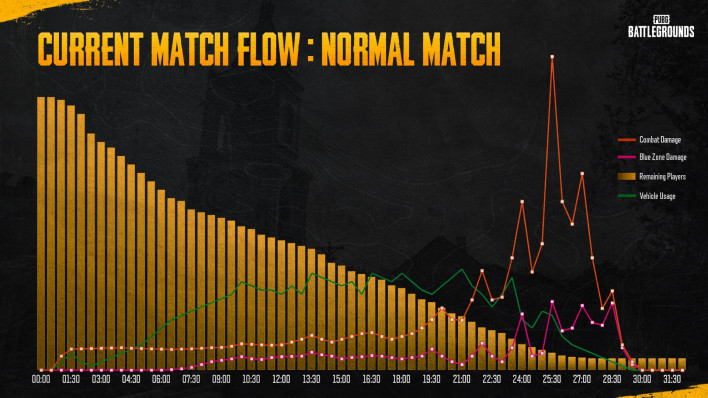
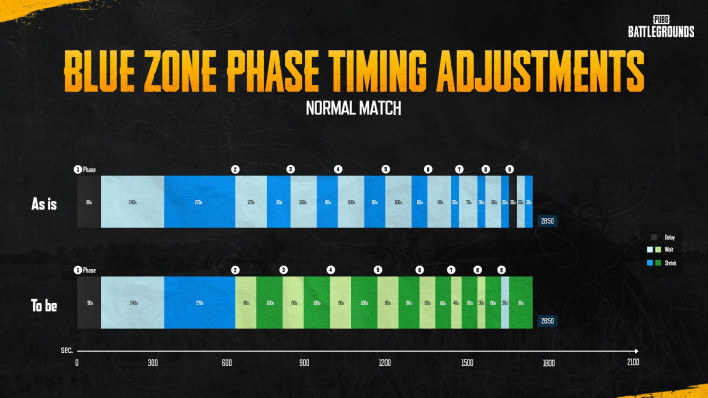
Interestingly, the direction for Normal matches is to 'slow down.' Previously, the Normal Blue Zone structure caused the safe zone to shrink faster as the match progressed. Because the zone closed rapidly, the burden of movement, combat, and Blue Zone damage was concentrated in specific phases. This often led to chaotic skirmishes in cramped spaces around Phases 5 and 6, even when the number of surviving players was similar to that of Ranked matches.
This was compounded by a tendency for players to wait and observe the situation before moving just as the Blue Zone began to shrink. As a result, teams frequently converged on the same entry points in a rush, leading to chaotic pile-ups or a persistent, heavy reliance on vehicles until the late game.
In response, KRAFTON is reducing some of the warning time (the wait time before movement) while ensuring sufficient time for the actual shrinkage. By slowing the speed at which the Blue Zone closes, the goal is to expand the late-game combat space and encourage natural combat progression rather than sudden, forced pressure.
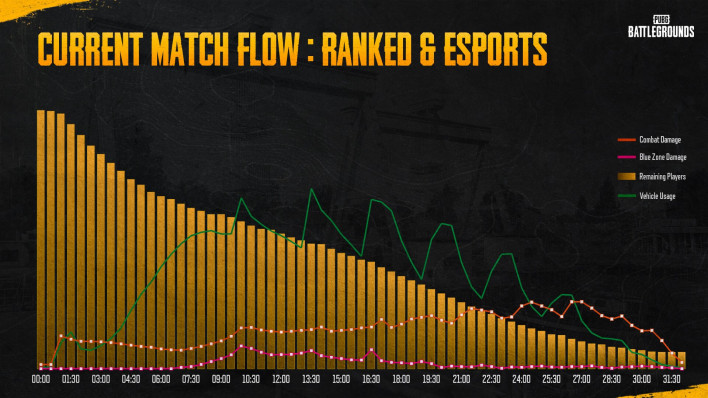
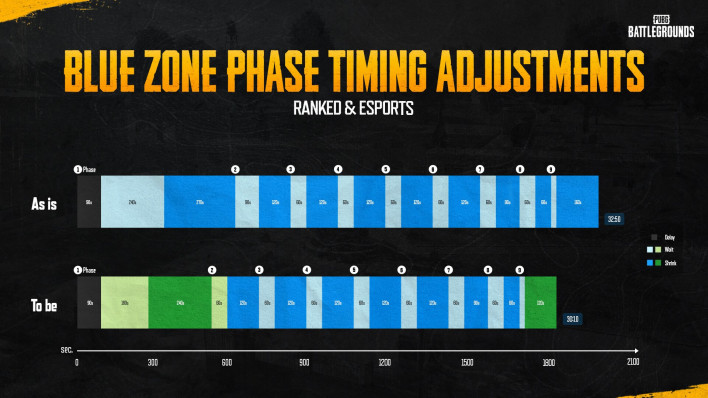
Conversely, the focus for Ranked matches is on heightening 'tension.' Given the survival-oriented nature of the mode, players often play defensively within the safe zone early on, leading to stagnant periods even after looting and initial movement are complete. The relatively large late-game safe zones and strong position adjustments also made it easier to predict the next zone, reducing variables.
KRAFTON is adjusting the duration of certain phases to reduce unnecessary early-game stagnation and increase the overall tempo. Simultaneously, it is relaxing the intensity of safe zone position adjustments to increase the randomness of where the Blue Zone forms. The intent is to make the next safe zone harder to predict, thereby increasing variables in positional competition. However, to maintain the fairness essential to Ranked play, some adjustment factors will remain to prevent late-game safe zones from becoming too lopsided.
The change with the most direct impact on the meta is the Blue Zone damage system. Previously, damage increased based on the distance from the safe zone. While this was intended to keep players within the safe zone, it only had a significant impact when players were far outside, and it was difficult to intuitively know at what distance the damage would spike.
Moving forward, damage will increase based on the 'duration of stay' within the Blue Zone rather than distance. While it will still be possible to enter the safe zone slowly in the early game, the damage will be clearly felt the longer a player stays in the Blue Zone as the match progresses. Consequently, the so-called 'late-game' ambush strategy—where players survive for long periods on the edge of the Blue Zone using healing items to catch enemies off guard—will become much more difficult.
As the Blue Zone is a system that affects the entire flow of a match, KRAFTON stated that it will closely monitor the update after implementation. Key areas of focus include whether the decline in surviving players aligns with their intentions, whether appropriate population density and combat distances are maintained in each phase, whether the rhythm of movement and combat feels too loose or too rushed, and whether players are taking excessive Blue Zone damage.

Sort by:
Comments :0