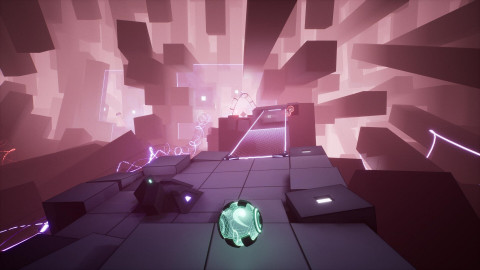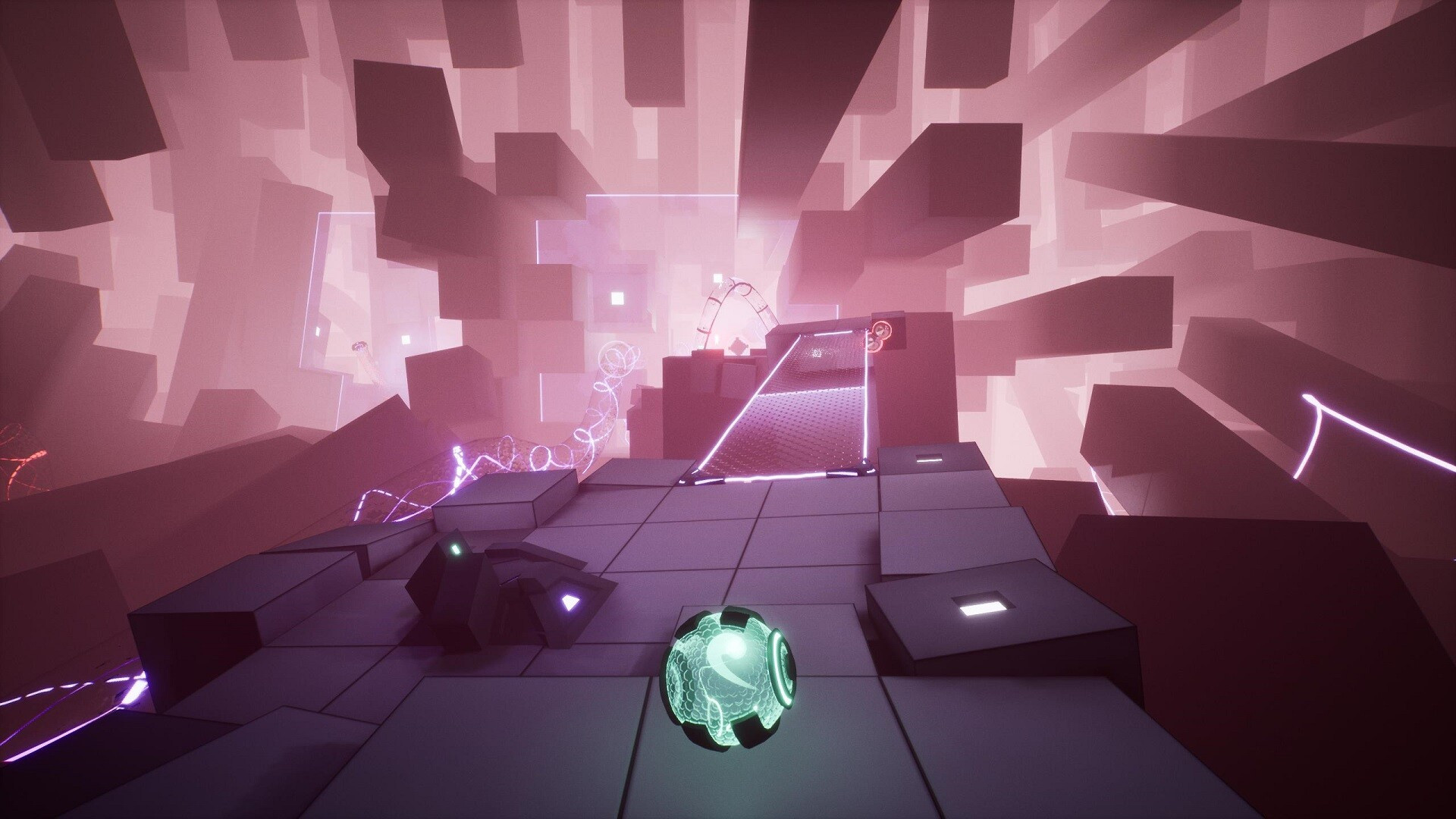
There’s a moment early in Orbyss where everything finally clicks — not because the game explains itself, but because the world around you hums to life. A dim corridor blooms into motion as pale ribbons of light spiral outward, and the orb you’re piloting feels less like a puzzle piece and more like a spark coaxing a dormant universe awake. It’s a tiny victory, but Orbyss treats it like a revelation, and over time you start to understand why: this is a game about thoughtfulness, patience, and the strange beauty of rebuilding a broken place one glowing node at a time.
You play as a drifting mote of energy, hopping between Orbs scattered through a stark digital landscape. Each Orb is both a character and a tool, overlapping across space like echoes of yourself. Orbyss loves this idea — that you can be in several places at once — and most of its puzzles are built around planning your movements across bodies that share a common purpose. It feels a bit like coordinating a small team, except the only person you’re negotiating with is your own foresight.
Where other puzzle games reward dexterity, Orbyss rewards restraint. Switching between Orbs rarely feels frantic; instead, you pause, trace a route, and commit to a sequence that only makes sense once the last switch falls into place. The game is upfront about this philosophy — “your big brain is enough,” it says — and it makes good on that promise. Success isn’t about twitch reactions; it’s about understanding how every mechanic interlocks across time and space.
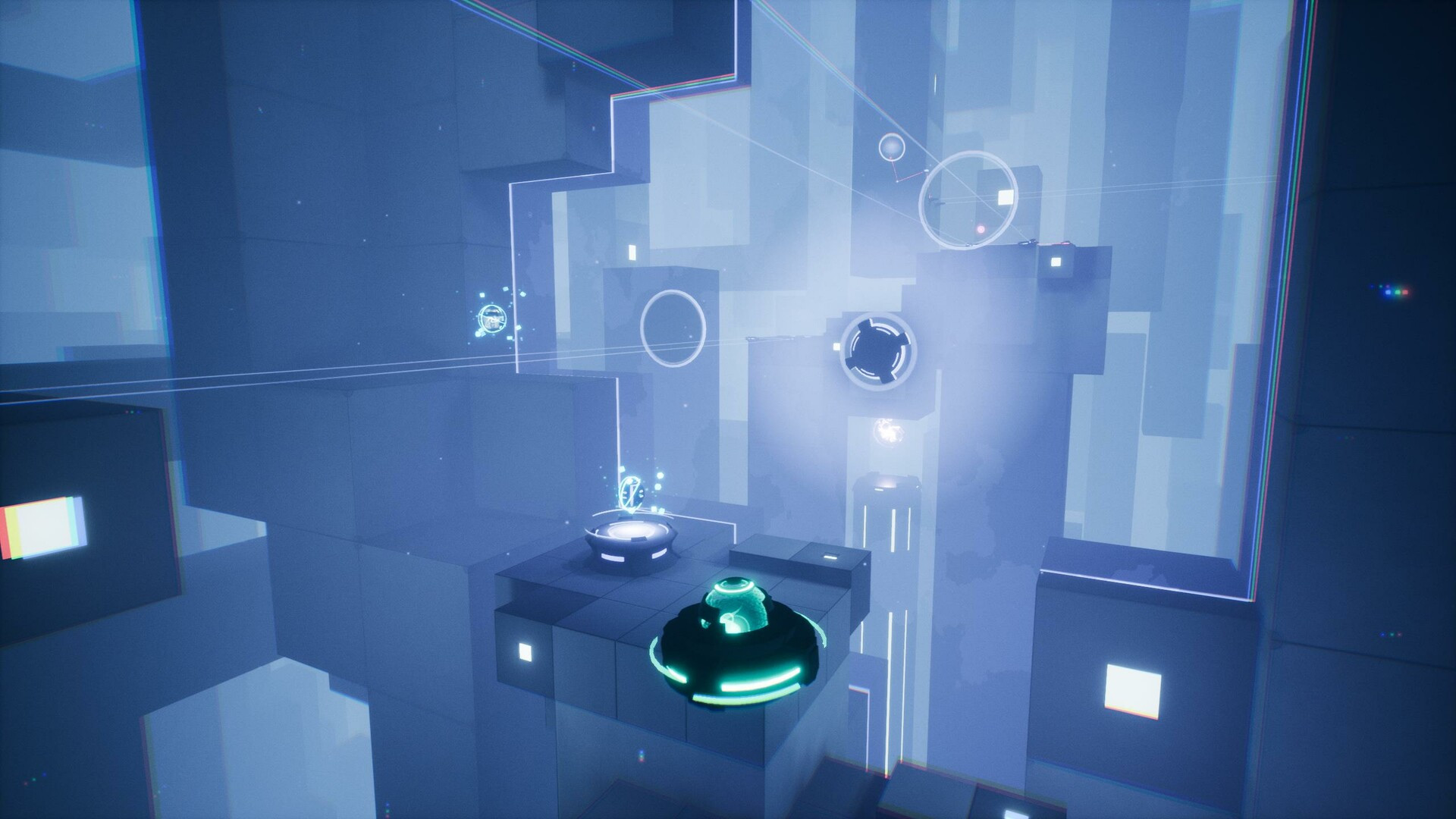
Those mechanics evolve slowly but deliberately. One moment you’re simply passing energy from one Orb to another, and the next you’re freezing time to preserve motion mid-trajectory, steering hovering drones through geometry, or navigating sound-based pathways that vibrate through the world like invisible scaffolding. Each new idea has its own personality, but the joy comes from layering them — solving puzzles not as discrete challenges, but as conversations between systems.
The universe itself feels purposefully abstract, like a cathedral assembled from digital slabs and hovering platforms. The sharp geometry is softened by floods of neon light and cascading particles, environments pulsing between serenity and unease. Whenever the mysterious shadow intrudes — a creeping presence that stains the world with uncertainty — it doesn’t just threaten you mechanically. It interrupts the quiet rhythm you’ve built, like static cutting through a song.
That rhythm is what makes Orbyss feel different from other minimalist puzzle games. The pace is meditative, sometimes almost fragile. There are stretches where you move slowly through towering structures, not entirely sure where the next puzzle begins, just taking in the scenery — spirals of light, drifting sparks, soft gradients of color that stretch into the void. It’s beautiful in a way that isn’t showy. You feel small inside it, but also responsible for stitching it back together.
And yet, Orbyss can be demanding. Some puzzles ask you to think three or four states ahead — juggling frozen moments in time, coordinating multiple Orbs, and anticipating how a drone path will intersect with your future self. When everything works, the payoff is deeply satisfying; when it doesn’t, the friction can feel mental rather than mechanical, like you’re untangling a knot that tightens each time you pull the wrong thread. The game never scolds you, but it’s not afraid to let you sit with your mistakes.
What keeps it grounded is its almost cooperative spirit. Even though you’re technically playing alone, the act of coordinating between Orbs feels collaborative — as if you’re passing ideas back and forth across different versions of yourself. Orbyss leans into that sensation, framing success as a collective effort against the looming darkness. It’s a surprisingly warm feeling for a world built from cold shapes and silent spaces.
Accessibility options — like visual cues that stand in for sound-based mechanics — reinforce that sense of inclusivity rather than compromise. They feel like extensions of the design philosophy, not afterthoughts. The game wants you to think, but it also wants you to feel capable of thinking your way through.
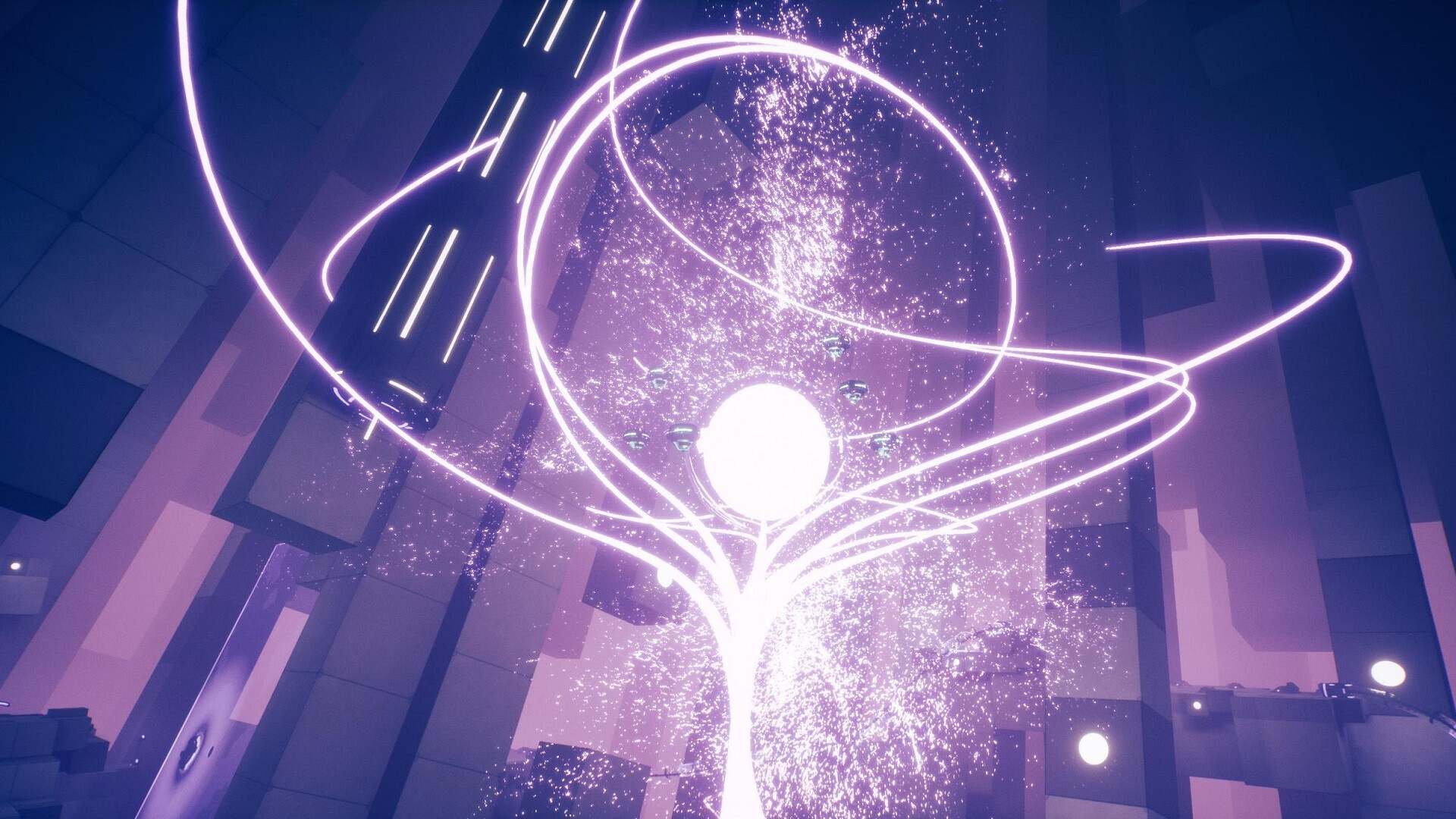
By the time Orbyss opens up its optional challenges — encouraging elegant or minimalist solutions, asking whether you can beat a puzzle by switching Orbs only once — it almost feels like the game is inviting you to speak its language fluently. Not just to solve, but to solve beautifully.
I don’t know if Orbyss will resonate with everyone. It is quiet where other games are loud, abstract where others are literal, stubbornly logical in a way that can border on contemplative isolation. But for me, drifting through its luminous structures felt like walking through a half-remembered dream — one where every spark, every line of light, was a reminder that patience can be as powerful as momentum.
-

I write. I rap. I run. That’s pretty much it.

Sort by:
Comments :0