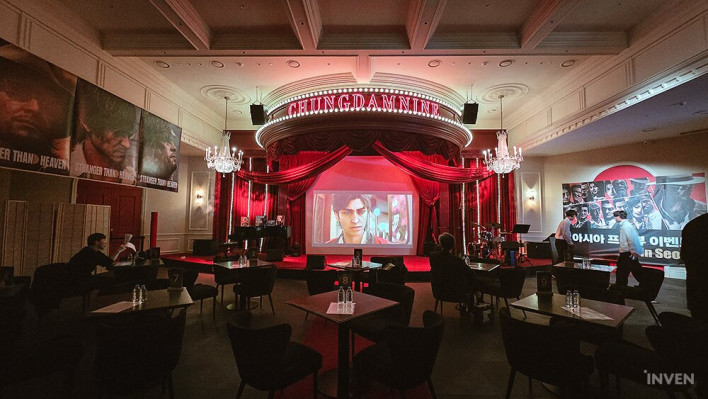
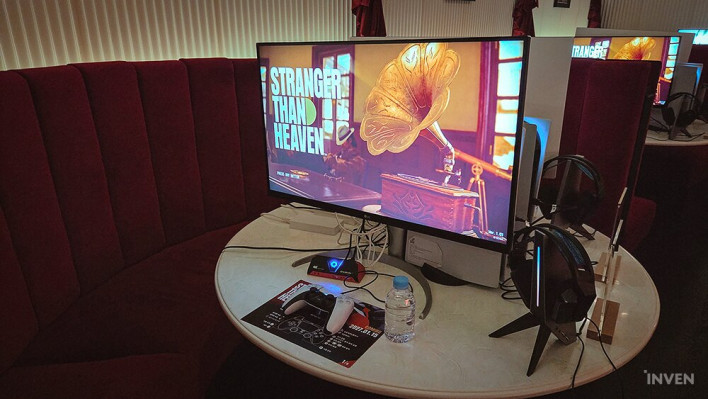
On November 27, RGG Studio held an Asia Preview event for domestic media, featuring hands-on play and interviews for its upcoming title, STRANGER THAN HEAVEN.
The demo lasted for about two hours, covering hands-on segments from the prologue—which shows Makoto Daito escaping San Francisco aboard a ship bound for Japan—to 1915 Kokura, 1929 Kure, and 1943 Osaka. Through this preview, attendees were able to experience a wide variety of gameplay elements, including exploration, combat, story, and showbiz management.
STRANGER THAN HEAVEN is a game depicting the 50-year life of protagonist Makoto Daito. Set against the backdrop of modern and contemporary Japan, the narrative unfolds across five eras and five cities. The story experienced during the hands-on preview was rich, turbulent, and violent—yet it also captured the glamour of show business and the beauty of its accompanying music.
Protagonist 'Makoto Daito' A mixed-race outsider who belongs nowhere: the beginning of the story
The prologue, played first, served as a tutorial section offering a brief glimpse into how Makoto Daito's story begins. Particularly impressive were the opening credits. The desperate plight of Makoto Daito, contrasted with peaceful jazz music, combined with different fonts and placement of text for each name, made even a simple walking scene feel like watching the opening of a film.
In 1915, Makoto Daito boards a fateful ship for Japan to escape the discrimination he faced in San Francisco for being mixed-race. It is here that he encounters Orpheus, played by Snoop Dogg, as well as his lifelong friend and rival, Yu Shinjo.
During the second session, which lasted around 40 minutes, attendees got to play the newly revealed early-game story of Makoto Daito. It depicts his arrival in Japan, where he faces a level of 'harshness' and 'cruelty' far different from what he had expected. Afterwards, with the help of Orpheus, Makoto Daito finds work at a trading company as he adapts to his new and unfamiliar home.
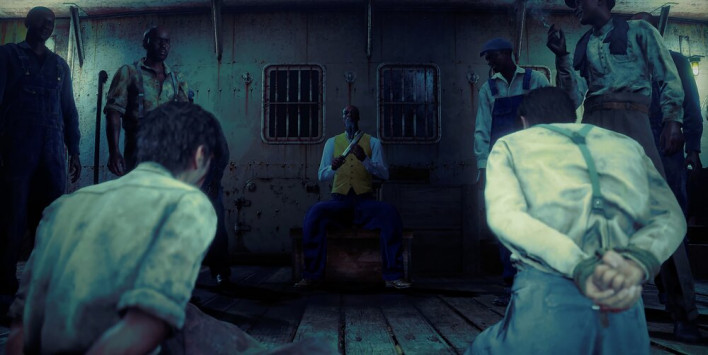
In the cutscenes early in the game, Makoto Daito's Japanese is still unpolished. Many people he encounters hurl discriminatory slurs at him for being mixed-race. Viewers can see his sorrow, frustration, and eventual resignation—discriminated against in America for his dark hair, and in Japan for his blue eyes. At this stage, Makoto Daito is young, clumsy, and innocent.
In this section, free-roaming exploration elements were introduced, allowing players to advance the story, battle warehouse guards, or enjoy various minigames. It was also possible to dine at eateries or try out different weapons. Although the map was not particularly large, fast-travel points were scattered throughout, making navigation smooth. Minigames varied by era, each featuring individual difficulty settings such as beginner, intermediate, and advanced.
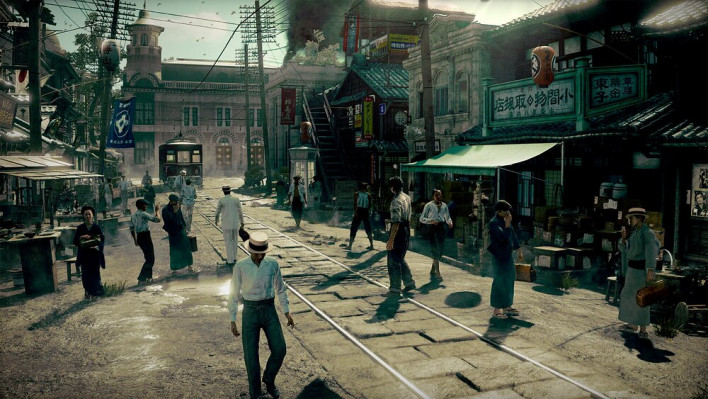
Some of the main cutscenes were quite lengthy once they began. The cutscene detailing his first meeting with Tae lasted over 10 minutes continuously without any gameplay interruptions.
The graphics, particularly during cutscenes, feature a noticeable amount of film grain noise, likely intended to create a cinematic effect. However, it is not eye-straining or distracting. Visually, it feels like RGG Studio's signature graphical style has been made even richer. Close-up shots render facial expressions and skin textures far more detailed compared to full-body views.
While the game's color palette varies by era, green tones are prominent throughout, accompanied by high contrast. This blends quite well with the game's overall atmosphere.
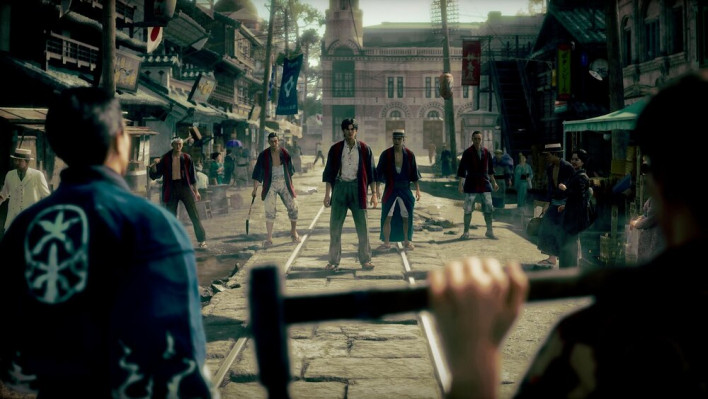
Heavy, Realistic Combat Still Feels Demanding to Master
The following two sessions featured various types of combat, including extended battles against enemy organizations, 1v1 arena bouts, and boss fights. Combat in STRANGER THAN HEAVEN requires using L1, L2, R1, and R2 to control each of the protagonist's limbs independently. This offers a highly unique gameplay experience that serves as one of the game's defining features.
However, as noted during the combat demo at SGF back in June, combat feels surprisingly heavy and quite challenging. Getting used to utilizing L1, L2, R1, and R2 is already unfamiliar, but having to time guards and dodges according to the direction of enemy attacks makes it even tougher.
Yet, executing a guard or dodge in the correct direction with precise timing triggers a Perfect Guard or Perfect Dodge, providing clear tactile feedback. The thrill of successfully blocking an incoming attack matching its direction is unmistakable—an experience made possible precisely because the combat mechanics and controls are realistic and demanding.
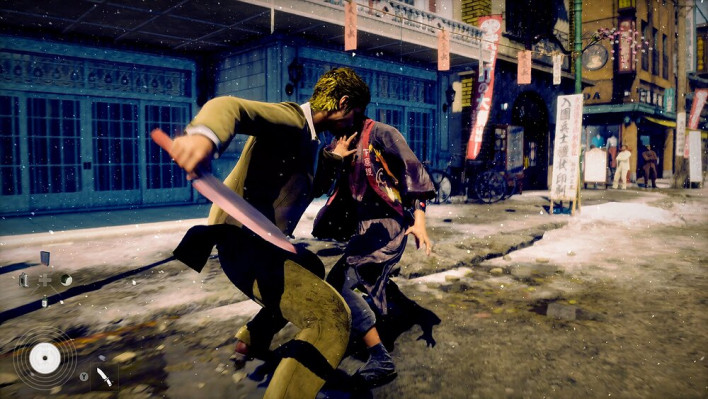
Personally, the game felt slightly slower paced than during June's hands-on demo, which meant one-handed weapons no longer felt overwhelmingly superior. This gave players more reason to experiment with a wider variety of weaponry. That said, while weapons with slower attack speeds packed a powerful punch per strike, finding the right opening to swing remained tricky.
Still, this learning curve might feel quite different when playing through the full game from the start rather than in piecemeal demo segments, as players gradually grow accustomed to the controls.
Alternating between L1 and R1 triggers various combos, which differ depending on the equipped weapon. Holding down a button executes a charged attack that rapidly drains the opponent's stamina. Players can also guard mid-combo simply by holding the guard button.
The combat experience varies significantly depending on the weapon equipped. Even weapons belonging to the same category have distinct attack speeds and control feels. Finding a weapon that suits your playstyle for each era promises to be an engaging aspect of the game.
Glamorous Show Business Beautiful Music and Sound
In the final area, Osaka, attendees got to play through music and show business—one of STRANGER THAN HEAVEN's core gameplay pillars. The sequence involved gathering sounds from various locations, arranging songs, and putting on live shows with completed tracks.
By toggling Focus Mode while walking around the city, players can listen to ambient sounds and collect inspiring audio cues. Interestingly, sound orbs also spawn during combat when inspiration strikes, which can be harvested with a button input. Even the sounds of battle feed directly into song creation.
Given Osaka's dense urban layout, numerous enterable buildings were scattered across the city. Inspiring sounds could be found everywhere, from inside shops to atop telephone poles. Sounds can be acquired simply by observing them, though temporary sounds—like applause or bird chirps—must be caught in the moment. Street noise, combat clashes, and actual musical melodies all serve as inspiration for Makoto Daito.
During show preparations, players can post flyers along streets or negotiate to put up promotional ads on large billboards. Completing sound collection and promotional activities noticeably boosts the event's overall buzz and audience draw.
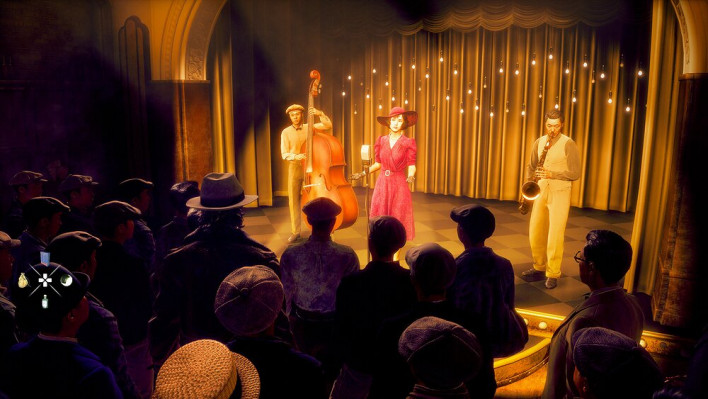
Once sounds are collected, players arrange music alongside Takashi. After finishing the arrangement, players plan the performance by choosing which track to perform, which character will perform it, and the overall stage configuration. Once preparation is complete, the show can begin. Collected inspirations are categorized by vibe, leveling up Takashi's composition skill, which affects arrangements. Higher composition levels unlock new vibes, unlocking additional musical elements.
These acquired elements can then be utilized during song arrangements—allowing players to alter the overall tone of a song by modifying the vibe of individual parts. As the composition level increases, owned tracks can be arranged in a wider variety of styles. Matching the song arrangement to the venue's requested vibe leads to a far more successful performance.
During this stage production process, every element can be fine-tuned and directed as if producing a real-life show. Beyond track selection, players can choose the vibe, arrangement, backing musicians, lead performers, and stage direction. Naturally, all of this requires money.
During the live show, players do not merely watch; simple button prompts can be executed to increase the performance score. One disappointing aspect was that net profits after the show were lower than expected. Given the substantial cost of staging a single performance, players will need to manage their finances carefully as they progress.
Due to time constraints during the demo, it was impossible to thoroughly confirm how venues are selected. However, maximum capacity varies by venue, and attendee numbers appear to depend on pre-show advertising and promotional draw.
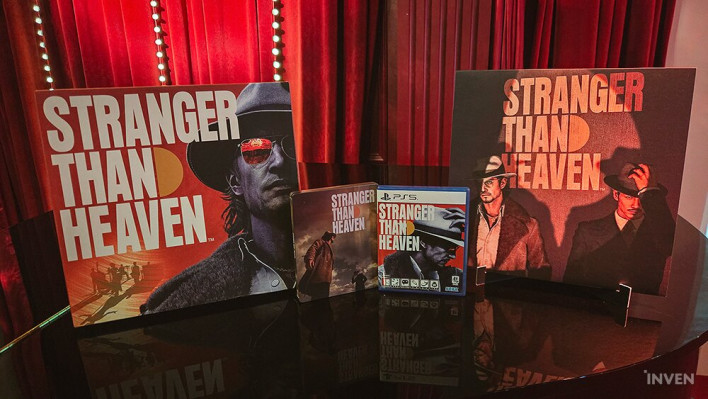
STRANGER THAN HEAVEN—a title depicting 50 years in the life of protagonist Makoto Daito—is packed to the brim with content far beyond its story, combat, and show business mechanics. Though two hours is by no means a short preview, it felt far too brief to fully take in everything the game has to offer.
RGG Studio's brand-new title, STRANGER THAN HEAVEN, is scheduled to launch on January 15, 2027, for PC, PS5, and Xbox Series X|S.