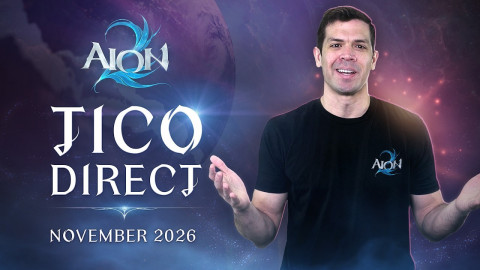
The debut title of a solo developer with zero game development experience has surpassed 200,000 copies sold on Steam within a week of release. That game is 'Slotbound', developed over the course of one year by Optima Arch CEO Min Kim. According to Steam data disclosed by Kim, 'Slotbound' surpassed 470 million won in revenue within 48 hours of launch, recording total revenue of $1,332,409 (approximately 1.8 billion won) after one week.
'Slotbound' is a defense game that fuses slot machine mechanics, autobattler gameplay, and roguelike elements. Kim began development on October 17, 2025, and released a Steam demo eight months later. On its first day, the demo logged 447 peak concurrent players, starting at 29th place on the live Steam Demo player ranking before climbing to 2nd place. 11 months into development, it passed 100,000 wishlists. The game was self-published without publishers or external investors.
What stands out most is how the game was built. Kim revealed that "virtually almost all of the code was written by AI." Development expenses mostly consisted of subscriptions for two AI coding tool accounts costing around 30,000 won per month, asset purchases, and the Steam registration fee. He sustained his daily living expenses using savings accumulated during his military service. Beyond being a simple indie success story, 'Slotbound' serves as a clear demonstration of how far generative AI has lowered the barrier to entry for game development.
However, Kim emphasized that AI is merely a tool, and that the creator must ultimately take responsibility for the fun and quality of the final product.
A 28-Year-Old with No Resume to Speak of Started with a Single Square

Kim is 28 years old. Having lived abroad since childhood, he enrolled in a computer science program in the UK but dropped out after falling behind in class. He returned to Korea alone around age 24. Because his entire family lived overseas, he lived by himself in Korea. Before making games, he played soccer.
"Honestly, I didn't have a resume to speak of," Kim admitted. Having spent his youth abroad, he lacked part-time work experience into his late 20s, making it difficult to find employment.
Behind his decision to pursue development was a long-standing promise. "Before I knew it, I was approaching 30 with nothing accomplished," Kim said. "When I came back to Korea at 24, I boldly told my uncle-in-law that I would buy a house in Seoul before turning 30, and I really wanted to keep that promise."
The turning point came when his brother, a computer science major, introduced him to vibe coding. At first, hearing the word "coding" made him not even bother trying. But deciding to give it a shot, he typed in, "Make me a game with a square that moves with WASD," and a game materialized exactly as requested. "That was the moment I thought, 'This is it,'" Kim recalled. "I'd loved games since I was young and always wanted to make them, but couldn't because I lacked coding skills, art skills, and experience. I realized I could finally do it."
A Year Sustained by Military Savings
What worried him most before committing was money, as his only remaining funds were his military installment savings. "I couldn't start with the mindset of 'let me just learn while making my first game'—I had to make a game that would definitely succeed," Kim said. Because of that, he spent the longest time finding an idea he could remain confident in until the end, rather than one he might abandon halfway through.
During the development period, he scraped by on his military savings while selling furniture and clothes from his house to pay for daily living. He barely managed to pay rent every month. He received no external funding, government grants, or investments. He applied for the 2026 Indie Game Dev Camp, but was not selected.
The actual development costs were minimal. Most of it went to subscriptions for two AI tool accounts costing about 30,000 won a month, asset pack purchases, and the Steam registration fee. "Instead, I shut myself off from society, turned down almost all social plans, and devoted myself entirely to development," Kim shared.
"Why Doesn't This Exist? This Is It!"
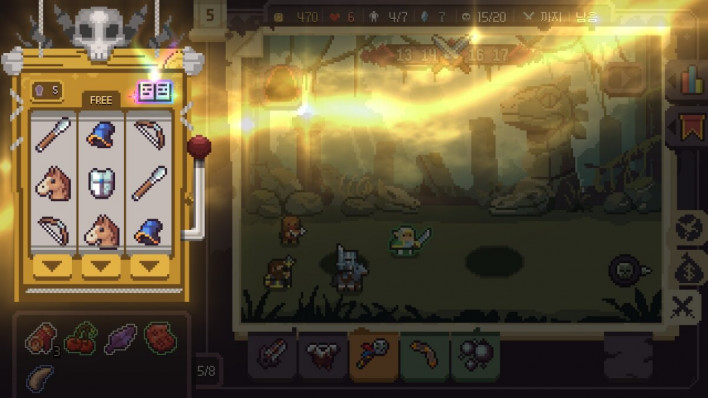
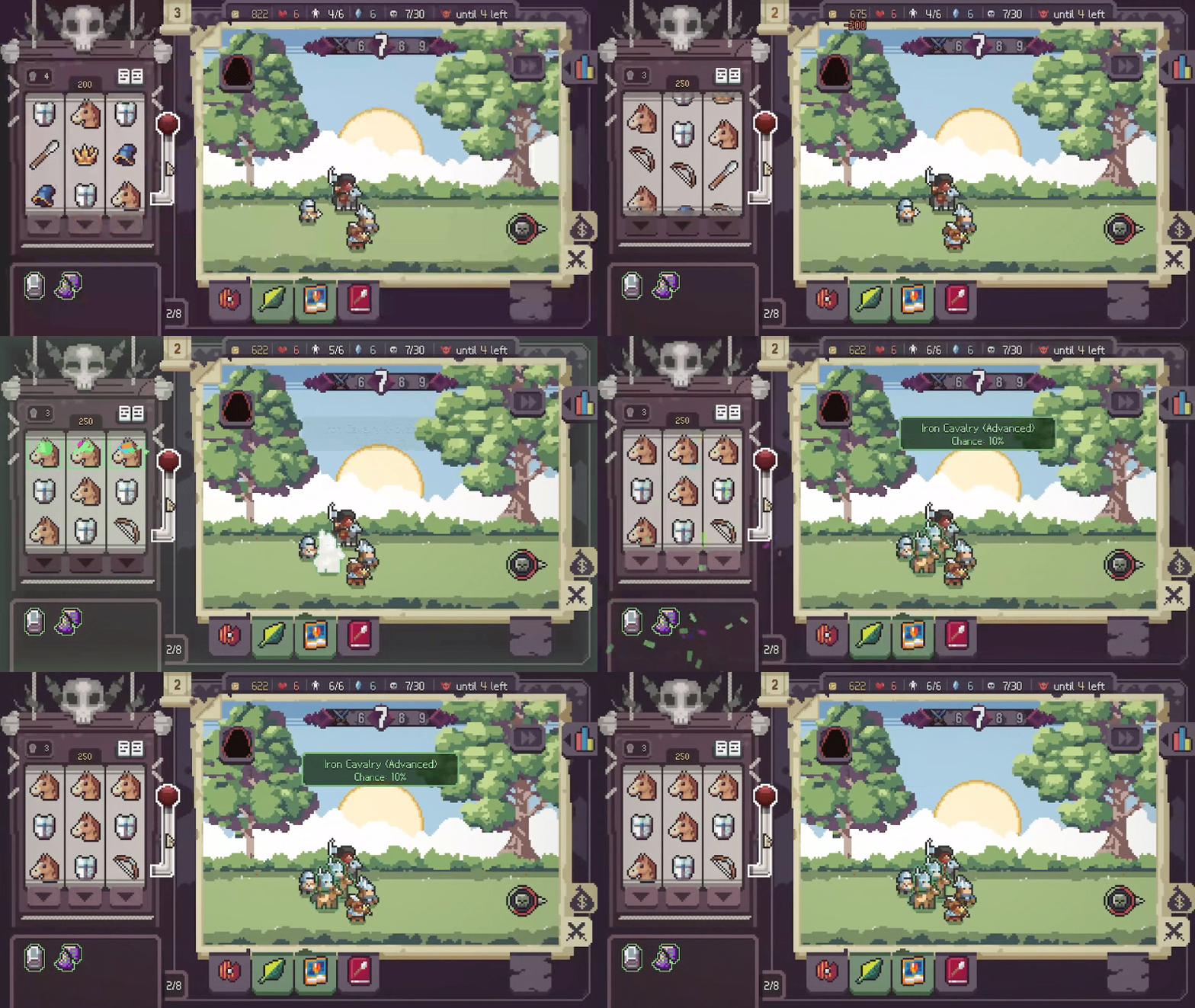
In 'Slotbound', players spin a 3x3 slot machine to summon units. They build their own army by absorbing or promoting weaker units, then use that army to defend against incoming waves of enemies.
The idea originated from 'CloverPit', a game Kim cited as his primary influence. "The moment three symbols lined up, I thought, 'If this matched spear-spear-spear and summoned a Spearman to fight for me, that would be insanely fun,'" he explained. He searched assuming such a game already existed, but existing slot machine combat games were either 1-on-1 battles or used slots merely to boost attack and defense stats. Kim said, "I thought, 'Why doesn't this exist? This is it!' and started immediately."
He used the LÖVE 2D engine and the Lua programming language. He did not watch lectures or read books; instead, he learned from scratch by giving tasks to AI step by step. He would describe what he wanted in words, test the output himself, and make adjustments. Whenever he needed something, he asked the AI on the spot to implement it.
He switched AI coding tools depending on the development phase. Early on, he used Copilot—a service bundling multiple AI models—with an account costing around 50,000 won. Later, when OpenAI's Codex came out, he alternated between two 30,000-won Codex accounts. "Since I didn't have surplus funds, I tried to maximize efficiency by switching to the other account whenever one ran out," Kim explained.
Kim stated, "Virtually almost all of the code was written by AI." His role was deciding what to make, testing it by playing directly, and catching bugs.
There was plenty of trial and error. "Back then, AI wasn't as smart as it is now, so fixing one thing would break another, or the AI would say 'it's done' when it actually wasn't," Kim said. So every time he made a fix, he expanded automated tests to check the entire game. He even built a tool that captured actual game screens to inspect them pixel by pixel. He also maintained documentation of rules for the AI to follow so it wouldn't repeat the same mistakes.
Kim emphasized, "In the end, what I had to master wasn't code syntax, but 'how to describe problems accurately' and 'how to verify whether they were truly fixed.'"
Didn't Hide the Use of AI
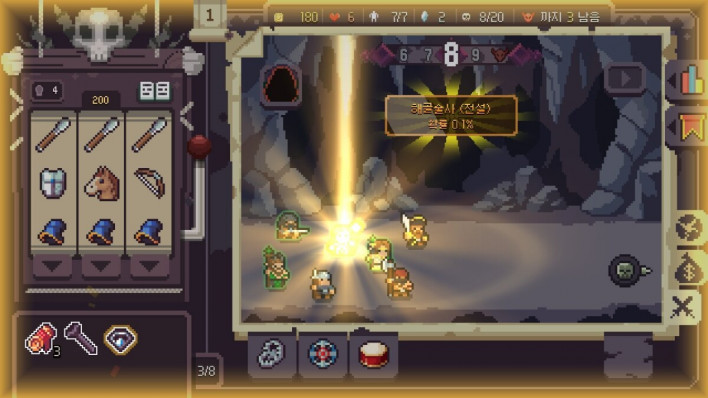
From game design to programming, art, balancing, localization, builds, and release, Kim handled everything alone. For audio, he initially used some asset packs before switching to the AI sound service ElevenLabs to produce the specific sounds he wanted. A Reddit user stepped up to create most of the music for free.
The Steam store page for 'Slotbound' includes a disclosure that generative AI was used for certain visual assets and promotional materials. According to Kim, AI was used in multiple areas, including the main menu background art and animations, the in-game shop screen, the Fate Stone screen, in-game stage backgrounds, and visual effects (VFX). The icons and units were all asset packs, while additional necessary elements were drawn by hand.
Regarding players' concerns over AI usage, Kim answered, "I completely understand." He added, "The reason I disclosed it transparently is simply because I dislike lying. I believed that even when using AI, affection and passion can be poured into a product, and that players can feel it." He continued, "For now, AI is just a tool, and the creator is ultimately responsible for the fun and quality of the final product."
Kim picked "when I couldn't trust my own game" as the hardest moment. During development, countless moments arose where he wondered, 'Is this even a game?'—leading him to erase and remake things he had worked hard on. Spending long periods fighting alone while mostly cut off from society also brought intense loneliness. Near the end of development, his heart sank when mini-games copying 'Slotbound' appeared twice in China.
What kept him going were the players. Kim said, "Every piece of feedback from players who tried the demo was confirmation that 'this game is fun.'" When counterfeit games emerged, a Chinese fan even reported them on his behalf. He added, "As a gamer myself, I think the desire to 'finish and complete this game no matter what' remained with me until the very end."
The Key Secret: 'A Single Core Fun Element'
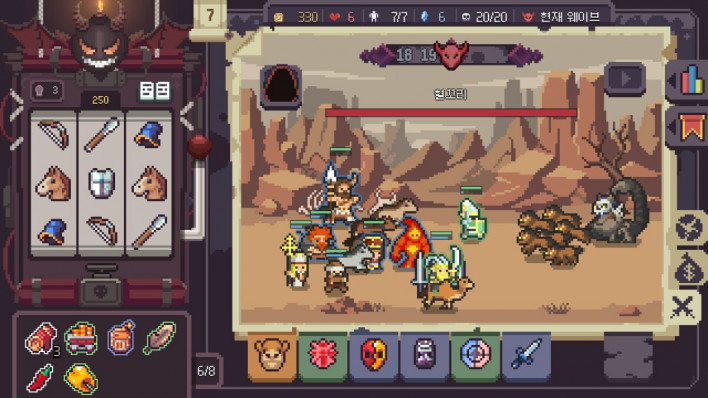
The solo development secret Kim shared is focusing on a single core fun element. For him, the moment of 'spinning the slots creates my army' was everything. Anything that compromised that core fun—no matter how good an idea—was pushed aside.
Working alone also made automating verification crucial. By setting up automated tests that checked the entire game with every fix, instances of new changes breaking existing features decreased noticeably.
Kim emphasized, "What's most important is execution power and metacognition about your own game. You must try to see your game's current state through the eyes of a player." As for scheduling, stamina management, or prioritization, he said there wasn't much to say. He slept when tired and spent almost all waking hours developing. Rather than setting strict priorities, he built whatever came to mind immediately. He relied mostly on intuition for feedback, while dedicated players who spent long hours on the demo pointed out late-stage balancing issues and shortcomings.
When asked how the demo went viral, Kim answered, "I don't know exactly because I didn't look closely at analytics." However, he noted that response from YouTube and China was the strongest. Interest from Chinese players was particularly high, and even now, roughly half of all Steam reviews are in Chinese. He added, "I was too busy fixing bugs and addressing feedback to look at metrics or graphs."
The demo went up to Stage 2. For the full release, he expanded the battlefields to six locations and added Infinite Mode, Fate Stones, a compendium, achievements, leaderboards, a second slot machine, and controller support. Since feedback on the demo was overwhelmingly positive, he focused on packing in content and creating an experience distinct from the demo.
Promotions did not yield much effect. During development, he posted on Reddit or Threads whenever he thought of it, but received little response. Kim said, "It suddenly blew up after the demo launched, so in reality, promotion had almost no effect."
He self-published without a publisher. Although he received many inquiries from publishers, Kim explained that none offered attractive or breakthrough proposals. He viewed modern marketing as consisting almost entirely of creators, Shorts, and Reels, making publisher revenue splits feel overly steep. He declined investments for the same reason. Kim said, "After enduring so much hardship to get here, sharing equity just for immediate comfort didn't appeal to me. I launched it with the determination to face everything on my own until the end."
The regular price was set at 12,000 won. As of the 24th, it is listed on Steam at 10,800 won with a 10% launch discount. Considering a play time of over 10 hours and a solid amount of content, Kim felt the 10,000-won price tier was appropriate.
Exceeding Expectations: Over 10 Updates in 10 Days
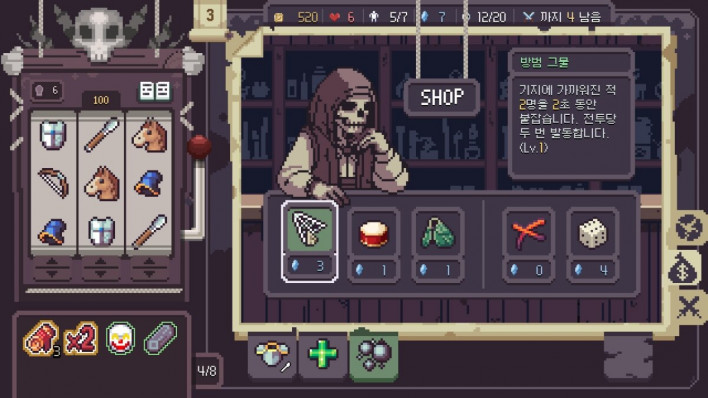
Launch performance far exceeded Kim's expectations. "Honestly, I was hoping for 100 million won in 24 hours and around 500 million won in a week," he said. "I never expected this many people to play." The top sales region is China. Chinese also accounts for nearly half of all user reviews, followed by English and Korean.
Along with commercial success came a flood of technical issues. Kim pushed out over ten updates in the ten days following launch. Problems included mysterious crashes occurring only on specific Intel CPUs, the game failing to launch on outdated Steam clients, and Windows Security blocking the executable file. Other issues included late-game lag in Infinite Mode, leaderboard manipulation, leaderboards failing to open in mainland China, and hotkeys not working due to Input Method Editors (IMEs). Kim checks Steam discussion boards and reviews daily, capturing reported bugs and fixing them immediately.
The most frequent feedback in reviews concerned drop rates. Opinions were especially common that Legendary and Prism units rarely appeared even during extended play in Infinite Mode. However, Kim did not raise the rates. He explained that granting them too frequently would diminish the thrill of getting one, making him hesitant to adjust the odds recklessly. He added that if players deliberately combine elements like Cores effectively, they can reliably obtain high-tier units.
"I'm Not Someone Who Will Disappear After Making One Game"
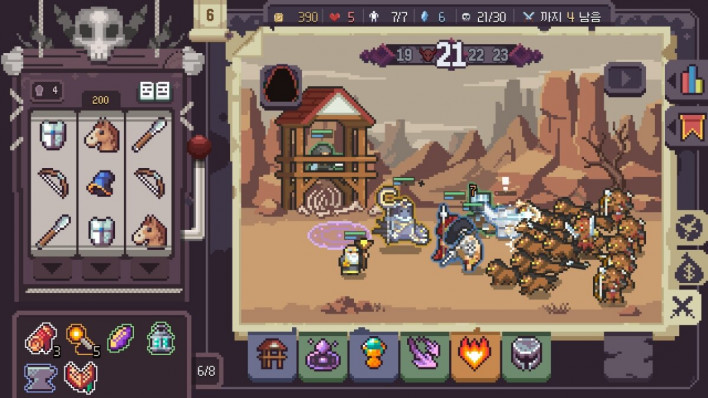
For the time being, 'Slotbound' will continue receiving bug fixes, balance adjustments, and content updates. Currently available on Steam for Windows and Mac, releases on mobile and Nintendo Switch are under consideration. Kim plans to start developing his next title around early 2027 and intends to keep working solo for now. "I don't know how much further AI will evolve, so I plan to do as much as I can on my own," he stated.
Regarding the domestic indie game environment, he expressed that he does not expect government support. "I'm not someone who lives relying on others," Kim said. "While I felt desperate during the truly hard moments, it was ultimately something I could overcome on my own."
However, he pointed out that assistance is needed for handling overseas copyright infringement. When knockoff games appear on foreign platforms, solo developers have almost no way to respond directly. "If that Chinese fan hadn't reported it for me, I wouldn't have known or been able to stop it," he said. He suggested that having a support channel to help solo developers navigate procedures like overseas copyright protection or game rating classifications would be beneficial. In his view, overseas copyright issues for Korean content are areas where the government could provide meaningful help. Expressing his hope for further growth in Korean indie gaming, Kim declared he would also offer education or consulting to the extent he can help.
To those looking to make a game without prior development experience, he encouraged them to just take the leap. "Taking that first step is the beginning. I started from 'a square moving with WASD,' too," Kim said. "Now, thanks to AI, the barrier to entry has become extremely low." However, he emphasized that finishing the product ultimately remains the developer's responsibility. "Clear up what game you want to make, play it directly every day, and don't give up—I think that's what matters most," he advised.
Finally, Kim expressed his gratitude to the players. "It's not because I'm great that this succeeded, but because all of you played and sought it out," he said. "I'm not someone who will disappear after making just one game. I have many games I want to make in the future, so building trust with players is my highest priority." He promised, "I will keep fixing it and making it better."