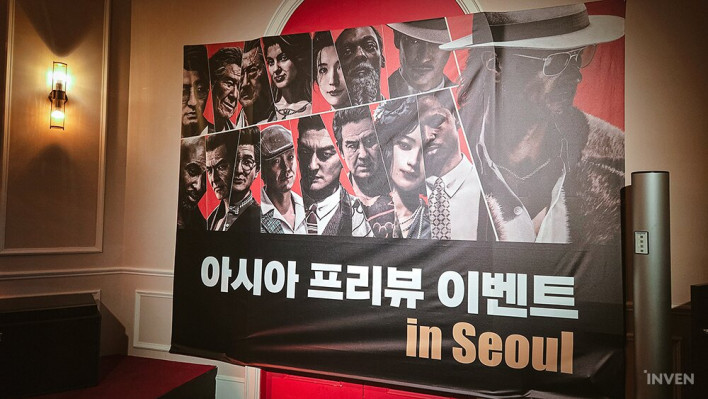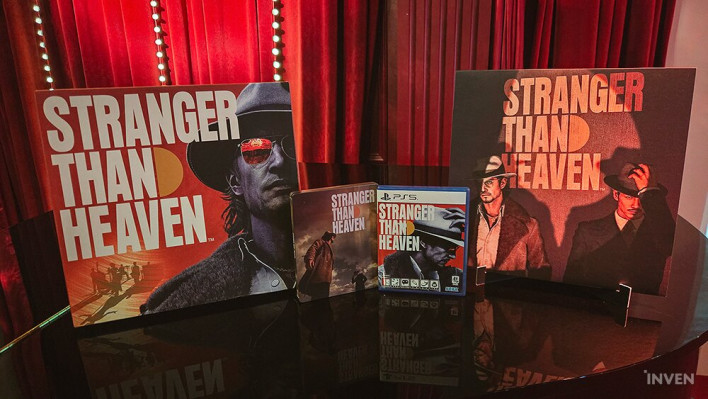
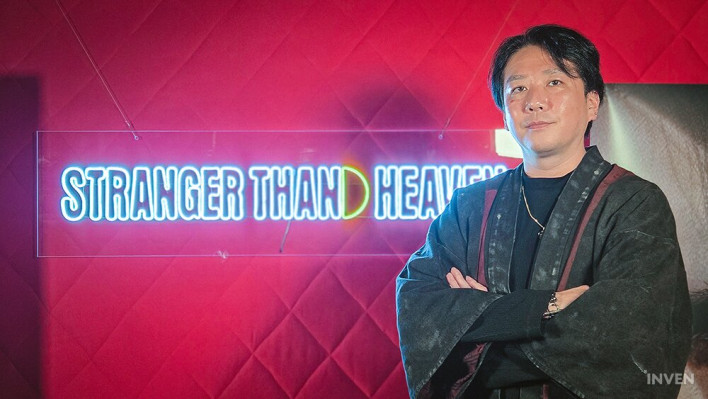
Sega held a media preview event for its new title, Stranger Than Heaven, on November 27 in Cheongdam, Seoul. The preview event featured a hands-on gameplay session of approximately two hours covering the overall game, along with an interview with producer Hiroyuki Sakamoto.
Through the interview, we learned more about Stranger Than Heaven's unique combat system, its signature showbiz features, as well as details regarding its five eras and settings, and protagonist Makoto Daito.
Stranger Than Heaven is a new title from RGG Studio, famous for the Like a Dragon series, and will showcase a fresh narrative and gameplay. The game is set to launch on January 15, 2027.
The unique combat system might feel like a barrier to entry for some players. How did you strike a balance between raw combat immersion and accessibility?
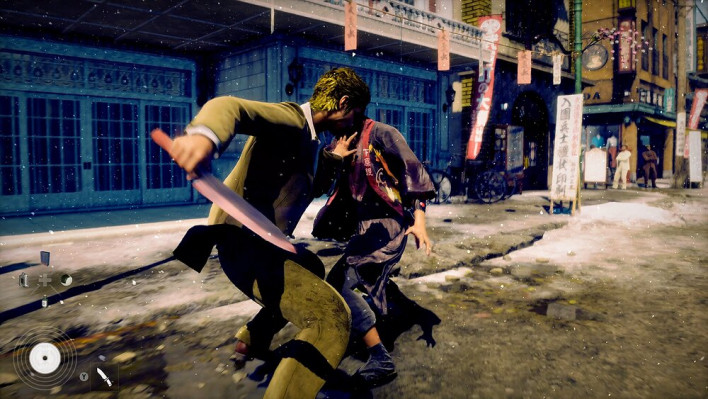
"You may have found it difficult because you played only a specific section of the game in this demo. However, we designed the game so that if you play from the very beginning, you will naturally learn the controls. You don't need to worry about that.
Since this game depicts the protagonist's 50-year life, you will experience combat over a long period. Players will also operate the controls for many hours, so we designed enemy compositions and other elements to help players naturally get used to the controls over time. The more you play, the better you will understand how to tackle combat.
Of course, we know that some players struggle with action games. In Casual Mode, players can enjoy exhilarating combat with simpler controls. We have also prepared plenty of options for beginners, such as automatic health recovery. We structured the game so that both action veterans and players who find action games difficult can enjoy it all the way to the end.
How much do the action and combat feel change depending on each weapon? Which weapon do the developers consider the most unique?
"Even within the same combat style and category, the control feel changes subtly depending on the weight or characteristics of the weapon used. There are also differences in the techniques available depending on the weapon, which we hope players will enjoy as well. It's hard to single out one weapon that the development team thinks is the most unique. Each weapon has different attack speeds and combo types. We hope players enjoy the unique characteristics of every single weapon.
Are there any behind-the-scenes stories regarding the implementation of the combat system?
"For the independent left-right control system, we built everything from scratch, including all animations. We didn't use any development assets from previous series. As a result, we had to craft the combo system and motion transition timing in extreme detail so that combos would seamlessly connect when players press buttons freely. We faced a lot of difficulties in that area.
On PC, the controls might feel unfamiliar. How are PC control optimizations handled?
"It would be best to play with a controller connected on PC as well. If possible, we recommend preparing a controller to play. Because it was designed to link with the left and right L and R triggers, we believe playing with a controller offers the best hands-on combat experience and immersion.
How do songs completed through showbiz affect game progression?
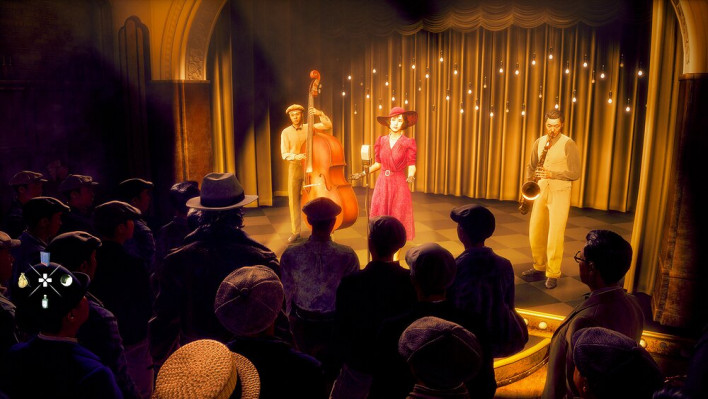
"Each showbiz performance requires a specific atmosphere. Completely altering the mood through arrangement of existing music and tackling the performance with that song is one strategy.
The income earned from completing various performances becomes a key source of revenue in the mid-to-late game. There are also benefits to gain when clearing all showbiz content in each era. The tracks used in showbiz carry over even as the era changes. As you steadily develop a song, its box office level rises, giving you certain advantages when reusing that song in the next era.
What did you focus on when implementing the musical genres of each era?
"Since a long period of 50 years passes in the game, selecting songs that were popular in each era or fit the time period presented some difficulties. We paid close attention to selecting songs that felt appropriate for the game while considering historical reality.
However, if we only used songs popular in those times, it could feel a bit plain or amount to nothing more than faithful historical accuracy. We added elements like musical arrangements so players can feel the period atmosphere while modern audiences can fully resonate with it. For example, even a very old song can feel completely different if arranged in a polka style. We put a lot of effort into those aspects. We expanded the range so players can enjoy arranging a single song into multiple genres.
When organizing a show program, you select performers, and for certain characters, you can also change the instrument they play—such as swapping a piano for an accordion or guitar, or replacing a saxophone with another instrument. We designed it so that even the same song can leave a different impression depending on the instruments used.
What were the criteria for selecting the five cities and eras? How did you distribute gameplay volume and density across each era?
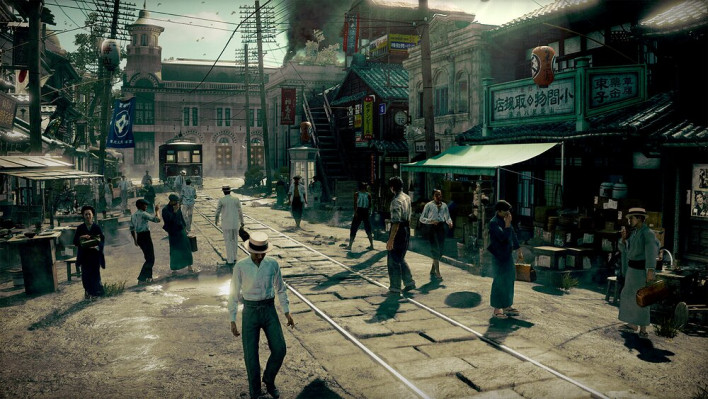
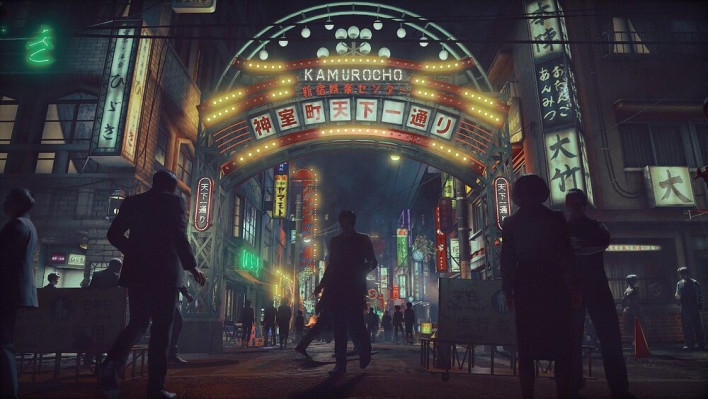
"No eras were considered and then cut. From the initial planning stage, we set out to build five eras and five cities and began development. The eras and settings were determined according to the main scenario concept. Why it starts in Kokura in 1915 and ends in Kamurocho in 1965 was all decided based on the design of the main story.
We tried to keep the gameplay volume and density as equal as possible across each era. There won't be any era with an extremely small amount of content. Each era features a variety of minigames and shops. We believe players can explore every corner of the different eras without feeling anything is lacking.
Recreating historical accuracy and atmosphere became harder the further back in time we went. In particular, for 1915, it was difficult to gather materials or interview people who lived through that era. In those cases, the development team exercised imagination and pondered what kind of period setting would be persuasive.
What we are making is a work of fiction, not a literal reproduction of actual history. As entertainment, we prioritized how to make it fun for players to enjoy. Where reference materials or information were scarce, we supplemented them with the development team's imagination.
Does the gameplay and overall atmosphere change as the era transitions?
"The biggest change is definitely in combat. As you grow through combat, the number of usable techniques increases. Dedicated modes that were initially locked will open up, allowing you to experience new elements such as defeating enemies using those modes.
As mentioned in past interviews, this game is not a modern-day drama. Comedic substories like the ones seen in previous modern titles are fundamentally absent.
While the main story proceeds in a serious tone, various side content exists. However, these were also created to match each era and consist of stories that evoke the atmosphere of that period. We believe players will be able to enjoy them thoroughly on their own merits.
The historical background must have imposed constraints on creating minigames and content.
"One rule we established during development was not to use technology that did not exist in each era. Minigames were also built considering these limits; for example, what players can enjoy in Kokura was kept within the scope of technology existing at that time. In Kokura, we implemented traditional Japanese games enjoyed since long ago, such as arm wrestling, spinning tops (koma), and card-slapping games (menko).
However, as eras progress, various minigames increase. For instance, in the final era of Shinjuku, players can play pachinko. Since it is pachinko from that period rather than modern pachinko, it takes a very simple form. We hope players can appreciate that aspect as a reflection of how people enjoyed pachinko back then.
How do Makoto Daito's personality and values change over 50 years?
"This is a core element running throughout the game's story. How Makoto's personality and outlook on life shift from his youth to his older years is portrayed through the main story. Players will be able to deeply empathize as they experience following one man's life.
Among all the games we have made so far, this is the first time we've depicted a 50-year span in a single title. It was a new challenge, but when playing the finished game, I felt we had created an epic tale that captures how people change over long spans of time.
When players clear the game to the end, to exaggerate a bit, I hope they feel as though they've experienced another person's life alongside their own. Much like the satisfaction felt after finishing a book, I believe players will experience the fulfillment of truly having lived someone else's life.
What is the meaning behind Makoto Daito's tattoo? What is the biggest difference between Makoto Daito in the initial planning stage and now?
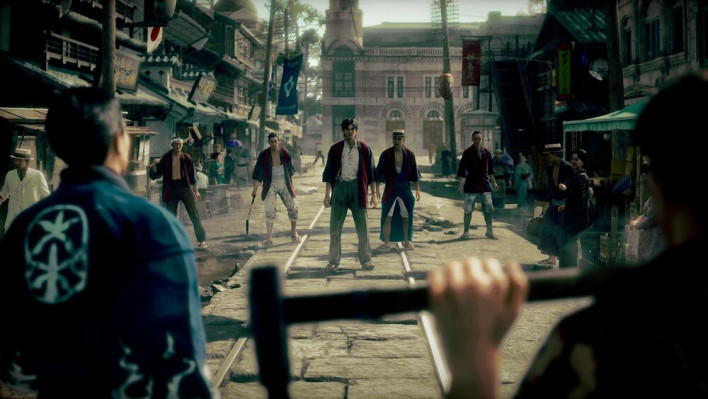
"We don't talk extensively about the tattoo in the game, but the fact that Makoto is of mixed heritage might serve as a hint. Taking that as a clue, I think many pieces will connect.
There isn't a huge difference between Makoto in early planning and Makoto today. As an original character, we deliberated a lot over how he should age across eras and how to express Makoto's circumstances in each period through his design. The design team came up with great proposals for that, so I think it turned out very well.
Are there connections to the world of the Like a Dragon series? What are the plans for turning Stranger Than Heaven into a series in the future?
"We minimized elements that rely on the existing Like a Dragon series as much as possible. You can consider that there is nothing you can't enjoy without having played the Like a Dragon series. In fact, if you play Stranger Than Heaven first and then play other Like a Dragon games, it might leave room for interesting imagination.
Stranger Than Heaven is fully accessible to new players. We took great care to ensure it can be enjoyed without knowing any connections to past titles. As for future plans for Stranger Than Heaven, I honestly have no idea yet (laughs).
Many famous global stars appear in the game. Given that it's a period drama, how did you ensure their presence doesn't disrupt immersion? Also, how significant is the role of Orpheus, played by Snoop Dogg?
"Because the narrative was already established, our highest priority during casting was how well the actors could portray key characters in the story.
Globally famous pop culture stars participated in this title. Everyone understood the tone of the game and thoughtfully considered what synergy their casting could bring. They delivered the performances we hoped for with immense care. Rather than us looking after them, it feels more like they did so much for us.
During the actual recording process, everyone did fantastic. While some lines and performances required multiple takes, in the end, both their acting and singing yielded results beyond our expectations. I am truly grateful.
Orpheus, played by Snoop Dogg, holds a very major role. The protagonist Makoto Daito decides the direction of his life upon meeting Orpheus. That is how important a character he is in this game.
Have any parts been modified or improved based on feedback after previous demos? Were there any elements cut due to development schedules or technical constraints?
"The area modified and improved the most is definitely combat. We received a tremendous amount of feedback regarding combat feel, impact, responsiveness, and control after our initial demo for media members at SGF. We adjusted the direction of elements we originally planned internally and underwent extensive tuning.
We are still making minor tweaks even now, and I believe by launch, it will be completed into a game that players can enjoy with full satisfaction.
There weren't really elements we had to abandon due to schedules or technical limits. From the start, we set out to make a game depicting 50 years of one character's life, and we developed it considering the necessary conditions to achieve that. Ultimately, I feel we completed a game of appropriate scale.
What we want to make is not a massive open-world game, but a narrative game. We value creating a format where players can best enjoy the narrative, a game that truly stays in your heart when finished. In that regard, I think it turned out well.
Lastly, do you have a message for Korean players?
"We are getting close to release. Although we have shown various aspects of the game through media preview events, there is still so much we haven't conveyed relative to the game as a whole.
This is a title into which we poured everything we can currently do when creating a narrative game. Even if you haven't played the Like a Dragon series before, if you're interested in a new style of narrative game, we hope you give it a try. You'll be able to feel the charm of the games we make.
Also, we put a huge emphasis on making a game that gets better the more you play it. We hope you trust that and keep playing. It's a game that gets richer the more you chew on it.