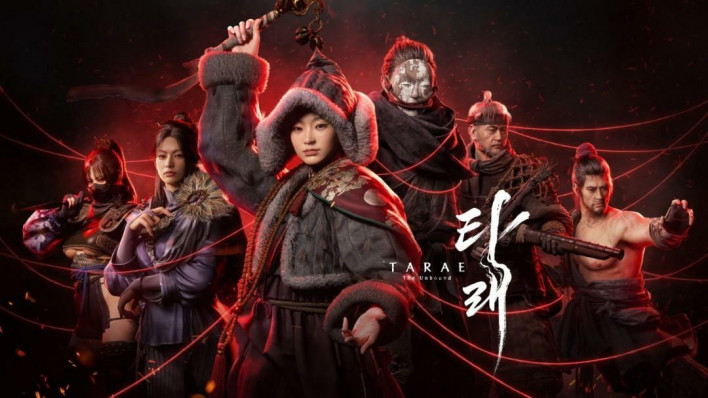
Roughly three months have passed since 'TARAE: The Unbound' (hereafter TARAE) was first revealed to the world. Its debut took place on stage at Gamescom 2026's Opening Night Live. While it was a bit regrettable that it made a brief appearance late in the show when fatigue had hit its peak, it was still one of the most eye-catching titles among KRAFTON's revealed lineup.
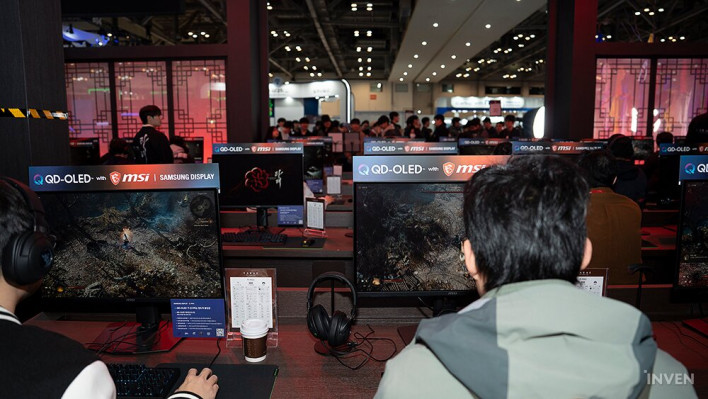
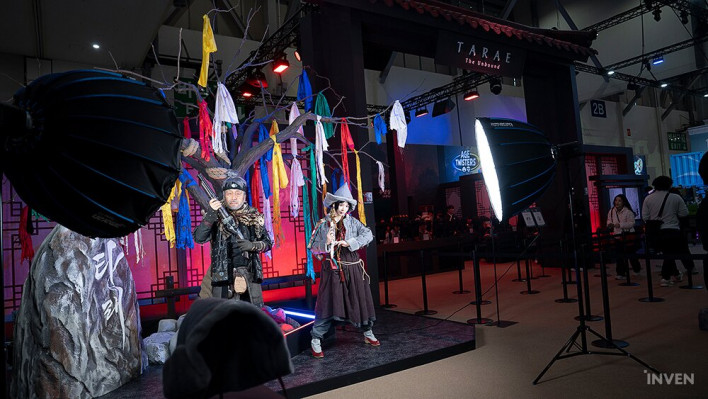
Fast forward through several announcements and showcases to G-STAR 2026. As soon as the venue doors opened, I headed straight to the TARAE demo booth.
Even the background context surrounding the game has a fascinating narrative. KRAFTON CEO Kim Chang-han first made a lasting impression on the media with 'Devilian', a game that billed itself as a Korean-style hack-and-slash — the very game where he handed out kimchi to reporters. Meanwhile, Boundary CEO Gu In-young, who leads TARAE's development studio, also dreamed of creating a Korean hack-and-slash with his previous title 'UNDECEMBER', though its results were somewhat disappointing. In that sense, TARAE represents a second attempt at an isometric ARPG for both the publisher's CEO and the developer's CEO alike.
Setting those thoughts aside, I took a seat at the demo station for a 30-minute play session. Due to technical issues on-site, I couldn't record actual gameplay footage directly, but here is an honest account of my initial impressions playing TARAE, without any exaggeration or AI assistance.
Strictly speaking, it is not a hack-and-slash.
In the demo build, TARAE lets players choose from four of its total six classes. Available were the newly debuted 'Togwi', the firearm-wielding 'Chakhogapsa', the Japanese-style melee character 'Samurai', and the Five Elements-focused 'Geomancer'. The remaining two classes, 'Kunoichi' and 'Manshin', were locked. Given the world blends elements across Eastern cultures, the class roster makes sense. Since ranged physical characters are usually the easiest for getting used to games in this genre, I selected the Chakhogapsa and started playing.
From first impression to last, the overall feel of the game is remarkably similar to 'Path of Exile 2 (PoE2)'. It features heavy-hitting combat feedback and a dodge-roll-based evasion system. Combat in TARAE revolves around managing attack resources, spending them at the right moments, and continuously dodging deadly enemy attack patterns.
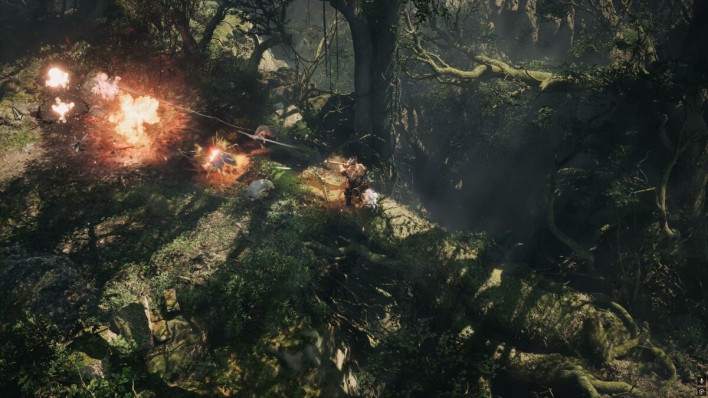
This shows that developer Boundary chose "action" as the core direction for what an isometric ARPG can aim to be. Typical hack-and-slash games — not in terms of camera perspective, but in the sense of mowing down hordes of enemies — focus on increasing character stat strength. Most difficulties are solved by "raising your stats further," and while mechanics occasionally step in, they rarely hold much weight. After all, it's nothing unusual for Diablo series bosses that felt so formidable early on to get blown away in a single skill shot later in the endgame.
Deadlocked neck-and-neck boss fights, or sweating out a close victory through frantic dodge-rolling acrobatics, carry a risk when pitched to gamers in this genre. You could say it's seasoning that doesn't quite suit hack-and-slash fans who want fast-paced, satisfying combat, as sentiment can easily shift to complaints like, "How is this a hack-and-slash?"
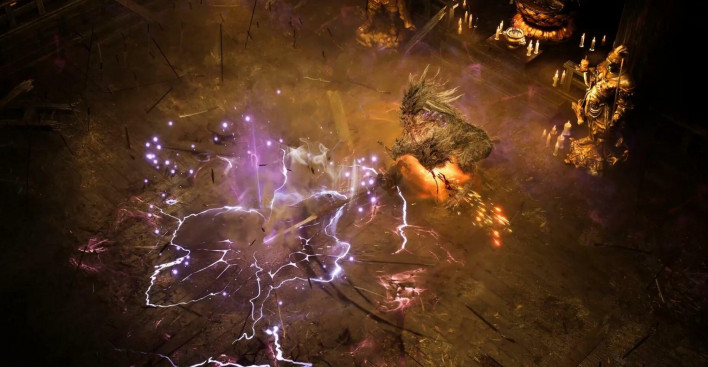
TARAE is definitely not a traditional hack-and-slash. It feels more accurate to describe it as an ARPG with a heavier, more deliberate palette. It's a design focused less on the "thrill of farming" and more on the "thrill of piloting" the character after farming. While the difficulty in the demo build might have been intentionally tuned, the developers wouldn't have placed heavy PoE2-style boss encounters at the climax of the trial if that wasn't the core direction of the game.
Generous Health Recovery vs. Tight Stamina Management
Where TARAE differs is that potion restrictions are somewhat more lenient, while introducing a stamina system in their place.
In PoE2, potions are always a limited resource. Flask charges refill as you defeat enemies, meaning boss encounters without minion spawns must be fought with a fixed number of potion uses. Wasting potions by taking too many enemy attacks makes clearing near impossible, so players are forced to learn boss attack patterns and approach fights with the mindset of avoiding almost every hit.
By contrast, potions in TARAE are fairly generous. While there is a limit on uses (varying by potion type), charges replenish automatically at a decent rate. Even if you burn through potions early on, consumption tapers off as you get used to the encounter over time. However, to prevent players from simply brute-forcing bosses with potions, the game implements stamina as a counterbalancing system.
As players know, PoE2 has no stamina mechanic. Sprinting can be sustained indefinitely out of combat, and rolling has no cooldown, allowing players to roll continuously. Rolling repeatedly against a new boss to study patterns and identify openings is routine in PoE2.
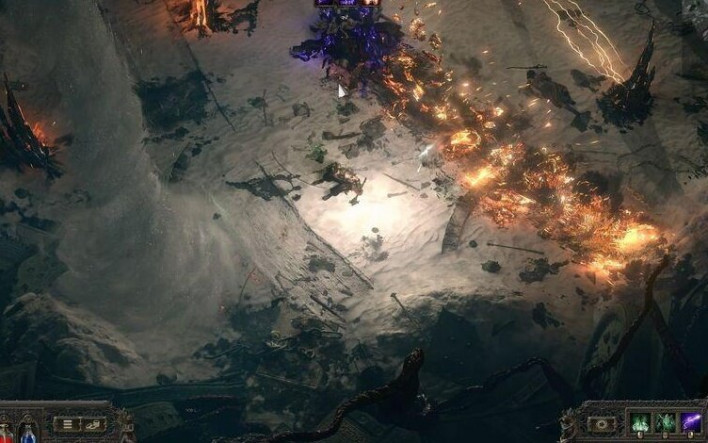
In TARAE, however, stamina exists, so you cannot run or roll infinitely. While stamina recovers during combat, it doesn't regenerate fast enough to let you dodge every single enemy attack with rolls. Since sprinting and rolling share the same stamina pool, wasting it mindlessly will quickly result in death.
As a result, boss fights in TARAE demand a different kind of mastery compared to PoE2. While PoE2 expects you to evade every enemy attack possible and strike during openings, TARAE requires you to judge enemy patterns — tanking lesser hits with your health pool while reserving dodges for fatal strikes. Rolling against every attack will leave you drained of stamina when a lethal blow lands, whereas minor chip damage can simply be healed back with potions.
In summary, TARAE's combat feels very similar to PoE2 on the surface, but differs in fine details — specifically, in what you need to track. While PoE2 demands constant focus on enemy attacks, TARAE requires you to monitor your own resources alongside them. Personally, it felt slightly more complex. Playing on pure instinct without thinking will inevitably lead to dying from stamina depletion, so constantly keeping an eye on your stamina meter created a bit of pressure.
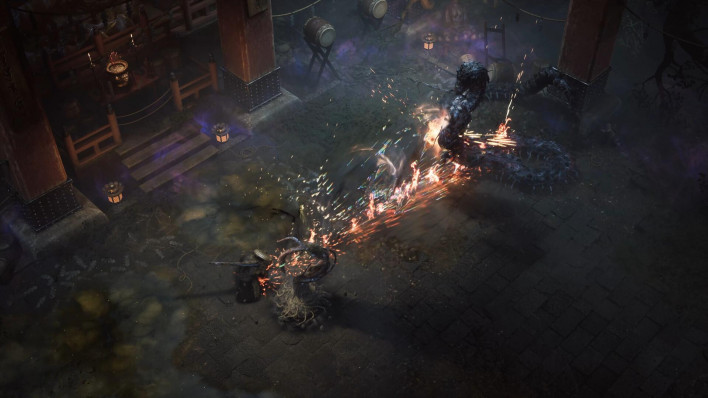
If Only It Gets a Bit More Polish...
Based on the demo build, TARAE demonstrated impressive potential. Its Eastern-inspired graphics deserve high marks, and its world-building and background presentation are equally solid. Looking strictly at the demo build, the noticeable flaws stem not from its concept or core direction, but from finer details like controls and UX.
"Action responsiveness" definitely needs further refining. The most vital aspect of an action game is having a character respond exactly as intended and interactions playing out as expected, but TARAE still shows somewhat unpolished edges here. For instance, hitboxes feel wider than what is displayed on screen — causing players to get hit by attacks they clearly dodged — while certain charge-up skills demand channel times that feel at odds with a game loop centered on constant movement and evasion.
On the UI/UX front, it was difficult to clearly distinguish targeted enemies when crowds of foes appeared, and hard to understand exactly how the numerous item stats functioned. While it was easy to grasp the style of action the game aims for and what skill set it demands from players, executing that gameplay felt like navigating over a few speed bumps along the way.
Still, given that only three months have passed since its initial reveal and plenty of development time remains before launch, TARAE's future looks far from dim. As a demo build, many auxiliary systems couldn't be evaluated, and the possibility of unforeseen risks lurking "behind the curtain" cannot be ruled out completely. However, as a public debut hands-on, TARAE's first Korean showcase earns a passing grade.
I couldn't defeat the final boss. Its desperation attack pattern crossed the line.