'TARAE: The Unbound' meets domestic players for the first time at G-Star 2026. Developed by Boundary and published by KRAFTON, the title targets a simultaneous release on PC and consoles in 2027, adopting a buy-to-play (B2P) model for title sales. Following launch, it will run on a seasonal model.
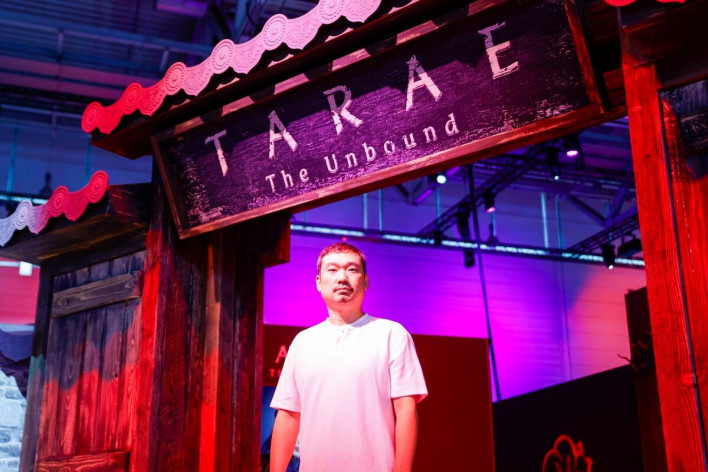
Regarding changes made since Gamescom, Boundary CEO In-young Koo, Art Director Byung-ho Park, and Creative Director Myung-sang Yoo explained, "We kept our overall direction intact and focused on polishing quality-of-life features based on feedback from Gamescom." With a Korean studio tackling the hack-and-slash market—long dominated by 'Diablo' and 'Path of Exile'—with a buy-to-play package model, it is a meaningful sign that an unfamiliar East Asian setting was welcomed in the West as fresh rather than a barrier to entry.
The developers shared that seeing attendees enjoy the game firsthand at Gamescom gave them positive signals. The main drawback was an unintuitive UX. There was a lack of features to indicate when health or resources depleted. This issue has been addressed in the new G-Star build.
A prominent change is the addition of floating gauges. New gauges were introduced to make health and resources visible at a glance, and players can toggle them on in the game settings. The development team stated that they will continue improving convenience step by step.
Indicating attack ranges is still under consideration. With support for both mouse and controller input, displaying attack ranges on screen obscures other UI elements like the HUD. Thus, instead of showing ranges, the current build automatically moves the character to the target's position to attack, while pressing the attack button on a controller automatically targets and attacks nearby enemies. The developers added that they will continue identifying pain points during the G-Star playtests to reflect them in development.
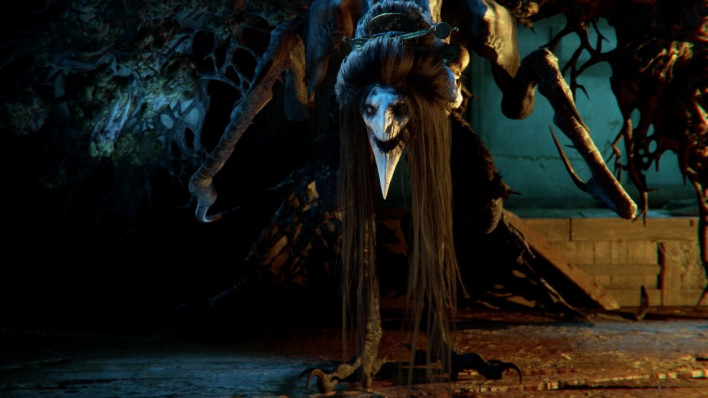
Heading into Gamescom, the developers' biggest concern was the setting. They were unsure whether unfamiliar Eastern concepts like the 'Six Realms of Reincarnation' or the 'Five Elements of Yin-Yang' would resonate with Western players. The outcome proved otherwise. "The barrier for those concepts wasn't as high as expected; in fact, we received a lot of feedback calling them fresh," the team shared. While maintaining their core vision, they discussed ways to convey the terminology and concepts more accessibly.
Weaving multiple East Asian nations into a unified world presented its own set of challenges. What started with just a few cultures expanded in scope, requiring the team to naturally blend imagery that conveys heroes from various regions embarking on a shared quest. The developers noted that because East Asian nations carry complex, sensitive histories, they were careful not to spark friction. That is why the game avoids real-world names like Joseon, Japan, or China in favor of newly coined terminology, constructing a brand-new world that borrows solely from each region's historical and cultural elements.
Character aesthetics stemmed from the same philosophy. The developers aimed to break away from conventional tropes. Believing that a narrative-driven structure requires a character's backstory and personality to be reflected in their appearance, they pursued a realistic aesthetic to support cinematic presentation. "Designing everyone as attractive, young men and women was never on the table from the beginning," the developers explained, noting that age, cultural background, and occupation were all calculated into the designs.
When asked about similarities to genre conventions, the developers highlighted combat action and class differentiation. From early development, their goal was to layer weightier, more dynamic action on top of the classic hack-and-slash thrill of clearing mob waves and farming loot. They are still actively balancing the thrill of mob clearing with the tension of boss encounters. They explained that each class features distinct combat styles and core mechanisms, delivering a markedly different feel in hand.
The narrative does not branch by class. Because the story follows six 'seekers' embarking on a journey together, playing through with a single character allows players to experience the entire story of all six heroes. This design ensures that endgame-focused players can jump straight into endgame content without having to replay the campaign multiple times.
Build progression varies by phase. During the campaign, characters progress along pre-set skill trees designed by the developers to prevent newcomers to the hack-and-slash genre from hitting difficulty walls. In endgame content, by contrast, the focus shifts toward build diversity, encompassing trait customization and 'Yin-Yang Traits.'
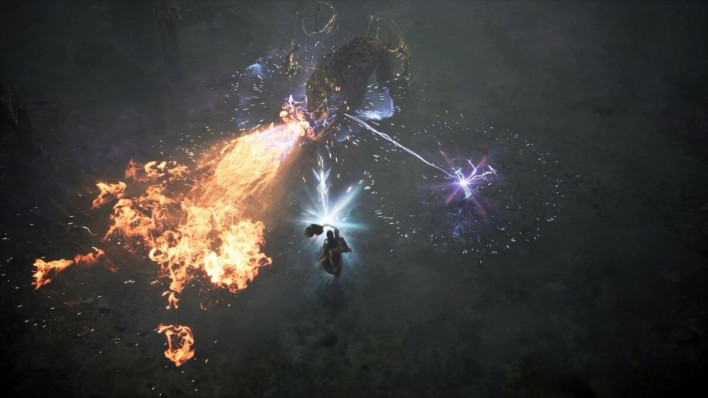
Only select classes are playable in the G-Star demo build, with the 'Mansin' and 'Kunoichi' excluded. The team felt that for the title's domestic debut, focusing on a few select classes was better than offering a shallow taste of many. The developers noted that the unrevealed classes, including the Mansin, are at a similar level of polish to the playable demo roster, and gameplay footage will be revealed when the time is right.
As for business model (BM), with a simultaneous launch planned on PC and consoles, the core framework is built around premium title sales (buy-to-play). In-game cosmetics are still under discussion. The developers stated they are weighing user-friendly BM options and will share specific details once discussions with the publisher progress further.
Post-launch live service is planned around a seasonal model. The plan is to add seasonal content, skills, and auxiliary techniques each season while adjusting balance and introducing new characters via DLC. The goal is to address the genre's chronic issue of stale, rigid builds over long live service periods through regular seasonal refreshes.
The target launch is set for 2027. While it is difficult to quantify development completion as a percentage, the team stated that they are building out content while concurrently developing and polishing the game to meet their launch schedule. Regarding publisher KRAFTON, they shared that KRAFTON strongly resonated with their vision of creating an action RPG of this nature, and because both companies share the same vision, launch preparations are progressing smoothly.
The developers urged visitors to try the game hands-on at G-Star. Even if it appears similar to existing genre titles, how the combat is designed and how each class differs in controls and combat style are things that must be experienced firsthand rather than watched in video footage.