When a Korean game launches overseas, every login, match and patch download has to cross international networks that most players never think about. Ahead of G-STAR 2026, Inven Global spoke with Tony O'Sullivan, CEO of RETN, about what it takes to get a Korean game's traffic to players abroad, from launch-day download spikes to subsea cable cuts and DDoS attacks.
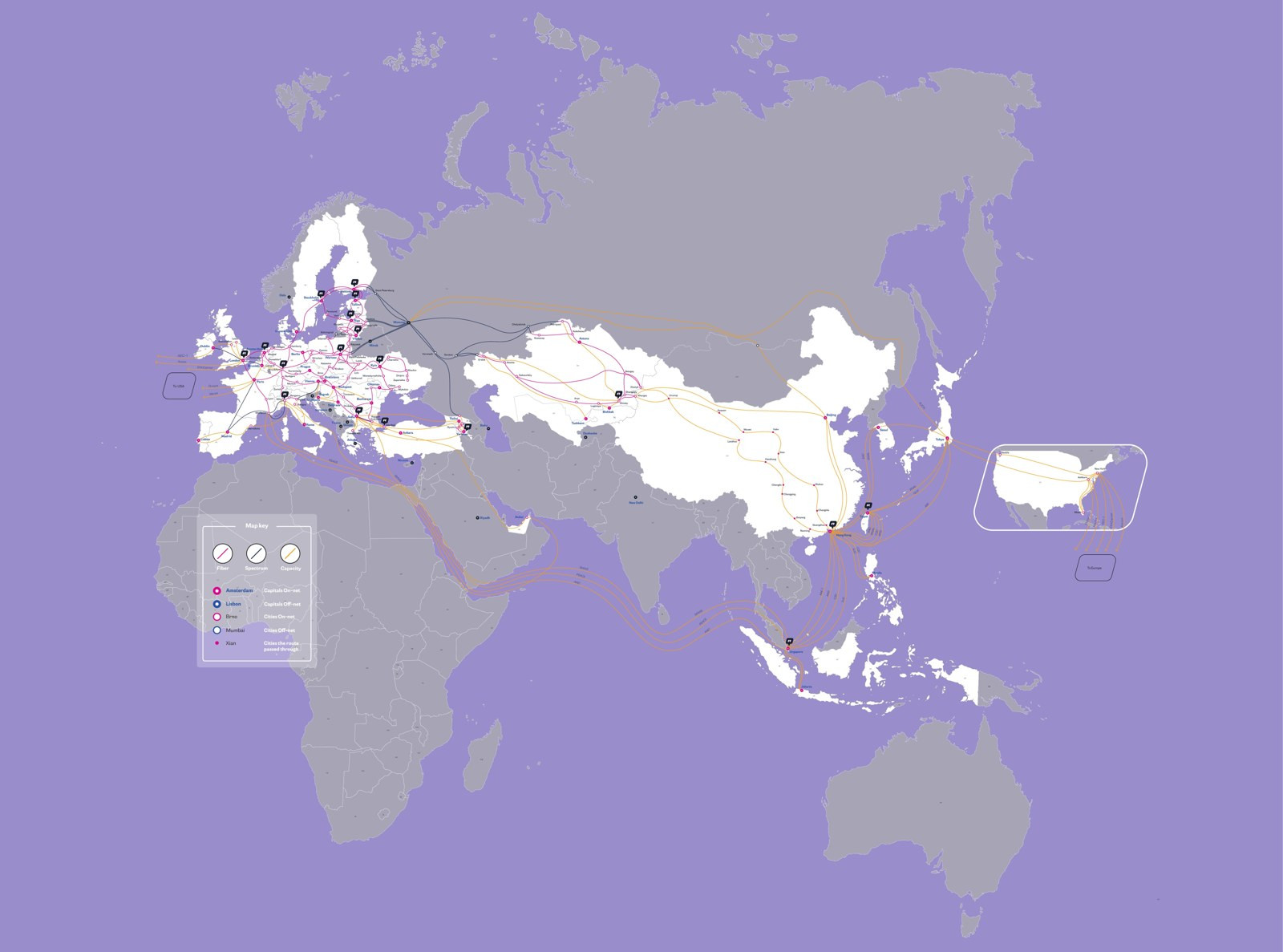
RETN is a London-based network service provider that sells IP transit, dedicated capacity and DDoS protection to carriers, content providers and gaming companies such as server host i3D.net. According to the company, its backbone runs more than 142,000 kilometres, with 1,010 points of presence across Europe, Asia and North America. One of its main products is TRANSKZ, an overland fibre route through Kazakhstan that RETN launched with local operator Transtelecom in 2016 and pitches as an alternative to the subsea cables between Europe and Asia.
RETN has had a foothold in Korea since February 2018, when it partnered with Korean internet exchange operator KINX and set up a point of presence in KINX's data centres. O'Sullivan joined RETN in 2007, became COO in 2016 and moved to Hong Kong in 2017 to build out the company's Asian business. He took over as CEO in January 2021.
G-STAR 2026 runs at BEXCO in Busan from November 19th to 22nd, with the business-to-business (BTB) exhibition open from November 19th to 21st. RETN Senior Sales Manager Michael Park will be there to meet Korean publishers planning international launches. O'Sullivan answered Inven Global's questions by email, grouped by topic, and his answers below follow that order.


RETN and G-STAR 2026
For gamers and developers who've never heard of RETN, how would you describe what the company does and where it sits between a game's servers and the player?
O'Sullivan: RETN is an independent global network service provider operating a backbone spanning more than 142,000 kilometres, with 1,010 points of presence across Europe, Asia and North America.
Our high-capacity internet helps game companies deliver services from data centres and cloud platforms to players around the world. For a live game, that connection matters because every login, matchmaking request, patch downloads, streams and especially real-time gameplay session and game launches rely on reliable, scalable connectivity.
Put simply, we help connect a game’s servers to the networks that serve its players. A studio may host its game in Korea, Japan, Europe or North America, while RETN provides international connectivity, IP transit, dedicated capacity, interconnection and DDoS protection to help its traffic reach players reliably.
RETN has been in Korea since partnering with KINX in 2018. How have Korean customers' needs changed since then, especially game companies?
O'Sullivan: Today, game companies are looking beyond bandwidth alone. As many plan to “go global”, they need to understand how their networks perform across multiple regions, how quickly they can scale for launches and live events, and how they can protect player experience during disruption. Their needs have become more global, more performance-sensitive and more resilience-focused.
Why is G-STAR 2026 a priority for RETN this year, and what conversations are you hoping to have with Korean publishers?
O'Sullivan: Why do we take part in G-STAR 2026? It’s an opportunity to discuss these priorities directly with Korean publishers, gaming companies, and cloud architects, particularly those preparing to launch or expand internationally. Michael Park, Senior Sales Manager at RETN, will attend to discuss the connectivity behind global game delivery, from reaching players in overseas markets to planning capacity for launches and maintaining service continuity when routes are disrupted.
Challenges and technical setups for Korean game companies
Live gameplay, game downloads and esports broadcasts put very different demands on a network. How should a publisher plan for each, and where do companies most often get it wrong?
O'Sullivan: RETN provides Layer 1, Layer 2 and Layer 3 services, ranging from capacity and Ethernet connectivity to IP transit. These interconnected layers, though largely invisible to players, underpin how game traffic travels between servers and users.
Therefore, publishers should plan around each workload: live gameplay needs low latency, low jitter and minimal packet loss; downloads need throughput and burst capacity; esports broadcasts need stable, high-capacity delivery with resilient paths. The common mistake is treating them alike or sizing capacity for average traffic rather than launch-day peaks.
A global launch or a big patch day can create download spikes far beyond normal traffic. How can publishers prepare for that without paying for capacity they don't need the rest of the year?
What does it take to deliver a stable, low-latency esports broadcast from Korea to viewers in Europe and North America?
O'Sullivan: It’s also advisable to forecast demand early and agree burst capacity before major events. A 95th-percentile billing model can accommodate short spikes without committing to peak bandwidth year-round. For esports, protect the contribution link between the venue and broadcast facility with redundant, SLA-backed connectivity, alongside sufficient distribution capacity for overseas audiences. Additionally, dedicated circuits can improve predictability, but they don’t eliminate packet loss or jitter.
Many Korean studios launch on AWS, Azure or Google Cloud. Where do public cloud networks fall short for real-time games, and when does a dedicated connection make sense?
O'Sullivan: As for public clouds, they remain valuable for scale, but publishers may need greater control over the connections between their infrastructures, cloud regions and partners. Dedicated connectivity makes sense where data privacy, predictable bandwidth and latency as well as consistent performance are critical. It complements cloud infrastructure rather than replacing it.
As Korean publishers expand into Japan, Southeast Asia and Europe, how should they decide between serving players from a few central hubs and building out regional servers and local connections?
O'Sullivan: Meanwhile, server placement should follow player locations, measured latency, traffic volumes and operating costs. Central hubs can support shared services, while regional servers can bring latency-sensitive gameplay closer to players. Across either model, efficient routing must be balanced with genuine physical diversity. RETN combines terrestrial and subsea paths, including the low-latency TRANSKZ route between Europe and Asia, to provide alternatives when individual routes are disrupted.
Network resilience and route diversity
Almost all of Korea's international traffic travels by subsea cable. How exposed are Korean games to a single cable cut, and what does realistic route diversity look like?
When major faults hit, like the Red Sea or Taiwan Strait cable incidents, what do players actually notice, and how quickly can traffic be rerouted?
O'Sullivan: A single cable cut doesn’t necessarily interrupt a game, but the impact depends on the availability and spare capacity of alternative routes. Players may experience higher ping, jitter, packet loss, slower downloads or disconnections as traffic shifts onto remaining paths. Where redundancy and automatic failover are configured, traffic can be rerouted within one to two minutes, depending on the service and failure scenario.
Physical subsea repairs, however, can take weeks or months, depending on vessel availability, permits, weather and access to the fault. The Red Sea crisis demonstrated why route diversity matters: prioritising the shortest or simplest path can concentrate traffic through shared chokepoints. During the disruption, RETN rerouted approximately 60 to 70% of affected traffic through TRANSKZ, our terrestrial network system connecting Europe and Asia, helping maintain service continuity.
RETN's network runs overland through Central Asia between Europe and Asia. What does a land route offer game companies that subsea cables can't, and what risks come with it?
O'Sullivan: Terrestrial routes can instead offer lower latency and faster repairs. They also bring cross-border and operational complexity, which RETN manages through a single-provider service.
For Korean publishers, a terrestrial Europe-Asia route adds geographic diversity beyond the subsea connections used to leave Korea. This becomes increasingly important as data centres supporting multiplayer games, cloud gaming and global services expand.
According to the 2026 KRNOG/KDCEA figures, Korea’s data-centre capacity is projected to more than double to over 3.19GW by 2030, while JAKO and AUG East are scheduled to enter service in 2027 and 2029 respectively. However, adding capacity is only part of the answer; combining physically diverse terrestrial and subsea paths helps strengthen resilience.
Security, AI and future readiness
Korean live-service and esports titles are often hit by DDoS attacks at launch or during big events. How are those attacks changing, and what should publishers do before launch day?
O'Sullivan: DDoS threats range from large-scale traffic floods to targeted protocol and application-layer attacks. Publishers need to protect not only websites, but also the game servers, authentication and matchmaking services that keep players online. Before launch day, they should arrange DDoS scrubbing, configure appropriate source-IP filtering, review backbone, peering and upstream capacity, and test failover and escalation procedures.
RETN’s DDoS Mitigation uses AI and machine learning to support automated threat detection and mitigation. However, technology is only part of the answer: protection should be built into launch readiness, not purchased in response to an attack.
AI workloads are competing for the same long-distance capacity. Is that raising costs or causing congestion for latency-sensitive games, especially between Asia and Europe?
O'Sullivan: AI’s impact on capacity is more nuanced. We are not currently seeing AI drive a surge in Europe-Asia long-haul traffic; much of the demand we see is local or intra-Asian, connecting data centres and cloud infrastructure. AI investment does not automatically translate into international backbone traffic growth. The more immediate pressure is on equipment supply and the ability to deliver additional capacity, with AI-related demand contributing to shortages of optical transport hardware. We recently launched a new white paper, “AI, Connected: How AI is reshaping infrastructure, energy and the networks that connect it” to expose the critical infrastructure bottlenecks, shifting traffic patterns, and soaring security risks behind the global AI boom. The white paper combines insights from senior experts across RETN’s global team with a survey of 2,000 consumers across the United States, Europe, and Asia. Read more: AI, Connected.
Without naming clients, can you share an example where a game's launch or a live event was saved, or hurt, by its network setup?
Over the next three to five years, what's the biggest infrastructure bottleneck for Korean games going global, and what should studios be doing now to prepare?
O'Sullivan: Looking ahead, our view is that Korean publishers should focus on dependable capacity, physical route diversity and operational readiness, not bandwidth alone. Studios should map where their players and infrastructure are located, secure capacity ahead of major launches, and test both failover and DDoS response. The objective is a network that can scale during demand spikes and maintain service when a route is disrupted. Our work with a global gaming infrastructure provider illustrates why network design and operational support matter.
Read more: RETN Enhances Global Gaming Experiences for i3D.net