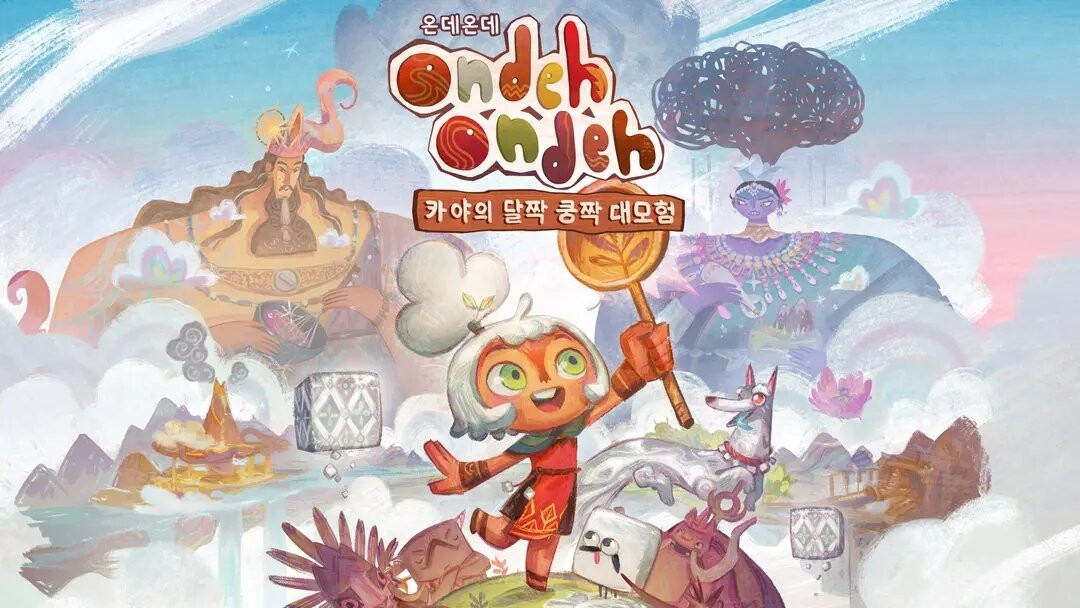
"Onde-onde" is a food made by deep-frying glutinous rice flour dough filled with mung bean paste and coated with sesame seeds on the outside. It is a traditional snack that has long been enjoyed in Malaysia and Indonesia. The reason for suddenly bringing up food is simple: one of the titles Bandai Namco Entertainment revealed ahead of TGS 2026 is 'Ondeh Ondeh Kaya's Tasty Tale', and its name was taken from this very treat.
This game is the new title from Metronomik, the Malaysian developer that previously showcased a unique grammar of musical action with 'No Straight Roads'. It is a rhythm-puzzle action-adventure that combines Southeast Asian cultural colors with the studio's signature music. The setting is 'Selera', a whimsical world where rhythm breathes life into everything. Once every 100 years, a period arrives when the world's flavors fall out of balance. Whenever that happens, Worldbuilders summon divine beasts made of ondeh ondeh to spread the world's flavors once again. The protagonist, Kaya, is the daughter of a Worldbuilder couple, and she embarks on an adventure to summon a divine beast to inherit the position of Worldbuilder.
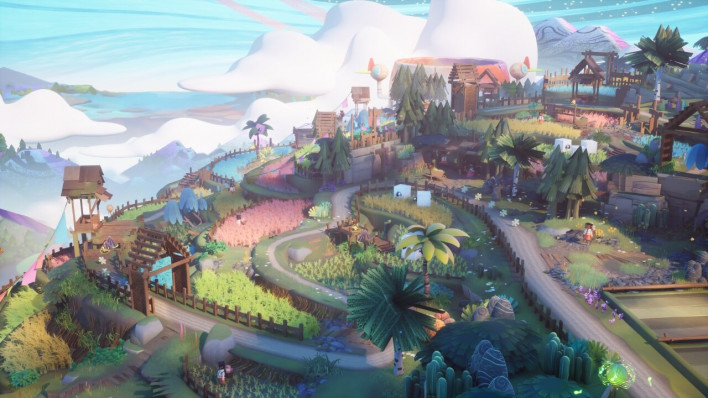
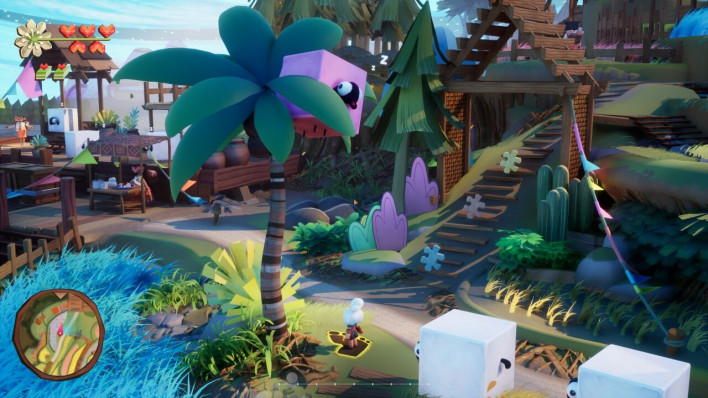
In this demo, players could experience the tutorial—which puts a twist on the legend of the Worldbuilders—and play up to the first town, Salty Village. Even though her parents are performing their duties perfectly well, her father intentionally acts crazy to spread various gimmicks, serving as both training and a way to teach players various mechanics. Aside from the absence of a jump feature, the method of solving these gimmicks seems no different from traditional adventure games. Classic elements commonly expected from adventure games are presented in the tutorial, such as pushing and pulling boxes with handles or various objects to press switches, or crossing through strong winds.
The main game begins after completing the tutorial with her father, learning the mindset of a Worldbuilder from her mother, and heading toward Salty Village. This is because rather than simply triggering a switch by stomping, you must time your stomps with the rhythm gauge displayed at the bottom while observing the field conditions to successfully complete tasks such as pouring coffee or grinding with a grinder.
After becoming aware of rhythm and visiting Salty Village, the true worth of 'Ondeh Ondeh' begins to show from the moment you enter the forest to find a lost sheep. Whereas before it was merely a matter of finding your way and trying to stomp on or push and pull various objects, now you have to pay attention not only to the shapes of everything in the field, but also to the sounds they produce.

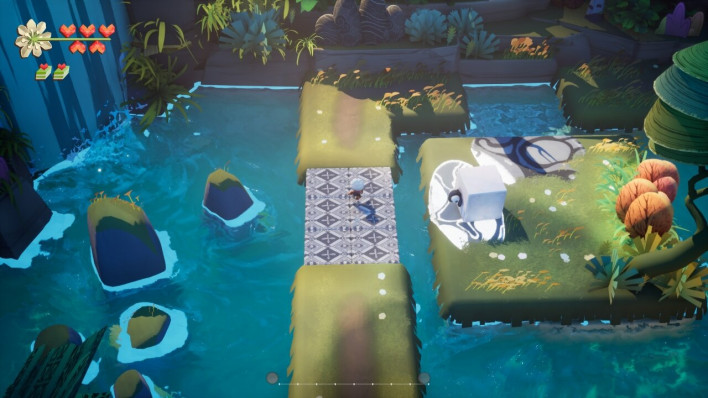
When I first went to look for the sheep, I didn't understand why it was square-shaped, but that too had a purpose. Since there is no jump, you could push a sheep into a gap in a broken bridge to make a path. Furthermore, each sheep makes a different bleating sound, and if you place a sheep in a peculiar area like an oil stain puddle, black-and-white cubes react to its sound. Placing a sheep that bleats continuously keeps the object activated, while placing a sheep that bleats only at a certain tempo activates it only when it bleats. By combining switches like this to traverse seemingly impassable areas, the solid fundamentals—capturing the fun of clever puzzle-solving through simple mechanics—were fully felt during the demo.
In between those puzzles, enemies like wolves and chickens appear. However, because they have only one pattern and telegraph their moves heavily, dodging and dealing with them wasn't much of a problem. That said, because Kaya's attacks also follow the rhythm, you have to press in time with the beat to smoothly chain up to 3 hits. As a result, mindlessly mashing buttons often meant the final hit wouldn't come out, leaving you open to an attack from the enemy.

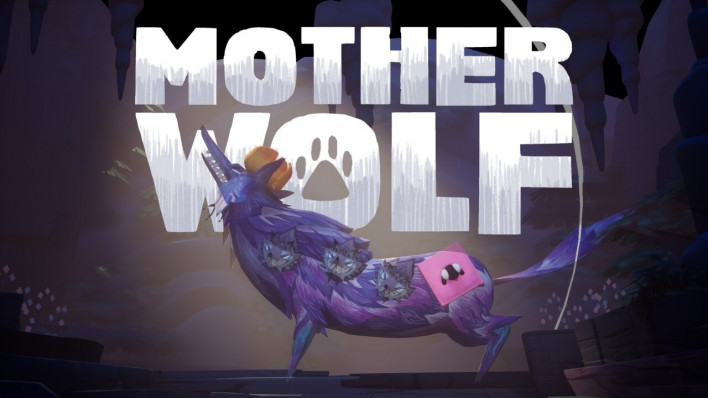

Following those basic puzzles and combat, a boss battle unfolds against a mama wolf who abruptly snatched the last sheep. The mama wolf has three baby wolves—who pounce at the opponent before returning—and the sheep. After launching them about three times, the sheep stays on the field for a moment. At that point, the mama wolf puts her head to the ground and fires a beam. If you continuously hit her jaw right before she fires the beam to put her into a groggy state, a platform is revealed on her head. To step onto that platform, you must bring the sheep to a flower near the wolf to create a path to the platform, get on top of it, and stomp to deal heavy damage—which is the key to defeating the boss. When her health drops below 25%, the central section breaks apart, requiring even more intricate gimmick manipulation, such as placing the sheep in the central puddle to cross over.
The process of progressing by solving puzzles and gimmicks like that was reminiscent of classic adventure games from the old PlayStation era. It may look simple, but for it to feel that way, the game must intuitively communicate its rules to players so that everything fits together seamlessly. In that regard, Ondeh Ondeh actually felt quite uncertain at first. Doing something in time with a rhythm sounds easy on paper, but in reality, it is far from simple—much like how rhythm-action games have simple logic yet are far from easy
. The way it initially avoids emphasizing that rhythm element and instead gradually weaves it into the narrative, allowing players to naturally accept it as a core rule and part of the game, was quite impressive. While the demo version did not offer a chance to check out elements like the spoon used to solve ondeh ondeh, I am eager to see what kind of clever puzzle-solving fun and worldview it will display as those rules expand. At the same time, attention is focused on how it will blend Malaysian tradition into the game and demonstrate its potential.