Game distribution platform Steam has rewritten its all-time record, surpassing 43.5 million concurrent users.
According to Steam tracking site SteamDB, peak concurrent users reached 43,505,724 on the 11th. This is an increase of approximately 820,000 from the previous record of 42,686,616 set last March, marking a new record in roughly seven months.
This trend has been continuing for several years. After surpassing 20 million users in March 2020 during the spread of COVID-19, Steam sequentially passed 30 million in October 2022 and 40 million in March of last year. On the 11th, active players actually in-game reached approximately 14.46 million. The number of players actively playing games—which stood at around 6.2 million when concurrent users first hit 20 million in 2020—has also more than doubled.
The key to understanding Steam's growth lies in the games serviced together on the platform. Competitive games enjoyed for years, brand-new hits starting to gain momentum, and playtests gathering players ahead of release all coexist on the same platform. It is a structure where users logging in to play one game can discover their next game.
New Hits Stacking Up Alongside Long-Running Games
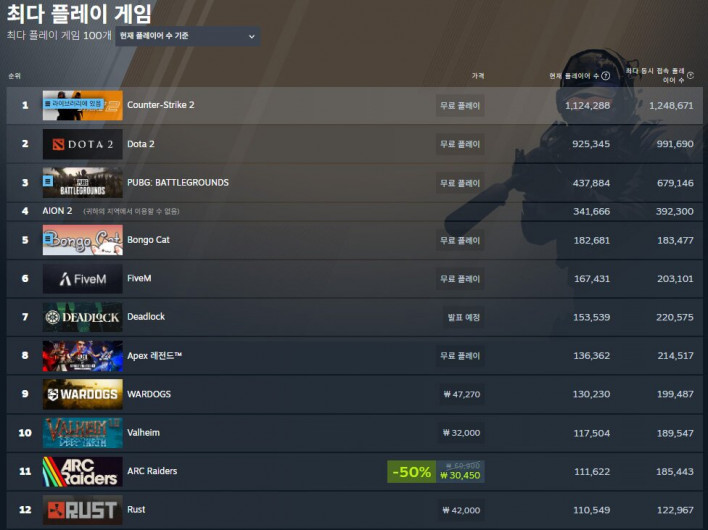
In Valve's statistics on the 12th, 'Counter-Strike 2' took first place with a peak daily concurrent user count of approximately 1.4 million. 'Dota 2' followed with about 1.03 million, and 'PUBG: BATTLEGROUNDS' with roughly 710,000. Competitive games that have been serviced for a long time still occupy top spots on Steam.
Matches played with friends, the satisfaction of improving skills, and fresh updates keep players returning long after launch. Steam is home to a deep library of games that sustain this kind of play over extended periods—titles that give users a reason to launch the platform even on days they have no plans to buy a new game.
Alongside them, new success stories emerge. 'WARDOGS', which entered Early Access last month, recorded approximately 430,000 concurrent users on September 13. Valve's in-development title 'Deadlock' also set a new personal record with around 260,000 users on the 9th. 'Deadlock' gathered a player base of this scale while still in a test phase that requires an invite from an existing participant.
Individual games have their own lifecycles of popularity. Interest built up at launch may decline, or players may return when an update arrives. On Steam, titles with different popularity cycles are serviced side by side. The strength of the platform is clear in how gameplay continues in established popular titles even while new releases capture the spotlight.
From One Game to the Next... Steam's Virtuous Cycle
The process of players brought in by hit games transitioning to other titles is also evident in data released by Valve. In its 2024 Year in Review, Valve examined 20 major releases from 2023. Through these titles, 1.7 million accounts purchased a game or activated a game key for the first time on Steam.
When Valve tracked this group's activity from January 2024 through early March 2025, the time spent playing games other than their initial purchase or activation exceeded 141 million hours. That first purchase or key registration served as a gateway to playing other titles on the same platform.
This case illustrates the lasting impact a hit game leaves on a platform. When a new title brings in users, games from other developers gain the opportunity to reach those same players. For users who purchased or registered their first game, the existing library of games becomes their next choice. New and existing titles effectively create reasons to visit Steam at different times.
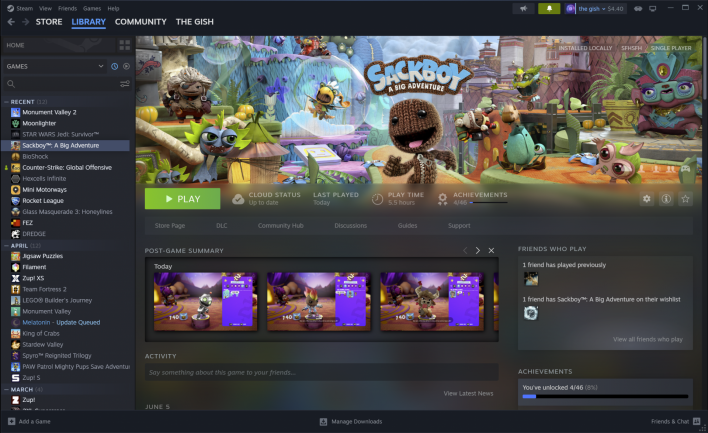
Even when players switch to a different game, their purchased titles and friend lists remain on the same account. In game hubs, they can read update news and talk with other users. Games that support cloud saves carry over save data even when changing PCs. These accumulated games, connections, and familiar routines become reasons for users to keep returning to Steam.
Steam also leverages that usage history to help users find their next game. In its 2025 Year in Review, Valve explained that the Discovery Queue recommends titles based on previously played games, wishlisted items, and games enjoyed by friends. Games already played and titles marked with interest serve as building blocks for future recommendations.
This holds significant meaning from a developer's perspective as well. Launching a new game on Steam means introducing it to users who are already playing other PC games. Channels are in place for games to reach new players based on their favorite genres and their friends' activity.
From Demos to Early Access... A Stage Built for New Games
The connection between new games and players begins well before official launch. On Steam, actions like playing demos, wishlisting favorite titles, and participating in playtests are seamlessly linked to the full game's store page. Developers can connect with people who have played the game and those eagerly waiting prior to release.
Steam Playtest accepts sign-ups directly on the main store page, allowing developers to manage player counts. Developers can observe how actual users play the game, while participants can wishlist or follow the main title on the same page. In effect, a pipeline is built in so that interest generated during testing translates into anticipation for the official release.
In Early Access, the sale and gameplay of a game in development happen simultaneously. Players enjoy the current build and provide feedback, while developers use those responses to guide future development. As seen with 'WARDOGS', the development journey leading up to full release becomes an extended period of engagement with players.
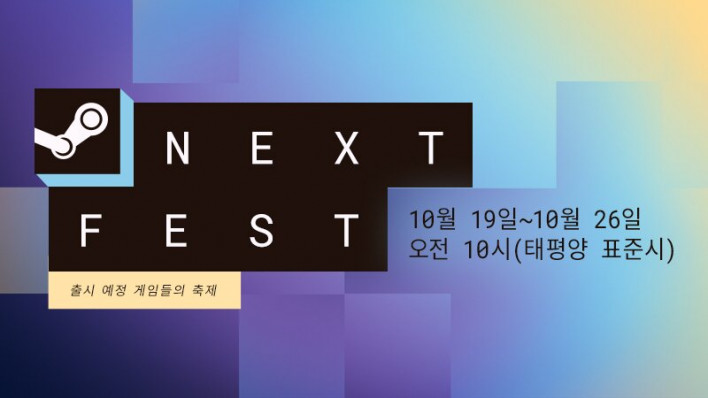
Steam Next Fest expands these connections by bringing together upcoming games in one event. Users can handpick and play various demos to find their next title. For developers, it offers an opportunity to deliver the fun previously shown in promotional videos through hands-on gameplay.
Mechanisms to maintain player interest are also in place. When a wishlisted game launches, Steam notifies the user via email or mobile alerts. When a demo is released, developers can also send notifications to users who have wishlisted the game. This saves players the trouble of remembering a game's name and looking up its release date later. Discovery, hands-on experience, anticipation, and purchase all seamlessly connect within the same storefront.
Steam's Dominance Set to Continue for the Foreseeable Future

The Epic Games Store has pursued Steam by leveraging free game giveaways and developer-friendly revenue splits. However, no clear competitor has emerged to threaten Steam's dominance in the PC gaming market. Giving users a reason to visit another store once is a very different challenge from getting them to switch their primary platform.
The weight Steam carries is also evident in the choices of major publishers. Ubisoft, which operates its own storefront, returned to launching new titles simultaneously on Steam starting with 'Assassin's Creed Shadows' last year. Even for a company with its own distribution network, Steam's user base represents a market too significant to overlook when launching new games.
The hurdle competitors must overcome is the library of games, friend networks, and familiar usage habits users have already built up. Games purchased over many years remain in the library, and the process of finding people to play with and discovering the next game continues within Steam. Discounts or a few exclusive new titles are rarely enough to reshape these established habits all at once.
Moreover, Steam continues to add new hit titles on top of its existing user base. Even as competitors try to gather games and players, the target they are trying to catch keeps growing. The new record of 43.5 million concurrent users demonstrates that this trend remains in full swing. Considering the current structure where accumulated games, active users, and new hit releases reinforce one another, Steam's dominance is likely to continue for the foreseeable future.