S-GAME's 'Phantom Blade Zero', which has been drawing attention for its exhilarating kung fu punk action and distinct boss fights, held a global media preview event in Beijing, China, ahead of its official launch.
At the event, media played through Chapter 1 of Phantom Blade Zero and two standalone bosses over six hours. The play session was conducted on PC with a Korean version, and as the game is still in development, the localization was not yet fully finalized.
To summarize the 6-hour hands-on experience, the action is truly incredible. While the build played last year relied heavily on raw individual mechanical skill, this demo delivered strong satisfaction from figuring out and countering each boss's unique mechanics. Additionally, the distinct features of each weapon could be clearly experienced while playing.
* The game was played in Korean, but developer-provided images and videos were used in this article.
The most impressive part was, as expected, the boss fights Distinct boss traits felt clearly across combat, atmosphere, and mechanics
Since this demo allowed playing Chapter 1 right from the start, unlike previous builds that focused solely on combat, players could experience various elements of the game such as exploration, quests, and story.



However, even taking all those elements into account, the most interesting, surprising, and central aspect was undoubtedly the boss battles. Every boss encountered possessed distinct mechanics, delivering genuine fun from both the action and solving those mechanics.
There were more bosses encountered in the demo section than expected. What's interesting is that none of these bosses overlapped, each showcasing a completely different combat style. Most of the bosses encountered this time were humanoid, yet every single humanoid boss offered a distinct combat experience.
Just as the player's attack style changes entirely depending on the equipped weapon, the bosses' attack patterns vary completely based on their weaponry. Even including the bosses played last year, not a single one felt repetitive.
Thanks to this, every boss delivered clear enjoyment in taking on the challenge, strategizing, deciphering mechanics, and dodging and countering strikes. Moreover, each boss placed a slightly different emphasis between mechanical execution and gimmick solving, which was another intriguing highlight.
While all bosses were challenging, the most memorable boss was Bai Zhelian, who could be played as a standalone fight. Using a weapon like a chain that extends at will, the boss's movements and attack styles were extremely fluid, and the mechanics themselves were very distinct.
It strikes an excellent balance between mechanical control and gimmick handling. Player skill plays a crucial role throughout the fight—blocking or dodging attacks coming from all directions, from air to ground, counterattacking quickly only when openings arise to deplete the boss's Sha-Chi, and then dealing heavy damage.
That said, raw control alone isn't enough. There are dedicated mechanic phase sections that must be executed properly to defeat the boss smoothly. It isn't a simple matter of mindlessly dodging and hitting until the boss falls. Of course, relying solely on solving mechanics won't suffice either; because the enemy's attacks are fierce, mechanical proficiency to dodge those attacks while managing the battle remains equally vital.

In addition, the "atmosphere" conveyed by each boss is impressive. Every aspect—including the background music running throughout combat, graphics, and visual staging—combines with the boss's appearance and attacks to deliver a distinct feel.
While some bosses give off a grotesque vibe, others evoke the atmosphere of a horror movie. On the flip side, there are stylish bosses reminiscent of classic Chinese kung fu cinema, bosses with traditional looks, and those with an intense focus on pure action—each conveying a different vibe.
Sound plays a huge role in this process. Music that delivers a modern and funky vibe makes the bosses' movements and combat feel far more intense and rhythmic. Notably, when phases shift, the dramatic musical variations instantly boost immersion. Furthermore, despite the strong Chinese visual elements, these tracks give the overall combat a sleek and refined feel.

Firmly delivering the thrills of action combat Combat experiences that shift with weapons and difficulty
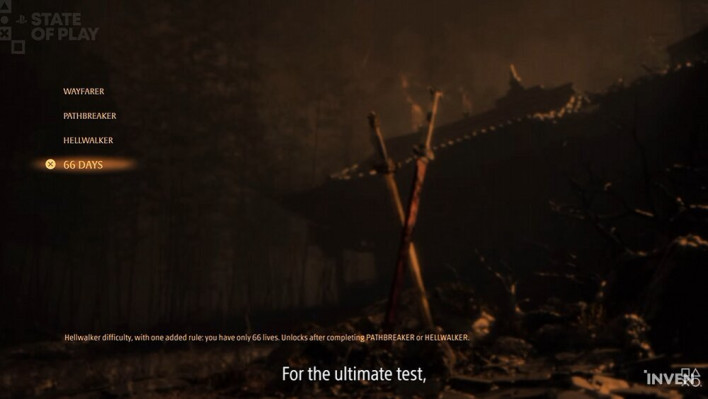
The game's difficulty levels are divided into Wayfarer, Pathbreaker, Hellwalker, and 66 Days. 66 Days has the same baseline difficulty as Hellwalker, but limits the number of deaths to 66. After trying all three available difficulties (excluding 66 Days, which was locked), each setting intriguingly delivered a completely different gameplay experience—almost as if changing genres altogether.
The Easy setting, Wayfarer, is extremely easy. It is perfect for enjoying pure action with zero stress. Getting hit by bosses poses little threat, and combat duration is naturally reduced significantly. However, in this demo build, switching to Easy mid-game made it impossible to change back to other difficulties.
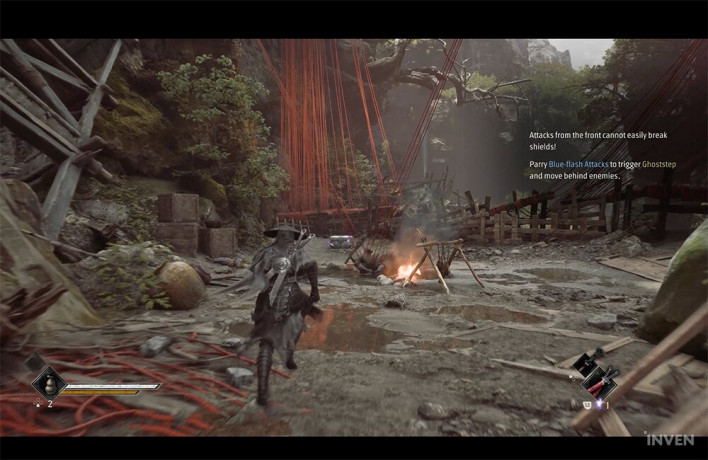
Pathbreaker, the Normal difficulty, strikes a solid balance between action flair and control skill. It is the difficulty that best highlights the signature feel of Phantom Blade Zero. While experiencing exhilarating action that makes players feel like a kung fu master, enemy attacks must still be dodged carefully and mechanics executed precisely.
The majority of the demo playthrough was done on this difficulty, and while it varied by boss, most could be defeated within a few attempts without excessive trial and error.
Meanwhile, the Hard difficulty, Hellwalker, is the exact opposite of Wayfarer—it is punishingly difficult. What's surprising is that it doesn't stop at merely boosting enemy health and attack power. On Hellwalker, the bosses' attack patterns themselves upgrade. Rather than just hitting harder, bosses unleash more complex and challenging attack strings.
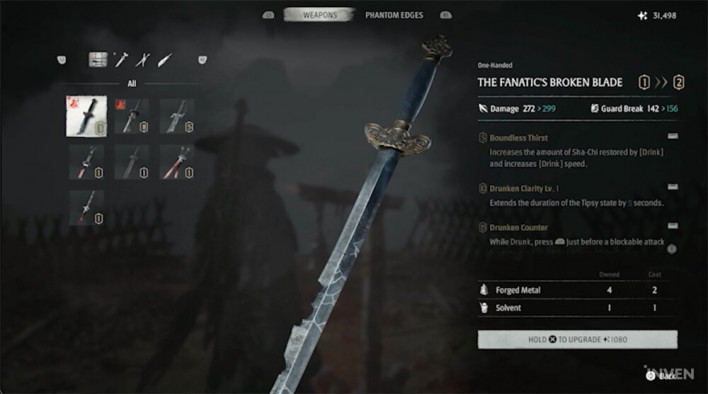
Another gameplay highlight is the weapon diversity. Although Phantom Blade Zero is an action game, button inputs are not complex. That doesn't mean attack combos don't exist; rather, the inputs required to perform those combos are exceptionally accessible.
This appears to stem from the game's core design, where attack styles shift dramatically depending on the weapon. Since each weapon features unique combo chains, button layouts are kept straightforward. Even pressing the same button triggers distinct traits for each weapon, leading into completely different follow-up attacks, making controls intuitive and clean.
Furthermore, playing with basic starting weapons feels completely different from acquiring and upgrading weapons one by one. Attack speed, range, combos, skills, and unique functions vary by weapon, individualizing the combat style entirely. While basic maneuvers like attack, dodge, parry, Ghost Step, and Perfect Dodge remain consistent, almost every other combat dynamic changes.
While impact feedback varies slightly by weapon, the overall hit feel leans toward being fast and fluid. Rather than heavy, sluggish strikes, it offers a brisk, airborne, and exhilarating flow. As a result, the combat feels exceptionally flashy and high-paced.
Additional elements of the game Graphics, story, and gameplay progression
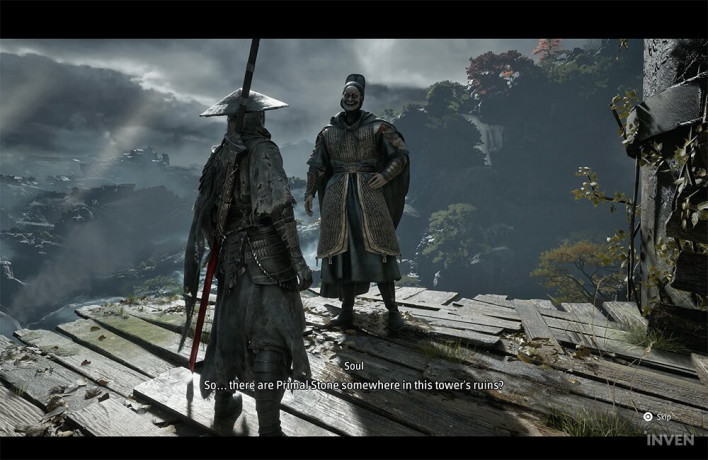
Even judging solely from the demo build, everything from the story and character visual designs to dialogue heavily oozes Chinese culture and Wuxia themes. The dialogue in particular features dense, archaic terminology that might be difficult to grasp unless one is already familiar with Wuxia fiction—deep enough that it almost feels like a novel requiring footnotes.
Apart from the protagonist, Soul, the key characters and bosses sport designs heavily steeped in traditional Chinese aesthetics. These character designs, combined with the dense Wuxia narrative and complex dialogue, may prove to be polarizing elements for some players.
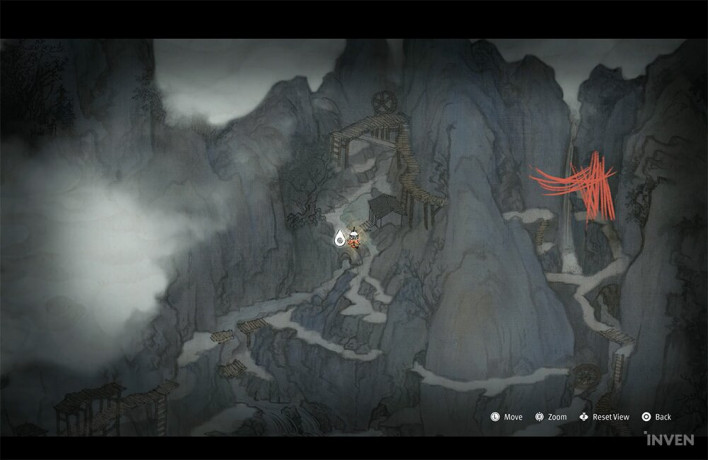
As for overall game flow and map design, it is both linear and non-linear. The progression path itself is definitely linear. Since it is not an open-world game, accessible areas and the main story arc follow a set structure.
However, along that path, various side quests separate from the main story branch out, leaving it up to player choice which side quests to pursue and which areas of the map to navigate through.
Certain areas of the map cannot be accessed initially. Requiring specific Phantom Edges or keys acquired later, players naturally backtrack after advancing the main story. Whether to tackle side quests or strictly stick to main progression during this process rests entirely with the player.
Naturally, save points and bells that allow fast travel are placed throughout the map, making traversal convenient.
The core action quality of Phantom Blade Zero is unquestionable. The 6-hour play session flew by without realizing it thanks to its sheer gameplay appeal, which mostly stems from its "action."
Attack, dodge, block, and counter. On top of these fundamental controls, Phantom Blade Zero adds distinct combo enjoyment through its exceptionally unique weapons. Even with basic controls alone, combat is immensely satisfying—an impressive feat in itself. Right from early encounters where combos are minimal, combat immersion is high enough to make controller-gripping hands sweat.

To facilitate fluid, uninterrupted combat, the stamina resource known as Sha-Chi is tied directly to weapons. Sha-Chi is used for all basic actions. Once depleted, players cannot attack, block, or dodge. However, switching weapons instantly refills Sha-Chi completely. In other words, continuously swapping between the two equipped weapons is key to sustaining ongoing combat flow.
This naturally pushes players to experience the distinct fighting styles of both weapons, seamlessly weaving together the unique action flair each weapon brings. This mechanic succeeds precisely because every weapon possesses such a distinct identity.
On top of this, clear strategy patterns for each boss deliver equal satisfaction in executing mechanics alongside controls. To prevent battles and attempts from becoming frustrating, the game thoughtfully lets players restart from the cleared phase upon death.
Now, the official launch to experience all this action is right around the corner. Phantom Blade Zero releases on October 29 for PC and PS5.