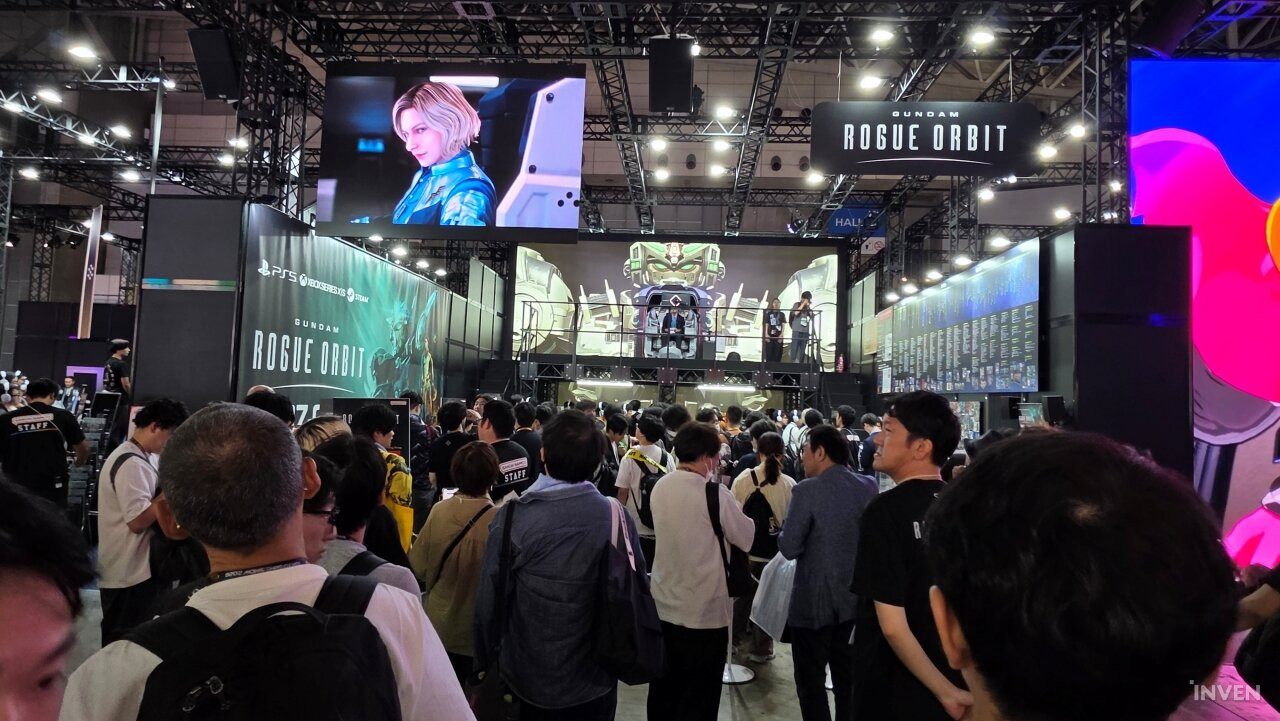
At TGS 2026, held at Makuhari Messe from September 17 to 21, Bandai Namco Entertainment showcased its new Gundam title, 'Gundam Rogue Orbit,' which was surprisingly unveiled back in June.
Few phrases spark as many mixed emotions among gamers as "a new Gundam game." As an IP with a long history, it boasts high fandom loyalty and has successfully expanded its audience through new anime series, but its video games haven't quite matched that success. Regardless of quality, there has been a lingering perception that Gundam games are difficult to approach for non-fans, hindering their broader appeal. While there have been various attempts to break out of this mold, some involved forcing unfamiliar genres into the franchise, resulting in failures.
Perhaps to break free from these past precedents, Gundam Rogue Orbit takes a completely different path from previous Gundam games. Visually, unlike earlier titles that retained an anime or painted Gunpla aesthetic, it stands out immediately with realistic metallic textures. Its premise is equally shocking, pitting humanity against an alien threat to ensure its survival. For 47 years since the original Mobile Suit Gundam aired, there was an unwritten rule that Gundam stories depict battles between Mobile Suits alongside human drama, and this game boldly shatters that convention.
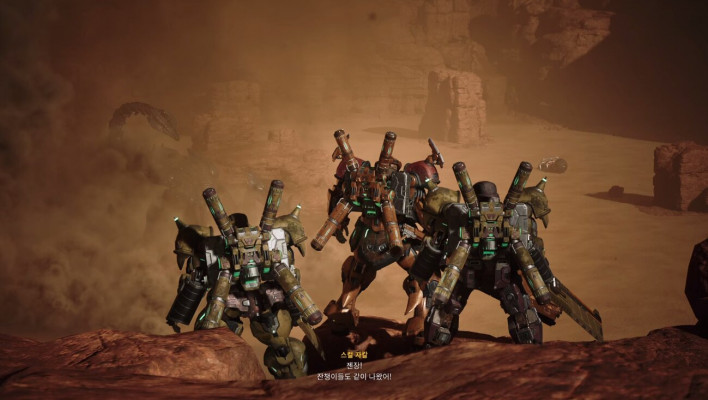
Packed with these bold changes, Gundam Rogue Orbit featured three Mobile Suit types and three missions at TGS 2026. As an action game based on Gundam, players can extensively customize various parts such as the head, torso, legs, and thruster units, but given the constraints of a show floor demo, the showcase focused more on the combat action that varies depending on the chosen weapon.
The Mobile Suit weapon presets made available were the Assault Sword, Whip Sword, and Sword Lance. The Assault Sword allowed players to land a powerful strike using a Triangle charge that consumed a large portion of the Boost Gauge; alternatively, players could fire an Anchor at enemies to close the distance without expending boost gauge, enabling stylish gameplay. The Whip Sword seamlessly switched between Sword and Whip modes to maintain a relentless assault, featuring a wide attack range that easily dealt with swarming enemies. Lastly, the Sword Lance was a stylish weapon capable of performing high mobility and long-range interception simultaneously, building up a meter when performing heavy attacks during dodge steps to fire a Beam Phalanx once full. Although its melee range was relatively narrow, its ability to attack and move at the same time made it optimized for poking and keeping enemies at a safe distance.

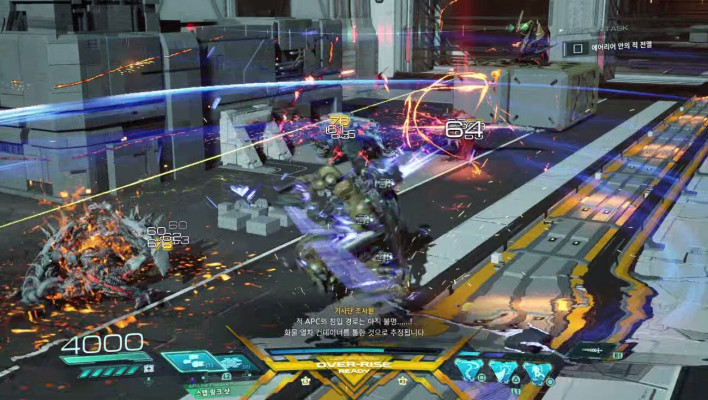
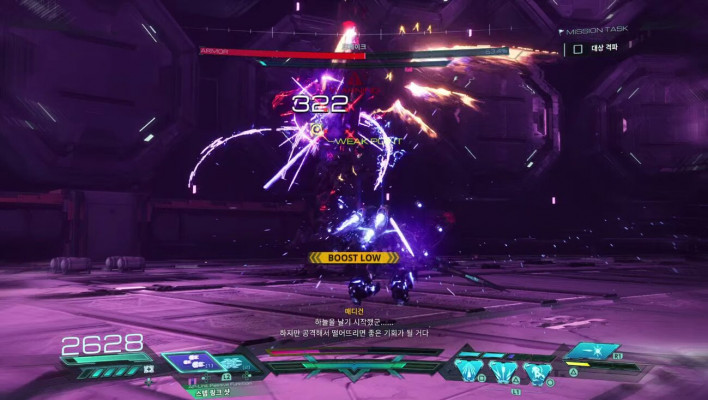
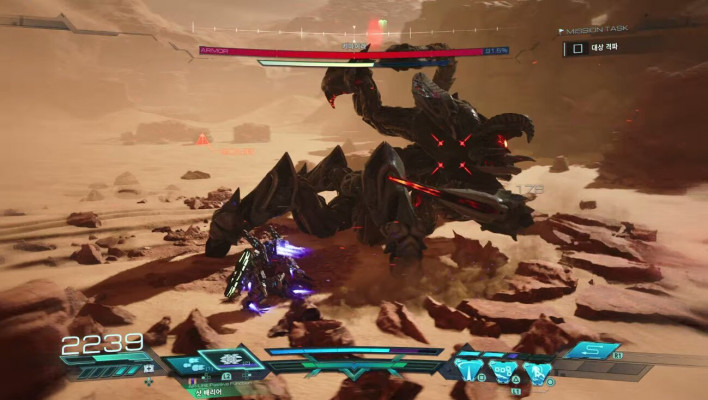
After selecting one of the three suit types, players chose from three missions: Battle of Rail Bridge, Instinct, and Sand Planet. Set in a spaceport, a hangar, and Mars respectively, each mission pitted players against different types of Apocalypse in a straightforward structure—moving to designated locations and defeating blocking enemies without complex objectives. This simple design allowed players to focus entirely on the core action that Rogue Orbit aims to deliver across various combat scenarios.
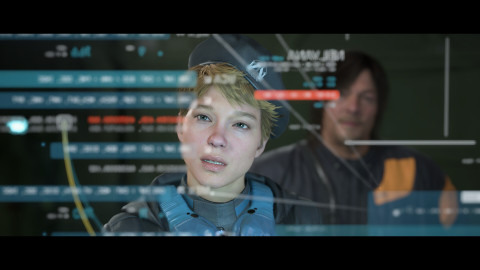
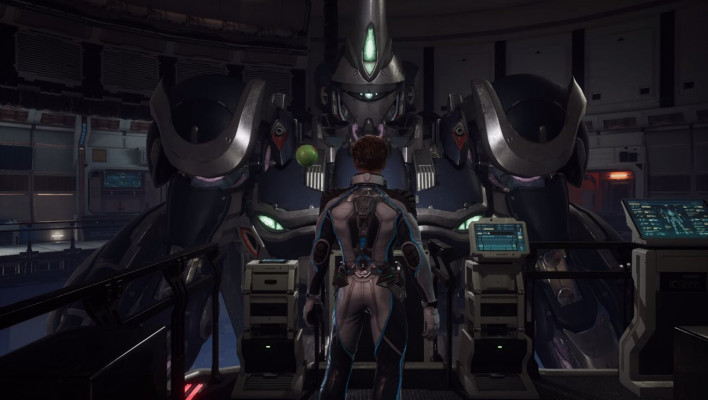
Going into the missions, Rogue Orbit felt both remarkably familiar and entirely alien. While selecting a unit and launching was a sequence seen across many previous Gundam games, this marked the first time the process was portrayed with such realism. The realistic character models, including the protagonist, and the camera angles framing Mobile Suits with pronounced metallic textures rather than a painted finish offered a perspective that was previously unimaginable. Even after seeing it in trailers, experiencing it firsthand felt all the more novel and refreshing.
However, the combat mechanics themselves did not feel entirely foreign, as they were rooted in the iconic high-mobility, three-dimensional action associated with Gundam. Players use boosters via thruster units to rapidly move between ground and air, switching between melee and ranged weapons at the right moments. Yet, with a greater focus on realistic graphics this time around, everything from visual effects to sound design felt strikingly different.

Mentioning Gundam usually brings to mind the iconic, sharp high-pitched sound of beam weaponry firing, but this demo boldly omitted those classic sound effects. Instead, it adopted heavier, more realistic impact sounds and explosion effects to convey the massive scale and power of Mobile Suits in a more immersive way. While past titles were not necessarily lacking in this area, non-fans unfamiliar with traditional Gundam tropes might have questioned why those specific effects and sound choices were used. Changing a long-established convention is no easy feat, but the game's bold willingness to try something new alongside introducing entirely unprecedented enemy types and styles was immediately noticeable.
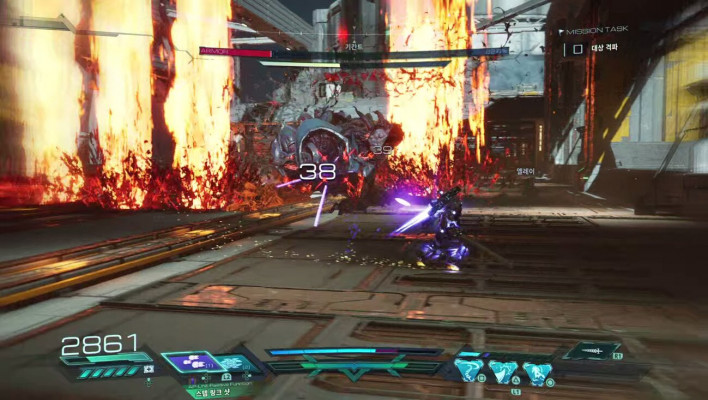
Beyond leveraging thruster units and boosters for high-mobility combat, the game introduces additional mechanics: "Apocalypse Units," "Tactical Skills," and "Overrise." Apocalypse Units are autonomous armaments that attack automatically or deploy shields while maneuvering, serving as an assistance tool for players less accustomed to the controls. Tactical Skills are special abilities triggered by expending the Tactical Gauge at the bottom of the screen. As players engage in combat using basic attacks and Tactical Skills, the Rise Gauge at the bottom center fills up; activating Overrise when full grants temporary invincibility and reduces booster consumption to zero. Rather than simply dodging, shooting, and relying solely on basic attacks, players can overcome challenges using autonomous support gear, diverse skills, and ultimate trump cards.

Beyond the tight Mobile Suit action, the introduction of the Apocalypse—enemies completely distinct from past opponents—served as a key highlight that elevated the experience. While Mobile Suit designs are undeniably sleek, the attack patterns achievable within their design and lore had inherent limitations. By breaking free from those constraints in both scale and design, even early missions featured remarkably diverse attack patterns. In particular, the "Chimera" encountered in the Sand Planet mission was a massive, threatening boss much larger than a Mobile Suit, harassing players with varied patterns like burrowing underground for surprise attacks or scattering plasma orbs in all directions. The tactical mechanics to counter it—such as luring it with nearby abandoned bombs or targeting specific body parts to break them—were equally impressive.
Looking back, recent Gundam games have faced the challenge of serving as an entry point for those unfamiliar with the franchise. Even without knowing the history or variants of Mobile Suits, the fantasy and thrill of piloting a giant mecha could be intuitively conveyed through games. However, existing fans could not be overlooked, necessitating ties to classic works—which inadvertently created constraints in style and design. Through this trial and error, the franchise pivoted toward a two-track strategy: creating games tailored for long-time Gundam fans while simultaneously forging an entirely new path inspired by the Gundam universe.

As part of the latter approach, Gundam Rogue Orbit holds up impressively as a mecha action game on its own, even if one sets aside its Gundam branding. It delivers stylish, heavy-hitting action alongside the genuine fun of tackling enemies with diverse attack patterns. While the depth of full customization could not be thoroughly explored in the demo, experiencing combat styles that varied sharply by weapon type gave a promising taste of the enjoyment players will find in crafting their own custom builds.
While traditional fans might feel somewhat left out up to this point, the developers are actively preparing MOD skins that adopt the appearance of iconic Mobile Suits from past works alongside customization parts, preserving that distinct classic vibe. Although these could not be tested directly in the demo build and were only seen on display screens while waiting in line, seeing the First Gundam's iconic appearance paired with its signature beam weapon sound effects blending seamlessly into the realistic battlefield made me look forward to playing it firsthand. As the Gundam IP approaches its 50th anniversary, all eyes are on how this bold new endeavor will ultimately take shape.