'Miraesi: Invisible Future' (hereinafter 'Miraesi'), a new collectible RPG developed by Control Nine and to be published by Smilegate, visited Tokyo Game Show (TGS) again this year following last year. This move aims to present the game directly in Japan—where anime-style subculture games have long been beloved—and gauge the reactions of local gamers.
Meeting 'Miraesi' again after a year revealed changes on multiple fronts. The work to bring Art Director Kim Hyung-seop's (a.k.a. Hyulla) signature artwork into 3D made significant strides, with noticeable advancements in fine details such as facial expressions, body proportions, and lighting. The combat, which combines real-time and turn-based elements, was also refined with improved tempo and hit feedback—areas criticized in previous demos. New features were also added, including the Councilor's Office for interacting with characters and a figure system to capture memorable moments during battle.
What has 'Miraesi' wrestled with and how has it changed over the course of a year? Why did it return to TGS for two consecutive years, and what are its achievements so far and remaining challenges ahead? We met with co-CEOs Cho Soon-gu (PD) and Kwon Se-woong (CD), alongside Art Director Kim Hyung-seop, to discuss the current state and future direction of 'Miraesi'.
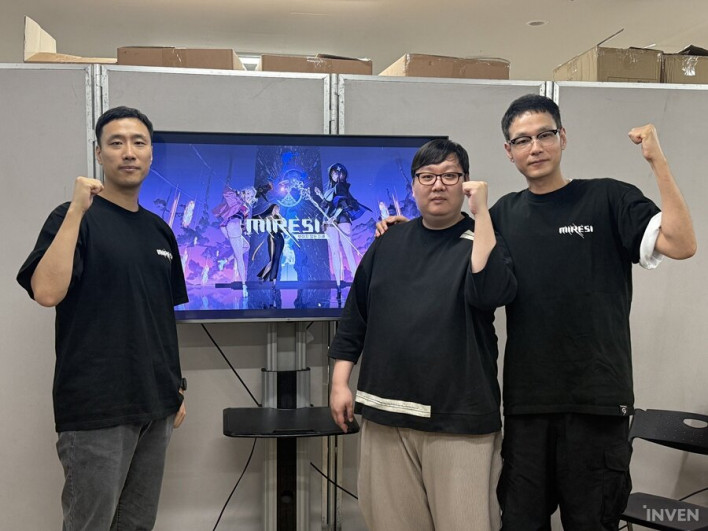
Before diving into the main interview, please briefly introduce yourselves and 'Miraesi'.
Kim Hyung-seop: I'm Kim Hyung-seop, the Art Director for 'Miraesi'. Rather than describing the game overall, I manage the art side as AD, and I'd love to hear what impression 'Miraesi' made on you from an artistic perspective at this showcase.
Cho Soon-gu: First of all, thank you for taking the time and showing interest in our game. I'm Cho Soon-gu, overseeing the 'Miraesi' project. We love taking on new challenges. Whenever a good idea comes to mind, we feel a strong drive to realize it, and 'Miraesi' is a project infused with that drive for innovation.
Kwon Se-woong: I'm Kwon Se-woong, the Creative Director for 'Miraesi'. I primarily oversee combat design and work to ensure that when new ideas are brought forward, they integrate harmoniously and organically into the combat system.
Compared to the build showcased at TGS last year, what changes have been made in this build?
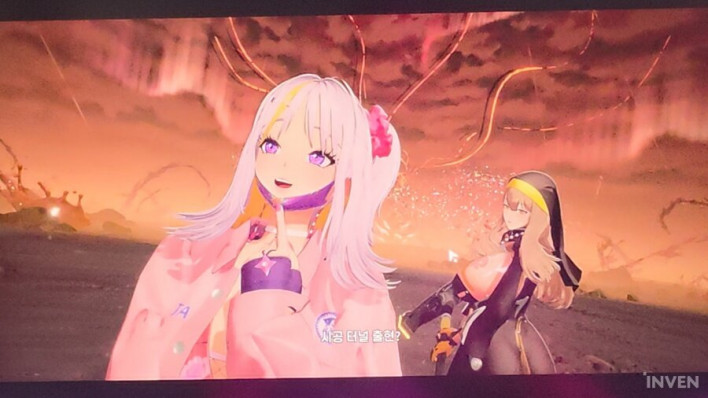
Cho Soon-gu: First, we made extensive revisions to the 3D modeling, which was the topic of most discussion last year. We paid much closer attention to facial details and expressions. In particular, we refined character body shapes and details around areas like the hips more meticulously.

Next, there were quite a few opinions that combat felt sluggish. To improve this, we tested through multiple stages before settling on the current combat tempo. There were also comments about a lack of hit feedback, so in this build, we enhanced overall elements like visual effects and audio to deliver a stronger impact.
Beyond that, improvements were made across many areas. For example, when a player's turn arrived, there were confusing moments where players wondered, "Is it actually my turn right now?" While it was fine under normal circumstances, feedback indicated players struggled to notice when they had consecutive turns, so we improved that aspect as well.
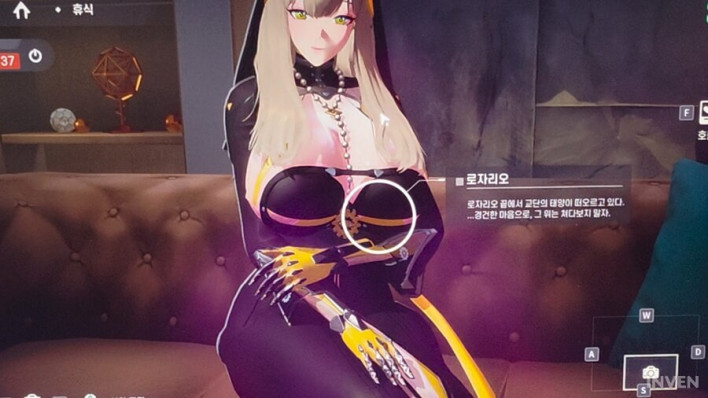
We also improved the UI and added a new system called the Councilor's Office to this build. In games of this genre, character interactions and relationships are crucial, and we agonized over how best to present them. The Councilor's Office, where the player resides, is our answer to that question. There are many other updates as well, but I'll leave it at that so I don't go on too long.
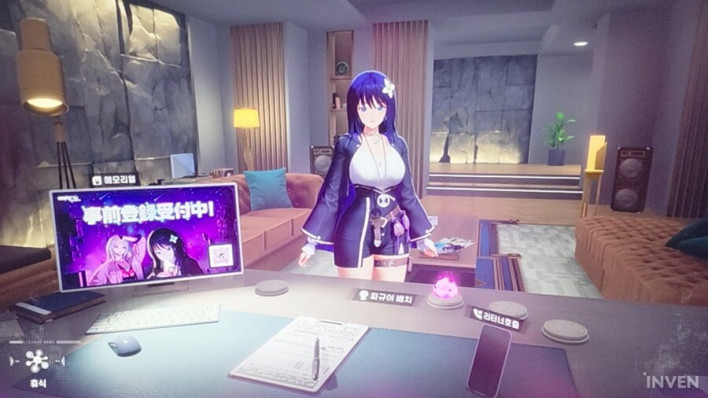
Could you explain in detail why the open-world content was omitted, and what role the newly added Councilor's Office serves?
Cho Soon-gu: First, I should clarify. 'Miraesi' was never an open-world game to begin with. As you can see from the map size, it isn't that vast. However, regarding the open-world content you mentioned, it was previously used as a space for characters to rest, and seeing it absent from this build might make people think it was removed completely. But we didn't scrap it. Rather, we had shown it temporarily as an example of how that space could be utilized, and we are currently developing ways to present it in a different format.
As for the Councilor's Office, since the protagonist's occupation is a councilor, we created it as a dedicated space fitting that concept.
In the Councilor's Office, you can summon other characters who literally act as your aides to engage in various activities together. You can share personal conversations, or advance story scenarios. It is a hub for character interactions and diverse activities. Since it is where the protagonist resides, we plan to expand it continuously going forward.
You added a new figure feature this time. What was the intention behind creating it?
Cho Soon-gu: It started as a diorama system. While playing our game, there are moments where visually stunning scenes occur. What I'm showing you right now is a screenshot I personally captured of such a moment, and taking it made me think it would be great to build a system specifically designed to preserve these moments.
At first, we considered a basic screenshot mechanic, but since that's something many other games already do, we brainstormed ways to differentiate it—which led to the diorama system. Since 'Miraesi' is a 3D game, we thought saving the scene itself as a 3D diorama that players can pull up and view anytime would be much better.
So we created a system to record scenes, but honestly, it wasn't as easy as expected. In 'Miraesi', combat flows in real time until a turn arrives and time freezes instantly. Because of this, it's hard for players to predict the exact moment time will stop. It might freeze right as you attack, or when you get hit. Therefore, we put a lot of effort into character facial expressions so that no matter when time freezes, the character looks striking and attractive.
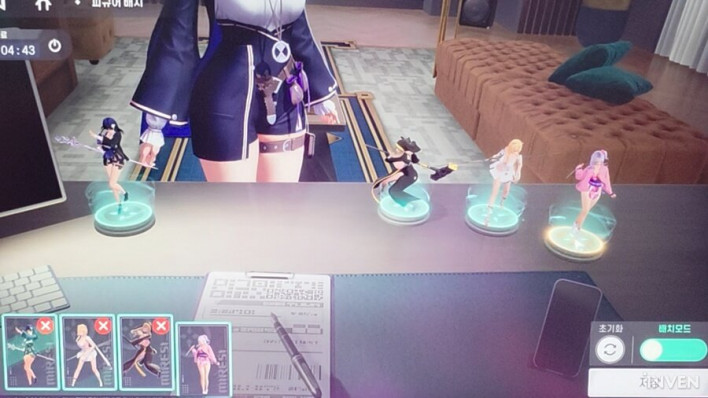
Then it suddenly occurred to us: instead of a diorama, why not preserve that exact moment as a figure?
What if players could save impressive or unique scenes and display them on a desk? That idea for the figure system took concrete shape and evolved into what it is today. Right now, it ends with placing the created figures on a desk, but we plan to add display cabinets later on for decoration.
Taking it a step further, one player might turn an attack motion into a figure, while another turns a hit-reaction frame into one to stage a scene. We intend to conduct further R&D on this to build content that brings even higher player satisfaction.
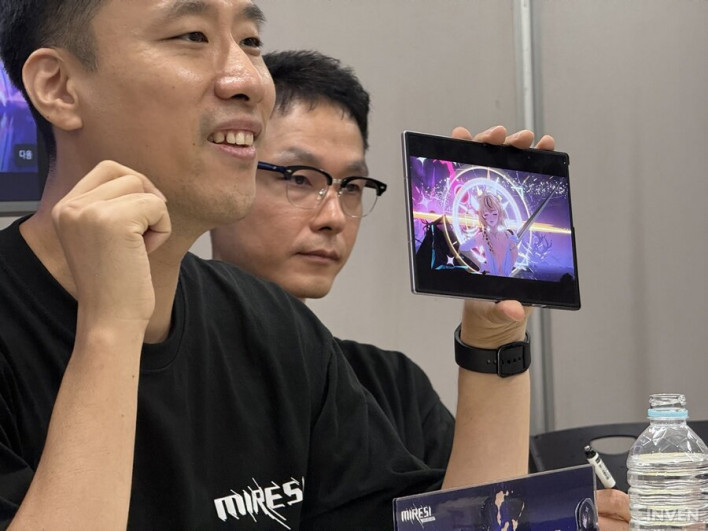
Currently, only the characters themselves can be made into figures, which feels a bit plain. Do you have plans to expand this by including backgrounds or visual effects in the figures?
Cho Soon-gu: Of course we do. However, it's at a stage that requires more R&D right now. To touch on the development side, visual effects vary—some are anchored directly to a character, while others spawn at specific locations during events like getting hit. Positioning values vary wildly, so rendering that into a figure wasn't as simple as it sounds.
On top of that, effect sizes had to be factored in. Some effects are small, while others involve massive explosions, but placing them inside display cabinets requires size constraints. Deciding how to scale those effects introduced several difficulties. So for now, we are conducting R&D with a priority on applying effects anchored directly to characters.
Movement skills and time freezes seem to force manual control to some extent. While engaging, doing this repeatedly could quickly cause fatigue. How do you plan to balance auto-battle and manual control?
Kwon Se-woong: I'll save the balance explanation for last and address why we fused real-time and turn-based mechanics first.
In traditional turn-based systems, when I attack, the opponent must take the hit barring RNG factors like accuracy, and vice versa when the enemy attacks. Thinking about how to break out of that rigid exchange led us to merge real-time and turn-based mechanics.
By building on a real-time foundation and layering turn-based combat on top, the moment your turn arrives via AP accumulation feels fresh. In a way, time freezing guarantees your turn. However, since the booth demo was a tutorial, it constantly had to guide you through instructions, making it feel interrupted and leading to that perception.
To return to your point, 'Miraesi' is not a game that forces manual combat. Weighing every single move carefully is great, but if required on every stage, it would quickly become a chore. While we created this combat system, 'Miraesi' is ultimately a collectible RPG. As your characters grow stronger through progression, lower-power stages can be cleared effortlessly. Naturally, auto-mode will be supported.
That said, we plan to distinguish between content geared toward manual play and content that isn't. For instance, competitive modes like raids or Tower of Infinity will intentionally be designed to require strategy and active play.
Cho Soon-gu: Simply put, it's designed so that when players hit a wall, they switch to manual combat. You can auto-play through standard progression, but when you hit a hurdle where auto-play fails, you tackle it manually.
We deliberately tuned this aspect. If the recommended combat power matches your current power, you might barely squeeze through on auto or clear it with minimal inputs. The reverse is also true: even if you fall well below recommended power, clever tactics will let you clear it.
We are glad that players found it engaging despite the current build having few supported characters and imperfect balance. As more characters and content are added, we believe it will become even more enjoyable.
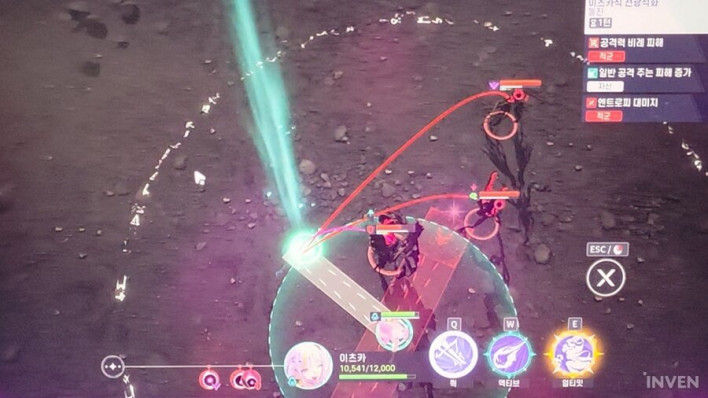
Are you considering PvP content utilizing real-time turn-based combat?
Cho Soon-gu: We tested PvP combat internally, and it was quite fun. However, in the anime subculture genre, real-time PvP—rather than traditional turn-based PvP—can consume a lot of time, and power gaps based on strategy and character performance can feel significant. We are weighing this carefully because while PvP is key content, it can stress players out. For now, we might consider co-op or casual shared formats like Cheonseon Daejeon.
Kwon Se-woong: To add to that, we made PvE difficulty quite high during internal testing to evaluate various strategies and outcomes—testing which skills or stances should be upgraded to overcome specific stages.
Apart from that, we are naturally testing PvP as well, though it remains purely experimental for now to see if PvP combat functions properly. Nevertheless, it worked surprisingly well, producing moments akin to teamfights in MOBAs. On your turn, predicting enemy actions and setting up plays can trigger traps when predicted correctly, followed by landing a devastating blow.
The 3D modeling seems to be closing the gap with AD Kim Hyung-seop's artwork, but it still feels slightly lacking. From the AD's perspective, what is the final hurdle, and how much further do you plan to push quality?
Kim Hyung-seop: What we focused on previously was translating our signature 2D illustration shading into 3D as faithfully as possible. This year was heavily dedicated to R&D to address that.
You likely noticed those improvements. As for the slight lingering shortcomings, I suspect color palette is the primary factor.
Ensuring colors look vibrantly beautiful overall and keeping that signature vivid, clean tone are crucial—qualities prominently featured in our original concept art. However, fine control over those color elements in 3D hasn't been fully mastered yet.
We aim to solve that next. Revisions to models must also continue in tandem with changes to shading and lighting. Major 3D titles—including high-profile Chinese releases—show continuous growth prior to launch, at release, and post-launch. I believe we will follow a similar trajectory.
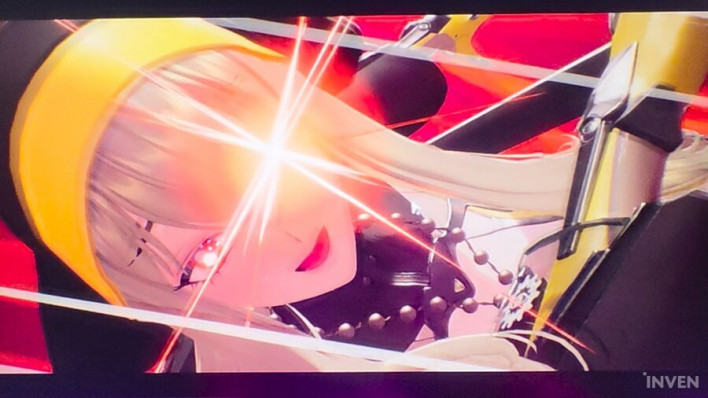
Cho Soon-gu: Internally, we also recognize areas that fall short. Examples include finer hair detailing, material texture rendering, realistic skin details, and Hyulla's signature eye styling. His eye designs have a cosmic depth, so to speak. We are striving to capture those nuances in 3D as closely as possible.
Regarding modeling, certain poses emphasize the hips, which can cause joints or mesh areas to deform unnaturally in 3D models. We are working to fix those details. Furthermore, we plan to allocate more polygon density to areas players observe most, enhancing visual quality and appeal.
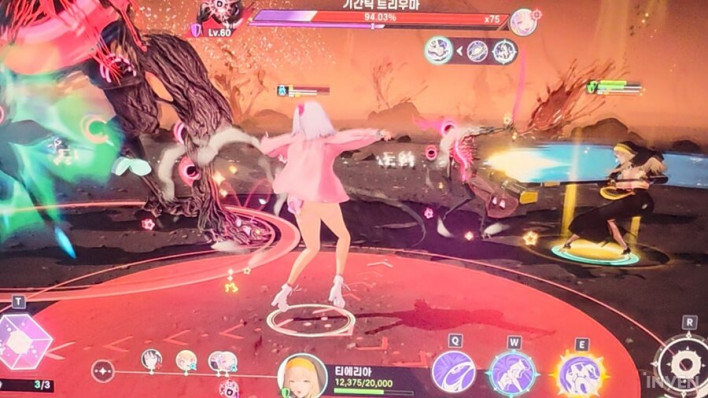
Compared to other subculture games, what sets 'Miraesi' apart?
Cho Soon-gu: First is character art. Artwork that stands apart from standard anime games—specifically Hyulla's signature style—is our primary differentiator.
Second is the combat system. Linking our proprietary combat mechanics to the subculture genre is another key feature. For example, when time freezes, players can freely examine characters in-game. Even in action games, zooming in or rotating characters during paused combat is uncommon, and it's even rarer in turn-based games.
In our game, every turn presents a fresh visual moment, which can be saved as a figure at any time. Seamlessly integrating Hyulla's dense, detailed aesthetic into our world is also vital.
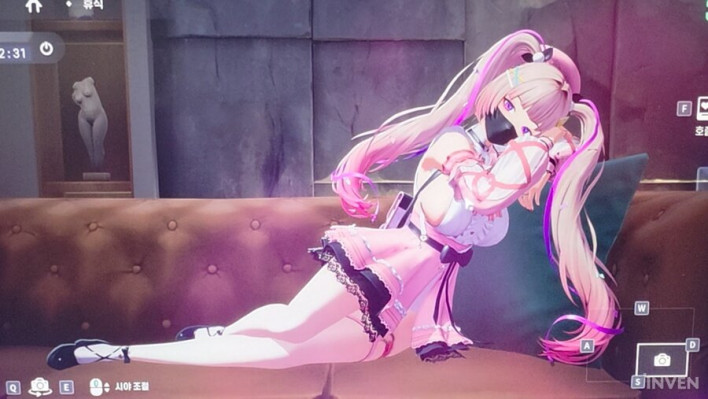
We also place heavy emphasis on character narratives. Interactions between players and characters evolve based on intimacy/affinity. Just as people start off reserved when meeting for the first time and become comfortable over time, relationship shifts are reflected through facial expressions, tone of speech, and posture.
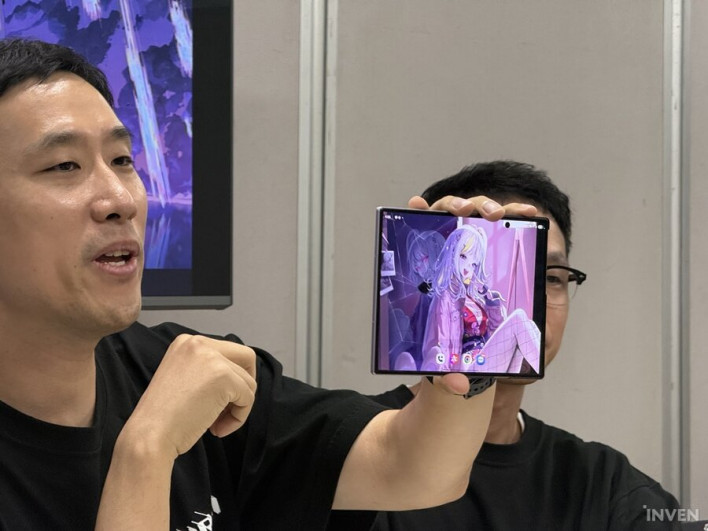
Another unique feature is the Memento system. Each character has dedicated story illustrations that can be viewed from multiple angles via an orbit camera function. We are considering ways for players to convert these illustrations into mobile wallpapers later on.
Going further, we are exploring ways to combine character voice lines, BGM, and visual effects when activating an illustration to showcase the character's backstory.
We want to challenge ourselves in every area—illustrations, 3D graphics, combat, and beyond. Rather than competing on sheer quantity, we aim to compete on quality while maximizing Hyulla's artistic vision.
Why did you adopt drag controls? Also, as subculture games test various approaches to differentiate combat recently, would you consider this a trend?
Cho Soon-gu: To address drag controls first: since this demo ran on PC rather than mobile, we judged drag inputs to be more comfortable for PC play. The mobile version will offer more convenient controls optimized for mobile devices.
Unlike last year, we mapped keybindings for PC. Drag controls accommodate players who prefer mouse-only play, while keyboard shortcuts allow faster, smoother controls in PC cafes or desktop setups.
Regarding your second point, I view this as an evolution of collectible RPGs rather than just subculture games. From the start of development, we frequently stated that we wanted to build our own unique genre. At that time, many games were mere reskins of existing titles, so we launched R&D to establish our own distinct identity, resulting in the current gameplay model.
Looking at recent subculture games, many skew toward action RPGs. In that landscape, we sought to stand out not only through visual identity but also through combat. Even if storylines revolve around saving the world, the distinction lies in *how* you save it. Ultimately, core gaming enjoyment stems from combat, so we focused heavily on that aspect.
How do you respond to concerns that drag controls might cause fatigue over long play sessions?
Kwon Se-woong: To expand on my earlier point, 'Miraesi' is a progression-based game where character combat power scales over time.
Once a boss has been defeated, even though our combat fuses real-time and turn-based elements, the underlying combat framework remains consistent. If team composition heavily dictates victory beforehand, auto-battle can clear it easily.
In other words, we won't demand repeated manual inputs for content players have already cleared and need to farm.
Still, to ensure new control schemes don't cause discomfort, we will continue refining options during remaining development to offer a balanced, convenient approach.
How are you preparing for graphical optimization and low-to-mid spec hardware support?
Cho Soon-gu: Regarding graphical quality, we haven't reached the optimization phase yet. However, our engine programmers and tech artists specialize in optimization, so we feel confident.
Of course, we must define minimum specs closer to release. Our goal is to ensure smooth gameplay without stuttering on target minimum hardware.
Naturally, visual gaps will exist between maxed-out PC settings and minimum specs. Balancing those differences effectively is something we will carefully tune moving forward.
How do you plan to appeal to gamers unfamiliar with the subculture genre?
Cho Soon-gu: We consider those players part of our target audience. I believe art is the initial hook for any game. First impressions—whether something looks beautiful, cool, or appealing—are paramount, so we aim to draw interest through Hyulla's distinct art style.
Second are players who might not prefer anime titles but love games and combat depth. We believe 'Miraesi' offers compelling gameplay for them as well.
In particular, gamers who enjoy strategy or tactical thinking over pure mechanical skill should find 'Miraesi' intriguing. Many console gamers appreciate tactical titles, so we hope to attract interest from that audience too.
Why was the protagonist designated as a councilor?
Cho Soon-gu: Narratively, selecting a councilor had multiple reasons behind it. It wasn't a simplistic decision. In a councilor's office, staff who assist you are called aides. Thinking about character-player dynamics in subculture games, we realized this framework could be effectively leveraged.
Additionally, given the various titles used for protagonists across other titles, we wanted a unique designation that didn't overlap with existing games.
Kwon Se-woong: Fundamentally, our world centers around time. Time appears as a key mechanic in combat, and we wanted that theme woven throughout the entire game. Because time is central, incidents and anomalies tied to time occur.
The protagonist belongs to the Spacetime Council as a councilor. Because the council exists, the character serves as a councilor. What the Spacetime Council does and what secrets involving time lie hidden will be revealed through upcoming story arcs.
Being a member of the Spacetime Council tasked with resolving time-related anomalies is the simplest explanation for the councilor setting.
With multiple artists collaborating, do you have internal design guidelines to maintain visual consistency?
Kim Hyung-seop: Since my art style is distinct, we distilled key techniques into baseline guidelines for internal work. Regarding facial features, unlike standard anime art styles, we emphasize detailed eyeliner, lip rendering, pupil depth, and eyebrow shaping. While facial proportions vary across art styles, many lean toward feline features. By comparison, my style portrays characters with a slightly more mature aesthetic.
Body proportions are another area requiring specific focus. We established explicit standards for rendering hands, feet, and leg silhouettes.
Based on presentation materials from lectures I gave in the past, I compiled reference points for eye lines and repeatedly communicate guidance on overall design direction.
For instance, when designing revealing elements, rather than focusing purely on skin exposure first, our primary goal is capturing character background and personality details. Within that context, we evaluate how to effectively highlight character appeal or revealing elements before moving forward.
Most subculture games involve team building. 'Miraesi' seems similar. However, team building often leads to mandatory "must-have" characters. How do you plan to handle power balance in this regard?
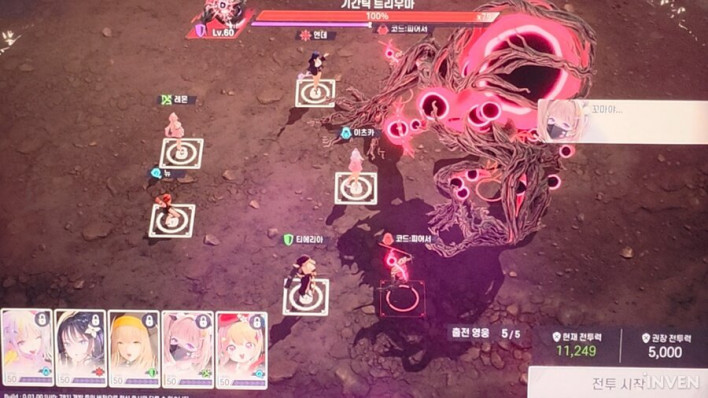
Cho Soon-gu: When testing internally, if we create a difficult hurdle stage and give the same five characters to ten players, we get ten different clearance strategies. Even with identical characters, 'Miraesi' allows a wide variety of tactical approaches.
There is no single correct answer—only broad recommended directions—with numerous viable tactics within those lines. As character variety expands, strategic permutations will grow exponentially.
Of course, individual characters may stand out performance-wise. However, we are building a framework where players can combine diverse units and rosters to clear stages in ways even we couldn't predict.
Our top priority in balancing is preventing any single character from becoming a complete all-in-one package. We assign internal power budget values to every skill module and stat.
For example, granting an immediate turn or reviving a teammate holds high value. If a character's total budget is 100 and that ability costs 30, remaining skill budgets are lowered accordingly. That budget cap prevents any single unit from becoming indispensable in all situations.
Kwon Se-woong: Aside from balance, structurally speaking, tactics effective in other games are generally effective in ours as well.
The divergence happens when combat power is closely matched. If your power overwhelmingly outmatches a boss, clearing it is straightforward; when power is evenly matched, strategy becomes essential.
A defining trait of 'Miraesi' is that directional targeting can only be dictated to a certain degree. Casting a skill on your turn does not guarantee a deterministic hit or fixed outcome.
Even if someone posts a guide saying, "Target that character at this timing," slight differences in angle can alter the outcome dramatically. This design affords players substantial tactical freedom.
Thus, simply following a single guide is unlikely to mandate a specific character at an exact timing.
What were the selection criteria for characters featured in this demo, and do you personally have favorite characters?
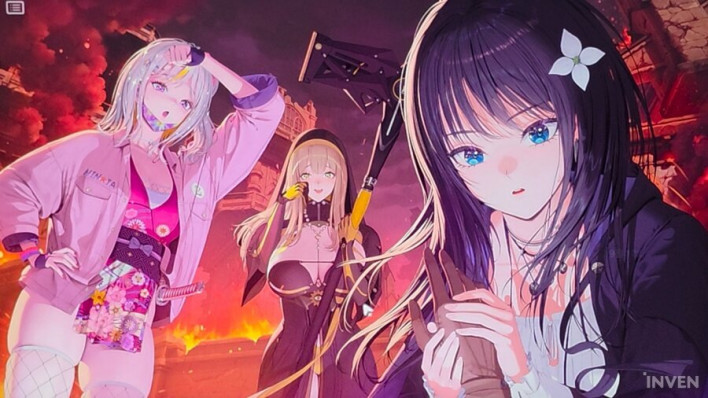
Kim Hyung-seop: Breaking it down by specific traits, Ende is my favorite facial design, Tieria is my favorite physique design, and Itsuka is my favorite personality. Ah, not just because I designed them!
How far along is the game's overall completion, and when can we expect the launch window?
Cho Soon-gu: Our overarching vision and required features are completely finalized. We are working hard toward closed or open beta tests. However, specific schedules and testing formats will be announced after coordinating with our business publishing team.
Finally, do you have any closing words for gamers?
Cho Soon-gu: What I want to say aligns closely with my opening remarks. 'Miraesi' takes on many genuine innovations.
However, being innovative doesn't mean simply telling players, "It's novel, give it a try." Our core philosophy is that novelty must be paired with genuine fun.
We will continue pushing boundaries while striving to deliver maximum satisfaction to our players. Please look forward to and stay tuned for 'Miraesi'.