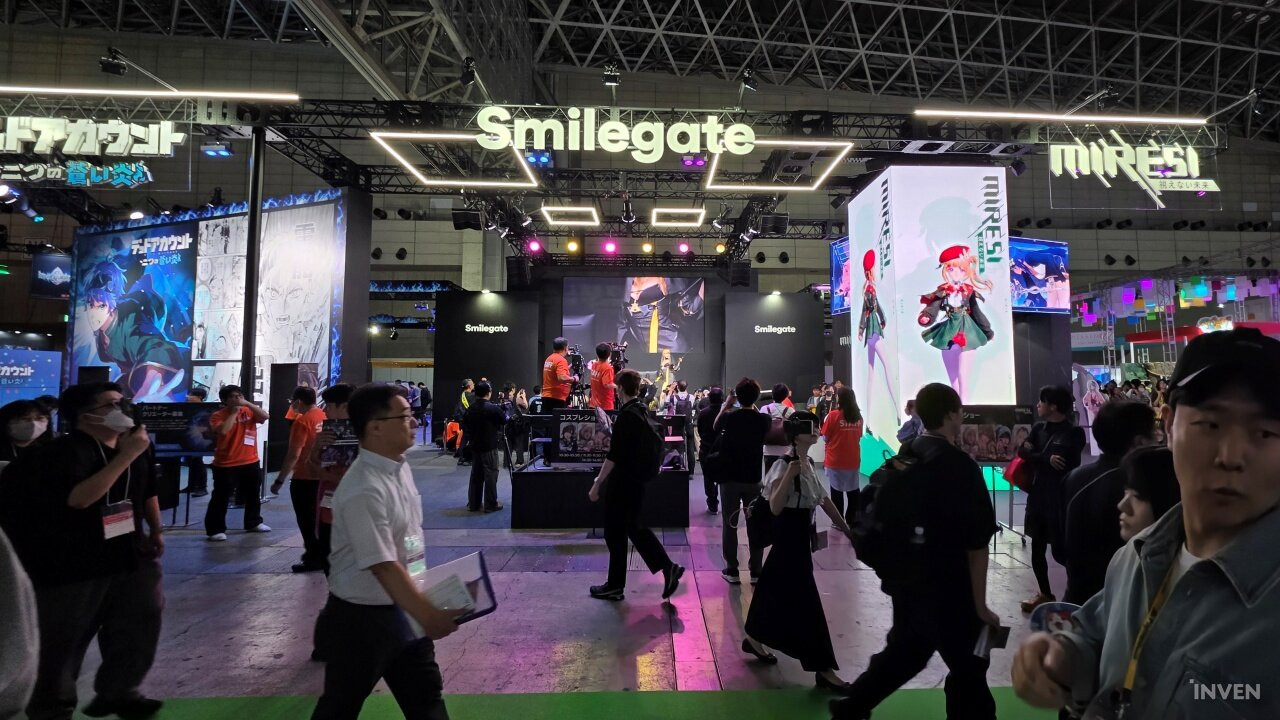
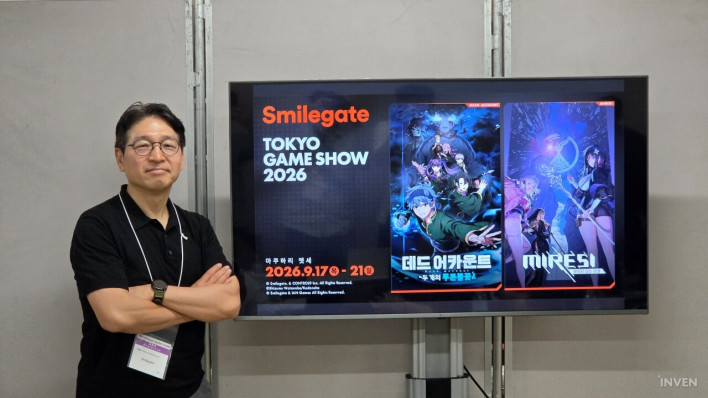
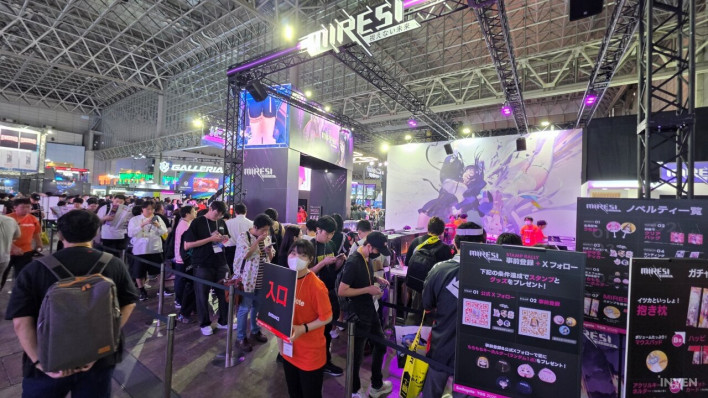
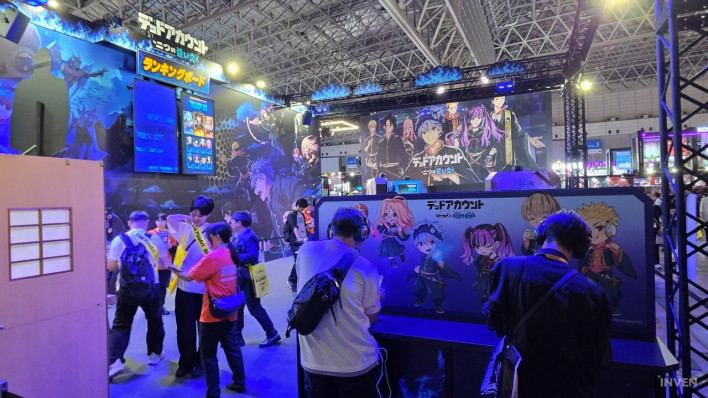
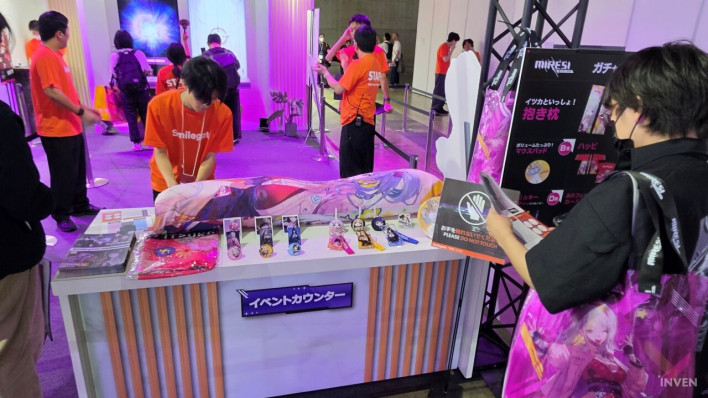
Following last year, Smilegate participated in Tokyo Game Show 2026, held at Makuhari Messe in Japan from September 17 to 21. Following last year, the company showcased 'Miraesi', a subculture strategy RPG featuring artwork by Art Director Kim Hyeong-seop, better known by his pen name Hyulla, while revealing in-game gameplay for the first time for 'Dead Account: Two Blue Flames', a mobile RPG based on the popular manga IP of the same name.
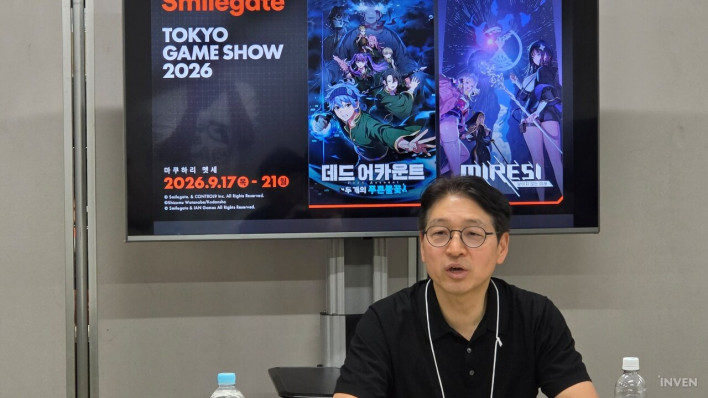
Although Smilegate had attempted to enter the Japanese market several times in the past without notable success, the company has renewed its push through active participation starting with last year's TGS. Smilegate Chief Business Officer (CBO) Baek Young-hoon spoke during a press conference with domestic media about how the company strategically approaches the competitive Japanese market, where formidable subculture mobile games vie for dominance.
You are now in your fourth year at Smilegate. What do you consider your biggest achievement, and what changes have occurred in the business areas you directly manage?
CBO Baek Young-hoon = When I first arrived, I was in charge of the mobile game division at Megaport. At the time, reliance on Epic Seven was so heavy that people called us a "one-trick pony with Epic Seven." Now, titles like Lord Nine, Chaos Zero Nightmare (Kazena), and Eclipse are all achieving meaningful results. We're also expanding our business capabilities step-by-step by publishing various other projects.
Being CBO does not mean I oversee all business operations across Smilegate. I mainly handle tasks related to Megaport and the STOVE platform. I expect to maintain my current scope of responsibilities while making gradual, stable adjustments.
Following Epic Seven and Chaos Zero Nightmare, you showcased Miraesi and Dead Account: Two Blue Flames at this TGS. What portion of your portfolio do subculture games represent, and how do you plan to expand them?
CBO Baek Young-hoon = Everyone defines "subculture" differently. We view it in a broader sense as anime-style games. In terms of game count, we actually have more of these games than MMORPGs. Currently, we have two live-service titles and two more preparing for launch.
While we intend to be more aggressive in this space, we haven't decided which additional games to secure yet. Within two to three years, I expect anime-style games, including subculture titles, will account for more than half of our portfolio.
Though it is a critical portfolio segment, that doesn't mean we are going all-in. The market itself has grown so large that the word "sub" no longer feels appropriate. As such, we aim to continually seek good games in this genre while also discovering new ones internally.
You previously announced plans to expand your Japanese branch. Could you share any metrics showing that your Japanese operations are progressing as planned? Have there been any adjustments to the original plans?
CBO Baek Young-hoon = Historically, Japan's share of our revenue was not large. Even Epic Seven had higher revenue contribution and player counts in Western regions than in Japan. On the other hand, for Chaos Zero Nightmare, Japan ranks second in both revenue and player base across all serviced regions. While this doesn't mean we achieved overwhelming success compared to blockbuster titles, I believe we have established a solid foothold in Japan.
Building on this, if we launch Dead Account: Two Blue Flames and Miraesi next year, I believe we can achieve quite meaningful results. However, our current figures are below our target. Since it is a challenging market, we must continue our efforts.
Both our operations teams and development studios are currently in the process of learning what Japanese players enjoy. Having worked in Japan before, I thought it would take less time due to similar experiences, but it hasn't been as easy as expected. Nevertheless, our absolute numbers are steadily improving.
Like Dead Account: Two Blue Flames, have you secured additional projects developed in Korea based on Japanese IPs?
CBO Baek Young-hoon = We are working to secure more. However, leveraging a Japanese IP does not guarantee success, as the market is becoming a red ocean.
An IP helps in terms of marketing, and having an existing world makes storytelling and design easier. On the flip side, supervision and licensing approvals pose challenges. We don't make securing Japanese IPs an absolute goal in itself. We comprehensively evaluate whether the IP has growth potential, whether it's an established IP, royalty fee conditions, and whether it aligns with our direction. When those conditions align, we proceed.
Even famous IPs might not be suitable for game adaptation, while lesser-known IPs can sometimes be great fits for gaming. In those cases, we might actively convince the IP holder to pursue an adaptation. However, since we must reflect the intentions of the original Japanese IP rights holder, we explore possibilities through continuous discussions with them.
What do you consider the core KPI for business in Japan?
CBO Baek Young-hoon = From a business perspective, revenue is core. However, revenue is a result; before that, user retention is what truly matters.
If retention is high, aggressive marketing becomes effective. As a fanbase builds up step-by-step, we can expand our internal IPs like Epic Seven or Chaos Zero Nightmare in different directions. Even if it doesn't match top-tier franchises, we can gradually broaden our presence in Japan.
Japan is a market with many players who display high loyalty once a game settles in. From this perspective, retention is our top priority. We believe it is essential to consistently secure user retention.
As you expand your subculture game lineup, the Japanese market is indispensable. As the person leading Japanese operations, how are you preparing to sustain and build upon current growth?
CBO Baek Young-hoon = Previously, our group didn't place heavy emphasis on the Japanese market. But Japan is the world's third-largest market. We believe we must achieve meaningful results and secure market share here. Japan is also a market where, once loved, player affection lasts for a very long time.
Once established, a bond is formed, enabling long-term success built on mutual trust. However, entry is extremely difficult. Looking back to 20 years ago when I first worked in Japan, Korean products were not highly regarded. Today, however, products from LG or Galaxy sell well. It is a market where, once recognized, you can sustain long-term operations.
As CBO, having experienced the Japanese market earlier than others, I believe my role is to better grasp what Japanese customers want. I see my role in reflecting that into our products and managing fan relationships so that players can enjoy our games without feeling dissatisfied.
Smilegate is trying three distinct approaches: partnering with local publishers like with Epic Seven, building original IP from scratch like with Miraesi, and licensing Japanese IP. What are the pros and cons of each?
CBO Baek Young-hoon = When working with a local publisher, communication is ultimately key. In the case of Epic Seven, we previously parted ways with our former local publisher. Japanese and Korean companies sometimes have different intentions, and alignments often clash. One reason publishing through a third party is difficult comes down to cultural differences, especially work culture differences.
I believe the approach Korean developers excel at is self-publishing while either utilizing established IP or creating original IP.
Using existing Japanese IP allows Japanese players to accept the game without friction. However, freedom of development is limited. Even if players love a certain element, implementing changes quickly isn't easy because agreement must be reached with the licensor and original author. While culturally easier to accept, it requires substantial coordination and management.
On the other hand, getting players to comfortably accept a completely new IP is extremely difficult. The reason Miraesi participated in TGS both last year and this year, as well as Comiket, is to consistently appeal to Japanese players and open their hearts. It requires significant upfront investment. However, once a fandom is established, we can quickly implement what fans want through online and offline events and solidify that relationship.
All three methods have pros and cons. Partnering with a local publisher who knows the market well still has difficulties due to work culture differences. IP-licensed games offer easy entry, but making fast adjustments to meet fan demands is tough. Original IP involves a grueling process of polishing quality and building awareness, but once past that stage, you can move in the direction you want.
How did you evaluate the potential of Miraesi and Dead Account: Two Blue Flames?
CBO Baek Young-hoon = Ultimately, the key is whether it meets player demands. In subculture games, art and immersion are vital.
For Dead Account, I thought the concept itself was great. It has a setting involving a specialized occupation handling lonely deaths. Extending that premise, smartphones hold various personal and private information, and the manga explores how that data gets recklessly handled using a narrative style unique to Japanese manga.
I felt that world-building could appeal to players. The character appeal is also solid. Over the past two to three years, Japanese players seem to have become more open to lighter games, so we approached it thinking this concept could work well.
For Miraesi, we focused on Art Director Hyulla's character style and the storyline fitting that art. Given there's already a fandom for his character art, we thought it would be great to produce it with high quality. Furthermore, since the team consists of experts in this field, we saw strong potential and pursued it aggressively.
The primary factors are whether we can build characters and a world that resonate with players, and if we're utilizing existing IP, whether that IP can help achieve our goals.
You attended TGS back-to-back last year and this year. How do you see the trends shifting this year?
CBO Baek Young-hoon = Last year, there were many Chinese game developers, but they were less visible this year. Also, I felt Korean companies have gotten genuinely serious about global markets, including Japan. Major Japanese companies stepped up to promote their flagship titles, while Korean firms appear to target the market with subculture or anime-style games.
However, it felt like there were no particularly stand-out blockbusters. Mobile-only games are also rarely seen now. There were a huge number of PC games. In the late 2010s or around 2023, many indie games in the B2B hall were playable on mobile or tablet, but now almost all of them are on PC.
This seems to be because Japanese indie developers also realize they need to reach global markets via PC platforms. While the mobile market remains generally stable without major shifts, mobile-exclusive games are declining while PC platforms are growing.
With intense competition in the subculture markets of Korea, China, and Japan, what is Smilegate's differentiated strategy?
CBO Baek Young-hoon = Speaking strictly within my scope of responsibility, it is to focus relentlessly on customers and fans. At some point, I feel we were making decisions based on what we wanted to make or what would make the next update easier. I reflect on that critically.
On the other hand, I feel we asked too few questions about what fans actually want. I always tell my business and marketing organizations: when preparing a new title, don't define the target demographic loosely as just "males in their 20s and 30s."
We need to look much closer at what games they play, their exact age group, and their tendencies. We must be able to answer what those people want. Only then can we predict and deliver the games they will want to play in the future.
Explanations like "we prepared this," "we will show you this," or "this is better than other games" don't mean much. If you make ramen and just claim "it's tastier than existing ramen" or "it's spicier," will it sell? It's that kind of problem.
I believe the most important thing is to endlessly contemplate and uncover what customers want and what parts fans enjoyed.
I think Eclipse's performance stemmed partly from this approach. We used the term "MMOLite." Looking at the mobile MMORPG market—often called "Lineage-likes"—we felt that while the genre is fun, it is heavy and demands too much time and money. Addressing that point and positioning the game around customer needs resonated with players.
If we observe what potential customers and players like, translate that into gameplay, and deliver it, the market will open up again. Japanese customers tend to be somewhat conservative when encountering new things. All the more reason to observe closely and approach them with proposals that feel both familiar and fresh.
At last year's TGS, you stated that if Chaos Zero Nightmare succeeded, you would expand staff at the Japanese branch. How much has the branch grown? Also, how specifically are you preparing the launch of your upcoming anime-style titles?
CBO Baek Young-hoon = Although Chaos Zero Nightmare didn't hit our ideal target, staffing at our Japanese branch has expanded to the mid-10s, if not quite double. In terms of launch timeline, Dead Account: Two Blue Flames will likely release first. However, a final company-wide test remains, so we'll decide after reviewing those results.
As for Miraesi, I suspect it might launch around the time people start wearing short sleeves next year, though that remains flexible as it can be adjusted through testing. Since we need to check and incorporate player feedback, nothing is finalized yet.
For Miraesi's live service and publishing, media mix strategy in Japan also seems crucial. Manga adaptations and offline merchandise are important, but as a Korean company, wouldn't Smilegate face distribution challenges? Do you have a related roadmap?
CBO Baek Young-hoon = While details aren't concrete yet, we believe we must approach merchandise more systematically. Rather than just handing out giveaways at events, the direction is to produce and distribute merchandise that fans can continually cherish and purchase. While difficult with Chaos Zero Nightmare alone, if Miraesi succeeds, we should be able to put more weight behind that effort.
We are also considering animating Miraesi or encouraging derivative works based on it. However, it's hard to say we have concrete plans yet; it remains in the conceptual stage.
The two co-CEOs of Super Creative recently announced their departure. Were there disagreements with them? Also, after their departure, will there be any impact on the continuity of the development organization or future title development?
CBO Baek Young-hoon = Both co-CEOs founded and led the company for a long time. However, founders often reflect on new pursuits after a certain amount of time passes. While there were differences of opinion, they weren't critical, and I think it was a time when they personally needed to recharge. In fact, when making Chaos Zero Nightmare, both poured in immense effort to the point of exhaustion. I hope people view it in that context.
Regarding game continuity, although both co-CEOs played crucial roles, planners who have been there since the beginning remain, and there hasn't been a major exodus of development staff, so there are no significant issues. You can view it from a common-sense perspective. We are fully disclosing the Chaos Zero Nightmare roadmap to players and operating normally.
Securing promising developers early has become vital. How are you approaching this, and what strengths can you offer to studios? Are there genres or platforms you feel are lacking in Smilegate's portfolio?
CBO Baek Young-hoon = Speaking for all of Smilegate is beyond my authority, so I will limit my response to my area of responsibility. Our collaboration methods with developers fall broadly into three categories: in-house, strategic investment, and publishing.
First, regarding pure publishing, for domestic and overseas developers looking to operate in Korea, I believe we are a publisher capable of understanding the market, grasping trends, and delivering on customer demands. The same goes for second-party deals. I believe we have competitive strength in those areas. Titles like Eclipse and Lord Nine serve as strong examples that appeal to third-party developers.
I want to extend similar proposals to Korean indie developers going forward: "Partner with us, and we will handle the business side so you can focus entirely on game development."
Investing in a second-party developer means wanting to walk together for a long time. We start by considering what developers genuinely want from a publisher. Beyond funding, there is the role of providing business direction on what customers want. I think we hold strong competitiveness in these areas.
We are also collaborating well with mid-to-small creators and YouTubers. We are building a win-win model where we grow together while promoting our games.
In terms of in-house development, beyond Super Creative's new title, we support common operational tasks for mobile games across the group. Whereas internal game projects previously operated in silos under separate corporate entities, our support structure now enables more organic coordination.
Let's discuss STOVE regarding indie developer support. Smilegate is preparing STOVE to grow into a global platform, but there are concerns that STOVE itself might become an entry barrier in Japan. Meanwhile, STOVE is widely known as an indie platform, and Japan is a massive market for indie games. Do you intend to utilize STOVE to approach Japan's doujin and indie markets?
CBO Baek Young-hoon = Regarding STOVE, we are earnestly attempting indie game publishing. However, we found that a simple approach makes it difficult to build a mutually beneficial structure.
To clarify, asking devs to partner with us doesn't mean telling them not to launch on Steam. The idea is to release on Steam while also gathering users on STOVE. Ultimately, it means we take on the risk and publish the game, gathering players across both Steam and STOVE and providing opportunities for the game to gain exposure.
Rather than just leaving STOVE open and waiting for developers to come on their own, we actively communicate how we can help while bringing games aboard. We are working to leverage our platform in publishing so good indie games can join.
Word needs to spread among indie developers that they can receive this kind of support when expanding onto STOVE or Steam.
While we are actively engaging in indie publishing, appealing to Japanese developers and testing the waters is still in its first steps. In Japan, some developers feel overwhelmed just launching a game on Steam. Under those circumstances, we are contemplating technical aspects and strategy on how to encourage them to also come to STOVE.