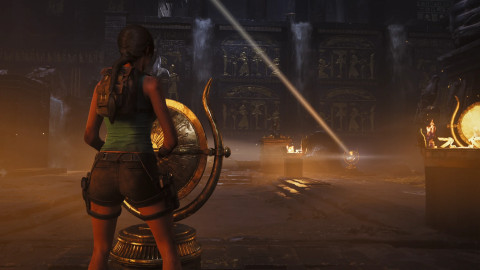
NC's new title 'Astrae Oratio' presented a playable build to the public for the first time at Tokyo Game Show 2026, which opened on September 17. Since first coming to light under the working title 'Project AT,' details including its official title, world setting, and characters have been revealed sequentially throughout 2026, alongside the start of recruitment for its first CBT. The game, which was previously known primarily through its name, lore, and trailers, has now reached a stage where players can experience its actual form firsthand.
Rather than revealing everything at once, 'Astrae Oratio' has gradually introduced its world, characters, and key lore. From its setting of "'89 Tokyo" to its unique blend of magic and public administration, the Special District Bureau, Trials of Domination, and regional mages and factions, the game has steadily fleshed out its background and setting.
With actual gameplay shown for the first time at TGS 2026, players could see how the lore and characters previously introduced individually come to life within the game. While many elements remain unrevealed as it is still in development ahead of the CBT, the information released so far offers a clear picture of what kind of game 'Astrae Oratio' is.
Here is a comprehensive overview of the key details revealed about 'Astrae Oratio' so far, alongside the newly confirmed information from TGS 2026.
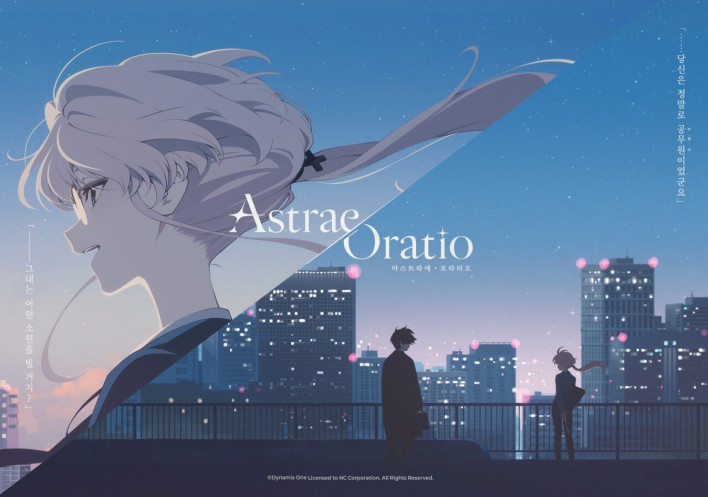
# 1. What Kind of Game Is 'Astrae Oratio'?

'Astrae Oratio' is a new subculture RPG developed by Dynamis One and published globally by NC. In early development, it was known as 'Project AT.' It came to public light in January 2026 when NC made a strategic investment in Dynamis One and secured its global publishing rights. Subsequently, in April of the same year, the official title was confirmed as 'Astrae Oratio.'
Full-scale development for 'Astrae Oratio' is reported to have begun in September 2024. Key development staff include scenario director isakusan, art directors In Kim (hwansang) and DoReMi, and character art director and supervisor Mx2j.
When 'Project AT' was first introduced, the term "hero-collector subculture RPG" was used, but since the official title reveal, it has been more actively described as a "shindenki subculture RPG themed around magic and administration." Rather than simply placing character collection front and center, the title highlights the nature of its lore and narrative.
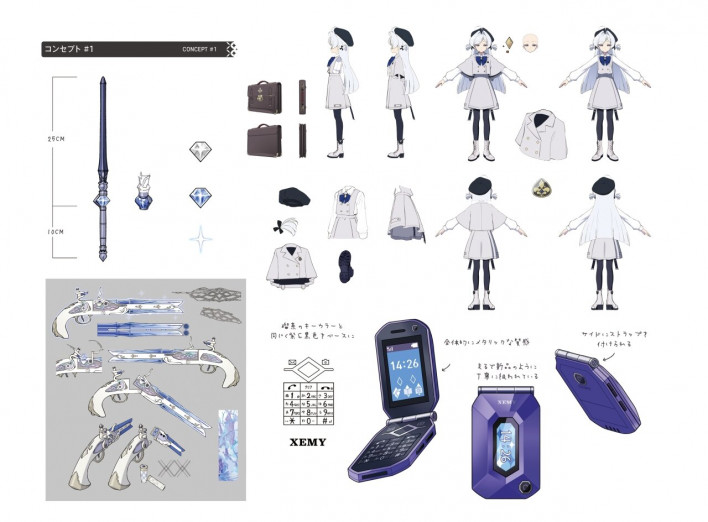
Prior to official launch, the development team is putting substantial effort into introducing the game's world and characters to players. The teaser art book showcased at Comic Market originated as a guidebook produced to share direction among the developers and collaborating departments. Art Director In Kim likened it to a "movie brochure" for understanding the world and characters before the full narrative unfolds. The team plans to continue communicating through tangible, readable, and interactive creations.
Throughout 2026, 'Astrae Oratio' rapidly rolled out world settings, character reveals, and gameplay videos. With CBT recruitment underway and its appearance at Tokyo Game Show to meet players in person, the game has entered its full-fledged reveal phase.
The long-term vision envisioned by the developers resembles an ongoing "serialized work" rather than a standalone, self-contained title. Director Jong-gyu Lim described the CBT as a pilot program to validate the gameplay loop connecting world, characters, story, combat, and daily routine. Art Director In Kim also cited the shared anticipation and enjoyment of new story chapters and content drops as a core strength of live-service games.
# 2. Tokyo, Magic, and Civil Servants
The setting of 'Astrae Oratio' is "'89 Tokyo." However, it is not a period drama that faithfully reproduces real-life Japan in 1989. The in-game world is an alternate Tokyo that advanced faster than actual history due to magic and other anomalous phenomena. To this, elements reflecting analog devices, cityscape visuals, and the period's atmosphere were added to forge the game's distinct tone.
The team's decision to choose Tokyo ties into the "shindenki" genre the game embraces. Director Jong-gyu Lim explained that just as Westerns naturally bring to mind the American wilderness, Tokyo holds immense iconic status for the shindenki genre. This means Tokyo was selected not merely to recreate the backdrop of 1980s Japan, but as a stage to reconstruct the tropes and conventions of shindenki for modern audiences.
In terms of art direction, this worldview is defined by the keyword "lyrical analog." Art Director In Kim stated that the goal is to recreate nostalgia for analog aesthetics—fondly remembered from the past—in alignment with modern trends. Real-world locations and landmarks like Tokyo Tower are recreated based on on-site field research, while elements such as maps, suits, documents, ID cards, seals, and nameplates are incorporated to convey the flavor of "bureaucracy," another core theme.
This nostalgia is not merely a choice to replicate the vibe of older works. Art Director In Kim explained that over the past decade, as tropes like isekai and post-apocalypse dominated subculture media, searching for a fresh perspective led them to revisit past genres and aesthetics instead. The desire to pass on the feelings evoked by works the development team enjoyed during their youth to today's players also influenced this artistic direction.
In the world of 'Astrae Oratio,' the central figures are "mages." Mages traverse the boundary between reality and unreality using keys called "Cleis (κλείς)," utilizing "artifacts" that manifest their will into reality. Furthermore, magic is intertwined with the in-game administrative system, with mages governing their respective "domains." The government body managing these is the "Special Administrative Zone Management Bureau of Hidden Domains," shortened to the "Special District Bureau." NC presents the Special District Bureau and domains as core settings in the lore of 'Astrae Oratio.'
Yet the protagonist controlled by the player is not a mage. The story begins when an ordinary civil servant holding the title of "Senior Clerk," previously stationed in a regional office, is abruptly transferred to the Special District Bureau. Handling administration for the magical world, the Senior Clerk becomes entangled in various incidents, crossing paths with a wide array of mages, including Special District Bureau Chief Ai Hiwagishiakari.
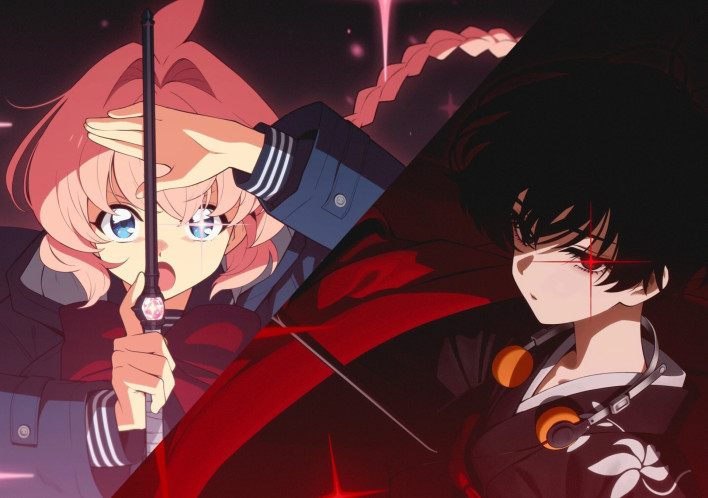
To resolve disputes among mages, a judicial framework known as "Trials of Domination" exists. As the name implies, it is a legal system where mages settle conflicts through duels, blending the fantasy element of magic with real-world administrative and judicial mechanics. Characters belong to various regions and organizations. To date, several factions have been revealed, including the Special District Bureau, "Domain Management Council Special District Bureau Branch," "Minato Ward Girls' Magical Activities," "Seiran Society," "Akina Urban Legend Research Lab," and "Roses of Bunkyo."
Thus, 'Astrae Oratio' seamlessly intertwines the twin themes of "magic and administration" throughout its world. Mages and domains, the Special District Bureau and the Senior Clerk who oversee them, and the Trials of Domination that adjudicate disputes all interlock to construct the game's unique setting.
This world and its characters are conveyed primarily through standing illustrations, cut-ins, and voice acting. The main story features full Japanese voice acting, covering not only dialogues between characters but monologues as well. While routine scenes allow players to read through the narrative in a relatively calm manner, pivotal moments or domain declarations elevate the production density. The development team aimed to maximize climax impact by contrasting peaceful daily life with the events unfolding beneath the surface.
At launch, roughly 30 characters will feature, with playable characters distributed across around 10 groups, though even more groups appear in the actual storyline. Rather than targeting Japan first before expanding globally, the game aims for a simultaneous global release, catering to regions including Korea, Japan, the US, and Europe where audiences enjoyed shindenki and related works from the 1990s and early 2000s.

# 3. A Combat System Layering Combos, Parries, and Tag Mechanics onto ATB
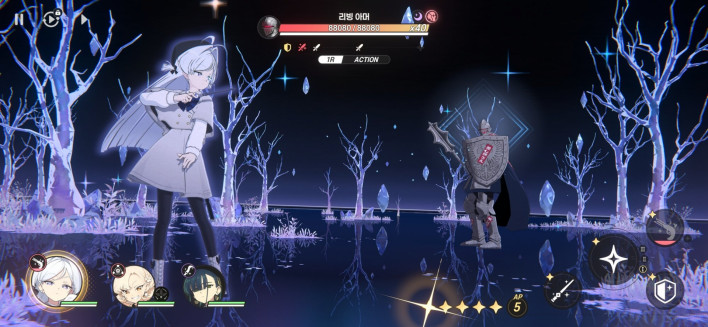
Through the TGS 2026 demo, 'Astrae Oratio' offered a closer look at its combat system. While structured fundamentally as a turn-based RPG, it stands out by actively incorporating real-time response mechanics to enemy actions during battle, rather than adhering strictly to fixed, alternating turn sequences.
Character actions are centered around basic attacks, combat skills, and ultimate skills. Executing actions consumes AP (the equivalent of skill points), allowing players to chain consecutive attacks as long as AP remains. Combat skills carry individual cooldowns, which can be shortened using basic attacks to seamlessly reconnect into further skill casts. Ultimate skills require charging a dedicated gauge before activation.
Countermeasures against enemy attacks are also incorporated. Players can interrupt regular enemy actions by striking first, while powerful incoming attacks can be parried via precise counter-timing to mitigate damage and reclaim the initiative. Conversely, certain red-coded attacks cannot be countered, requiring players to swap characters or brace for impact. Enemies also possess action gauges, allowing players to proactively adapt when allies act first.
Battles feature a tag-team format with a party of three characters. Only one character fights active on the field at a time, but players can swap characters mid-battle to sustain attack chains or withdraw heavily damaged allies. Specific tag effects trigger upon switching depending on the character or role class. Standby characters can still take damage from certain area-of-effect attacks, requiring careful management of non-active party members as well.

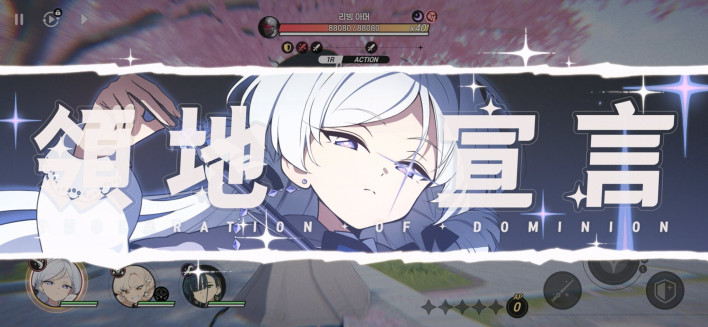
"Domain Declaration" represents another core combat mechanic. Players can trigger a domain declaration once specific character conditions are met, recovering AP and resetting combat skill cooldowns upon activation. This enables players to expend AP, trigger a domain declaration, and continue relentless offensives to maintain dominant momentum.
Additionally, a mechanic targeting enemy elemental weaknesses to rapidly deplete their break gauge is included. Exploiting weaknesses to inflict a Break state, combined with managing AP, skill cooldowns, tagging, and domain declarations, forms the core operational flow of combat.
In summary, combat in 'Astrae Oratio' uses a turn-based foundation while emphasizing real-time responsiveness through enemy action gauges, counters, and tagging. Because players can chain multiple actions within a single turn as long as AP permits, success hinges on how efficiently offensive combos are linked and how adeptly player responses counter enemy moves, rather than simply waiting for a turn to execute a single skill.
This design is not intended merely to tack real-time controls onto a turn-based RPG. Director Jong-gyu Lim explained that the combat goal is to deliver both "turn-based strategy and real-time tension." The team sought to deconstruct the thrill of fighting games—where players read and react to opponent moves within simple rules—and infuse it into turn-based combat. Rather than passively watching pre-scripted ultimate animations, players construct their own offensive flow and combos by combining AP, counters, tags, and domain declarations.
However, as the TGS demo was a timed trial version, detailed combat rules—such as specific domain declaration triggers per character, tag effects, status ailments, and buffs or debuffs—could not be fully examined. The precise architecture of these systems is expected to become clearer during the upcoming CBT.

# 4. Ahead of CBT, Astrae Oratio Takes Center Stage to Make Its Mark
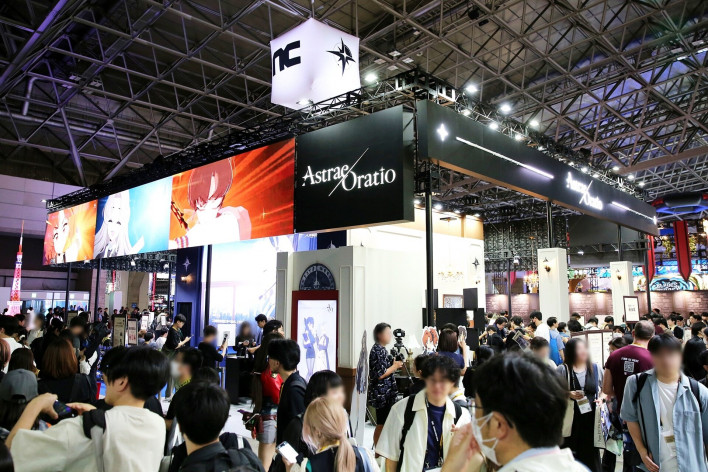
Recruitment for the 'Astrae Oratio' CBT is currently underway. The application period runs from August 19, 2026, until noon on September 21, with selected participants able to test the game on Android and iOS devices. Specific start and end dates for the test have not yet been announced.
The content volume is designed to accommodate approximately 3 to 5 days of gameplay. Rather than isolating individual story or combat slices, the early gameplay is densely structured so testers can experience the fundamental cycle linking combat, narrative, and Special District Bureau administrative duties. Through this, the developers plan to evaluate both individual content elements and how seamlessly they weave into a single gameplay loop.
Recommended specs for the test on Android are Snapdragon 8 Gen 2 or higher, 8GB RAM or higher, and Android 14 or higher. For iOS, an A16 chip or higher, 6GB RAM or higher, and iOS 18.0 or higher are recommended. Minimum specs on Android are Snapdragon 7 Gen 1 or higher, 6GB RAM or higher, and Android 12 or higher, while iOS requires an A14 chip or higher, 4GB RAM or higher, and iOS 16.0 or higher.
This CBT targets global players, supporting text in Korean, Japanese, Traditional Chinese, and English, with Japanese audio. In-game purchases will not be enabled during the test period, and all player data—including characters, currency, and story progress—will be reset upon conclusion. NC stated that it plans to showcase the game's lore and core content through the CBT and incorporate player feedback into ongoing development.
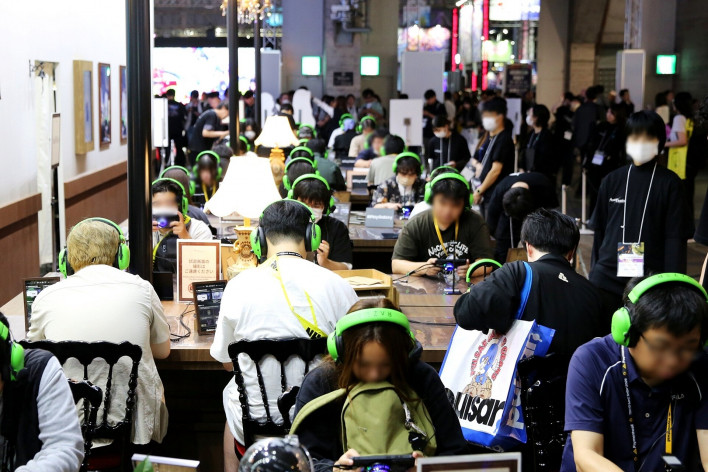
Ahead of the CBT, a demo version of 'Astrae Oratio' was unveiled at Tokyo Game Show 2026, which opened on September 17. On-site play was structured so attendees could choose between testing either a scenario build or a combat build. A "Prologue Scenario Screening" featuring early story content was held at the booth, while a new trailer titled "Prologue Digest PV" covering key prologue highlights was released on official channels on September 17.
The platform strategy remains focused on mobile for the time being. This CBT will not support a PC version. While an internal PC build exists and a PC version is under consideration for the long term, the developers are prioritizing delivering the first experience on smartphones, as the title was designed as a smartphone game. Director Jong-gyu Lim explained that the goal is not merely to restore the feel of past shindenki works as-is, but to reinterpret them modernly for mobile environments.
To date, 'Astrae Oratio' has unveiled information incrementally with a focus on its setting and characters. Although select combat and scenario footage had been shown via video, players had no opportunity to play the game directly before TGS 2026. Through the upcoming CBT, players will be able to see in greater detail how the lore and characters revealed so far take form in actual gameplay.