Recently, the hottest topic in the gaming monitor market is undoubtedly the "mainstreaming of high refresh rates." Beyond 144Hz, which was called a dream number just a few years ago, and 240Hz, once the exclusive realm of high-end lineups, four-digit 1,000Hz products are now appearing on the market. While there were once many skeptical views questioning "can the human eye even tell the difference?", users who actually experience them respond that "it is definitely much smoother anyway," proving that when it comes to high refresh rates, the more, the better.
Monitors span a very wide spectrum of specs and prices, ranging from tens of thousands of won to millions of won. Therefore, rather than simply defining a "good monitor," it is more realistic to find a product that fits the user's budget and buying preferences.
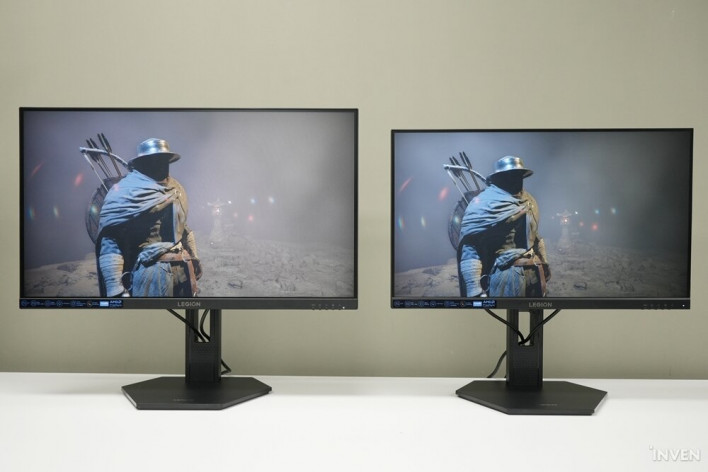
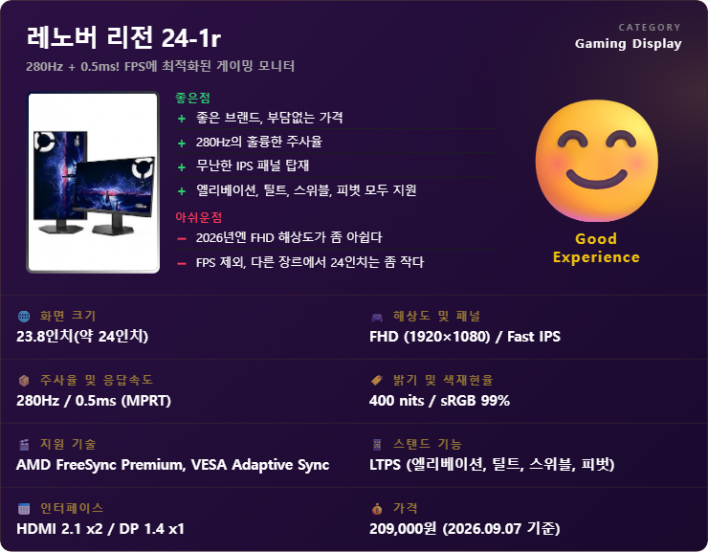
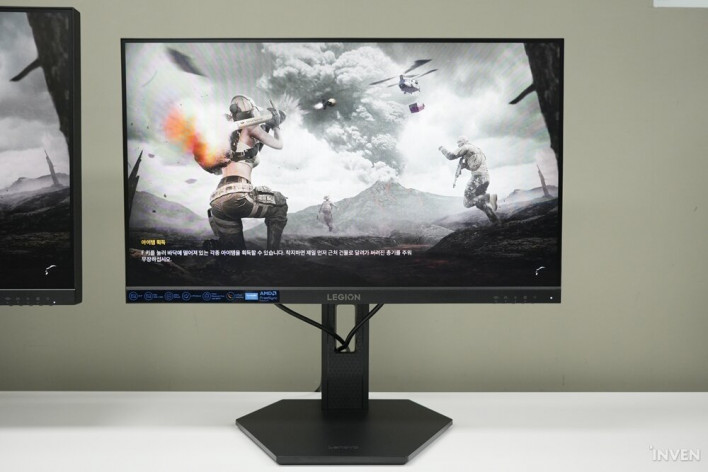
Recently, Lenovo's gaming brand LEGION introduced new products featuring outstanding value for money. These are the Lenovo Legion 24-1r and Lenovo Legion 27-1r, which feature a 280Hz high refresh rate, 0.5ms (MPRT) response time, and Fast IPS panel at a reasonable price in the 200,000-won range. While the FHD resolution might feel slightly disappointing, it is a completely understandable compromise considering their price competitiveness.
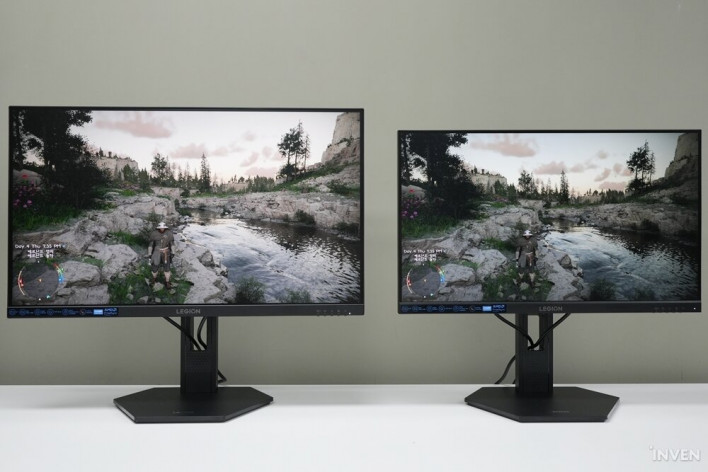
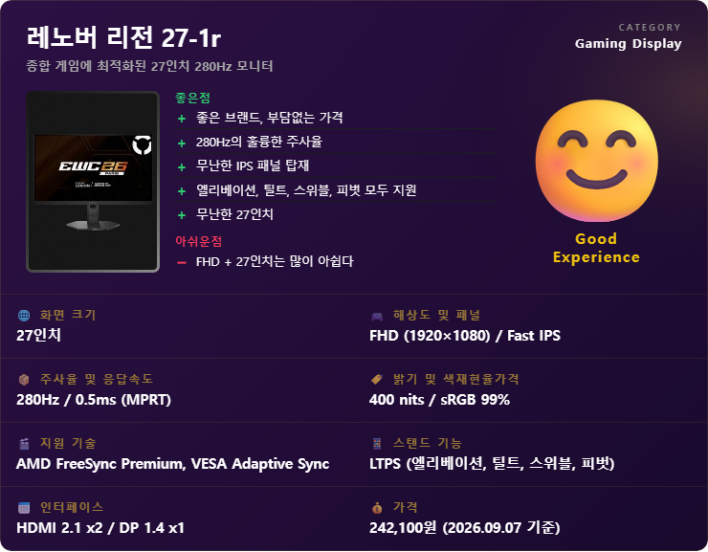
The only difference between the two products is size (inches)... Allowing users to choose according to their preference!
The only difference between the Lenovo Legion 24-1r and 27-1r is the screen size. Both models equally support a 280Hz high refresh rate and 0.5ms (MPRT) response time based on a Fast IPS panel. In particular, despite being an entry-level lineup, they come equipped with a multi-functional stand supporting height adjustment, tilt, swivel, and pivot, making them excellent not only as primary monitors but also as secondary monitors. They are a very attractive option for users seeking vertical pivot functionality.
The panel performance is also excellent. Featuring 400 nits of brightness and a 99% sRGB color gamut, it cleanly resolves the dim or washed-out, dull color issues often pointed out in budget monitors. On top of offering a reasonable price point relative to its solid fundamentals, the quality reliability provided by a global brand like Lenovo is also a major advantage.
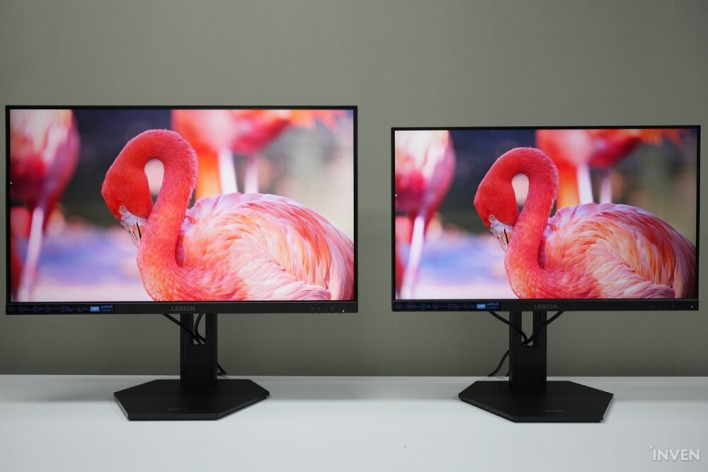
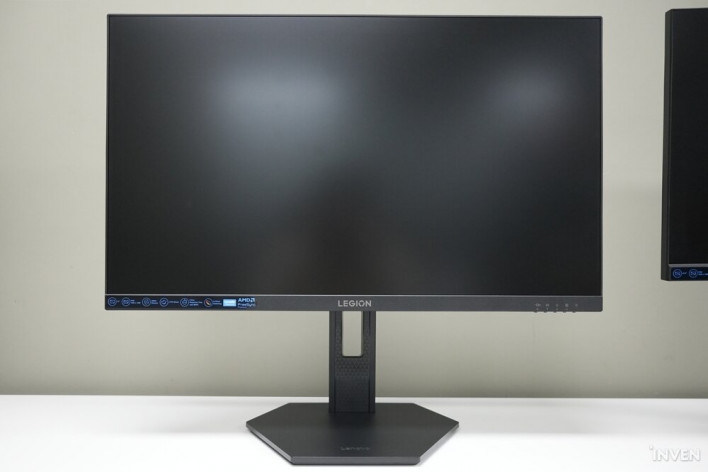
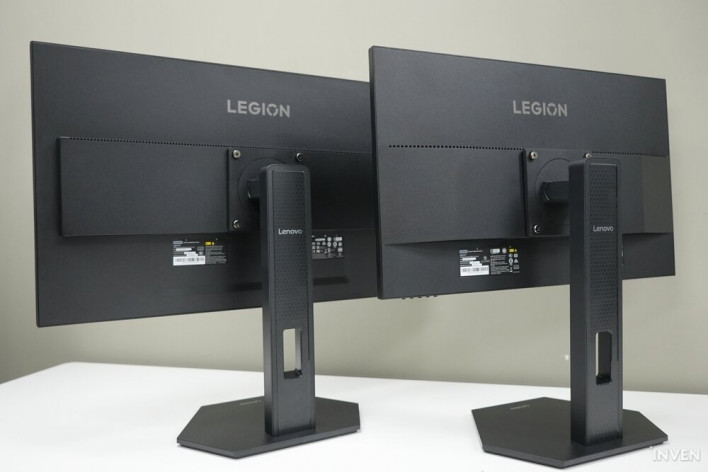
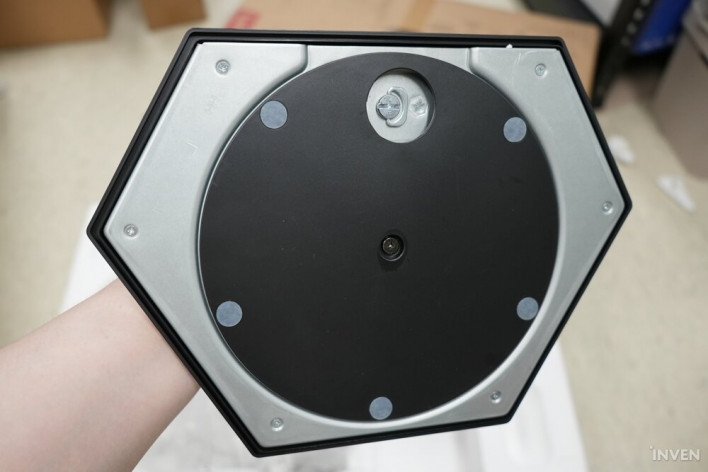
If FPS is your main genre, go for the Lenovo Legion 24-1r!
A common downside of both models is the FHD resolution. It won't be an issue for users who aren't sensitive to resolution, but at a time when high-end lineups are moving beyond 4K to 8K, FHD resolution feels somewhat disappointing. However, this drawback is offset in the 24-inch form factor. The 24-inch size, where the entire screen fits into a single glance, combines with the pixel density of FHD resolution to deliver ideal readability and screen balance.
In particular, 24 inches remains the most preferred size for FPS gamers who need to minimize eye movement. Beyond FPS, having the entire screen fit into view is also advantageous in the MOBA genre. However, when playing the iconic MOBA title 'League of Legends' directly, I personally felt that the visual enjoyment provided by the 27-inch model was greater. Of course, this is a matter of personal preference, so it should be taken as a simple reference based on your preferred gaming environment.
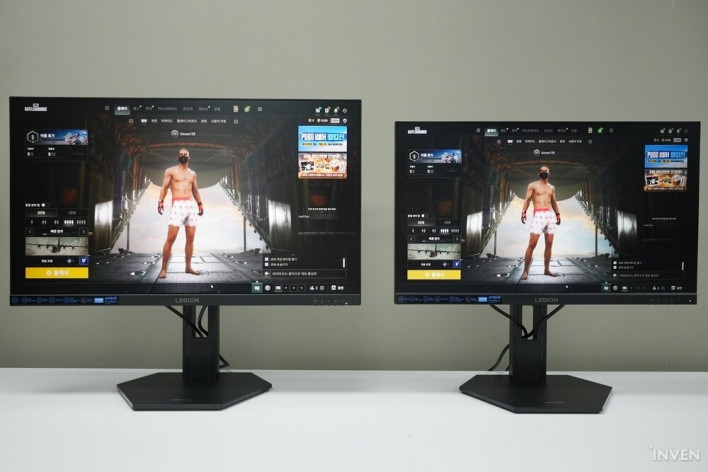
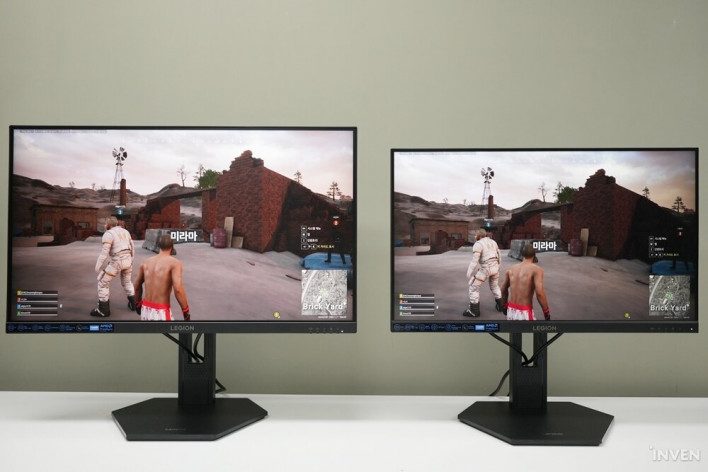
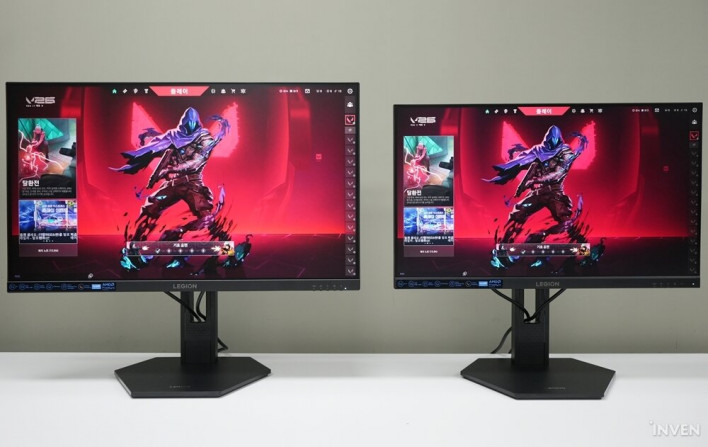
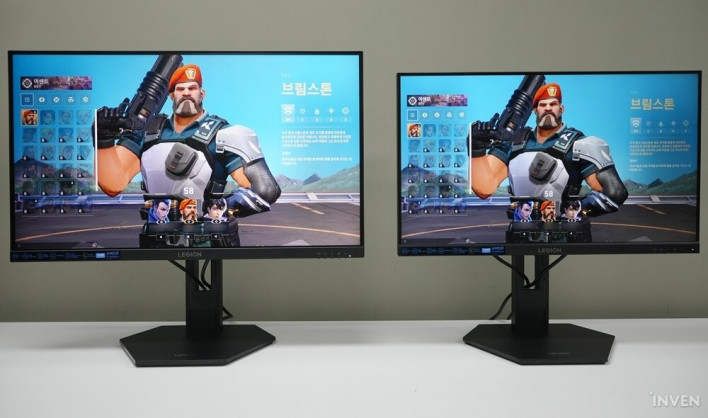
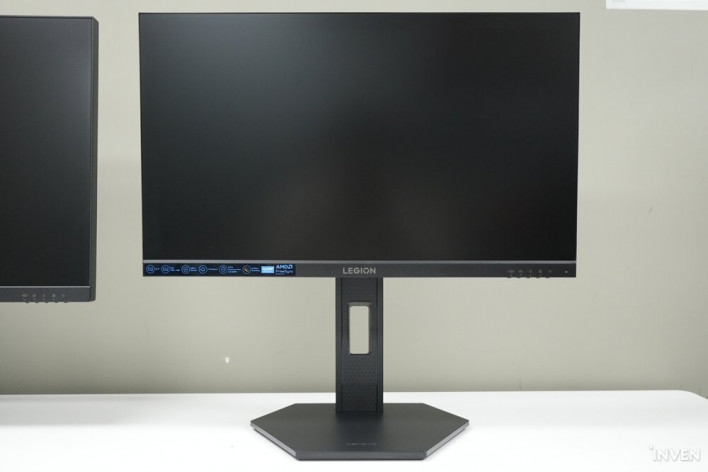
For immersion and a versatile gaming environment: Lenovo Legion 27-1r
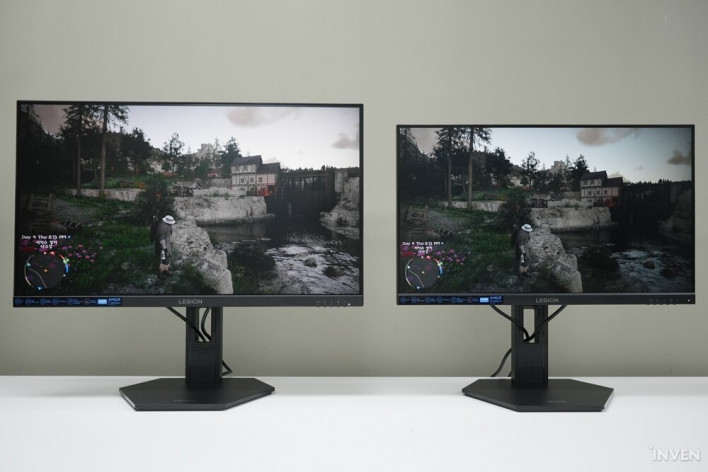
For gamers who enjoy a variety of genres, 24 inches might feel a bit cramped. Unless you have a specific purpose in mind, 27 to 32 inches is the most versatile size to use as an all-rounder. In fact, when playing AAA open-world games like 'Crimson Desert', the 27-inch screen provided far superior visual immersion compared to the 24-inch display.
However, the combination of a 27-inch size with FHD resolution may divide user opinions. Those accustomed to high-resolution displays might notice a slight pixelation, but for everyday gaming and video consumption, it offers a perfectly acceptable compromise.
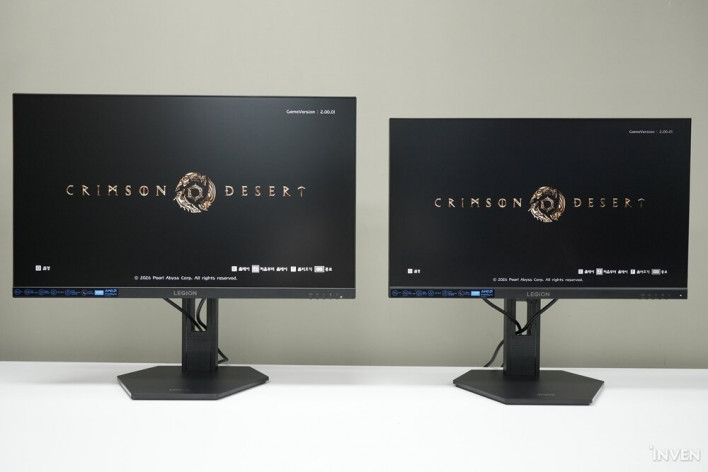
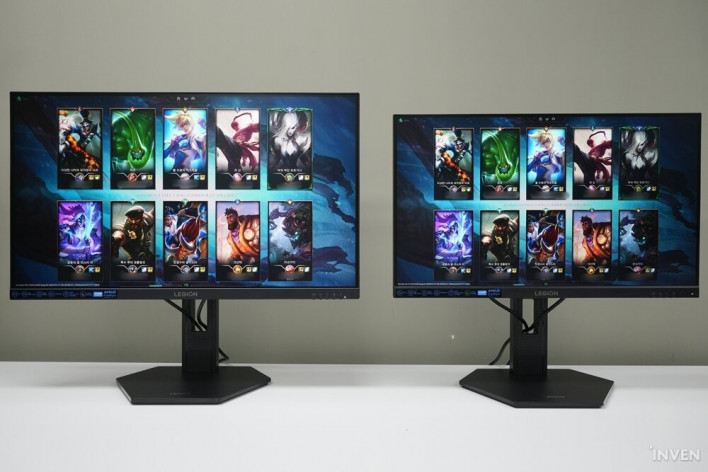
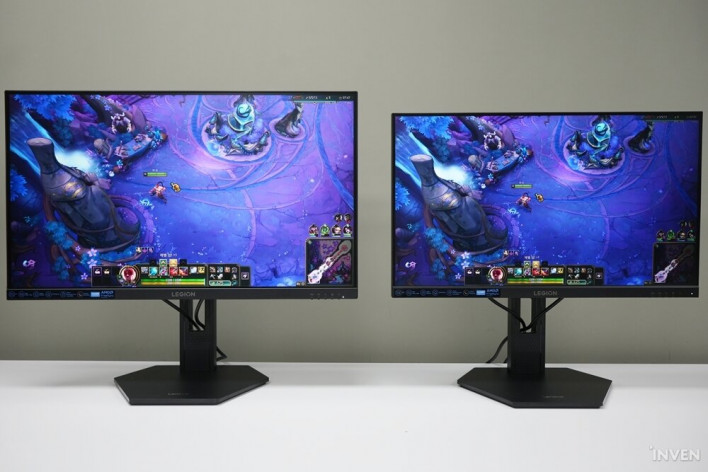
FHD + High Refresh Rate: A Solid Option for Value-Focused Monitors
Refresh rate perception also heavily depends on user preference. Some are satisfied with 60 FPS, while others feel stuttering if it drops below 144Hz. The core point to consider here is PC system specifications. While 280Hz at FHD resolution is a realistically achievable frame target, delivering 280Hz at QHD resolution requires a high-end PC. No matter how high the monitor's refresh rate is, it is useless if system performance cannot keep up.
In that regard, the Lenovo Legion 24-1r and 27-1r are the most realistic value gaming monitors that allow users to actually experience an ultra-high refresh rate of 280Hz without putting a heavy burden on their system. While the resolution leaves a slight regret, considering the price-to-performance ratio, they are an easily justifiable, excellent choice.