In game development, good ideas don't always come on schedule. A new idea might strike after the production schedule is already set, or developers might discover new gameplay possibilities in a scene originally planned as a cutscene. The problem is that in AAA games involving vast teams, plans cannot be changed simply because someone thinks, "This sounds like more fun."
Donald Barrett, Senior Designer at Insomniac Games—developer of the Marvel's Spider-Man series—has repeatedly pushed his ideas into actual games under such circumstances. From the sewers in the Marvel's Spider-Man DLC to the Vulture and Prowler boss fights in Marvel's Spider-Man: Miles Morales, and a late-game scene highlighting Miles and his father, multiple unplanned ideas evolved into real content through his initiative.
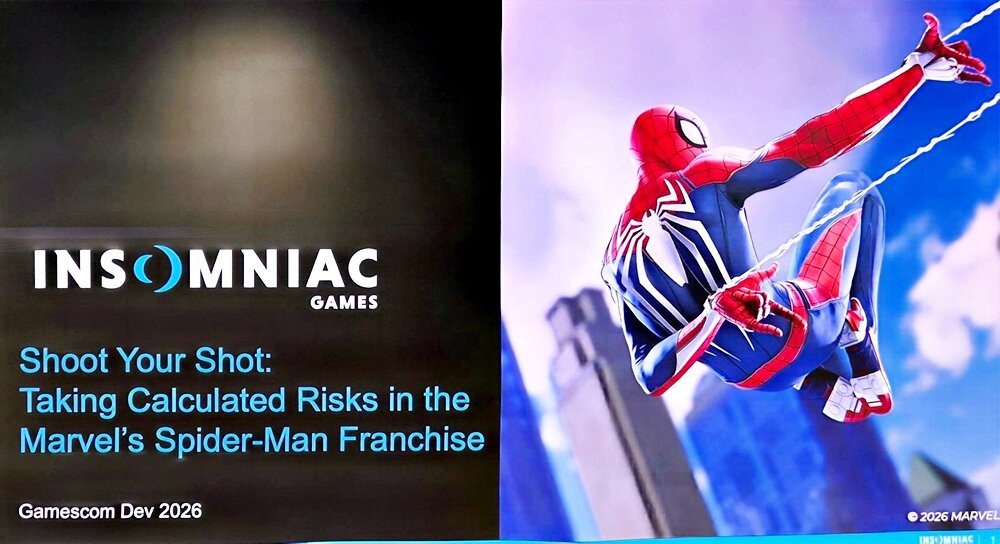
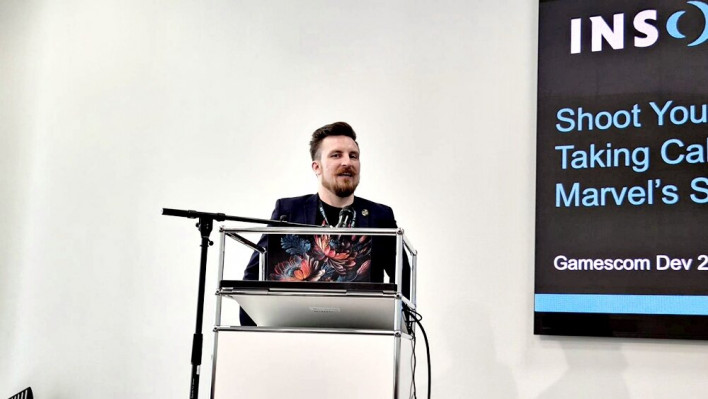
At gamescom dev held in Cologne, Germany on August 24, Barrett delivered a presentation titled "Shoot Your Shot – Taking Calculated Risks in the Marvel's Spider-Man Franchise." True to the title, he shared how to take "calculated risks" during the development process.
Barrett explained that Insomniac fosters a culture where "great ideas can come from anywhere." This means anyone—from QA, animators, designers, and artists to leads and directors—can pitch ideas. Barrett himself joined Insomniac as a QA tester in 2017 and worked his way up to senior designer by spending lunch breaks and off-hours learning the proprietary engine and dev tools.
More Important Than a Good Idea: Knowing 'How Much It Costs'
The first hurdle when proposing a new idea is the fear of failure. Barrett suggested that if you feel afraid to share an idea, first ask yourself, "What do I actually have to lose?" Even if a proposal is rejected, what you lose is mostly the time and effort spent building the prototype, and a failed attempt can still teach you how to solve other problems. That doesn't mean pushing ideas blindly at any time, however. If a production deadline is right around the corner, it is not the time to start something new; conversely, if you have a brief breathing room after completing a milestone, you can use that time to quickly build a prototype.
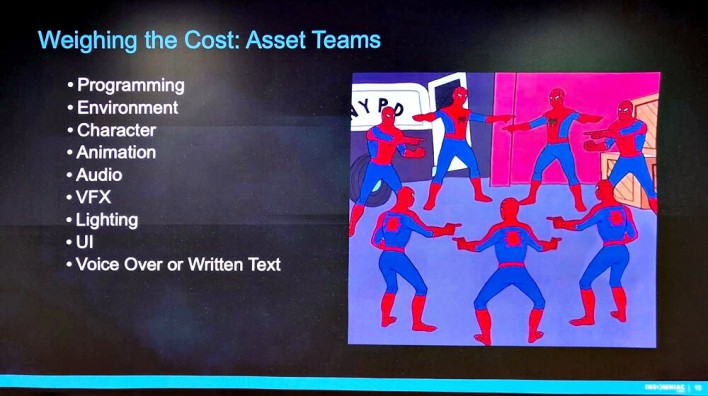
Above all, Barrett repeatedly emphasized "cost." Creating a single new piece of content in a game requires far more than just a designer's effort. It involves work across numerous departments, including programmers, environment artists, character and animation teams, audio, VFX, lighting, voice recording, text, and localization. Barrett recalled that early in his career, he thought reusing existing assets would make implementation simple, but starting the work often revealed the need for new animations or adjustments to older character models and materials.
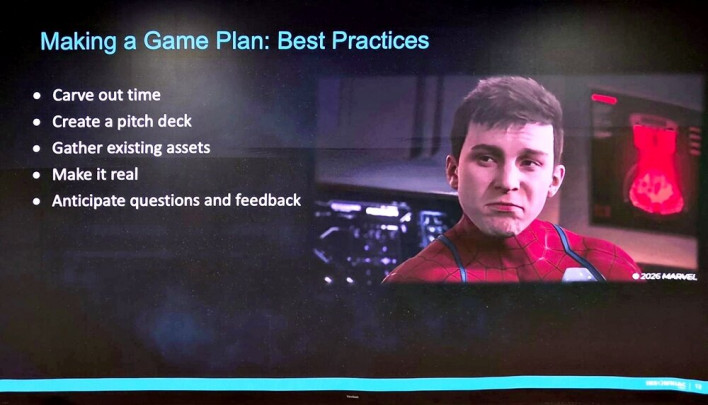
Therefore, when pitching ideas, he actively borrowed or reskinned existing assets and repurposed already built environments. Whenever possible, rather than relying solely on documentation or verbal explanations, he created prototypes that felt as close to the actual game as possible. While a simple explanation makes it difficult for others to picture the exact idea in their head, showing a working result makes proving its potential far easier.
Furthermore, getting approval isn't the end. Once a new idea enters production, the person who pitched it must communicate with every department, integrate feedback, and follow through with implementation and bug fixes all the way to release. Barrett stressed that one must avoid creating situations where their idea disrupts another team's schedule or causes crunch. Ultimately, "Shoot Your Shot" isn't about blindly throwing out ideas. It means calculating how many people need to be involved, proving its potential as best as possible with available resources, and then taking the shot.
From Sewers to Prowler: "Prove It First with What You Already Have"
The first time Barrett actively pitched his own idea was late in the development of Marvel's Spider-Man. Transitioning from QA to design at the time, he noticed the base game lacked substantial sewer content and thought the DLC "The City That Never Sleeps" could showcase a new space beneath Manhattan. Using existing assets, he built an environment himself and created an early prototype that included Spider-Man's traversal mechanics and puzzles utilizing existing Electric Web.
Though still relatively new to the design discipline, he sent his idea alongside a video to the team. "I just shot my shot. I put myself out there and said, 'What if we made something a little different, a little further out there?'" The response was positive. While most of the space Barrett built did not make it directly into the game, his initial layout and concepts inspired the sewer content in the actual DLC, which later evolved into sewer enemy bases.
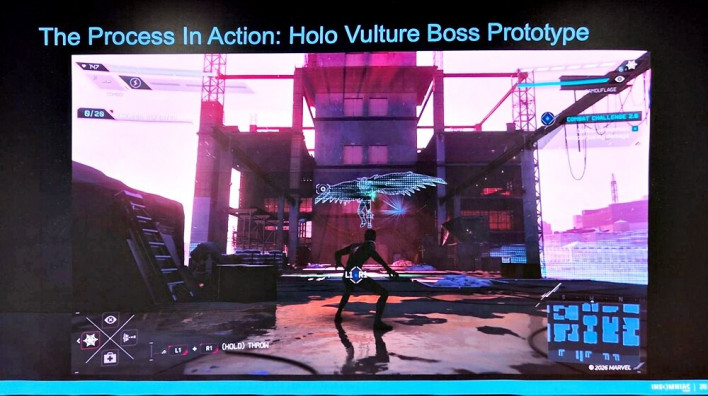
This approach was used even more proactively in Marvel's Spider-Man: Miles Morales. When the team needed content to cap off the holographic training left behind by Peter Parker, Barrett brought back the Vulture boss fight from the previous game. The idea was to frame the existing Vulture battle in a holographic context, allowing Miles to experience Peter's past fight. He even built an initial prototype where players fought three Vultures simultaneously, which was ultimately scaled down to two.
"After making the prototype, I asked, 'What if you fought three Vultures at once?' Everyone said I was crazy, but we decided to try it."
Thanks to the hologram setup, there was no need to justify why multiple real Vultures were appearing. Since there was no budget to produce a large volume of new animations, they combined existing elements to create a simple cinematic and asked the VFX team only for color changes on the hologram material to distinguish between the two Vultures. Added to this was dialogue from Yuri Lowenthal, the voice of Peter Parker, impersonating Vulture with jokes, transforming it from a simple boss asset reuse into a training session where Peter passed on his experience to Miles.
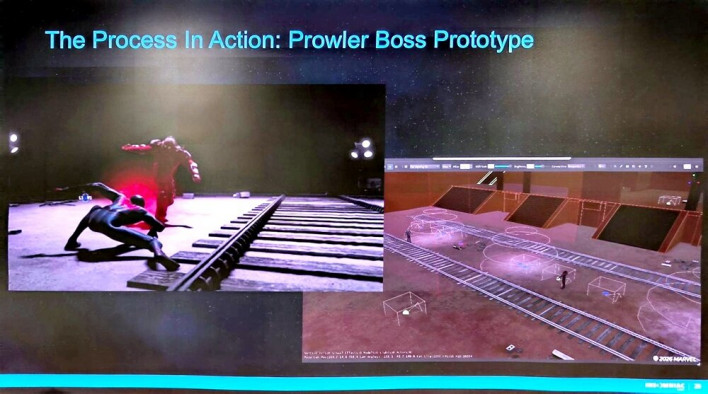
The most dramatic example was the Prowler boss fight. In the finished game, it stands as one of the major encounters, but it was originally planned as a cutscene rather than a fight. Barrett believed an actual battle was needed, but asking to build a brand-new boss from scratch would have incurred excessive production costs. So he turned to Taskmaster from the previous game. Since Taskmaster shared movement characteristics similar to Spider-Man, Barrett placed Taskmaster in a test environment acting as Prowler to verify the fight's potential first.
The core of the initial prototype was "light and dark." Unlike previous fights where Miles held the upper hand with his invisibility ability, this time Prowler would vanish into darkness, requiring the player to use light to force him out. Rather than building an environment from scratch, Barrett reused a subway space from the previous game's DLC and adjusted its layout. Although the initial concept of Prowler vanishing simply in darkness felt too magical and was ultimately changed to suit cloaking technology, by then the prototype had already proven the feasibility of the boss fight itself.
"Budget is always a concern. There's always the question of 'How can we possibly fit all of this in?' But in the end, we found a way."
The sewers, Vulture, and Prowler were all different pieces of content, but they shared the same starting point: rather than asking for a full budget to create polished content from day one, make something first using existing resources, gain confidence that it's fun, and then request the required resources. They served as concrete examples of how Barrett's concept of "taking calculated risks" worked in actual game development.
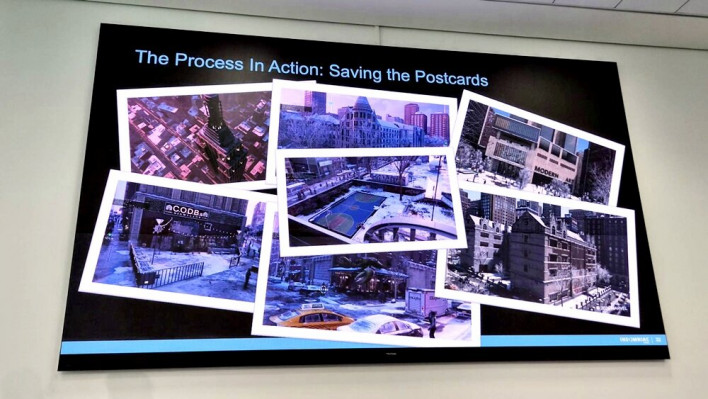
The Postcard Quest That Almost Got Cut: Own Your Idea to the End
The final example was the postcard scavenger hunt quest in Miles Morales. Unlocked after the main story, the quest has players search around New York starting from the first postcard left by his mother, Rio, but near the end of development, it faced cancellation due to a lack of time. While many of the locations and necessary assets were already built, there wasn't enough manpower to finish implementing it into actual content.
Barrett offered to take on the additional workload to save the content, proposing to personally place the postcards, implement the scripting, and hook up the pre-recorded voiceover lines. However, he faced another challenge: he felt that simply receiving a reward after finding all the postcards would fall short as a conclusion to the story.
His initial pitch was a playable flashback controlling young Miles. The idea was to return to a past where his father, Jefferson, was still alive and together with his mother, letting players directly experience Miles during that time. Combining existing animations, he constructed a rough prototype, and while it didn't make it into the final game as-is, it received positive feedback from the dev team. It built a consensus that a scene revisiting the time Miles spent with his father was indeed necessary.
The final result shifted from a playable flashback to a scene of young Miles playing basketball with Jefferson. This was achieved by taking basketball animations already present in the open world and swapping the character models to young Miles and Jefferson. Though the form changed from the initial idea, the core beat—reflecting on memories of his father at the end of the postcard quest—remained intact.
This scene also drew from Barrett's personal experience. He reflected on his own family and relationship with his father, explaining that he saw the potential for the scene to resonate with players who had lost a parent or gone through similar experiences.
"I thought about my own family and relationship with my dad. I felt there was an opportunity to speak to players who might be in that situation or who had lost their father. I wrestled with how to put heart back into that story."
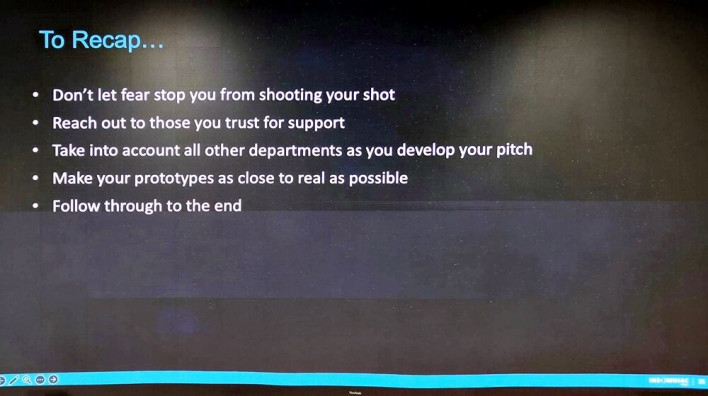
At the end of the lecture, Barrett synthesized the examples he shared into a unified set of principles: never let fear prevent you from trying; seek input from colleagues rather than pushing ideas in isolation; consider the burden on other departments; and make prototypes as close to the final product as possible. Above all, once approved, the person who pitched the idea must take ownership of it through to the end.
"Make your prototypes as real as possible. And if you get buy-in, follow through. If you start something, take accountability and see it across the finish line."
In the end, Barrett's message of "Shoot Your Shot" was not about throwing out ideas recklessly. It was about calculating the cost to your colleagues as well as yourself if it fails, proving the concept first with what you have if you believe it's worth trying, and taking full ownership until the moment it ships in the actual game.
That was the "calculated risk" he took time and again across the Marvel's Spider-Man franchise.