“Is it possible to make a competitive MMORPG that everyone can enjoy?”
The new MMORPG 'Zeus: God of Arrogance' (hereafter 'Zeus'), published by Com2uS and developed by AButton, reportedly began with this very question. Existing mobile MMORPGs typically feature a competition structure centered around top-tier players. Furthermore, accumulating progression gaps generally caused the fun of competition to concentrate among a select few users. 'Zeus' aims to be an MMORPG that breaks away from this trend, creating a structure where many players can compete and feel accomplishment in their own ways.
Building such a structure requires more than tweaking a single element; it virtually requires redesigning the entire game structure. If character (class) identity, quality-of-life features, and the economic structure allow the gap between individual player growth and the overall player base to meander too far, the game will inevitably regress to the old formula. Zeus introduced during media showcases and developer videos that it researched and implemented systems specifically designed to break this mold.
From Mythological Worldview to 8 Classes and Persona Competition
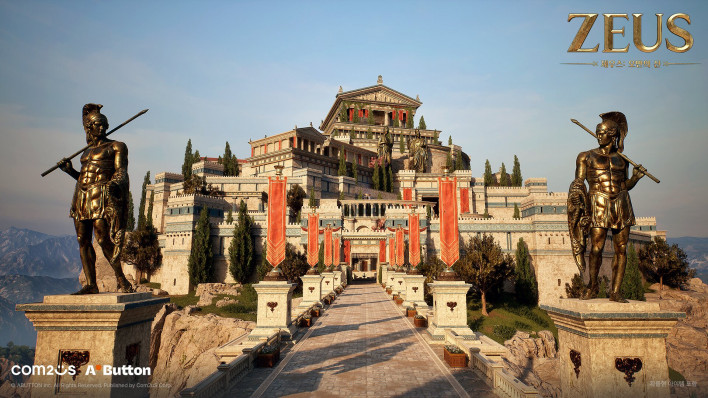
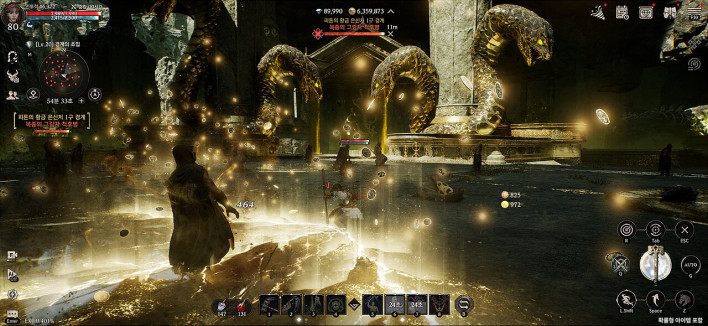
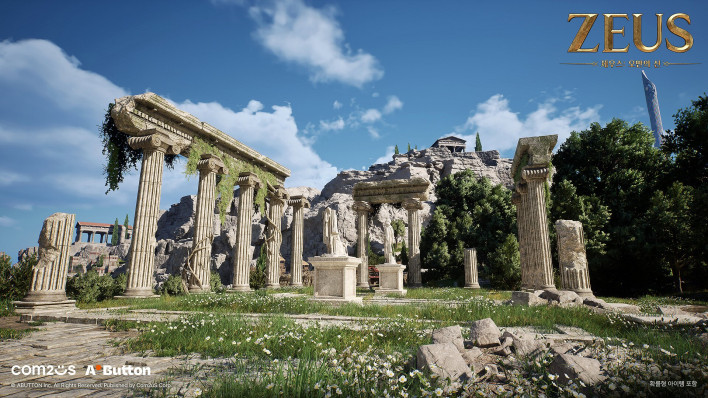
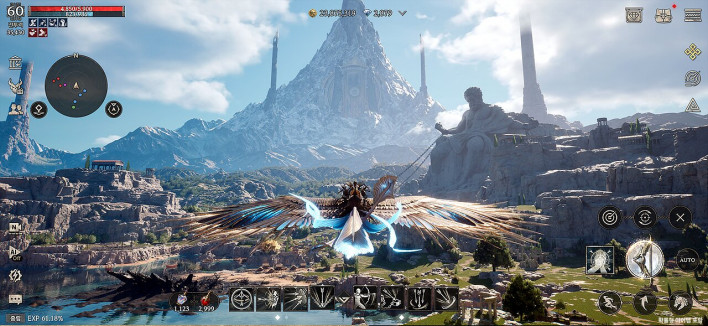
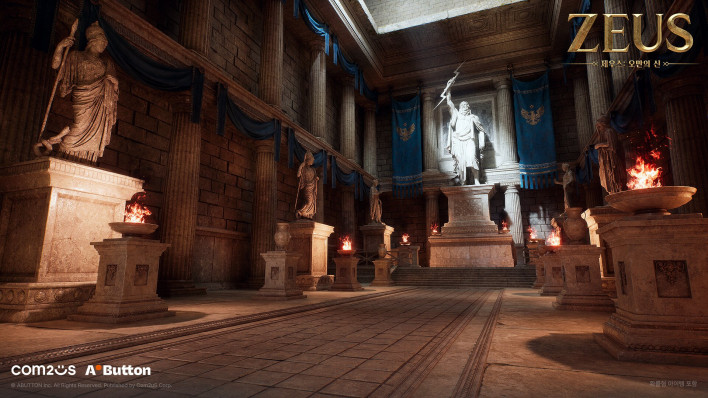
'Zeus: God of Arrogance' is based on a reinterpreted Greek mythological worldview, realizing a vast world through Unreal Engine 5. The core setting of the game is 'Theia,' a world where gods, demigods, humans, and monsters coexist. In this world, gods bestow oracles upon humans, and humans respond with offerings to coexist, yet the Olympian gods reign as absolute rulers who tolerate no challenge to their authority. In the past, the Olympian gods defeated Cronus and the Titans in battle but were unable to completely destroy them, opting instead to seal them away—a historical event that continues to maintain tension in the world.
Players enter as 'demigods,' beings existing between god and human. As 'unfilled vessels' who have not yet attained godhood, they embark on a journey to grow into the strongest 'vessel of the gods' by overcoming trials imposed by the deities.
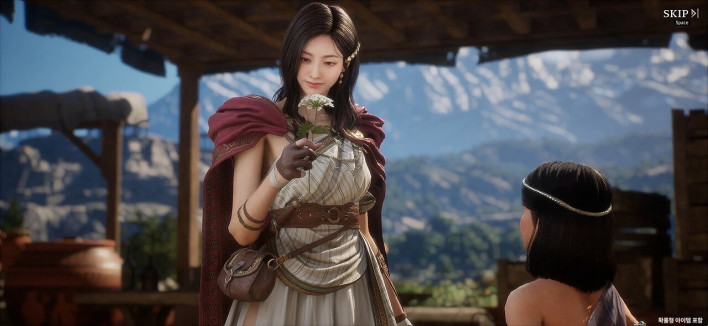
At the center of the narrative stands the key NPC 'Pandora'. Pandora leads players into major events and connects them with the gods, serving as a vital link and central axis between deities and players. Actress Park Ji-hyun's appearance and performance were brought to life in the game via facial scanning and voice recordings. Hermes, the messenger god, also guides players on their journey and conveys the will of the gods, acting as a guide who leads players from the early stages of the game.
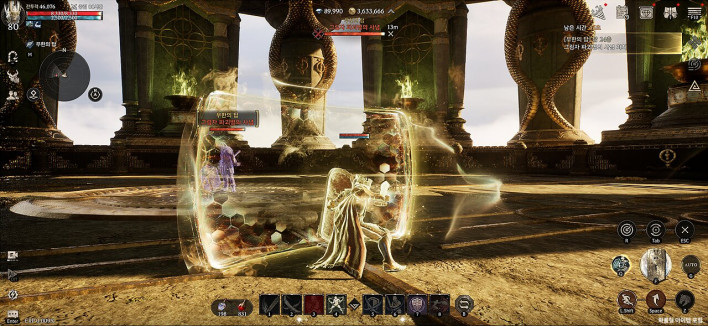

The mythological setting extends into classes and combat. Each class is linked to the blessing of a specific deity, and core skills and actions encapsulate the unique personalities and powers of the gods. Major regions such as Thebes, Thessaly, and Zahav were also built on Unreal Engine 5, featuring distinct environments ranging from Mediterranean landscapes and granaries to deserts and oases.
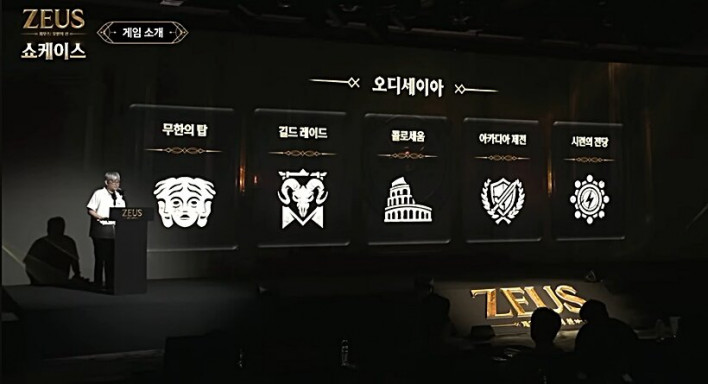
In this world, players experience a journey where progression and competition unfold together. Zeus is structured to broaden participation in competition while maintaining the value of top players' achievements and competitive pride. Rather than forcing all players to clash in the exact same manner, players can choose their competitive path based on their progression level and playstyle preferences.

The flagship content, 'Odyssey,' consists of the 'Colosseum' for individual proof and the 'Arcadia Festival' for group proof, encompassing a wide range of PvE and PvP from individual to guild scales. Furthermore, the guild content Arcadia Festival links progression and preparation directly to competition, allowing guilds to acquire exclusive buffs and guild skills through various seasonal activities like hunting to utilize in battle.
The Colosseum and Arcadia Festival introduce 'Persona,' AI entities that reflect a player's actual appearance and combat capabilities. Conceptually, this is similar to "ghosts" in other games. Because players duel against a Persona rather than a live opponent, they can compete whenever they want even if the opponent is offline, reducing the burden of real-time matches. This can be seen as an effort to lower emotional drain and direct fatigue while maintaining the tension of real-time competition.
Meanwhile, direct competition features large-scale content including field bosses, inter-server battlegrounds, node control, as well as territory wars, fortress battles, and siege battles. Boss rewards from direct competition will be distributed based on various criteria, such as contribution, final hit, and basic participation rewards. By operating two main pillars—mitigated competition via Persona and open field competition—the developers allow players to choose competitive modes suited to their preferences and progression stages.
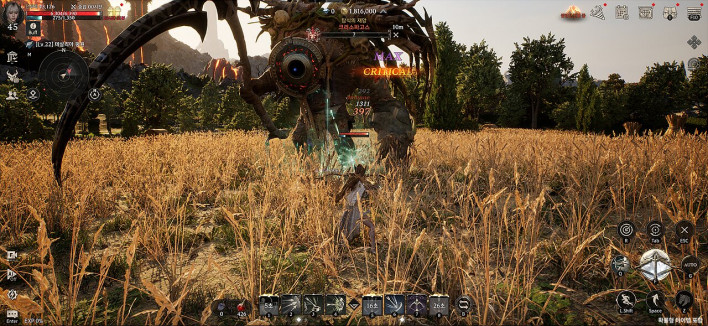
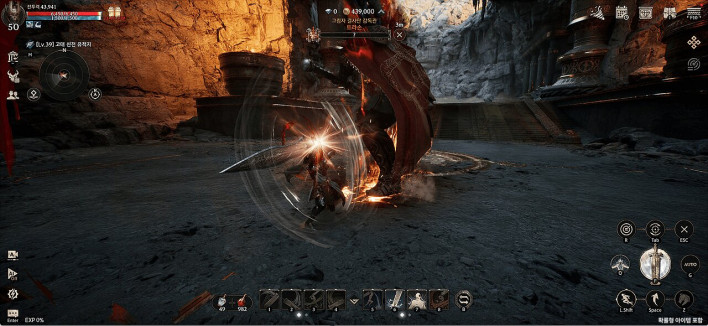
Zeus basically expands from four base classes—Warrior, Rogue, Mage, and Paragon—into a total of eight advanced classes through class advancements. Gender is locked per class to maximize the quality of each character's unique combat actions. After an initial adaptation period of about an hour early in the game, players can immediately perform their secondary class advancement, and even after advancing, costumes and customization data remain intact to preserve character identity.
Warriors, who receive Apollo's blessing, branch into 'Knight' and 'Berserker'. Rogues, who inherit Artemis's agility, split into 'Assassin' and 'Ranger'. Mages, blessed by Athena, advance into 'Elementalist' and 'Oracle,' while Paragons, blessed by Hephaestus, can become 'Blessed' or 'Artisan,' a class specialized in economic activities. Each class is designed with distinct roles in combat and gameplay, beyond just attack styles. In particular, the 'Artisan' can be viewed as an economy-specialized class focused on production and trading, growing exclusive crafting skills to produce materials and items needed by other players and supplying them to the exchange.
AI Mode, Organic Economic System, and Anti-PK Measures
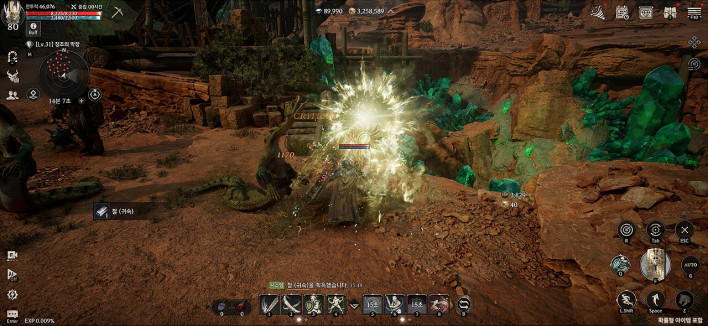
'Zeus: God of Arrogance' has built quality-of-life features covering offline hours alongside an organic economic system. At its core is 'AI Mode,' which continues hunting and progression according to preset instructions even when players are not logged in. It can be activated with a single input, and automatically resumes operation based on the scheduled plan even after closing the client or following server maintenance.
Players can view their character's active movements on screen and perform necessary controls such as using shops and exchanges, managing items, and setting skills. They can also plan play schedules by specifying hunting grounds and precise locations by time slot. Additionally, a 'Conscription' feature allows guild members' characters who are progressing in AI Mode to be deployed into guild content.
Ultimately, these elements reflect the dev team's philosophy: easing the burden of repetitive grinding sections via AI Mode while maintaining the significance of manual control in content where cooperation and combat matter. It serves as a convenience feature offering players who cannot devote all their time to gaming the opportunity to steadily grow and participate in competitive content. While it may be a polarizing feature for gamers who value manual play time, its convenience itself is indisputable.
This system links directly to the game's economy. As items and currency gained through gameplay cycle through trading and fuel further progression, it serves as driving power that allows the economic system to operate even more dynamically.
An exchange system was also established to support this. Zeus expanded the trading scope through an 'inter-server integrated exchange' linking three servers into one, while the aforementioned economy-specialized Artisan class crafts progression materials and items to supply to the exchange. Since direct crafting takes place for items and progression materials, players who focus primarily on this style of gameplay are likely to emerge.
There is also 'Midas' Vault,' where the system directly purchases specific items and rewards Diamonds. Through this, a cycle connects acquisition, crafting, trading, and consumption centered around Artisans, the exchange, and Midas' Vault, feeding back into character growth.
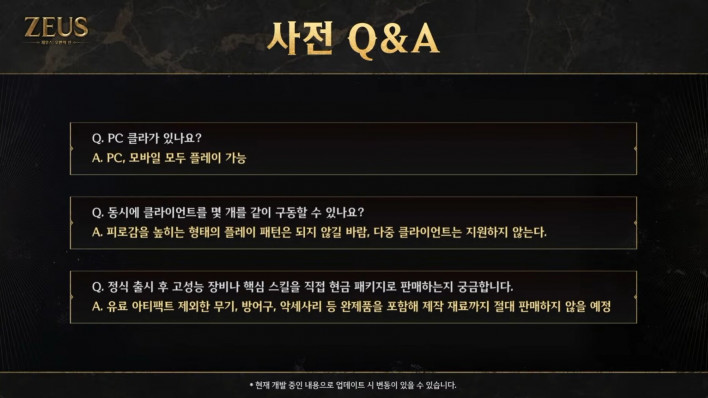
Meanwhile, by adhering to a single-instance policy for the PC client, safeguards against oversupply have been established to some degree. This also functions as a measure to prevent unnecessary gaps and burdens caused by multi-client usage. Personal trading is linked to membership, though Heroic-grade and above items and materials are excluded from personal trades. The announced 'Character Gifting' feature will not be available immediately at launch but is scheduled to be added through a future update.
In this way, 'Zeus: God of Arrogance' aligns competition, classes, convenience, worldview, and economic structures toward a single unified direction. Diverse competitive content and eight classes provide distinct goals and roles, while AI Mode complements progression continuity. Artisans and the economic structure allow players to participate in the game world through means other than combat.
In addition, the guild system goes beyond simple social interaction, closely integrating raid-scale boss raids and distribution systems. Loot acquired after defeating bosses is bound to the guild storage and undergoes a transparent distribution process via guild auctions or contribution-based allocation. While joining a guild is not mandatory, participating in key content such as Odyssey is expected to require guild activity.
In particular, the development team implemented a 'Slayer System' to prevent indiscriminate PK. Upon being flagged for indiscriminate player killing, players are registered as Slayers, their real-time location is tracked on the world map, and warning alerts are sent to nearby players. Furthermore, Slayers face penalties such as significantly increased potion costs and blocked recall functionality during PvP. Crucially, escaping to safe zones (such as towns) does not decrease penalty timers, imposing a heavy burden.
The development team also stated that, alongside PK penalties like the 'Slayer System', they will focus on suppressing indiscriminate field control and random killing to create an environment where players who need progression can hunt safely in the open field.
Can It Become a Competitive MMORPG for Everyone?
As a mobile MMORPG, players naturally hold high interest in the monetization (BM) model. The development team previously outlined several core principles during the showcase. The overarching principle of BM design is making "all paid items obtainable through in-game currency" and restricting key progression areas so they can only be reached through active play.
Additionally, during a subsequent developer livestream, they established an operational policy guaranteeing that high-performance gear or core skills will never be sold directly via cash packages. The structure aims for major in-game gear and skills to be earned exclusively through players' direct efforts via boss raids, hunting, crafting, and user-driven economic circulation. They plan to thoroughly exclude mechanics where paid currency undermines the fun of progression, focusing on protecting the value of rewards earned through fair competition.
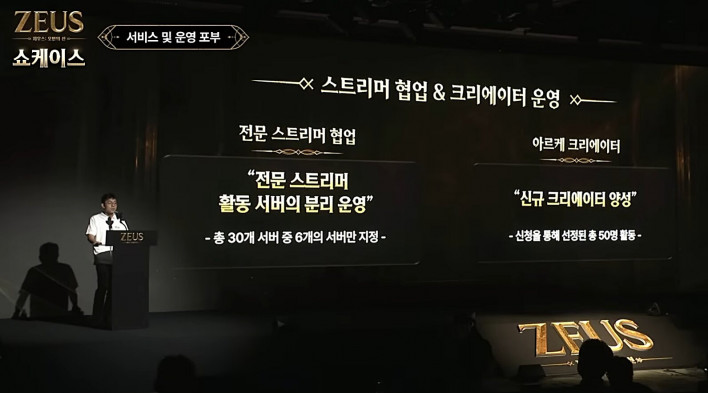
A notable point in the operational policy is the separation of professional streamers' servers from general player servers. Professional streamers will operate exclusively across only 2 server groups out of the entire group, totaling 6 servers. Servers with active streamers will be clearly distinguished from general servers, allowing players to choose whether to play on a streamer server or a general server based on their preference. Streamer servers will be completely separated from general servers in all service aspects, including integrated exchange operations, server transfers, and matchmaking. This measure respects players' divided opinions regarding streamer collaborations and provides an independent environment that does not impact regular players economically or in their gameplay experience.
Measures against gold farms and macros have also been prepared. Identity verification will be required when using the exchange, and an AI-learning-based 24-hour monitoring system will detect abnormal behavior, issuing immediate permanent bans upon detection. The results of these enforcement actions will be announced continuously. Additionally, nickname changes will be restricted at launch to prevent fraudulent practices such as account trading or scamming in advance.
Post-launch, the development team plans to share patches, updates, outages, and errors through developer notes, while scheduling regular and occasional live streams to address major issues and receive feedback. The first pre-launch livestream has already taken place, while details for subsequent livestreams have yet to be decided.
Additionally, the opening of the 'Arcadia' inter-server space is scheduled for Month 1, followed by the addition of a new class and a class-change system in Month 4. Monthly boss debuts, dungeon revamps, and seasonal real-time arena operations will also be consistently implemented.
Looking at 'Zeus: God of Arrogance' as a whole, what kind of MMORPG the development team wants to present is clear. It is also evident that various systems have been established to create that structure. However, how these systems will play out in the in-game society populated by actual players remains unknown. In fact, many games have attempted similar features only for side effects to overshadow the benefits.
As such, it will be intriguing to observe whether an MMORPG where players progress and compete in their own ways—fulfilling distinct roles through combat, cooperation, production, and trading rather than all competing identically—can truly materialize. The launch of official service at 12:00 PM on August 26 will mark the very first step.