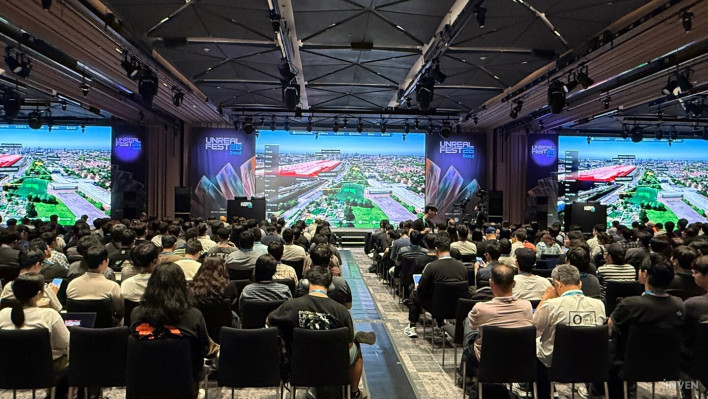
Epic Games hosted 'Unreal Fest Seoul 2026' for two days starting today (the 20th) through the 21st at Westin Seoul Parnas. Unreal Fest is an annual event where Epic Games introduces the latest technology for its commercial game engine 'Unreal Engine' and the Epic Ecosystem, sharing real-time 3D interactive production experiences across various industries.
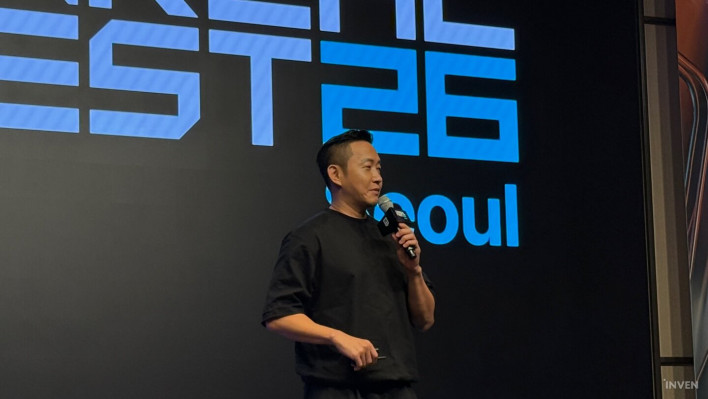
Prior to the official opening of the event, Park Sung-chol, CEO of Epic Games Korea, highlighted the rapidly changing conditions of the gaming industry. He noted that while trend shifts are accelerating and development costs are rising, the success rate for newly released games remains low. He added that the gaming industry is experiencing unprecedented volatility, with large-scale games shifting toward social platforms and competition with other entertainment sectors intensifying. Preparing Unreal Engine 6 to adapt to these shifts, he expressed, "We hope this will resonate meaningfully with developers who are contemplating how to evolve alongside changes in the gaming market."
Gaming Trends Shift Toward Ecosystems; Unreal Engine 6 Adapts
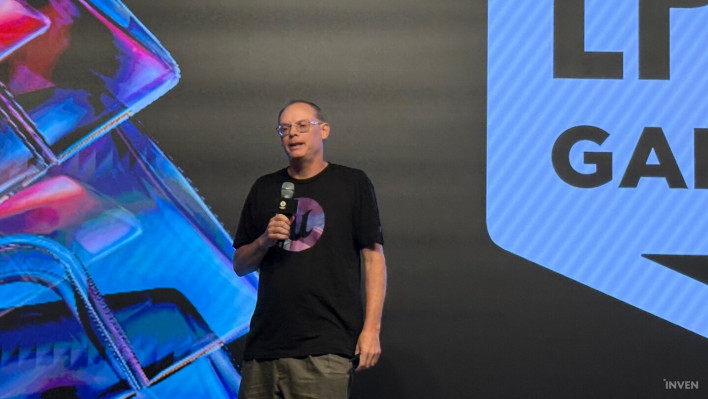
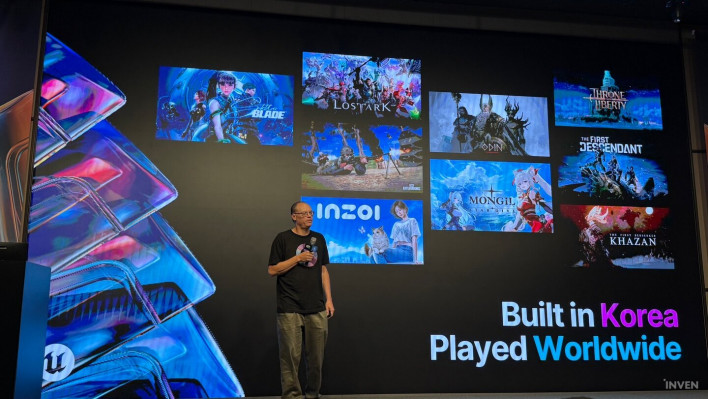
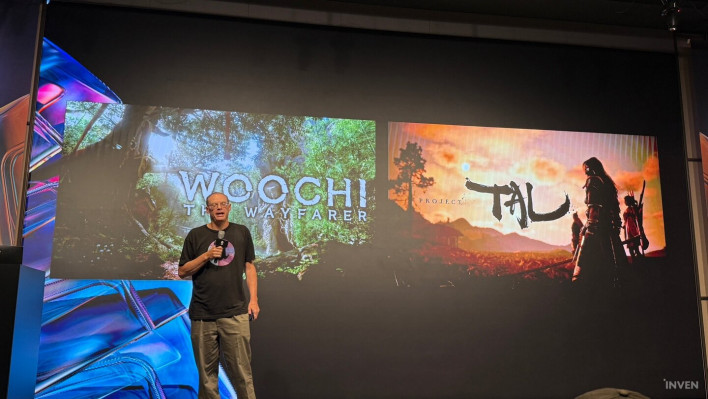
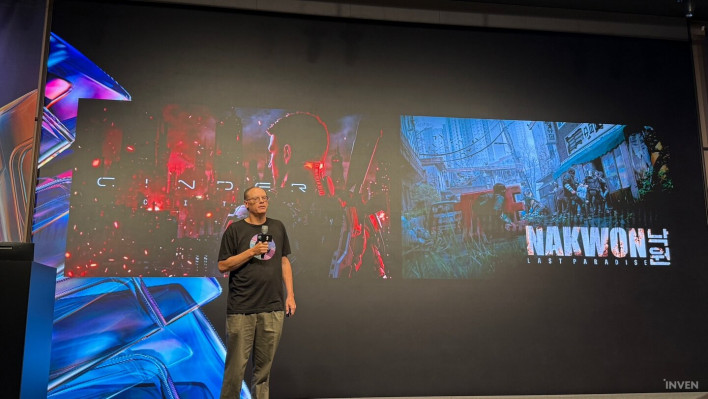
Following this, Epic Games CEO Tim Sweeney took the stage to highlight the accomplishments of Korean game developers. He emphasized that while the global games industry as a whole is undergoing upheaval due to rising production costs and success uncertainty, Korean studios are successfully expanding from mobile and PC to consoles. In particular, he praised the further diversification of genres and styles, pointing to Shift Up's 'Stellar Blade: Blood Rain' and Nexon's 'Vindictus: Defying Fate', as well as traditional Korean culture-based titles 'Woochi the Wayfarer' and 'Project TAL', alongside modern Korean urban titles targeting global players like 'Cinder City' and 'Nakwon: Last Paradise'.
After emphasizing these achievements, CEO Tim Sweeney pointed to the growing prominence of ecosystem-based games. Currently, Fortnite and Roblox, leading examples of ecosystem games, record over 76 million and over 400 million MAUs, respectively. Within these ecosystems, players share social experiences with friends and seamlessly move between various game modes.
Synergies between the Epic Games Store (EGS) and the Fortnite ecosystem were also disclosed with concrete figures. In 2025, EGS global gross spending reached $1.16 billion, and total MAUs surpassed 120 million. In particular, spending in the Korean market surged more than 12-fold year-over-year, vaulting South Korea into 3rd place globally in spending behind the United States and China.
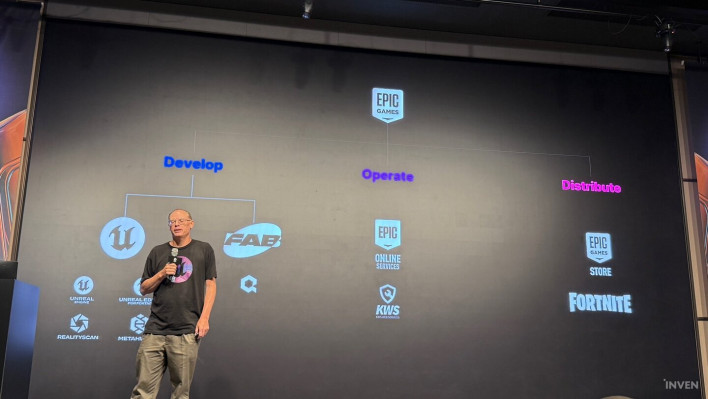
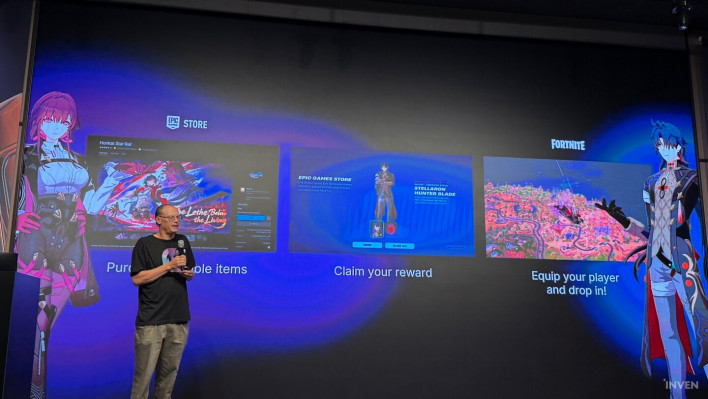
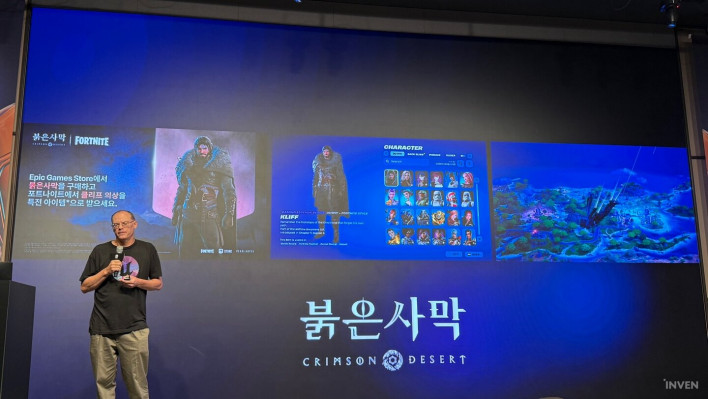
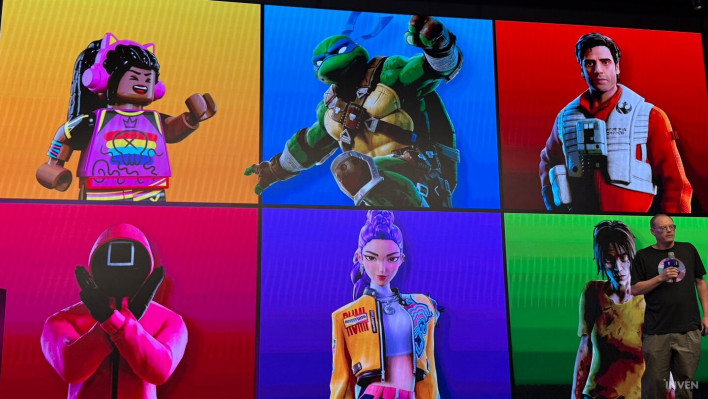
CEO Tim Sweeney explained that crossover mechanics—where purchases in EGS for titles like 'Honkai: Star Rail' and 'Crimson Desert' lead to in-game Fortnite outfit rewards—drove a virtuous cycle of user acquisition. The Unreal Editor for Fortnite (UEFN) ecosystem also surpassed $1 billion in cumulative payouts to third-party developers. Growth among indie studios is becoming tangible, with 'Steal of Rain Lord', created by a small 7-person development team, recording 4.5 million MAUs and peak concurrent users of 1.1 million. Epic Games plans to continue expanding partnerships with global mega-IPs such as Disney, LEGO, and Squid Game.
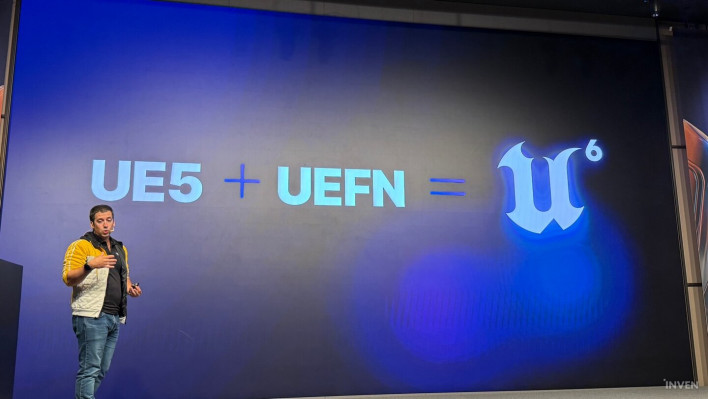
Next, CEO Tim Sweeney addressed the philosophy behind the next-generation engine, 'Unreal Engine 6'. The core of Unreal Engine 6 is 'UE5 + UEFN'—unifying the standalone AAA game production environment and Fortnite's live-service deployment environment into a single integrated editor.
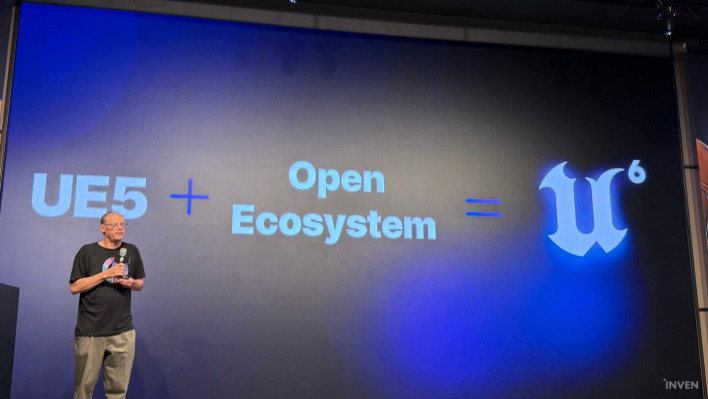
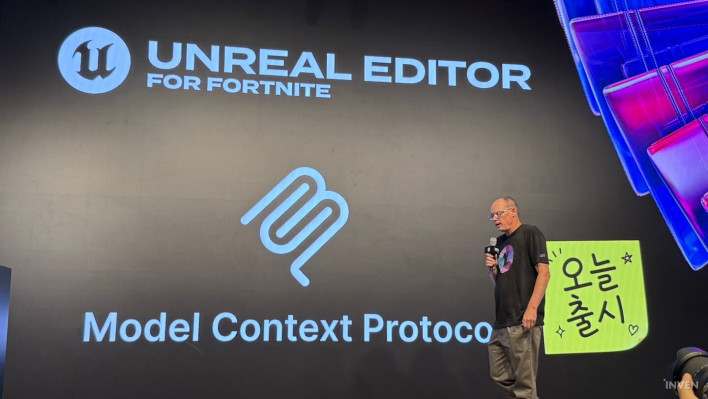
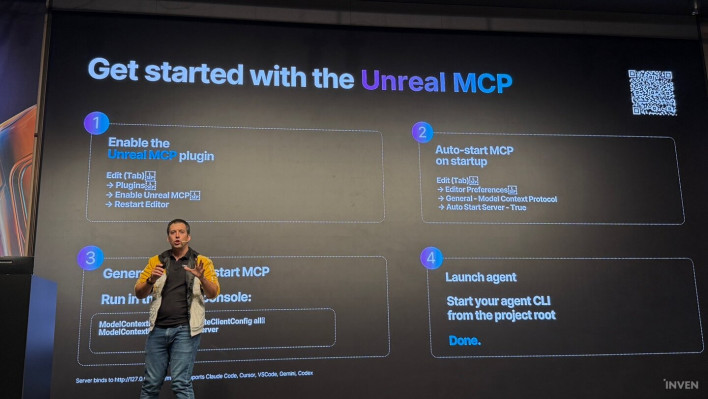
Under the UE6 system, a single build will allow not only traditional store releases across PC, console, and mobile, but also instant live deployment to Fortnite and other UE6-based virtual world ecosystems without separate downloads or installation processes. In addition, rather than building its own proprietary AI models, Epic Games adopted an open AI strategy that fully supports integration with various external AI models such as Claude, Codex, and Cursor via the open standard Model Context Protocol (MCP). MCP is available for immediate use starting today.
Unreal Engine 6 to Enter Early Access in Late 2027 Following Late v5 Releases Focused on AI and Stabilization

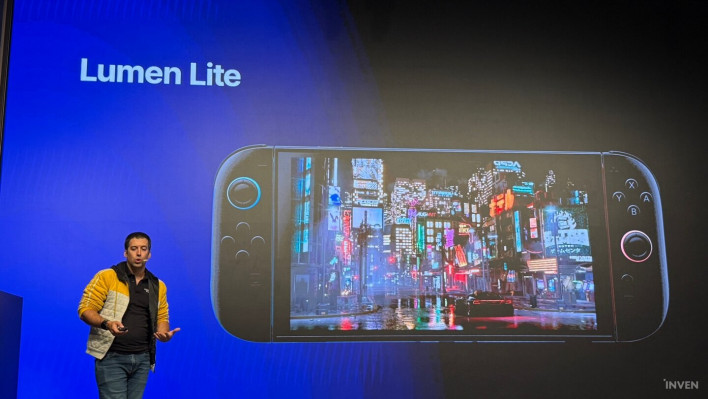
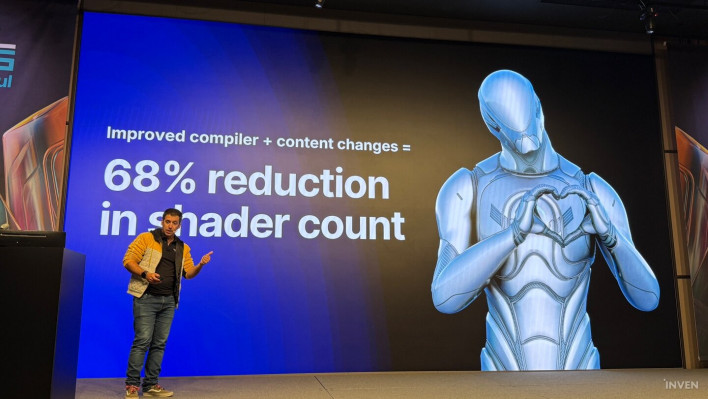
Next, Senior Director Julien Marchand presented Unreal Engine's current state, technical architecture, and upcoming changes. In the latest official release, Unreal Engine 5.8, 'MegaLights'—which processes thousands of dynamic shadow-casting lights at a fixed cost—has reached full production readiness, while 'Lumen Lite' was added to support Nintendo Switch 2 and mobile environments. Based on these additions, many developers will be relieved of lighting-related concerns. Additionally, runtime stuttering was improved through a 68% reduction in shader compilations, and 'Mesh Terrain', a 3D mesh-based non-destructive terrain system, was introduced to make optimization and world-building even easier.
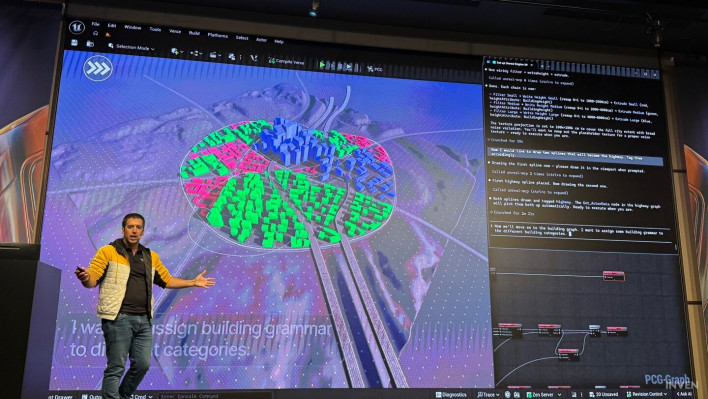
With MCP being introduced today, a live demonstration of real-time AI workflows utilizing MCP servers was conducted on stage. Using natural language prompts and image inputs, controls over lighting, materials, Niagara particles, and UMG HUD interfaces for environments ranging from studies to entire cities were shown in real time. All outputs are placed into the engine as manually editable actual meshes and PCG graphs rather than fixed generative images. In other words, instead of merely generating a static model via prompts, developers can actually edit and utilize the results as they see fit. He explained that Unreal Engine 5.9 will further enhance AI functionality and mobile optimization.
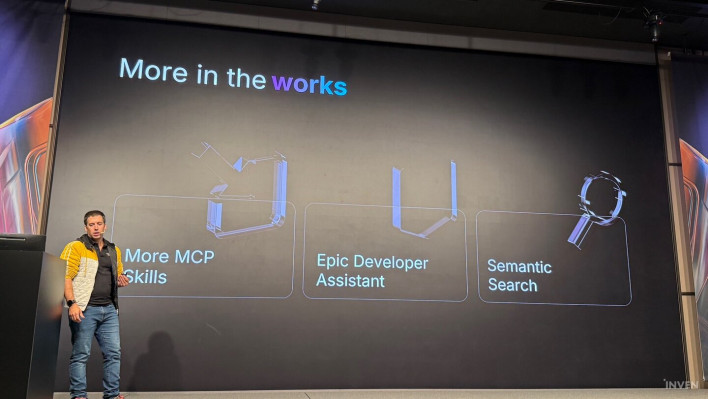
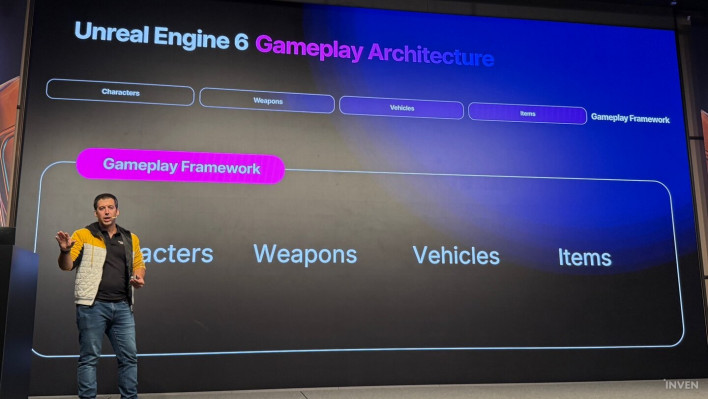
Key highlights of Unreal Engine 6 following v5.9 include: ▲ redesigning engine APIs to be driven by AI agents, ▲ asset and code portability based on USD and glTF, and ▲ a next-generation gameplay programming architecture. As the first step toward these goals, he first introduced 'Lore', a version control and data storage system within the architecture.
Lore is a system designed for smooth version control in game development environments with large assets and heavy binary data. As a content-addressed storage system that identifies data based on hashes contained within files rather than file storage locations, identical data chunks across an entire project are stored only once without duplication. Furthermore, it is designed to save local storage and bandwidth by selectively pulling only the data actually needed for a specific branch and revision without downloading an entire repository spanning hundreds of gigabytes. It also offers an infrastructure architecture accessible without bottlenecks, from single-machine work to edge and regional cache servers. Having already been battle-tested in UEFN as Unreal Revision Control, it was released as full open source under the MIT license in June 2026.
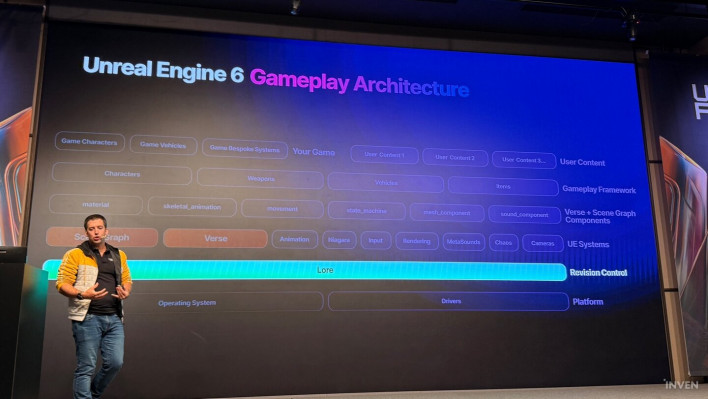
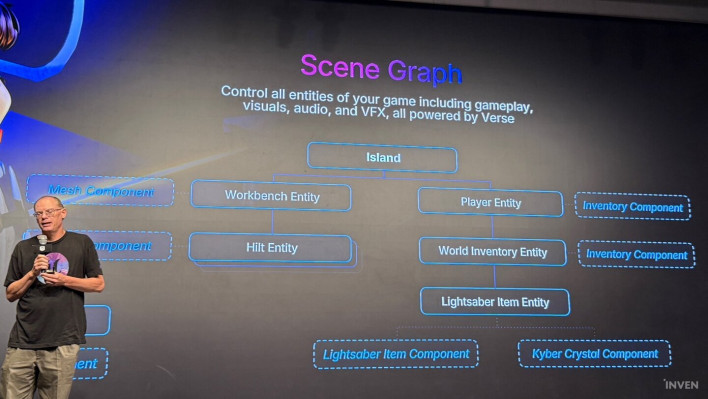
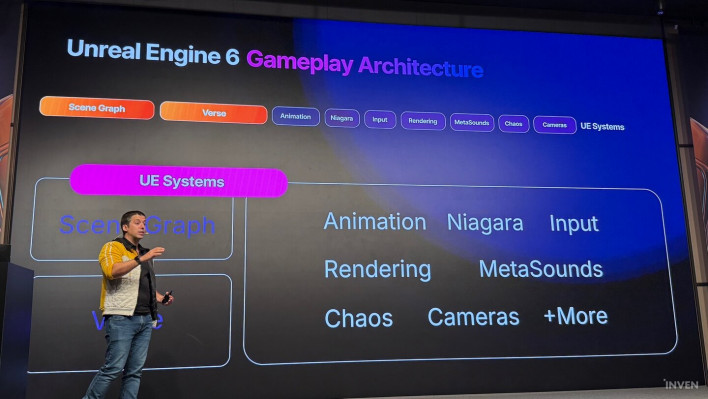
Next introduced was 'Scene Graph', a next-generation framework based on entity-component principles rather than the traditional Actor and Component model. By treating all objects as units of data and logic similar to prefabs, it serves as a core technology that can be immediately ported and reused across various game projects without fragmentation once created.
Another component being prepared for this purpose is 'Verse', a new programming language already utilized starting in UEFN. Verse is used to write all gameplay logic outside the low-level engine core handled by C++, and every function in Verse executes inside a transaction capable of rollback and re-execution. In other words, even if a code collision occurs within the world, the transaction is aborted so it operates as if the code never executed, maintaining uninterrupted flow.
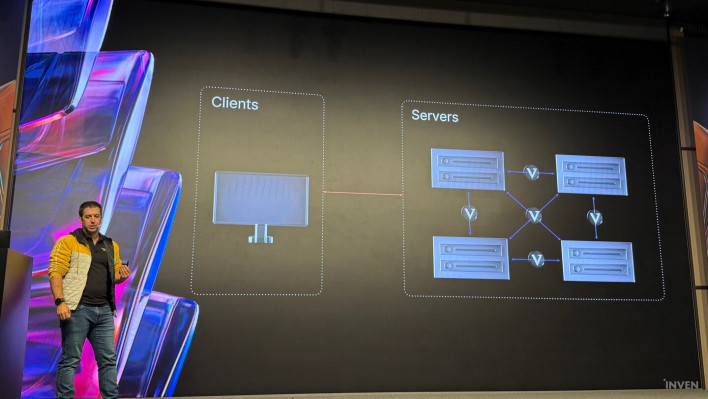
He emphasized that 'Distributed Software Transactional Memory (Distributed STM)' technology—which leverages Verse's capability of executing all code in transactions to scale single-threaded code across multi-server data centers—will be a major asset when building massive worlds. When an object is needed on a different server, the runtime can roll back the transaction, migrate the object, and re-execute the transaction with the object present. He added that because data saving is synchronized and persisted by the runtime across all running instances of the game, maintaining persistence across global maps and building ultra-large concurrent user environments becomes possible without designing complex separate backend databases.
Finally, Senior Director Marchand addressed developers' concerns regarding the transition to Unreal Engine 6. Reiterating that Unreal Engine 6 is a combination of Unreal Engine 5 for standalone games and UEFN, which has been validating the new programming model in live operation, he noted that everything built so far has been made fully available on the GitHub Unreal Engine 6 mainstream so developers can adapt to these changes in advance. Additionally, plans are in place to release several projects based on this tech stack prior to the Early Access launch of Unreal Engine 6.
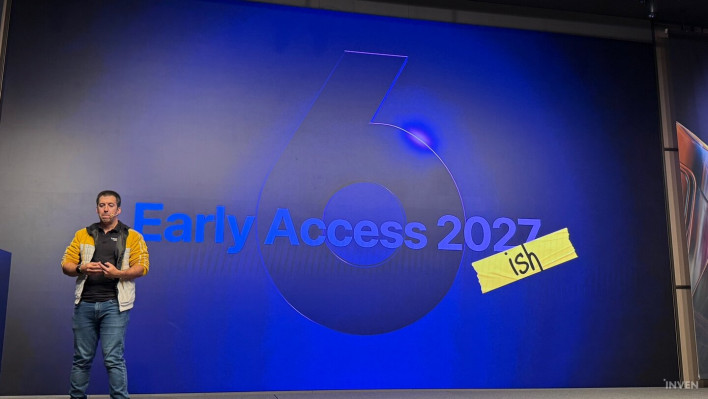
Unreal Engine 6 Early Access is scheduled for late 2027, with the full official release planned approximately 12 months later.