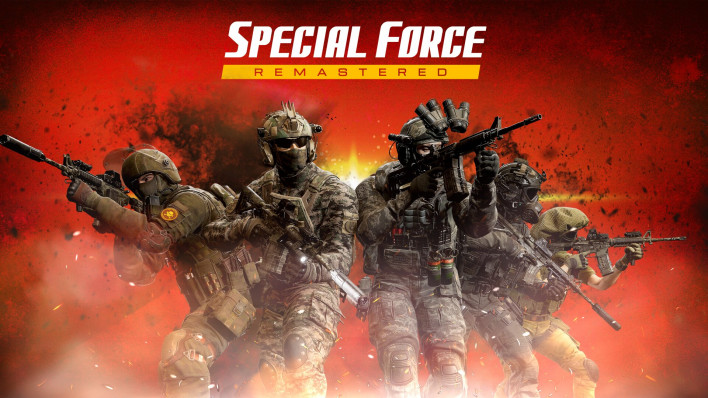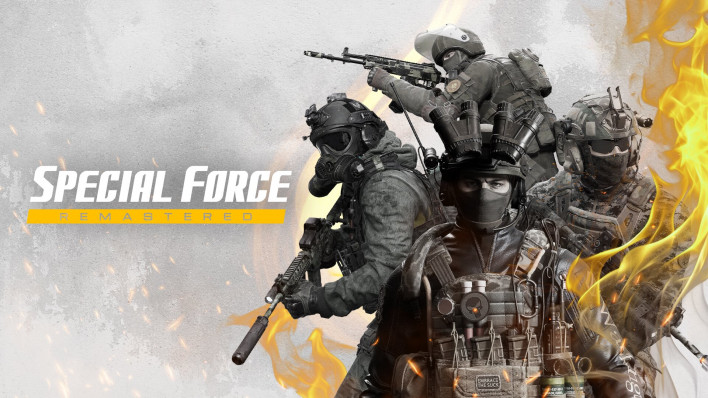
A game where moving diagonally makes you faster, and the only FPS where you spray bullets in full auto while jumping—'Special Force Remaster' brings back the combat feel of the original title.
'Special Force' is back. Dragonfly has rebuilt 'Special Force'—originally launched in July 2004 and serviced in over 100 countries—on Unreal Engine 5. Rather than stopping at raising resolution and frame rates, the studio focused on restoring diagonal movement, ghost stepping, weapon recoil patterns, and team-based combat. Gathering player feedback during three months of Early Access, Dragonfly dedicated seven weeks of closed polishing to elevate the service quality.
With the official launch set for September 17, and pre-registration underway, we met with Dragonfly as they prepare for full service. Oh Jin-won, Head of Business Strategy, and Na Heung-sik, Manager, candidly shared what they preserved from the original game, what new elements they added, and the challenges identified through Early Access.
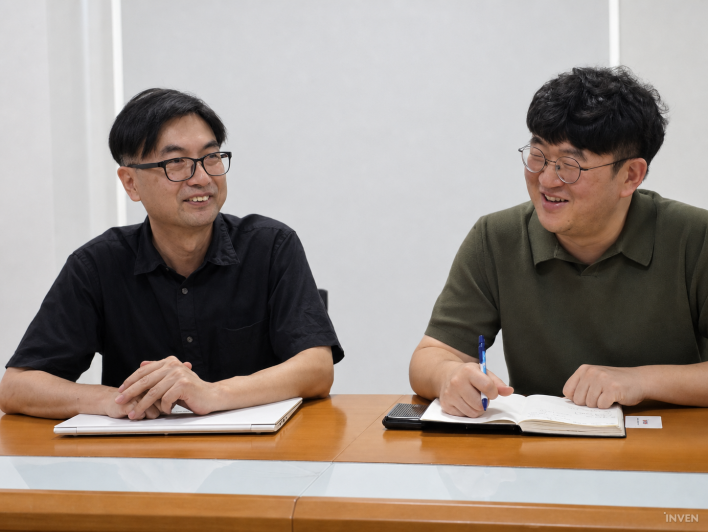
Q. Launched in 2004, 'Special Force' returns after over 20 years as 'Special Force Remaster'. Over the years, the IP expanded into various formats including sequels and mobile games, but this time you chose a remaster of the original rather than a completely new sequel. What was the background behind starting this project, and what were the key elements you decided to keep from the original versus new features added for modern FPS standards?
"Oh Jin-won: Over the years, several PC and mobile games were released using the 'Special Force' IP. Since there was 'Special Force 2', we considered whether the next title should be 'Special Force 3'. However, just as the first and second titles were distinct games, a third entry would also have had to be a completely different game.
The original game is still actively serviced today. Overseas partners kept requesting higher frame rates and resolutions. Reconfiguring the old engine structure to meet those demands was difficult, so we concluded that we needed to change engines and build a new game.
We believed the reason players continue to play the original 'Special Force' lies in its tactical team combat, unique movement mechanics, and satisfying gunplay. So we launched the project with the vision of elevating quality while preserving the core gameplay of the original.
On the other hand, we decided to eliminate stat-boosting monetization (BM) elements that past players found frustrating. Even when adding new systems, we approached them in ways that broaden gameplay choices—such as weapon progression, tactical equipment, and ranked matches—without compromising the original's core appeal.
Q. Executive Producer Park Chul-seung, who led the original game's development, took the helm for this project as well. Moving movement and gunplay feel from an legacy engine to Unreal Engine 5 can feel different even if the same values are applied. What areas did you focus on most when restoring the mechanics that veteran players remember instinctively—such as diagonal movement, ghost stepping, jump shots, and the M4 recoil pattern?
"Oh Jin-won: Executive Producer Park Chul-seung never left the company and returned. After 'Special Force', he participated in developing several FPS games, and later stepped back from hands-on work to lead the development team in CTO and executive roles. For this project, he returned to hands-on development. He even studied Unreal Engine 5 himself while directing the project.
Because development on the original game started so long ago, design documents and reference materials were lacking. It was difficult to restore the game feel purely by analyzing code. Fortunately, developers who had continuously updated the original game were still present, and Executive Producer Park passed down his experience in building levels and weapon feedback. Beyond technical assistance, having the original developer on the team gave the developers tremendous confidence.
For in-game movement, we aimed to carry over original mechanics intact—elements like diagonal movement, where moving diagonally increases speed slightly, ghost stepping, and jump shots. Even when numbers matched on paper, actual play felt subtly different. We are continuously identifying and narrowing those differences.
Na Heung-sik: We felt the M4's bullet grouping pattern was another element that had to be preserved. When full auto starts, once a direction is established, the shot pattern climbs in that direction. That is where the original gunplay feel comes from. Recreating the feel of an old engine 100% identically in Unreal Engine 5 was not easy. We are still working to minimize any gaps with the original.
Q. Early Access launched on March 25 and ran for over 100 days. You described this period as focusing on collecting player data and feedback rather than aggressive external marketing. How does Dragonfly evaluate this period? We would like to hear both what confirmed the game's potential and what you determined needed improvement before full launch.
"Na Heung-sik: It was a period where we verified our potential while also reflecting on areas that fell short. As it was Early Access, we minimized external marketing and focused on gathering gameplay data, but far more players submitted feedback than expected. There was criticism, praise, and suggestions alike.
From an operations standpoint, silence is far scarier than criticism. The fact that so many players visited with high expectations confirmed our potential. We also realized how many people who remember the original game were waiting for a new version.
There were regrets as well. Some features were known to be necessary, but due to task prioritization, they could not be ready in time for the start of Early Access. We wondered if we might have received an even better response had those features been included from day one.
Q. You consistently shared update schedules and development progress through the official cafe and developer notes, while players shared feedback in various forms including criticism, support, and suggestions. What player responses stood out to you most during direct communication? Please share key feedback that was actually incorporated into full service preparations.
"Na Heung-sik: The sheer volume of feedback was impressive in itself. Whether harsh criticism, praise, or suggestions, players sent input with genuine care. For development and operations, having players point out specific pain points is far more helpful than receiving no response at all.
A key example was the request to allow mid-match join-in. Without drop-in matchmaking, players cannot enter matches already in progress, which leads to longer matchmaking queue times. There were also many requests to improve matchmaking balance.
The development team was aware of the need for both features and was already working on them. Although task prioritization prevented them from being ready for Early Access launch, player feedback reaffirmed their importance. Early Access served as a process for establishing which features to refine first.

Q. Ahead of official service, you paused the game service for about seven weeks to conduct large-scale improvements. What areas were the focus of improvement during this downtime, and what change will players notice first when logging in on September 17 compared to Early Access?
"Na Heung-sik: The main piece of content prepared for the official release is seasonal ranked play. This isn't just adding a leaderboard feature; it requires the matchmaking framework, MMR calculation, tier rating metrics, and server infrastructure to work in harmony.
If it were a free-for-all mode where individual results are calculated per player, it would be relatively simple. However, ranked play in 'Special Force Remaster' is built around team-based combat. It must account not only for individual skill levels, but also for skill gaps between team members and opponents. We comprehensively overhauled matchmaking and the server environment to support that framework.
For official launch, we are also adding the Missile map, which was iconic in original tournaments. Players can customize characters, weapons, and profiles through the Battle Pass, while emotes and victory pose animations displayed at match end are also introduced.
Oh Jin-won: We are expanding the service reach as well. In addition to Steam and the Epic Games Store, we are adding Dragonfly direct service and Stove, along with English-language service covering North America and Europe. Setting up operational environments for each channel alongside ranked play and server infrastructure required an extended maintenance period.
Q. The original 'Special Force' had a strong culture of clan matches and LAN center team play. While seasonal ranked matches seem poised to revive that past team-based competition, you decided not to include party matching in Season 1. Please explain the reasoning behind this decision, the timing for the clan system, and what safeguards are in place so new players are not overwhelmed by legacy veterans.
"Na Heung-sik: One common piece of feedback during Early Access was that premade groups had a tactical advantage over solo entrants. When players who know each other pre-coordinate roles, they hold an inherent advantage over teams formed on the spot.
For Season 1, we decided against party matchmaking, opting instead to form teams entirely from solo entrants. Because we must balance individual skill gaps as well as team-versus-team discrepancies, the matchmaking structure had to be meticulously engineered.
We initially hoped to launch the clan system alongside full release. However, refining matchmaking complexity proved higher than anticipated. We are prioritizing stable operation of ranked matches and the seasonal system first, with clans scheduled for a subsequent major update.
Excluding party matchmaking in Season 1 was also chosen to prevent new players from being placed at a severe disadvantage against organized stacks. Our primary focus is ensuring solo entrants experience balanced competition matched to their skill level.
Q. Official service brings both a Battle Pass and new maps. What rewards center the Battle Pass, and in what order will tournament maps remembered by original players return? Please share what maps and content updates are planned post-launch beyond Missile, as far as you can disclose.
"Na Heung-sik: The Battle Pass grants rewards based on tiers unlocked through play. In line with eliminating P2W elements, rewards center on cosmetic customization for characters and weapons.
Players can customize kill feed profile icons, name tags, and banner art. Emotes featuring character animations and post-match victory poses for top performers are also included. We focused on self-expression rather than combat effectiveness.
For maps, we are prioritizing battlefields heavily played in the original. Early Access featured Desert Camp, Satellite, and Nerve Gas, and official service will add Missile, which was used in official tournaments.
Afterward, we plan to implement Shanghai, Hospital, and Train sequentially. Our initial target is expanding the main map rotation to 8 maps. We are preserving original layouts for familiarity while adding tactical tweaks to key spots to foster fresh strategies.
Q. Weapon mod attachments and five tactical equipment items are features absent in the original. While offering progression goals for players who stick with specific weapons, stat-changing attachments could introduce balance gaps. What design principles guided weapon modifications, how does the EXP/attachment monetization structure work, and how does tactical equipment alter existing team battle dynamics?
"Na Heung-sik: The original game added new weapons continuously. In Remaster, we wanted progression depth for players who stick with specific weapons.
Even with the same weapon, one player might boost mobility while another sacrifices mobility to boost accuracy for mid-to-long-range engagements. Weapon customization is not a flat stat buff. Increasing accuracy lowers mobility or affects swap speed, introducing trade-offs. The goal is tailoring the weapon to individual playstyles.
Weapon EXP is earned through gameplay. EXP items are also available for purchase for players wanting faster progression. Weapon level-ups unlock attachment tiers, and attachment skins require unlocking the base attachment first.
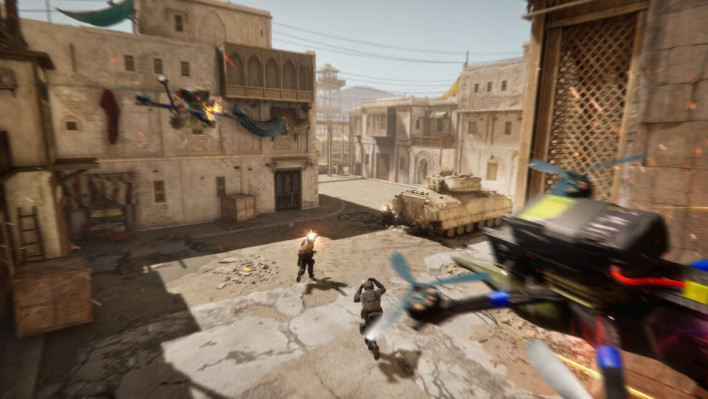
Tactical equipment was designed to introduce strategic resource allocation per round while giving trailing teams comeback potential. Players purchase gear using points earned in-match.
You can suppress multiple targets at once with an RPG or strike from above with an FPV drone. In team play, defending teams turtle in base, making entry tough for attackers. Tools like FPV drones attack from unexpected angles, disrupting turtling tactics.
During Early Access, we left equipment stats and point gain tuned broadly to observe varied play styles. Round-by-round resource management didn't unfold strictly as intended, but we did observe new tactical plays absent in the original, such as using drones to clear base defenders.
Q. The original game was serviced in multiple global regions and operated Pro Leagues and World Championships. Alongside Steam and Epic Games Store, official launch adds Dragonfly direct service and Stove. How far along are preparations for English-speaking regions including North America and Europe, as well as Southeast Asian publishing? We would also like to hear your vision for restarting esports based on regional service expansion.
"Oh Jin-won: Early Access ran on Steam and the Epic Games Store. From official launch, we are adding Dragonfly direct service and Stove.
Younger players are used to Steam, but many veteran players prefer downloading dedicated launchers. We are expanding platform channels to suit player preferences.
We are launching service for English-speaking regions, including North America and Europe. For Southeast Asia, we have regional publishing partners preparing localized releases. Since players in English-speaking markets who remember the original game have inquired about launch schedules, we plan dedicated marketing there.
A major driver of 'Special Force' during its golden era was the Pro League esports scene. We continued LAN parties and regional tournaments afterward, but running such events became difficult following COVID-19. Through Remaster, we actively plan to rebuild esports.
Discussions are underway targeting launch in Thailand in the first half of 2027, followed by potential service in the Philippines or Taiwan. Once at least three countries participate, we believe we can structure a World Championship. We aim to host it in late 2027, with domestic qualifiers launching as early as winter 2026 or spring 2027 at the latest.
Q. Reclaiming familiar gunplay feel is key for players in their 30s and 40s who played the original, while players in their 20s trying 'Special Force' for the first time need to see it as a fresh competitive FPS rather than a retro restoration. What would you highlight for each group? Lastly, any final message for players awaiting September 17?
"Oh Jin-won: Simply asking players to visit because we worked hard would sound cliché. What I really want to emphasize is that we analyzed why players left 'Special Force' in the past and addressed those reasons directly. Unspoken user-made ban rules and disappointment in BM were major factors.
Remaster offers a fresh start. Players have a fresh chance to rank up and gain military ranks in an environment built for seamless matchmaking while retaining original gunplay dynamics.
For original players, this is a chance to relive memories of gathering with friends at LAN centers for squad battles. Even as we age, few games offer the chance to experience that same team-focused combat. It may be an old-school game, but I hope those who loved it back then get to relive those memories today.
For newcomers, seasonal ranked play and matchmaking provide an entry into team-based competition. While preserving original movement dynamics, we introduced modern options like weapon customization and tactical gear.
Na Heung-sik: We know nostalgia alone won't suffice. Some players might find actual play differs from their memories and feel disappointed.
Conversely, domestic Early Access players shared that while new features felt unfamiliar, the game captured the classic flavor and was genuine fun. Overseas players outside official service regions even reached out to customer support asking when they could play.
In the end, players pass judgment. I simply want to convey that we prepared thoroughly to live up to those evaluations and expectations.