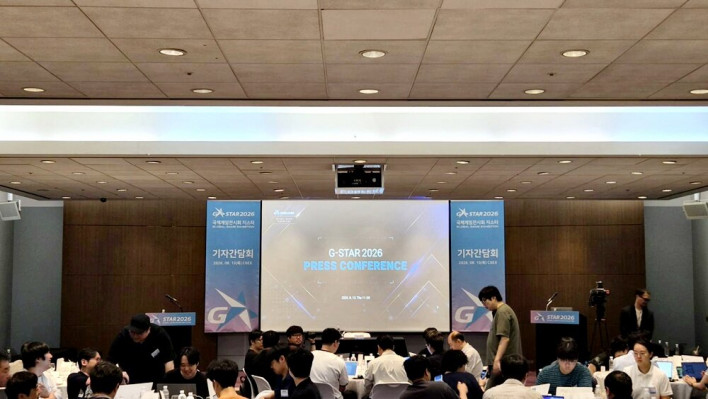
On August 13, 2026, a press conference was held at the COEX Conference Room in Seoul to unveil the overall plans for 'G-STAR 2026.' The event was attended by over 100 media outlets from various sectors, including gaming and IT. Key announcements included the main sponsor, exhibition direction, major participating companies, business programs, G-CON and side events, and support plans from the host city, Busan.
Jo Yeong-gi, Chairman of the G-STAR Organizing Committee, thanked the media in attendance and opened the event by stating, "I am here to share the overall direction for G-STAR 2026. We have considered multifaceted approaches to respond to the rapidly changing market, and we will do our best to ensure everyone is satisfied."
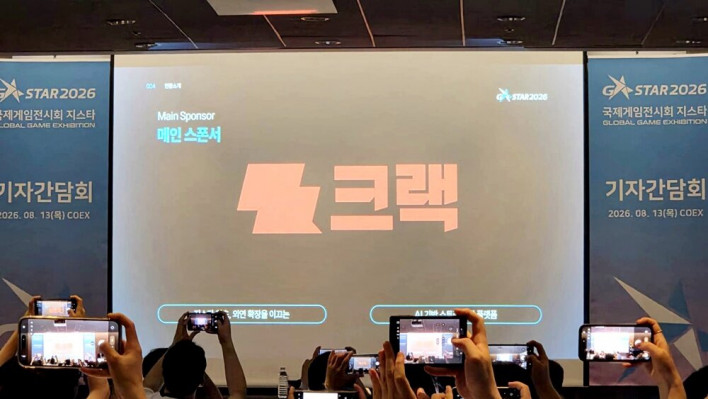
Main Sponsor: AI Platform 'Crack'
Before explaining this year's direction, the G-STAR secretariat reflected on the significance of game exhibitions. The secretariat defined an exhibition as 'a result that showcases the industrial structure of a given time' and a space that projects the current state of the market. The reason console games hold a high share at the Tokyo Game Show is that the Japanese game market remains console-centric; similarly, G-STAR must reflect the current changes in the Korean game industry.
The secretariat summarized the current trends in the domestic game market as the 'expansion of the console market' and the 'globalization of the game market.' As domestic developers expand their platforms beyond PC and mobile to consoles and increasingly target the global market from the outset, the committee determined that G-STAR should no longer remain an exhibition in its traditional form.
Accordingly, G-STAR 2026 has set two core strategies: 'outward expansion' and 'expansion of in-house content.' The 'outward expansion' mentioned by the committee is not a simple numerical increase, such as growing attendance from 200k to 250k. It means moving beyond the 'gamers' who have been at the center of G-STAR to include potential visitors who enjoy various media content, such as webtoons, animation, and film.
The expansion of in-house content follows the same logic. Previously, the content visitors could experience at a game exhibition depended heavily on which companies participated and what new titles they showcased. This year, G-STAR aims to increase its own programs—independent of the exhibitor lineup—so that visitors can say, 'At the very least, I can experience this at G-STAR.' Indie games, new title demos, online long-form content, performances, merchandise, automotive collaborations, and creator programs are all being prepared under this initiative.
This shift is also evident in this year's main sponsor. The main sponsor for G-STAR 2026 is 'Crack,' an AI character chat platform operated by Wrtn Technologies. Crack is a service that allows users to converse with various AI characters and create their own stories. Given that G-STAR's main sponsors have historically been domestic and international game companies, the participation of an AI service brand aligns with the outward expansion G-STAR is pursuing this year.
Crack will not merely be a title sponsor but will also participate in on-site content. Notably, a mini-concert and side events featuring the band QWER are planned, and Crack will also sponsor G-CON. Specific programs and operational details will be announced later.
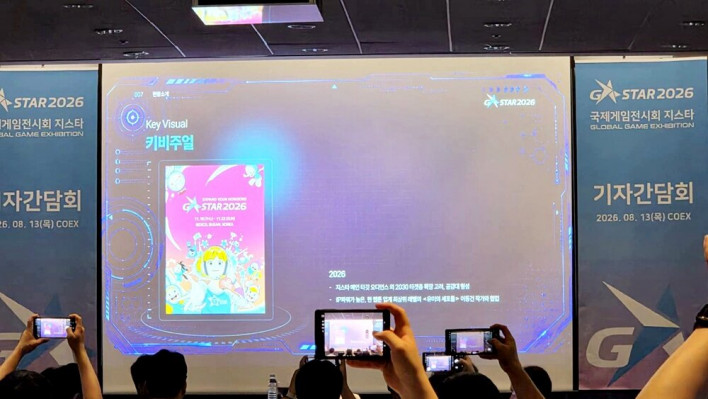
The key visual representing this year's G-STAR also reflects this direction. After collaborating with Moon Jung-hoo, author of 'Yongbi the Invincible,' last year, the committee has partnered with Lee Dong-gun, author of 'Yumi's Cells.' The intent is to create touchpoints with other content areas like webtoons rather than limiting the image to games, while making the G-STAR brand more relatable to the 20s and 30s demographic.
BTC and BTB Overhauled... From Large Booths to Indie and Investment Matching
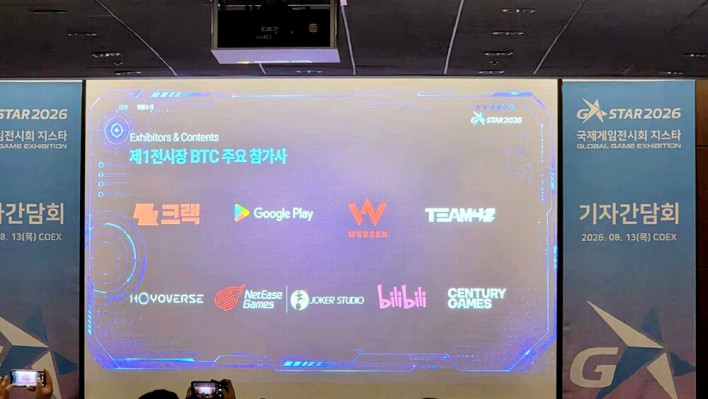
The BTC Exhibition Hall 1 will feature the main sponsor Crack, as well as Google Play, Webzen, and Team42. International companies including HoYoverse, NetEase Games, Joker Studio, Bilibili, and Century Games are also on the list. The list released today is only a portion of the total participants, and the committee plans to announce additional companies and their respective exhibits sequentially.
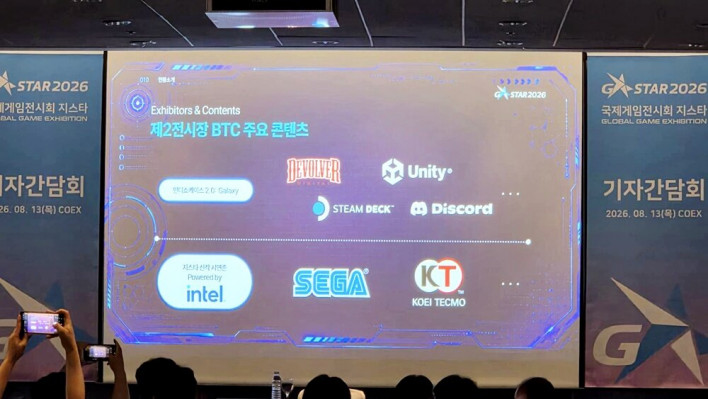
Exhibition Hall 2 will be utilized as a space to strengthen G-STAR's self-curated content. A flagship program is the 'G-STAR Indie Showcase 2: Galaxy,' an expansion of the existing indie exhibition. The goal is to move beyond a simple collection of indie games and showcase the entire ecosystem surrounding indie games in one space.
Accordingly, not only individual indie developers but also various companies and brands across development, publishing, platforms, and communities—such as Devolver Digital, Unity, Steam Deck, and Discord—will participate. The committee plans to differentiate this from previous indie showcases by placing various entities involved in the process of game development and delivery alongside the games themselves.
A separate 'G-STAR New Title Demo Zone' supported by Intel will also be set up in Hall 2. Companies like SEGA and Koei Tecmo are expected to participate, providing a dedicated space for games that do not have individual large booths to meet visitors. The Game Culture Festival, in which the Korea Creative Content Agency participates, will also be held here.
Content combining games with other industries will also be showcased in Hall 2. Hyundai Motor Company is preparing a program centered on the Hyundai N brand that combines gaming and motorsports. The 'Hyundai N Virtual Cup 2026' Grand Finals will be held, and a sim-racing experience zone for visitors will be created. High-performance Hyundai N vehicles and actual race cars used in WRC and TCR will also be on display.
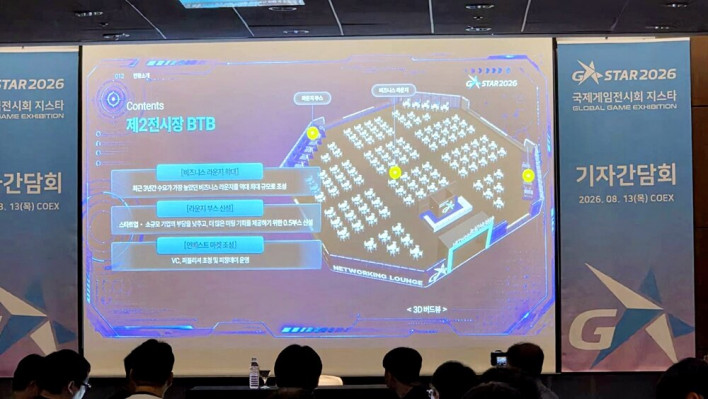
Beyond the BTC for general visitors, the BTB section is also undergoing a major overhaul. Reflecting the high demand for business lounges over the past three years, the committee is expanding the lounge to its largest size ever. This measure addresses the market shift where many participating companies prioritize meeting and consulting with industry contacts over setting up booths for promotion.
The barrier to entry for small developers and startups is also being lowered. A new 'Lounge Booth'—half the size of a standard booth—will be introduced, allowing companies that cannot afford large booths to secure a meeting base in the BTB area. This plan aims to make it easier for developers, publishers, and platform operators to participate in the business area of G-STAR, regardless of company size.
Additionally, an 'Invest Market' will be newly created to directly connect VCs and publishers. The intent is to match participating companies with investors and publishers, creating a structure that leads to actual investment and publishing discussions beyond simple exhibition and networking.
BTB pass operations are also being improved. Convenience will be enhanced by introducing a 'Super Early Bird' system and extending online registration and pass validity periods. Microsoft will participate in the official networking program, hosting the 'G-STAR Networking Party Powered by Microsoft.' The committee is organizing this year's BTB with a focus on increasing the density of actual business meetings and networking rather than just expanding the exhibition space itself.
Not Just a Stage for Game Companies... G-CON and G-STAR's Own Content Expansion
This year's G-CON will be held on a single stage over two days, November 19 and 20. It will operate with a capacity of approximately 1500 seats and, following last year, will maintain 'narrative' as a key theme. However, it distinguishes itself by broadening the scope of creation beyond the existing developer conference framework—which focused solely on game developers' production experiences—to include film, webtoons, and animation.
In the gaming sector, Marcin Blacha, VP and Story Director at CD Projekt Red, and Narrative Director Philipp Weber of 'The Witcher 3: Wild Hunt' will participate. From SQUARE ENIX, Yoshinori Kitase and Naoki Hamaguchi, who lead the 'Final Fantasy 7' Remake project, are on the list, and Game Director Yong-hee Cho of 'Pragmata' from Capcom will take the stage.
From Korea, SHIFT UP CEO Kim Hyung-tae will attend, and a session with Shinji Mikami is also planned. Key developers from Supergiant Games, including Creative Director Greg Kasavin and Audio Director Darren Korb of the 'Hades' series, will participate, and Harry Krueger, well-known for 'Returnal,' is also listed as a G-CON speaker.
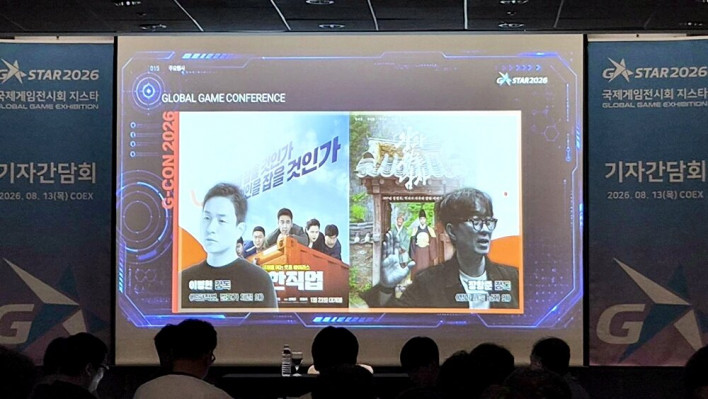
This year's G-CON is particularly notable for actively bringing in creators from outside the gaming industry. Director Lee Byeong-heon of the film 'Extreme Job' and Director Jang Hang-jun will participate, as will Lee Nak-joon, the original author of 'Severe Trauma Center,' and Ryan Green of 'That Dragon, Cancer.' Senior Animator Kim Hye-sook from Pixar Animation Studios, who worked on 'Inside Out 2' and 'Toy Story 5,' and Lee Dong-gun, author of 'Yumi's Cells'—who created this year's G-STAR key visual—are also on the speaker list.
A small-scale program called 'Salon de G,' which differs from large-scale lectures, will also be operated. A total of six roundtables are prepared, and currently announced roundtable leaders include Greg Kasavin, Darren Korb, and Lee Jun-ho of 'The First Berserker: Khazan.' This program focuses on developers and participants discussing topics in a more intimate setting rather than the one-way presentation format of typical conferences.
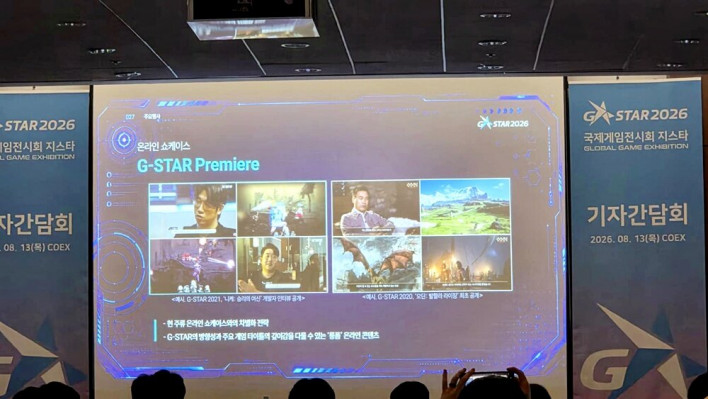
Beyond content consumed only on-site, G-STAR is also expanding its own online content. 'G-STAR Premiere,' introduced this year, is a program that sheds deep light on a single game through 20–30 minutes of long-form content, unlike typical online showcases that focus on short trailers and announcements.
Side events and on-site convenience for visitors are also being expanded. A G-STAR Special Pass in collaboration with KREAM will be introduced, and official merchandise utilizing this year's key visual, 'Yumi's Cells,' will be produced. Prior to the event, a G-STAR pop-up store will operate at the Hyundai Department Store Pangyo branch to create offline touchpoints before the exhibition begins.
Support for cosplayers will also increase. Existing support facilities such as waiting areas, lockers, and changing rooms will be expanded to improve convenience for cosplayers active on-site for long periods. For influencers, an official influencer lounge will be operated in partnership with Monster Energy, along with on-site events.
Ticket operation methods will also change. According to the committee, 2024 saw a surge in visitors that exceeded BEXCO's capacity, and 2025 served as a test for managing entry numbers to resolve this. This year, the policy is to sell tickets at an appropriate level that BEXCO can accommodate, based on an analysis of entry and visitor data from the past three years.
Entry will be divided into Part 1, starting at 10:00 AM, and Part 2, starting at noon, to disperse visitor inflow. By focusing on online reservations, on-site waiting and congestion will be reduced. The focus is on improving the actual viewing experience within the current exhibition scale rather than record-breaking visitor numbers.
Busan City: "Expanding G-STAR Beyond BEXCO to the Entire City"
At the press conference, the host city, Busan, also made a separate presentation. Hwang Jeong-sun, Director of the Video Content Industry Division at Busan City, explained that as G-STAR has been held in Busan for a long time, it has become a major driving force that grows the local game industry, tourism, and MICE industry beyond being a simple game event.
Busan City emphasized that the scale of the local game industry has grown continuously alongside the hosting of G-STAR. According to the presentation, Busan's game industry revenue increased from ₩125.2 billion in 2020 to ₩303.5 billion in 2023, and the number of employees in the game industry grew from 1957 to 3065 during the same period. The number of local game companies has also expanded significantly compared to when G-STAR first settled in Busan.
Busan City assessed that G-STAR contributes not only to the game industry but also to enhancing Busan's MICE competitiveness. In the 2025 UIA international conference hosting rankings, Busan ranked 7th in Asia and 22nd globally, and the city views G-STAR, which attracts large numbers of domestic and international visitors and game industry stakeholders every year, as one of its representative international events.
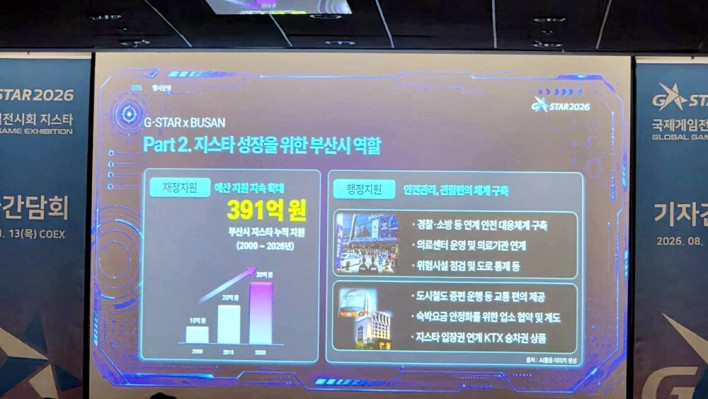
To this end, Busan City has provided long-term financial support. From 2009 to 2026, the cumulative budget supported for G-STAR amounts to ₩39.1 billion. The support, which was initially around ₩1 billion per year, has increased to 2 billion and ₩3 billion levels, growing in scale alongside the event.
Administrative support covers both inside and outside the venue. The city establishes safety response systems with relevant agencies, including police and fire departments, operates medical centers, coordinates with medical institutions, and supports the inspection of hazardous facilities around the venue and road traffic control. Considering the large number of visitors moving at once, subway services will also be increased.
The city is also addressing concerns about accommodation costs and transportation convenience, which are pointed out every year during G-STAR. Busan City is preparing measures to lower the burden on visitors from other regions, such as suppressing excessive accommodation price hikes through agreements and guidance with the local lodging industry, and preparing KTX ticket packages linked to G-STAR admission tickets.
Busan City is also pushing for facility expansion to support the long-term scale of G-STAR. Construction of BEXCO Exhibition Hall 3 is currently underway, with a target completion date of 2030. As the existing Halls 1 and 2 have limitations in accommodating large numbers of visitors and exhibitors, the plan is to secure new exhibition space to increase capacity for large events, including G-STAR.
Gadeokdo New Airport, aimed for opening in 2035, was also presented as long-term infrastructure to support the globalization of G-STAR. Busan City expects that improved international flight accessibility will make it easier for overseas game companies, buyers, and media to visit Busan.
A point Busan City particularly emphasized this year is making G-STAR an 'urban festival' rather than an event confined to BEXCO. Busan City plans to develop G-STAR into a 'MICE × CITY' format that combines MICE events with the city, and expand programs so that G-STAR can be felt throughout Busan during the event period.
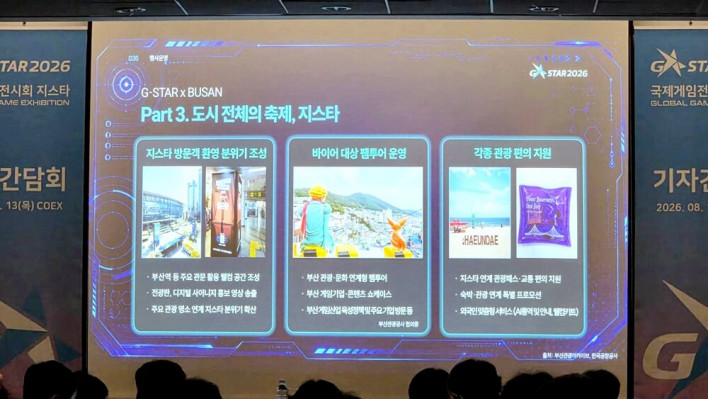
'G-STAR Stations' and welcome spaces for visitors will be created at major gateways, including Busan Station, and subway stations, and event-related content will be displayed on electronic boards and digital signage. The concept is to convey the impression that G-STAR is taking place throughout the city, even to citizens and tourists who do not visit BEXCO.
A special drone show linked to G-STAR is also scheduled to take place at Gwangalli. For overseas buyers, the city will provide familiarization tours to experience Busan's tourism and culture, and programs introducing local game companies and related industries will be prepared in consultation with the Busan Tourism Organization and others.
The city also plans to provide general visitors with tourism passes, transportation convenience, and accommodation/tourism-linked promotions. Customized services such as guidance and interpretation for foreign visitors are also under review. The direction presented by Busan City is to expand the G-STAR visit from a simple schedule of seeing games at BEXCO into an experience that leads to Busan tourism and local consumption.
As such, G-STAR 2026 focuses on broadening the scope of content and experiences the event provides, rather than simply increasing its scale by attracting more game companies and visitors. By selecting an AI platform rather than a game company as the main sponsor, bringing in webtoon, film, and animation creators, and expanding areas directly planned by G-STAR—such as the indie ecosystem, investment programs, automotive collaborations, and original video content—the event is evolving.
Furthermore, the host city, Busan, has also presented a vision to utilize the entire city as a stage for G-STAR, beyond BEXCO. Ultimately, the 'outward expansion' mentioned by the committee this year is closer to simultaneously widening the scope of content, people, and space that G-STAR covers, rather than simply increasing visitor numbers or exhibition area.
G-STAR 2026 will be held from November 19 to 22 at BEXCO and throughout Busan. Detailed participant lists, exhibits, and program schedules will be announced sequentially, and details regarding press kits and media coverage support will be released in September.
Q&A
It appears that many major game companies, with the exception of Webzen, are not participating among this year's major association members. What are your thoughts on this?
Chairman Jo Yeong-gi: I used to be on the side of participating in G-STAR, but now that I am on the side of hosting it, the feeling is different. I am always asked why the participation rate of overseas game companies is low or why major game companies are not participating.
Looking at the bigger picture, one of the characteristics of G-STAR is that it focuses on the premiere of new titles. However, there are not many major new titles that large game companies can showcase at the moment.
Regarding overseas game companies, I think we need to rethink the definition of 'global games.' Many domestic game companies now have overseas revenue exceeding domestic revenue. I believe it is more important to create an event that satisfies visitors than to dichotomously distinguish between domestic and foreign companies.
Compared to other overseas game shows, G-STAR has some shortcomings in terms of hardware, such as location and facilities. Rather than trying to catch up in the exact same way, I believe it is correct to consider a different direction by expanding the scope and broadening content categories.
Director Jeong Seung-woo = Not all participants have been announced yet. More domestic game companies are scheduled to participate in the future.
There are also physical limitations at BEXCO. Based on 100 booths, only about six companies can fit into Exhibition Hall 1. Because of these spatial limitations, there have been many cases where we could not accept participation even when there was interest.
'GTA6' is a blockbuster highly anticipated worldwide. What impact do you think the release of 'GTA6' will have on G-STAR 2026?
Chairman Jo Yeong-gi: I am aware that it is a highly anticipated game worldwide. However, I am not sure if the release of 'GTA6' will have a direct impact on G-STAR. I haven't thought about it deeply, but we will monitor the situation and respond accordingly.
While there is no disagreement that G-STAR is the largest game event in Korea, attracting over 200k people, the location of Busan feels relatively disadvantageous as events in the metropolitan area like PlayX4 and AGF grow. What does Busan City think about this? I am also curious about the background of renewing the hosting agreement with Busan last year.
Director Hwang Jeong-sun: We are aware that the ₩3 billion support from Busan City may be considered insufficient. We are considering additional support for the areas that are lacking.
Director Jeong Seung-woo = The host city for G-STAR is selected through a local government public contest. Since it proceeds through local governments participating in the contest, the G-STAR secretariat does not have a structure where it collaborates separately with a specific city or lobbies for hosting.
There is also criticism that G-STAR's status has faded compared to the past. What are your thoughts on this?
Chairman Jo Yeong-gi: I hear that often. Even considering the limitations of the exhibition space, there may certainly be limitations. We must also consider the differences in market environments. In Japan, consoles account for about 25% of the game market, but in Korea, it is about 5%. It is difficult to push an event centered on consoles in the domestic market.
Ultimately, to keep up with market trends and flows, we must continue to make new attempts. Of course, such attempts do not always hit the mark. For our part, we are just trying to make as many new attempts as possible in line with market changes.
Looking at the currently released participant list, the proportion of Chinese game companies is quite high. You mentioned that there are still many unannounced participants; are there plans for participation from other overseas game companies, including those from the West?
Director Jeong Seung-woo = In addition to Chinese game companies, SEGA and Koei Tecmo are scheduled to participate. G-STAR basically has a direction of focusing on unreleased games for exhibitions.
G-CON's status has risen significantly in recent years. However, there were rumors about protocol issues regarding some overseas speakers last year. What are your thoughts on this?
Director Jeong Seung-woo = First, I would like to say that the protocol-related issues raised last year were all untrue. Because they were not true, we did not take any separate action at the time.
Since a specific speaker was mentioned, I will clarify: there was a story that speaker Yuji Horii used economy class, but that is not true. Yuji Horii and his entire party entered the country using business class. We provided separate protocol vehicles for all schedules and even received thank-you notes after the event ended.
Trust is extremely important in the Japanese game industry. If there had actually been problems with the protocol process last year, it would have been difficult to invite various Japanese speakers again this year. As I have clarified this accurately today, I hope you will refrain from speculation on this matter in the future. We will also do our best to ensure such problems do not occur in the future.
As user tastes become increasingly fragmented, events that focus intensively on specific genres or cultures are growing. In this situation, is there a possibility that G-STAR's direction of trying to encompass all content might actually blur the event's identity?
Director Jeong Seung-woo = I would like to say that our direction is to pursue diversity within a range that does not damage the essence of gaming. I hope you understand that we are expanding our reach without losing our basic principles—the core idea of 'what a game show should be.'
The symbolism and influence of the main sponsor at G-STAR are significant. What content is this year's main sponsor, Crack, preparing for G-STAR 2026?
Director Jeong Seung-woo = The organizing committee cannot intervene in the content prepared by participating companies. We only explain the direction of the event that G-STAR pursues. Also, I am not sure if the main sponsor has such a huge impact on the entire event. I think that varies depending on the situation.
You mentioned that there are participants you haven't announced yet. If it's difficult to disclose specific company names or scale, can you at least confirm if there are any additional large domestic game companies joining the BTC?
Director Jeong Seung-woo = While I cannot explain the exact company names, participation scale, or details right now, there are indeed companies joining the BTC.
Recently, some vice-chair companies of the Korea Association of Game Industry have left the association. How does the association view this situation?
Chairman Jo Yeong-gi: There has been a recent departure of some companies. As someone who was a CEO of a game company, I have been thinking a lot about what the Korea Association of Game Industry should be and what the role of a vice-chair company should be.
What I worry about most is that the domestic game industry must do well. Personally, I think the Korean game industry is currently in a crisis. However, it is not easy for me to evaluate the management decisions made by each company. There are many concerns, but it is not an easy problem to find a clear solution for.
Since becoming the association chairman last year, I said at a press conference that I would increase the number of member companies, and indeed, 6 or seven companies have newly joined. Conversely, some companies have left the association.
Since I believe my current position represents the Korean game industry, I am trying to represent the positions of various small and medium-sized game companies. I haven't given a clear answer, but I want to say that I am continuing to think and work hard for the entire Korean game industry.