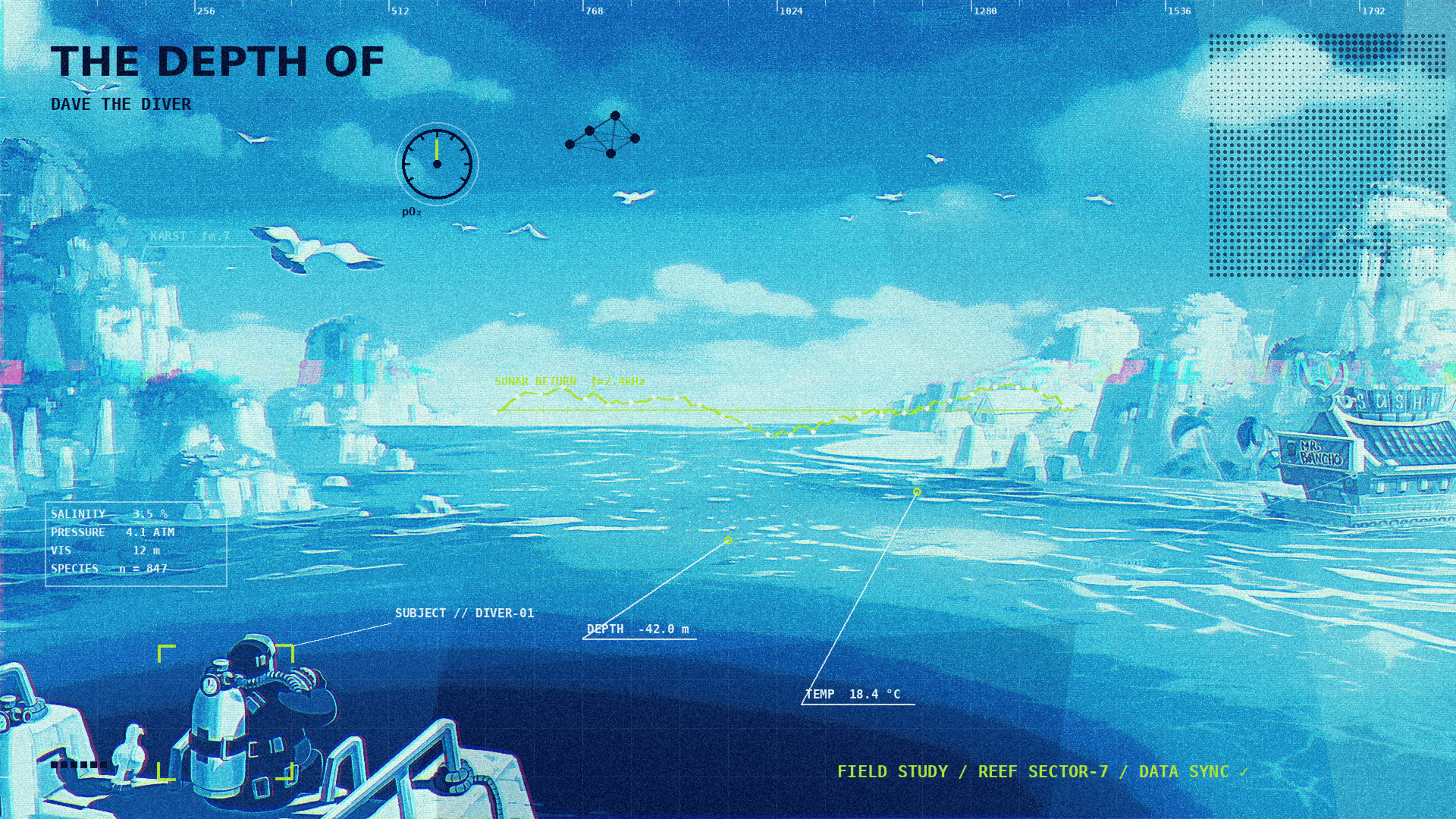
The title of this article was almost too hackneyed and cringe for me to use (ha ha, DIVE!), however, it's simply too fitting. The depth of Dave the Diver is extraordinary. Before the sushi, before the bosses, before a single joke lands, you sink into the Blue Hole for the first time and the water just feels right. The light goes soft and green. Bits of silt drift through your headlamp beam. A school scatters when you get too close and folds back together once you've passed. It hits some part of your brain that has been underwater before and knows the difference.
I have been underwater before, which is probably why it got me so fast. A while back I did a run of dives off the Dominican Republic, out past Bayahibe, where the reef glides along a sunlit shelf and then, with zero warning, simply stops. One moment you're cruising over coral in bathtub-warm, postcard-blue water with parrotfish ignoring you below. The next you're hanging over a ledge where the floor falls away into a blue so deep it shades to black, and your entire nervous system files an urgent memo about how you have no idea what is down there. Nothing was down there. Didn't matter one bit. That edge, the bright-then-bottomless lurch of it, is a feeling I've never quite shaken, and the first time the Blue Hole opened up beneath my chubby pixel diver, there it was again.
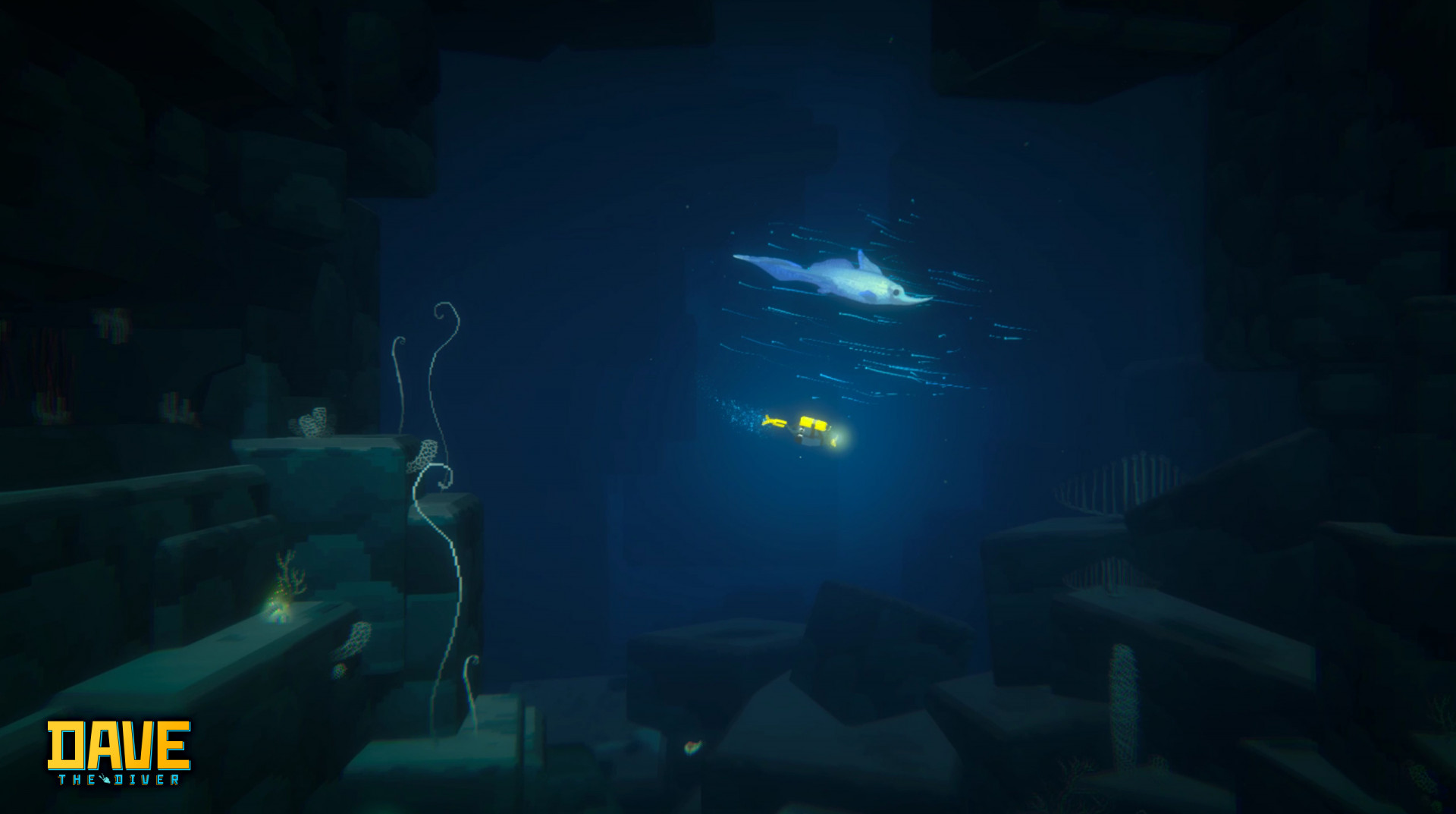
A cartoon did that to me. With googly-eyed fish. That should not be possible, and working out why it is became the whole reason for this piece.
So let me be careful here, because I'm not going to claim Dave is secretly a marine biology textbook. It isn't, and it would be a far worse game if it tried to be. This is a bright, breezy, very funny thing about a slovenly guy who stabs fish and runs a restaurant. But this series is about going 1,000 percent on a game, chasing down everything around it, and when you go poking at why Dave's ocean feels as honest as it does, you keep landing on the same unglamorous answer: somebody did the work. Real diving, real research, an ocean somebody put a regulator in their mouth for. The science was never the point. It's the floor the point gets to stand on. Dave has more going on under the surface than it ever lets on, and I mean that about as literally as a sentence can.
The first sign that something serious is happening under the hood is that the people who built this ocean went out and learned to breathe in a real one.
When I talked to Jaeho Hwang, he told me that while the team was dreaming the game up on Jeju Island, "both our art director and lead designer got their diving certifications, which helped enormously in shaping the feel of the ocean." You can spot it in the animation if you know to look. "Their direct experience really shaped the sensory layer of the game," Hwang said. "How coral is constructed, the motion of a fleeing fish, how far it needs to swim before relaxing its guard again. All of it came from actually being in the water."
That definitely stood out to me. Not how a fish looks. How far a fish runs before it decides you're not worth panicking about anymore. That's a documented behavior, a measurable bubble of personal space that prey animals haul around with them, and close to zero games on earth bother to model it. Dave models it.
The Blue Hole is Dave's entire identity. A shaft of water that's bright and sunny up top and goes darker and stranger and more obviously hostile the deeper you sink. And it's built on a real category of place, one that working scientists treat with a healthy dose of dread.
The team never got to visit one. As Hwang put it, "we studied the folklore around the Bahamas' blue holes and the structure of the one in Belize, using that research to build the kind of blue hole people picture and want to see." That Belize site is the famous one, the Great Blue Hole, and reality pretty much storyboarded it for them. Picture a near-perfect dark circle about a thousand feet wide and four hundred feet deep. It isn't even an ocean feature by birth. It's a limestone cave that sat on dry land during the last Ice Age, then drowned when the seas climbed and its roof caved in.
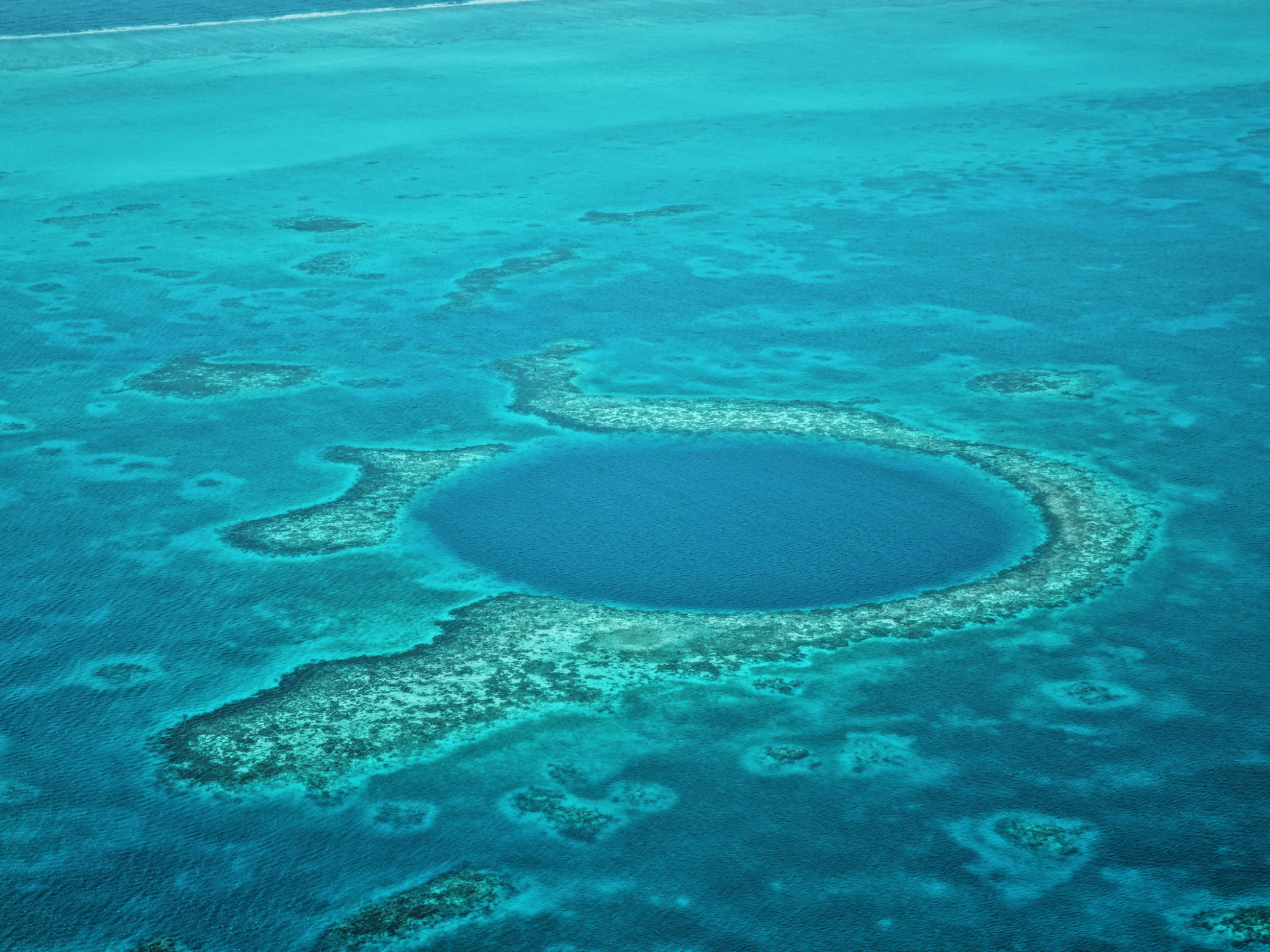
The bottom is where it tips into horror. When a crew took submarines down to map the interior in 2018 (the trip with Richard Branson and Fabien Cousteau aboard), they dropped through a thick layer of hydrogen sulfide hanging around 300 feet down. Below that toxic curtain the water goes anoxic. No oxygen, no light, nothing alive. Sharks cruising the rim won't cross it. The floor is carpeted with the shells of conches that wandered over the lip and suffocated, plus the bodies of a couple of divers who went down and never came up.
Now go back to how Hwang described the brief for the game's version, which he summed up for me as a pretty surface that "darkens quickly," where "you don't know what's living further down or where it connects to." None of that is invented. He's describing the literal layered anatomy of a blue hole, just with the poetry left in. The dread sitting at the center of Dave the Diver, light up here and a lightless dead zone down there, is simply what one of these things is.
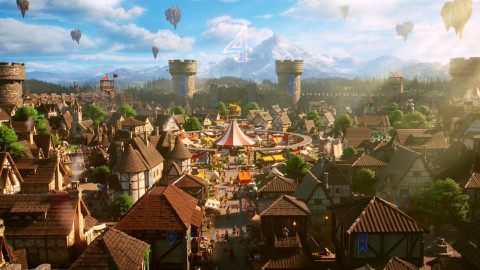
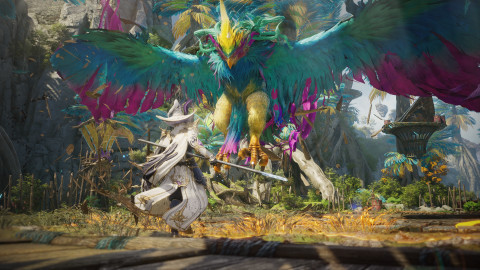
Which drops us, neatly enough, on today, because as I write this MINTROCKET has put out Dave the Diver: In the Jungle, a content pack that hauls Dave out of the salt and into a freshwater jungle lake. The science is the whole reason that swap is more than a reskin.
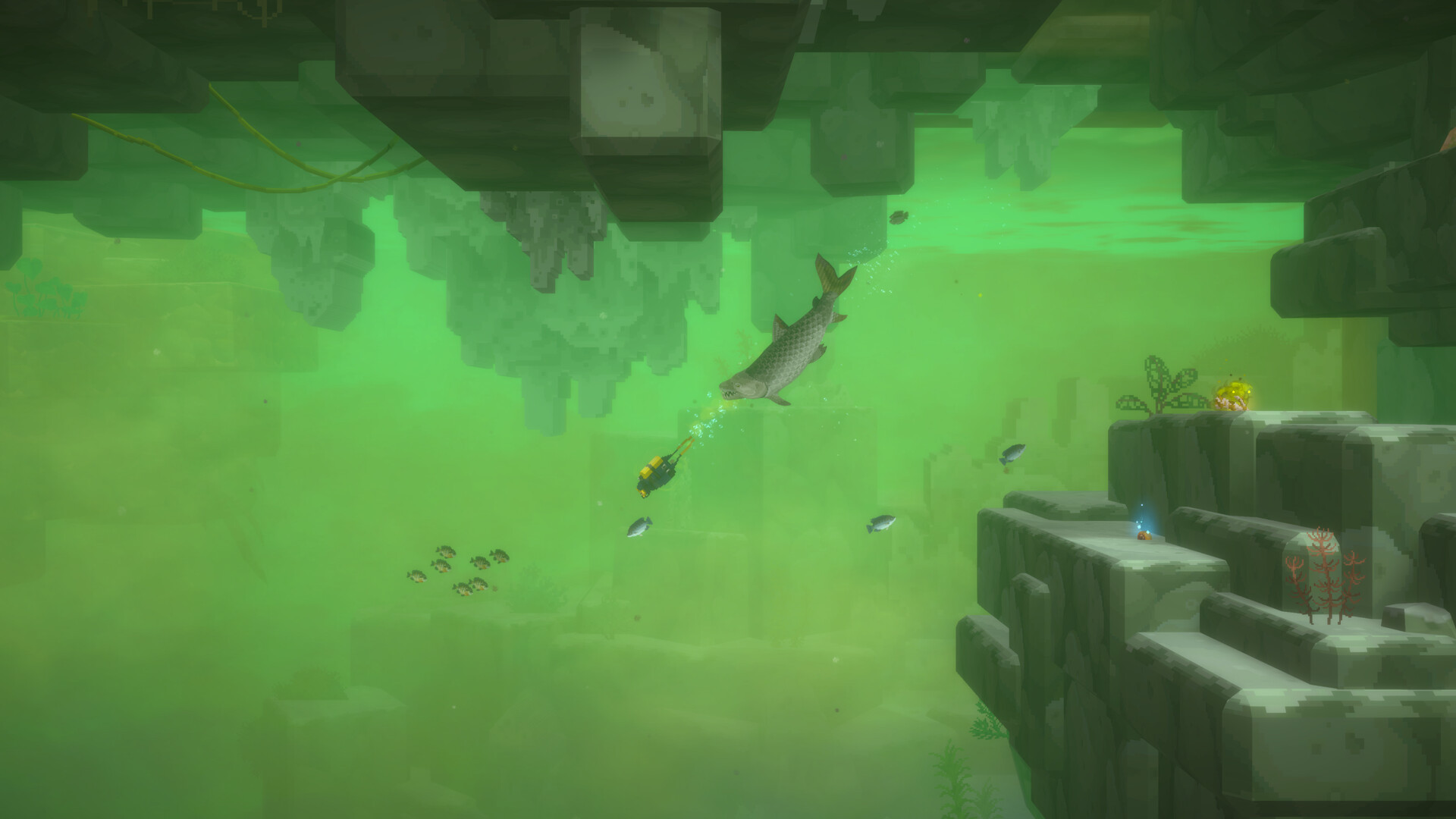
The ocean, as it happens, was cramping their style. Saltwater predators are weirdly well-mannered. As Hwang told Inven Global, the Amazon-grade monster fish he could suddenly reach for "have strong teeth, and there are many vicious creatures," and all that nastiness opened doors the sea kept locked. The headline feature is ecosystem interaction. "If a fish is shot and bleeds, piranhas smell the blood and attack that fish," Hwang said, and "if an electric eel emits electricity, surrounding fish also take damage." Catfish gulp things down whole, eels zap, and, in his words, "sturgeons shoot stones from their mouths." Even the lake's layout has a footnote in fact. Hwang modeled it on Weekuri Lake in Indonesia, noting that "the lake sits on high ground, but the lower portion is actually connected to the sea," a true brackish, sea-fed lagoon, which doubles as a convenient excuse to keep the old saltwater Blue Hole lurking somewhere far below the surface.
The research itch reaches even the literal bug-collecting minigame. To stock it, Hwang told Inven, "we even researched global data to include rhinoceros beetles." Naturally.