Is the utopia we expected AI to bring becoming a reality?
Do you remember when ChatGPT was first released to the world in late 2022? Anyone could access it with a simple sign-up, and it was free. Whether it was reviewing a contract that used to require a lawyer, translating foreign documents that needed a translator, or explaining complex concepts that required a teacher, anyone could solve these problems alone at two in the morning. People were ecstatic.
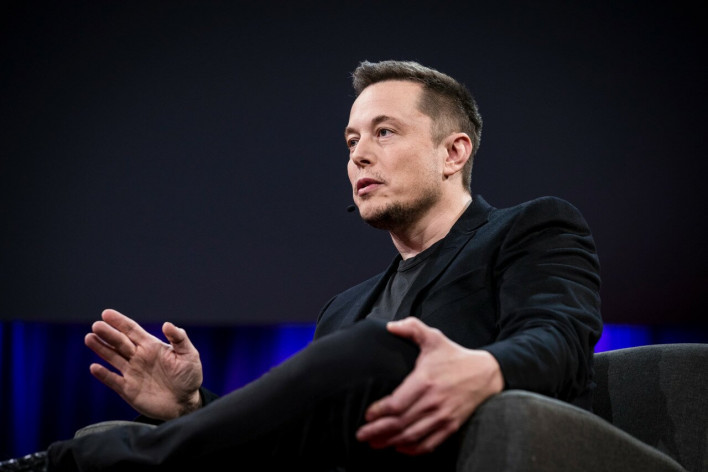
That enthusiasm held something more than mere convenience. It was the sense that AI technology could belong to 'everyone.' Visionaries like Elon Musk went a step further, claiming that AI would explosively boost human productivity and that the surplus would be evenly distributed across society. They envisioned a world where a child in a poor country could receive world-class education, and anyone with an idea could start a business, even without capital. Some were even bolder, suggesting that once productivity exploded, the very concept of money would eventually fade away.
It didn't sound wrong. At times, it actually seemed like AI was working that way. But as 2025 passed and we entered 2026, something began to change—quietly, yet clearly.
At first, it felt like a minor change. OpenAI limited free users' access to GPT-4 to a few times a day. Google reduced the image generation limit for its free Gemini plan from three images to two per day. The notices were always similar: "Temporarily limited due to explosive demand," or "A measure to ensure stable service." These were understandable reasons. What could you do if the servers were struggling? I thought it would get better if I just waited, even if it was a little inconvenient.
But the restrictions were never lifted. Instead, they have been steadily tightening, little by little.

Anthropic blocked external automation tool integration in Claude and lowered peak-time usage limits. xAI’s Grok made image generation exclusive to paid subscribers. Things that were once free are disappearing one by one, replaced by subscription plans. $20 a month, $200 a month, or contact us for enterprise pricing. If you want to use a better model, you have to pay more.
The companies' explanations were partially true. OpenAI is expected to spend about $5 billion in operating costs this year alone. The computational cost of creating a single video is equivalent to processing hundreds of text queries. GPUs consume electricity, and electricity costs money. AI was never a free resource like air. It wasn't that way from the start; companies were simply hiding those costs initially to attract users and capture the market.
That strategy worked, and now the bill is arriving. For us.
Up to this point, it could be read as mere 'business logic'—the idea that there is no such thing as a free lunch. But let’s think about the near future, a world where AI is as much a part of daily life as our smartphones.
One person uses a free plan. They have a set number of tokens they can use per day. By the time they finish organizing a few emails and drafting meeting materials in the morning, they hit their limit before the afternoon. Even if they have more questions, they have to stop. They can start again tomorrow. It’s inconvenient, but there’s no other choice.
Another person has no such restrictions. They talk to AI from the moment they wake up. They organize their daily tasks, summarize documents they need to read, and analyze pending decisions from multiple angles. If they hit a wall, they ask immediately. If they see they are heading in the wrong direction, they correct it instantly. The AI runs alongside them at the speed of their thoughts.
Both live in the same era and use the same AI. But by the end of the day, the difference in what they have produced is significant. That difference accumulates every day. A year passes, then five. At some point, the two are standing in completely different places. And both know that the distance isn't due to a difference in individual ability, but a difference in the tokens they can afford. As paid AI models advance, that gap will only widen—just as the price grows from $20 to $200 a month.

Tokens: the minimum unit for processing information in the AI world. The basic unit of computational resources consumed every time you ask a question and receive an answer.
This word has begun to take on a new meaning. We used to talk about the 'digital divide'—the gap between those who could access the internet and those who could not. That gap was largely narrowed by the spread of smartphones and the expansion of communication infrastructure. But the gap in the AI era is not simply about 'accessibility.' It is a question of how deeply and how freely one can use it. Under the illusion that we are using the same tool, we are actually living in entirely different versions of the future.
Let’s look back at that scene in 2022 that everyone was so excited about. Anyone could access it, there was no cost, and it felt like the world was going to change. That feeling wasn't entirely wrong. AI is indeed changing the world. It’s just that the direction of that change might be heading somewhere a little different than what we imagined.
It is not a utopia where surplus is evenly distributed, but a world where those who possess computational resources move faster and further. It is not a world where the concept of money disappears, but one where a new currency called 'tokens' emerges. And the amount of tokens one possesses becomes a power more potent than any previous asset.
We are standing at the threshold of that world right now.
Is the utopia we expected AI to bring becoming a reality?


Sort by:
Comments :0