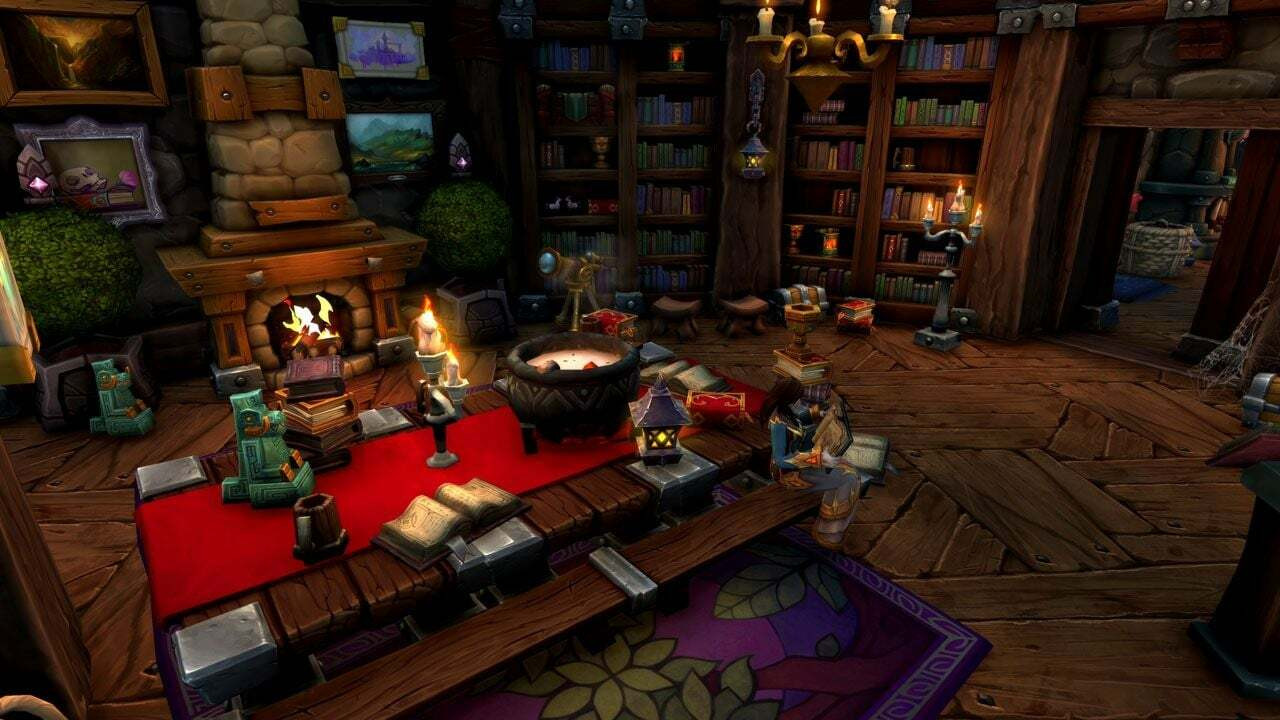
Early housing access for players who pre-purchased the “World of Warcraft: Midnight” expansion begins Dec. 4, 2025. Housing is one of the expansion’s major features, giving players the ability to customize personal homes within World of Warcraft.
Blizzard has held several interviews and briefings on the feature, including another conducted at the end of November ahead of early access. Earlier pre-beta interviews were mostly one-way presentations, but now that many players have experienced the beta, recent discussions have focused on feedback from actual testers.
This interview was conducted online with multiple domestic media outlets in attendance.
Blizzard Senior Artist Jay Hwang (left) and Associate Director Paul Kubit.
Since the alpha test, players have created elaborate builds such as floating structures and large-scale constructions. How did you determine the limits of what players can build in housing?
The development team wanted housing to reflect the player’s fantasy as accurately as possible from the beginning. World of Warcraft supports many character fantasies. Some characters are large, some are small, and some even appear to float within the setting. The team proceeded with development aimed at providing the freedom and tools needed to bring those fantasies to life without major restrictions.
However, housing isn’t entirely unrestricted. Because players share neighborhoods, some limits prevent one home from intruding on another player’s space. For example, a bridge that crosses into another player’s plot is not allowed. Outside of those boundaries, players can build almost anything they imagine. The tools remain largely open, with only minimal rules to prevent conflicts between neighbors.
Some players say it’s difficult to create more refined interiors for Orcs, Tauren and other Horde races because many assets lean rustic. Are more decoration styles planned?
That’s right. The development team is aware of this, and because housing is designed as a long-term feature, its decoration options will continue to grow over time. The current setup is only the starting point.
Decorations also aren’t restricted by faction. Players can freely mix Horde and Alliance items, and many PTR and beta builds already combine styles to create more elegant indoor layouts. The team intended this mix-and-match freedom and plans to maintain it.
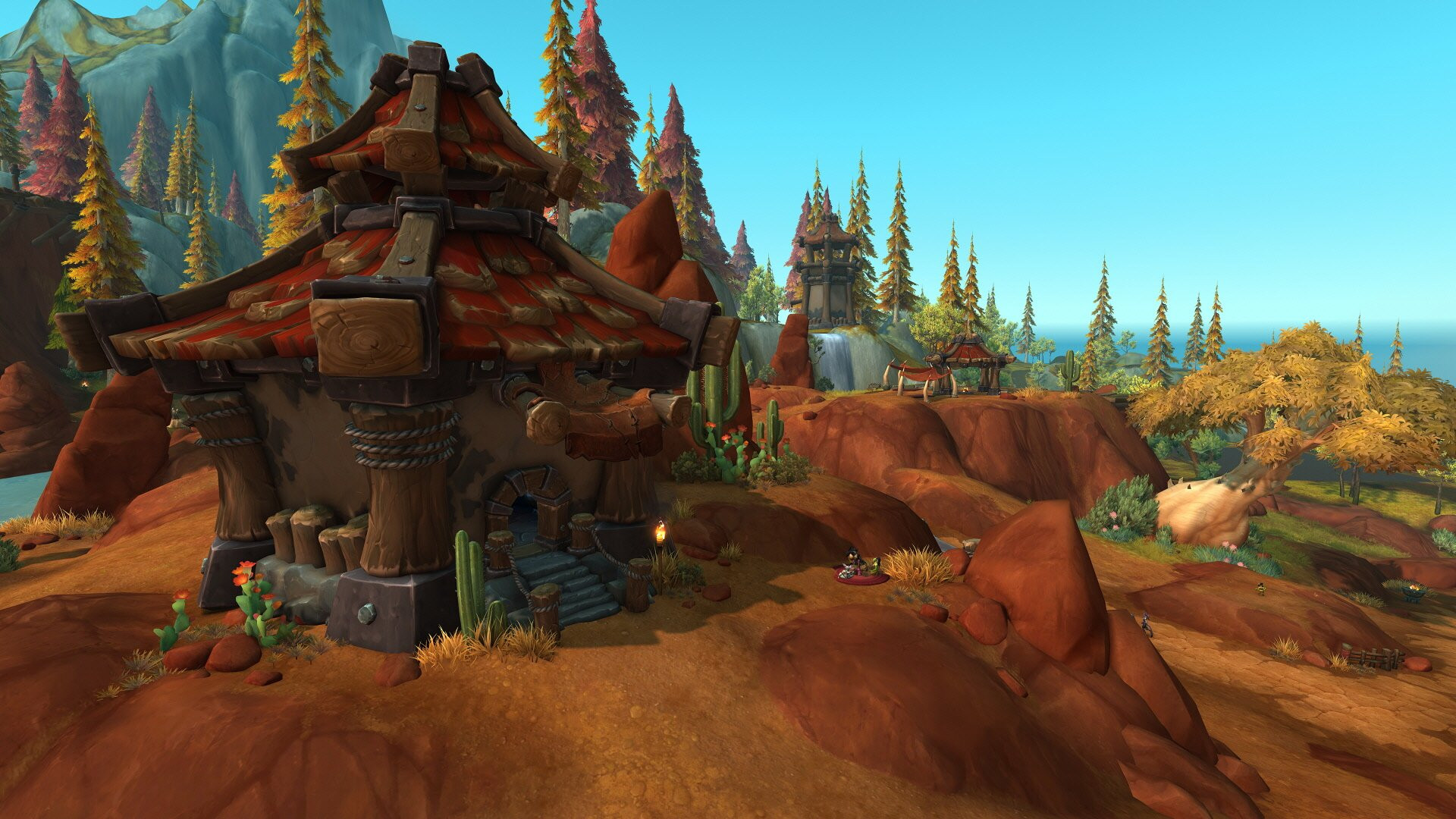
Still, there are many Horde players who aren’t fond of the Horde style.
Will housing items appear in the Trading Post? And are there plans to let players upload their own image files or create pixel art?
There are no current plans to sell housing items in the Trading Post. It’s not impossible, but the Trading Post’s one-selection system could create unnecessary pressure if housing items were included.
Uploading real-world images or external files is also unlikely for now, as the team wants housing to reflect Azeroth’s established art style. However, players are already making pixel-style images by stacking small objects, and that level of creativity will continue to be supported.
Can players recreate styles from past regions, such as the Draenor garrisons?
We don’t rule out the possibility. The team referenced outposts from that era when developing the housing art direction, as those structures still represent iconic faction styles.
However, because technology and art quality differ today, the team did not bring over the old assets directly. As housing expands, reputation and achievement rewards from past regions will be added, and players who wish to may eventually build homes resembling places like the Shadowmoon Valley outpost.
Is there a size difference between personal houses and guild housing? What is the concept of guild housing?
All personal homes are the same size. Guilds don’t receive a single shared house; instead, they control entire neighborhoods. The larger the guild, the more the neighborhood’s size and layout can vary.
While guild housing may expand long-term, the current priority is ensuring each player has an individual space.

More intricate than expected; many areas require attention.
Assigning each player their own instance seems server-heavy. How did you address this?
The housing instance system differs from dungeons and raids. The engineering team created a dedicated system so that when a player rearranges rooms, changes hallways, or moves staircases, it doesn’t significantly burden the server.
The most challenging part was launch day. When hundreds of thousands or even millions of players enter housing at once, the number of objects inside homes becomes a server load issue. Because of this, the initial house layout on day one is intentionally simple—basic walls, some boxes and one or two lights.
Will new housing features or decorations be added each season?
Exactly. Each season adds decor tied to the region featured that season. This is something players can expect consistently.
The team is also considering expansions based on player feedback, including new tools, housing-specific content, housing quests and new gameplay modes.
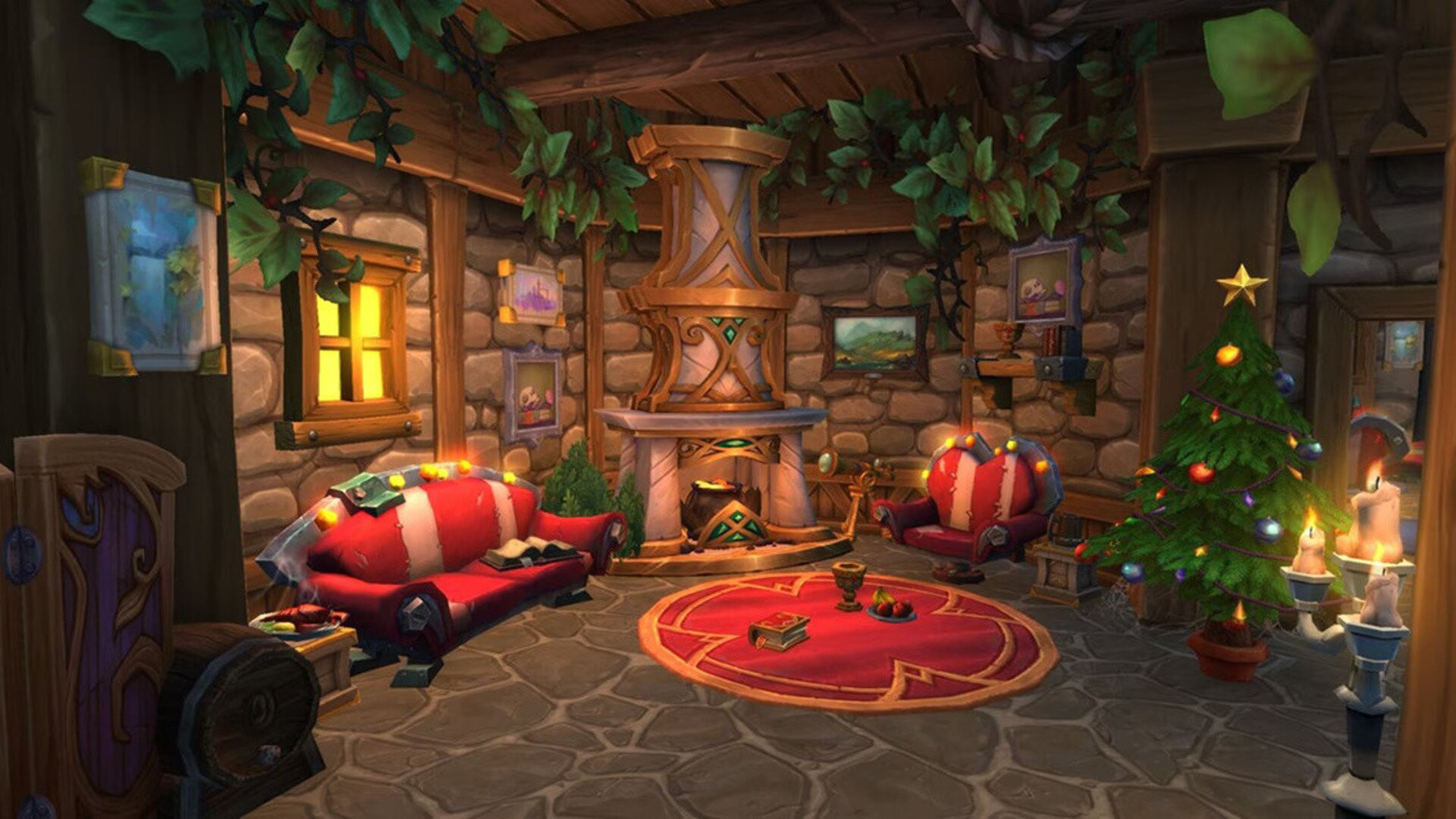
New decorations and content will be added every season.
What kind of content is the Exchange? Is it a monthly group quest?
The Exchange was designed to bring neighborhood cooperation into housing, similar to the sense of community from guild or local group activities. For example, if a player gathers 200 herbs overnight and raises the contribution level, neighbors who log in the next day will naturally feel gratitude and solidarity. That feeling is the goal of the Exchange.
Difficulty also scales based on the number of active players in a neighborhood. Whether there are 50 or 20 participants, the system adjusts automatically so smaller groups can participate without burden.
Mission types change monthly. Some focus on general gameplay—gathering herbs or minerals, digging, or completing fields quests. Others follow cultural or regional themes, such as participating in seasonal activities with Silvermoon blood elves or fighting hozen atop Kukunala during months themed around the Grumbling of Kukunala. The regions and cultures shift each month.
Cities offer many utility effects that keep players visiting them. Is there a reason for players to spend time at home instead?
Housing encourages creativity and community by allowing individuals to decorate spaces that form a village together. But the team wants to avoid a repeat of the garrison era, when players rarely needed to visit cities. Housing should be comfortable, but it shouldn’t replace the game’s social spaces.
For now, the philosophy is to avoid adding overly powerful convenience features. Player feedback will determine which utilities are appropriate and how extensively they should appear.
Can players move if they don’t get along with a neighbor?
It’s possible. Because a house is saved as a single data unit, it transfers exactly as it is when a player relocates. Object placement is preserved in the new plot. Nothing is reset or lost.

If the neighbor is too noisy, you may have to move.
What happens to Exchange missions or community content when neighborhood participation declines?
Difficulty is based on the number of players who actually participated that month, not the total resident count,” the team said. Even if 50 players live in a neighborhood, if only 35 participate, difficulty adjusts to that number. If participation drops sharply over a long period—down to just two or three active players—merging neighborhoods may be considered, as some community features require a minimum population.
Could monster-invasion events occur in housing areas?
At launch, there are no plans for invasion-style events. Housing should feel safe and creative, and destructive content would undermine that. But given how much creativity housing encourages, experimental content is possible in the long term.
Will housing decor rewards be added to existing expansion achievements?
Several decorative rewards were added in Patch 11.0.7, and work will continue to add achievement and renown decorations from older expansions.
What are the long-term plans for housing? How will development be maintained?
Housing is expected to become a long-term pillar of World of Warcraft. The team plans to expand the system based on real player behavior and feedback.
Some features originally unintended have been embraced as “creative uses,” and the team now views those as features. Housing will grow alongside the community.
Do you have any final words for your Korean fans?
Korean players are among the most passionate and active communities. Thank you for your continued interest in housing. We plan to provide more features and creative opportunities, and we hope the experiences and achievements you’ve built over the years inspire new stories in your homes.
This article was translated from the original that appeared on INVEN.