
Asha Sharma, the newly appointed CEO of Microsoft Gaming, marked her 100th day in office today (the 11st) by sharing her achievements and upcoming challenges via Xbox Wire.
CEO Sharma noted that while Xbox has made meaningful progress over the past 100 days, she acknowledged that the company faces realistic hurdles, including declining profitability and hardware supply chain issues. "We have released more updates in the last 100 days than in the entire previous year," she stated, adding that the number of active partners on the Xbox platform is at an all-time high. She also noted that Game Pass has reversed its downward trend, which had persisted for over eight months, and is now back in growth mode.
Expanding communication with the community was also highlighted as a key achievement. As an example, she pointed to the recent launch of 'Player Voice,' a user feedback platform designed to provide a real-time channel for gathering input from players, creators, and developers.
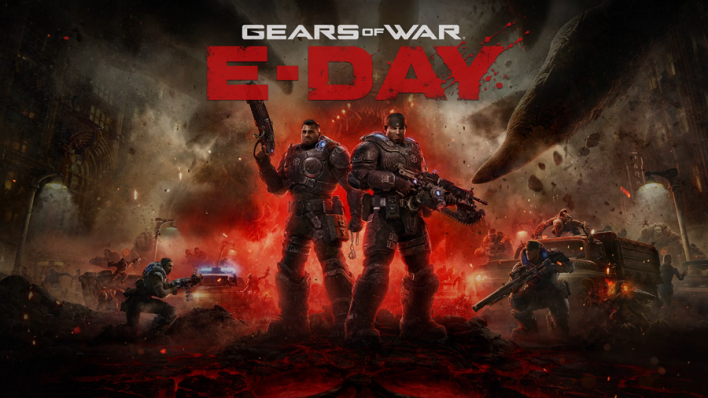
There were also positive signals regarding content. Highlighting the success of the recent Xbox Game Showcase and mentioning upcoming titles like 'Gears of War: E-Day' (slated for 2026) and 'Clockwork Revolution' (2027), she reaffirmed the company's commitment to strengthening its first-party exclusive lineup.
However, the report was not without its challenges. "Now, we must prepare for the next 100 days," she said, outlining the practical difficulties encountered during the business restructuring process.
CEO Sharma noted that while over 1 billion players worldwide enjoy Xbox games annually, the company cannot afford to be complacent. With an abundance of entertainment content, including television, she explained that the primary competition moving forward will not be other gaming platforms, but the users' attention itself.
The financial situation is also difficult. Xbox projects a roughly 3% year-over-year decline in revenue for the current fiscal year. Excluding the impact of the Activision Blizzard King acquisition, annual revenue has actually decreased by about $500 million over the past five years, despite more than $20 billion in investments across content, platforms, and hardware. "This trend is no longer sustainable," she emphasized.
Hardware supply chain issues were also identified as a critical challenge. The cost of console storage components has already quadrupled since last autumn, with further price hikes expected through the 2027 holiday shopping season. Memory prices are following a similar trajectory. "While the entire industry is facing a component crisis, Xbox is being hit harder than others due to decisions made over the past several years," she explained.
She also expressed concerns regarding the content production structure. While Xbox significantly expanded its studio organization to support subscription services, cloud streaming, and multi-platform strategies, this has led to a more complex production system and increased operational burdens. She announced plans to rebalance investments in first-party exclusives, third-party content, and new IP over the next five years.
Technical infrastructure is also slated for improvement. The current Xbox platform is described as having an overly complex architecture with hundreds of dependencies, making rapid response difficult and creating a high reliance on external vendors. Consequently, the company plans to overhaul its tech stack and reorganize internal capabilities, while also considering potential mergers and acquisitions (M&A) to strengthen competitiveness across hardware, PC, mobile, and cloud sectors.
In closing, CEO Sharma stated, "We cannot achieve success by ignoring hard truths," adding, "We will build a stronger Xbox by improving our hardware, content, and services across the board."

Sort by:
Comments :0