Currently in development by Archetype Entertainment, 'EXODUS' is an action RPG combining a vast sci-fi universe with player choice. Industry veterans who worked on 'Dragon Age', 'Star Wars: Knights of the Old Republic', and 'Mass Effect' are participating in its development. Archetype has set a goal to combine world-class storytelling with deep emotional resonance, broad player agency, and modern gameplay into one package.
The game is set on 'Lidon', a planet settled by a human ark ship 200 years ago. Although Lidon was terraformed by ancient Celestials, the technology that maintained its habitable environment has been infected by 'the Rot' and is slowly collapsing. Players take on the role of 'Jun Aslan', heir to legendary Traveler Orion Aslan, and must search for Celestial technology to save their home and loved ones.
'Time Dilation' is the defining feature that sets 'EXODUS' apart from other sci-fi RPGs. The game's universe obeys the theory of relativity, with no faster-than-light travel. While only a few days pass for a Traveler traveling to another star system, years or even decades slip by back home. The choices players make before departing reshape society, technology, and personal relationships in the meantime, leading to unexpected consequences upon their return.
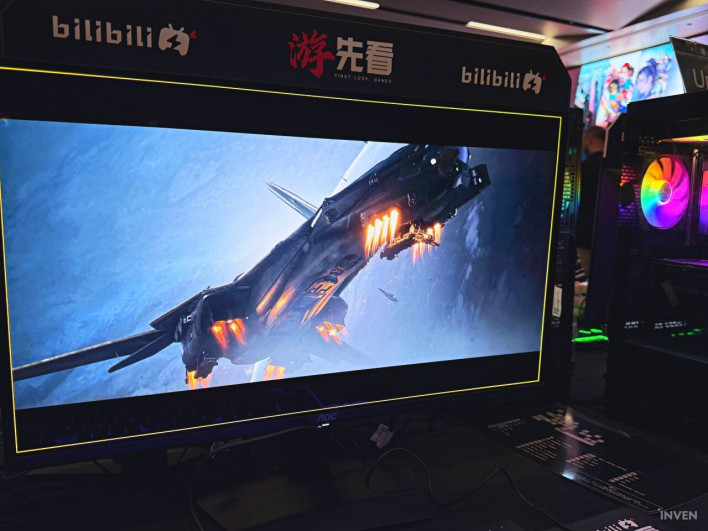
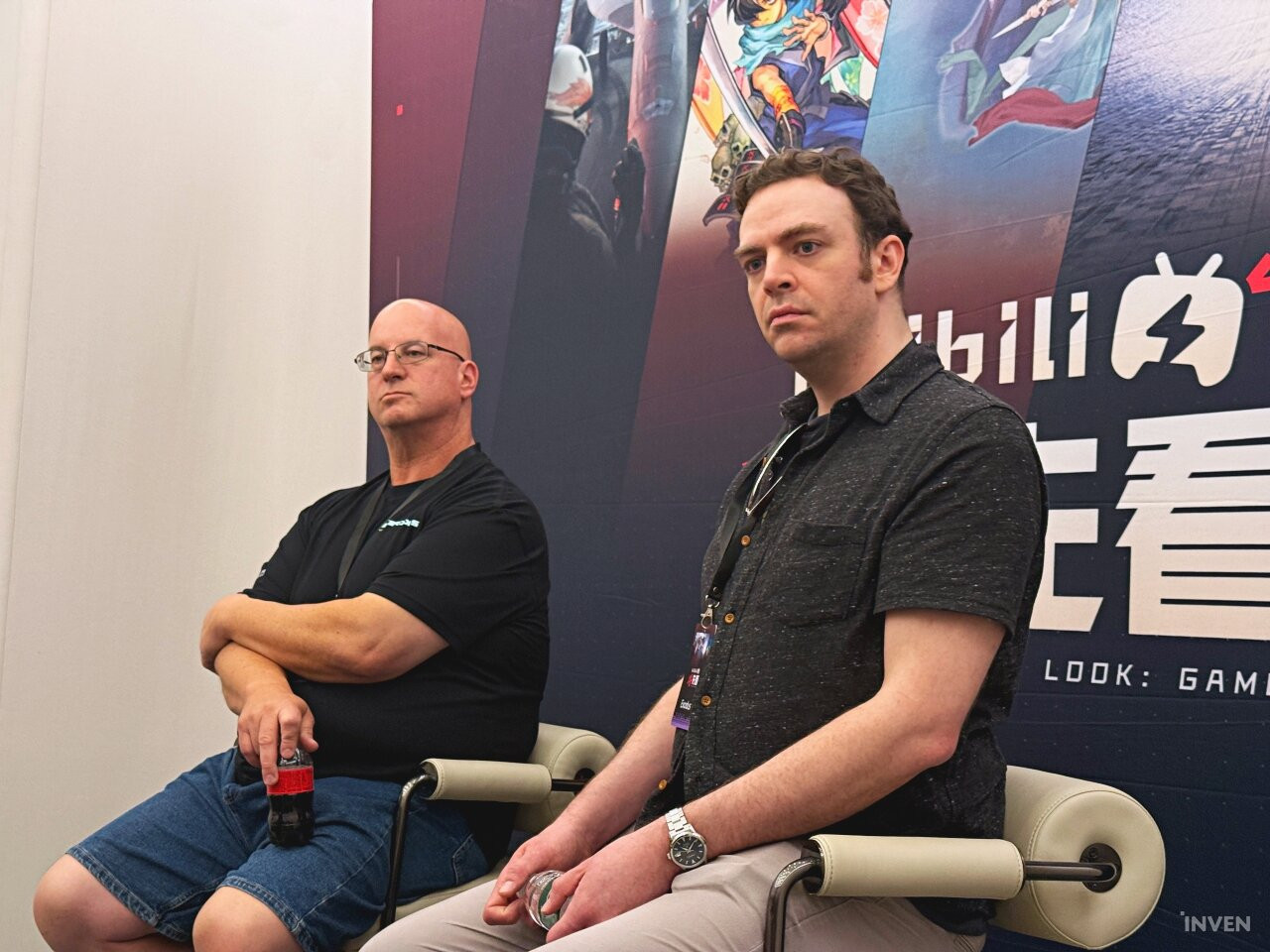
At the Bilibili First Look held on the 2nd, media were able to hands-on demo a section of 'EXODUS', which is currently in development. In the interview that followed, Archetype Entertainment Narrative Director Drew Karpyshyn and Creative Director Jesse Sky spoke about Time Dilation, player choice, the dynasty system, companions, combat, and the future of the world of 'EXODUS'.
How large was the hands-on demo section relative to the full game? I'm also curious about the overall playtime.
Drew: What we showed today is just one of many missions, and even a portion of that mission was cut short for the demo. The final game will feature various types of missions. What you played today was a standard mission within the current star system, not an 'Exodus' mission where you directly experience Time Dilation.
You prepare for larger Exodus missions by completing these standard missions. In addition, there is an RPG hub where you can enjoy optional content. While we haven't officially announced the overall playtime yet, it will be on the scale of tens of hours.
How does 'Time Dilation', the core mechanic of the game, impact actual gameplay?
Drew: It can be divided into two main aspects. First, in various missions, you acquire powerful Celestial artifacts called 'Remnants'. You can choose how to utilize them for your civilization, and when you return after embarking on an Exodus, you will see the planet dramatically transformed based on those decisions.
Jesse: There are also narrative shifts. While the player is away, characters age and live out their lives. When you return, your relationships with them may no longer be the same. While I can't go into specific details due to spoilers, Time Dilation is less of a simple gameplay gimmick and more of a core narrative pillar structuring the entire story.
It's a bit hard to grasp how time passes every time the player travels. Is the game progression quite linear in structure? How much freedom is given to the player?
Drew: The mission you experienced in this demo uses a structure we call 'Open Linear'. You have an objective to follow, but there are also areas along the way where you can explore your surroundings.
By playing through these standard missions multiple times, you secure companions and resources, prepare personnel and ships, and then embark on larger-scale 'Exodus' missions. Upon returning from an Exodus, the consequences of your choices manifest, opening up new content or causing existing content to disappear depending on what decisions you made. As a result, you cannot experience all content in a single playthrough.
Jesse: Player freedom manifests less in simply where you travel and more in who you build relationships with and what choices you make. There is also a substantial amount of optional content prepared.
Are there romance options as well? Can you date Salt?
Drew: Of course, there are plenty of romance options. However, just like in real life, things don't always go the way you want. If you don't make the right choices, a relationship might end differently than expected.
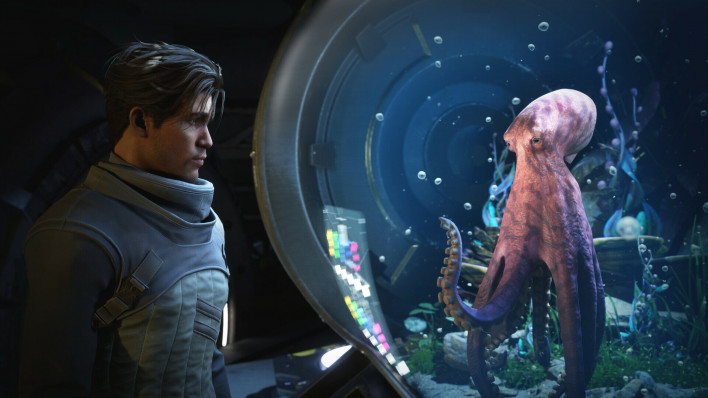
As for Salt... no. Salt has preferences too. From Salt's perspective, humans don't have enough arms.
Do affinity or relationships with companions actually affect the main story and ending?
Drew: To an extent, yes. Talking about it in too much detail would spoil things, but the relationships you build with companions impact the outcomes in the late game. Depending on the choices you make, the companions who stand beside you at the end can change.
Small choices also magnify over time. When returning from an Exodus, past minor decisions can sometimes result in massively amplified consequences due to the long time you spent away.
Where can players primarily observe the changes caused by the passage of time?
Drew: You will mainly see them in the major city that serves as the player's hub. As time passes, the appearance of the city changes, new quests appear, or existing quests vanish. Certain characters may no longer even be around.
Relationships with companions are also affected by the decisions made along the way. Transforming these hub areas is one of the key ways we showcase Time Dilation.
What exactly is a 'Traveler', the title bestowed upon the protagonist?
Drew: A Traveler is a heroic figure who voyages to other worlds to retrieve technology, using it to develop their home planet. The story of this game unfolds over years and decades.
Even if only a few years pass for a Traveler, decades—or in some cases, nearly a century—can pass back home. That is why it's crucial not just to go on expeditions, but to build a dynasty that will endure while you are away. You must rally companions and factions to build a foundation that can carry out your plans even in your absence.
In that case, I take it not just anyone can embark on an Exodus.
Jesse: For the most part, only Travelers can do so. An Exodus requires highly complex preparations and carries massive consequences. If an ordinary person were to participate, they would effectively have to abandon their life and family. Therefore, only those who undergo rigorous training and are tasked with the mission actually depart.
Why must Jun Aslan take such risks to set off on an Exodus? What is the current situation on Lidon?
Drew: Much of Lidon relies on Celestial technology, but present-day humanity does not fully understand it. Furthermore, the technology keeping the planet habitable has begun to crumble after being infected by the Rot. A Traveler is someone capable of searching for technology on other worlds and bringing it back to restore this infrastructure.
Jesse: Lidon itself is also engulfed in civil war. Jun's father, Orion, was a Traveler from the previous generation who never returned from an Exodus. Jun's half-brother, Gideon, who departed with Orion, returned alone, seized power, and became a tyrant. Jun lives in a city where forces opposing Gideon remain.
Are political and diplomatic relations between different species or factions important in the game as well?
Jesse: Yes. To grow your dynasty, you must establish relationships with various factions both on and off Lidon. You can seek out factions on other worlds for help or alliances, and among them are not only humans, but other species as well.
Drew: While some of this is explored in more depth through optional content, relationships with different factions play an important role in the main story itself.
Character names like Suliman Tenjin carry a distinct regional or religious flavor. Was this intentional?
Drew: We didn't intend to map them directly to any single culture or religion. After humanity left Earth and dispersed across multiple ark ships, Earth's diverse cultures blended in different ways.
Suliman is also a character inspired by various cultures and philosophies. In particular, he was raised by a group known as the 'Parliament of Ravens' and has a deep connection to the Awakened. While you might recognize familiar cultural elements, they are not direct copies of any specific modern-day Earth culture or religion.
Can players set off on Exodus missions freely whenever they want?
Drew: Not quite. An Exodus is a major event requiring extensive preparation, and generally occurs at the conclusion of a chapter. You can think of it as making sufficient preparations while progressing through that section's main story before embarking on an Exodus.
What are the 'Paladin' and 'Immortal' systems introduced at the end of the demo?

Jesse: You can think of it as EXODUS's unique moral alignment system. Paladin represents leaning into human virtues, while Immortal represents embracing Celestial characteristics.
However, you don't have to choose strictly between one or the other. Players can invest points into both paths. It influences the outcome of certain choices, but it's also connected to combat skills. Deep within the skill trees, there are abilities that require your Paladin or Immortal rating to reach a certain threshold to unlock.
Is the dynasty system separate from the Paladin and Immortal alignments?
Jesse: It is separate. Your dynasty is a very crucial element in the game. Most of the major choices you make during gameplay influence what kind of dynasty you build in the long run.
Which factions or characters you ally with, who you antagonize, and what resources you gain or lose all depend on your choices. The dynasty you build in this way significantly impacts the late game and ending.
The weapon variety was limited in the demo. Will the full game feature more weapons and builds?
Jesse: Yes. It's too early to give exact numbers, but there will be significantly more weapons, powers, and mods.
Drew: This demo provided a pre-configured character to showcase a mid-game segment. In the actual game, you can build distinct playstyles, such as direct combat, stealth, or heavy reliance on Celestial technology. You will mix and match weapons, mods, and skills to forge your own fighting style.
Is it a rigid class system where your role is fixed from the start, like Mass Effect's Engineer or Sentinel?
Drew: No. When starting the game, you select an initial skill package, which sets your starting direction. After that, however, you are free to pick abilities and experiment. It is not a strictly locked class system.
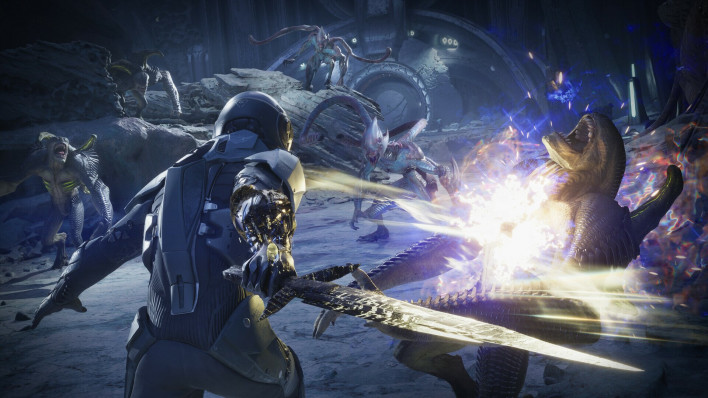
How important are elemental attacks and companion combos in combat?
Jesse: They are very important. Understanding specific combinations lets you handle combat much more effectively, and combining player skills with companion abilities is especially key.
Some status effects are also tied to the Paladin and Immortal systems. For instance, the skills or effects available to you will vary depending on moral choices made during play.
Drew: Since this demo started mid-game, not all systems were explained via tutorials, but Jun also possesses an ability to assess the tactical situation before combat starts. Scanning enemies to gather intel prior to engaging and building tactics around that will offer distinct advantages.
Are there areas you cannot explore or content you miss out on if you don't bring specific companions?
Drew: Certain missions may require specific companions, while others offer complete freedom of choice. However, we don't lock off exploration zones or major rewards solely because you didn't bring a specific companion.
Instead, who you bring creates narrative differences, such as unique reactions to situations or new dialogue lines.
What specific role do companions play in combat? In the demo, they felt a bit like skill triggers supporting the protagonist.
Jesse: As the game is still in development, this is an area we are continuously tuning. Fundamentally, we place great emphasis on companions creating combo opportunities for the player.
Drew: To use a basketball analogy, it's like a companion throwing an alley-oop pass for the player to slam dunk. The companion sets up the situation, and the player executes the powerful finish. We are still refining their balance and AI behavior.
Additionally, companions each have their own abilities and skill trees, which players can develop.
The Awakened bear encountered as a boss possessed human-level intelligence yet acted quite beastly. Do Awakened think like humans while retaining animal instincts?
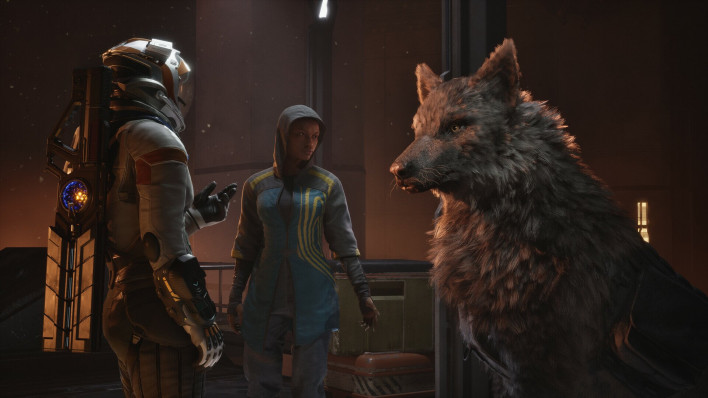
Drew: While Awakened possess intelligence, they fundamentally retain the instincts and traits of the animals they were. The bear's rage and actions are quite primal, but it doesn't move merely like a wild animal. If the player climbs to high ground, it exhibits smarter behavior, such as throwing objects to knock them down.
Jesse: It varies from animal to animal. For example, Salt, who is an octopus, pilots a mech suit and fights as a sniper. Some Awakened hold on more strongly to their animal nature, while others far more actively embrace the ways of human society.
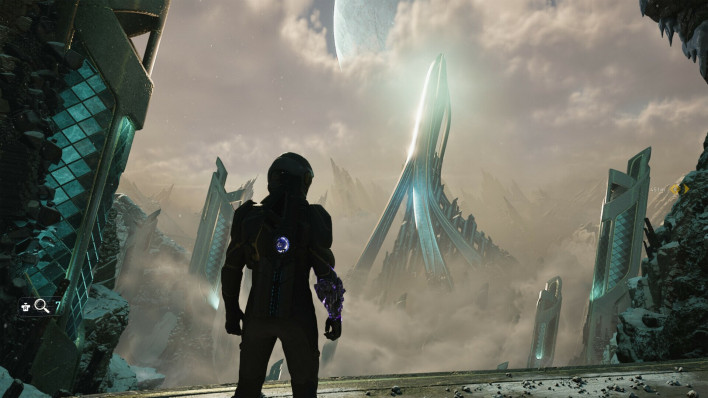
Do Awakened insects exist? Also, how are they treated in human society?
Drew: In the lore, Awakened insects do exist, but they won't appear in this game. In the main game, you will mostly encounter relatively large mammalian Awakened. Cities even feature districts where they live together.
Legally, they are integrated into human society and hold equal rights, but in reality, they face prejudice and discrimination. Because most public infrastructure was designed around humans, they also struggle to adapt physically.
Can players choose between male and female for Jun Aslan? Does the story change based on this choice?
Jesse: You can choose a male or female Jun. It isn't a choice between two distinct protagonists, but rather selecting the gender of the same character, Jun. It's essentially closer to character customization, and the overall flow of the game does not change significantly.
Is 'EXODUS' a standalone title, or are you envisioning a long-term franchise?
Jesse: We are very excited about the future and view 'EXODUS' as a new franchise. Projects expanding the universe outside the game are also underway.
However, the story of this game itself has a clear conclusion. While we can't talk about what form future follow-ups might take right now, it is a grand narrative spanning vast periods of time, with plenty of possibilities left to explore.
In that case, is there a possibility that choices made in this game will carry over into future sequels?
Drew: That is definitely something on our minds. We can't officially state a direction just yet. However, choice and player agency are crucial elements of the experience we want to build. We believe there are many exciting possibilities to leverage going forward.
In 'Mass Effect', various alien species formed an interconnected galactic society. Do the civilizations in 'EXODUS' share a similar relationship?
Drew: In 'EXODUS', each civilization is far more isolated due to Time Dilation. Traveling to distant star systems means communications alone can take years, so you might not even know what is happening there.
As a result, each civilization, Celestial society, and world can have a relatively independent story. Being more isolated than in many other sci-fi universes allows each visited world to possess a unique, self-contained narrative.

Since long periods pass on previously visited planets every time you set off on an Exodus, can players revisit them to see how they've changed?
Drew: You will see the results of these changes primarily in your hub city. While player choices do impact other worlds and you can observe some of those outcomes, the game isn't structured around revisiting and physically re-exploring every planet you've previously visited.
That's because taking off for another planet again would consume another few decades or more.
While many sci-fi works express universe diversity through various alien species, 'EXODUS' stands out with its Awakened animals. What was the rationale behind this setting?
Drew: When humanity left Earth, they didn't depart alone—they brought a wide variety of Earth's creatures with them. Animals are companions that came from Earth alongside humans, serving as reminders of home. Thus, the Awakened serve as a starting point that feels both alien and familiar to the player.
Of course, Awakened are not the only beings in the game. There are beings called 'Changelings', and you will meet Celestials as well. There are even Celestial companions. The game carries a major theme of 'evolution and change', and the Awakened are beings that transformed from ordinary animals into what they are now.
In the early game, we show many of the relatively familiar Awakened, but as the player grows into a more powerful Traveler, you will encounter increasingly stranger and more bizarre beings and worlds.
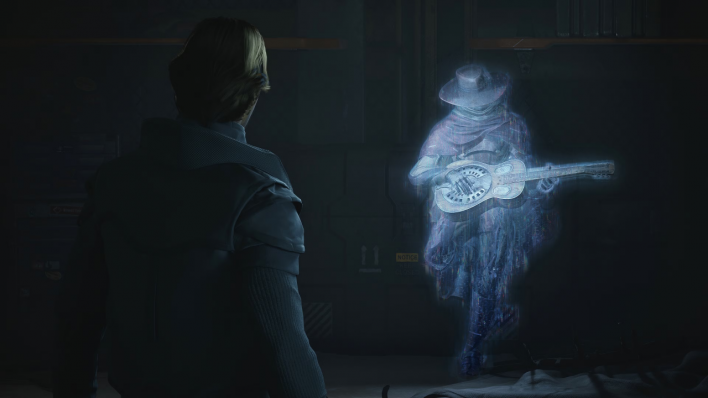
Was the character C.C. Orlev created after casting Matthew McConaughey first? Or was the character designed first, leading you to think of Matthew McConaughey?
Drew: Matthew McConaughey is originally from Austin, Texas, where our studio is located. His ongoing connection to the area served as one bond. Furthermore, his film 'Interstellar' is a landmark work explaining the concept of time dilation.
After pitching the project to him and securing his participation, we began figuring out how best to utilize him. In the end, the character C.C. was co-created in collaboration with Matthew.
Who is the ultimate main antagonist players face in the game?
Drew: In the early game, the primary adversary is Jun's half-brother. However, 'EXODUS' follows a key trajectory of growth and escalation. As the player gains power and the story progresses, you will face larger, existential threats.
I can't disclose specific details as they would be spoilers, but starting from a familiar scenario and continually expanding in much grander, unexpected directions is something we place great importance on in this game.

Sort by:
Comments :0