For years, a knife in CS2 was one of the highest-priced and most desirable items on the market, while even basic models cost far more than most weapon skins. After the October 2025 trade-up update, that barrier collapsed. The cheapest knife CS2 players can buy in 2026 now costs only a fraction of comparable pre-crash levels, while simple finishes on less popular models have pushed the entry point to a historic low. The question of how much a knife costs now has a very different answer from the one it had eighteen months ago. The lower end of the category has become accessible to a much wider group of players.
What Changed on October 22, 2025
Five Reds Could Now Produce a Gold
On October 22, Valve extended Trade Up Contracts to Covert skins. Five red skins could now produce one knife or pair of gloves from one of the collections represented in the contract. StatTrak inputs followed the same rule, with five StatTrak reds producing a StatTrak knife. Players immediately started buying cheap reds and feeding them into contracts, creating a direct route to Gold items that had previously entered circulation mainly through cases.
Knives Fell While Reds Became Trade-Up Fuel
The crafting wave increased knife supply and hit mid-tier listings hardest. Many knives and gloves fell by roughly 20 to 50 percent, while some items briefly lost 70 percent or more during the initial selloff. At the same time, eligible reds became trade-up fuel. The MP9 | Starlight Protector climbed from around $3 to $65 because players chased Butterfly Knife outputs from the Dreams & Nightmares collection. The estimated market value of CS2 skins fell by around $1.75 billion within days. For craftable knives, the cost of five eligible reds became the main price floor, reducing the role of case odds in common models and finishes.
Where the Entry Floor Sits in 2026
Entry-level knives now trade far below pre-patch levels. Four basic finishes show the new market floor:
- Safari Mesh: Cheaper models moved from around $100 to $130 before the crash to roughly $40 to $60.
- Boreal Forest: Entry listings fell from about $100 to $130 to around $40 to $65.
- Scorched: Basic versions dropped from roughly $90 to $120 to about $40 to $65.
- Forest DDPAT: Cheaper models declined from around $80 to $110 to roughly $40 to $60.
These finishes are now more affordable than at any earlier point in the CS2 market. The cost of five eligible Covert skins creates the effective floor, and listings rarely stay below it while the inputs cost more. Entry-level blades now start at roughly the cost of a mid-tier rifle skin. At this level, buyers mainly pay for the knife model, pull-out animation, and a Gold item in the loadout. The finish adds little collector value without an exceptional float or pattern.
Which Knives Held Their Value
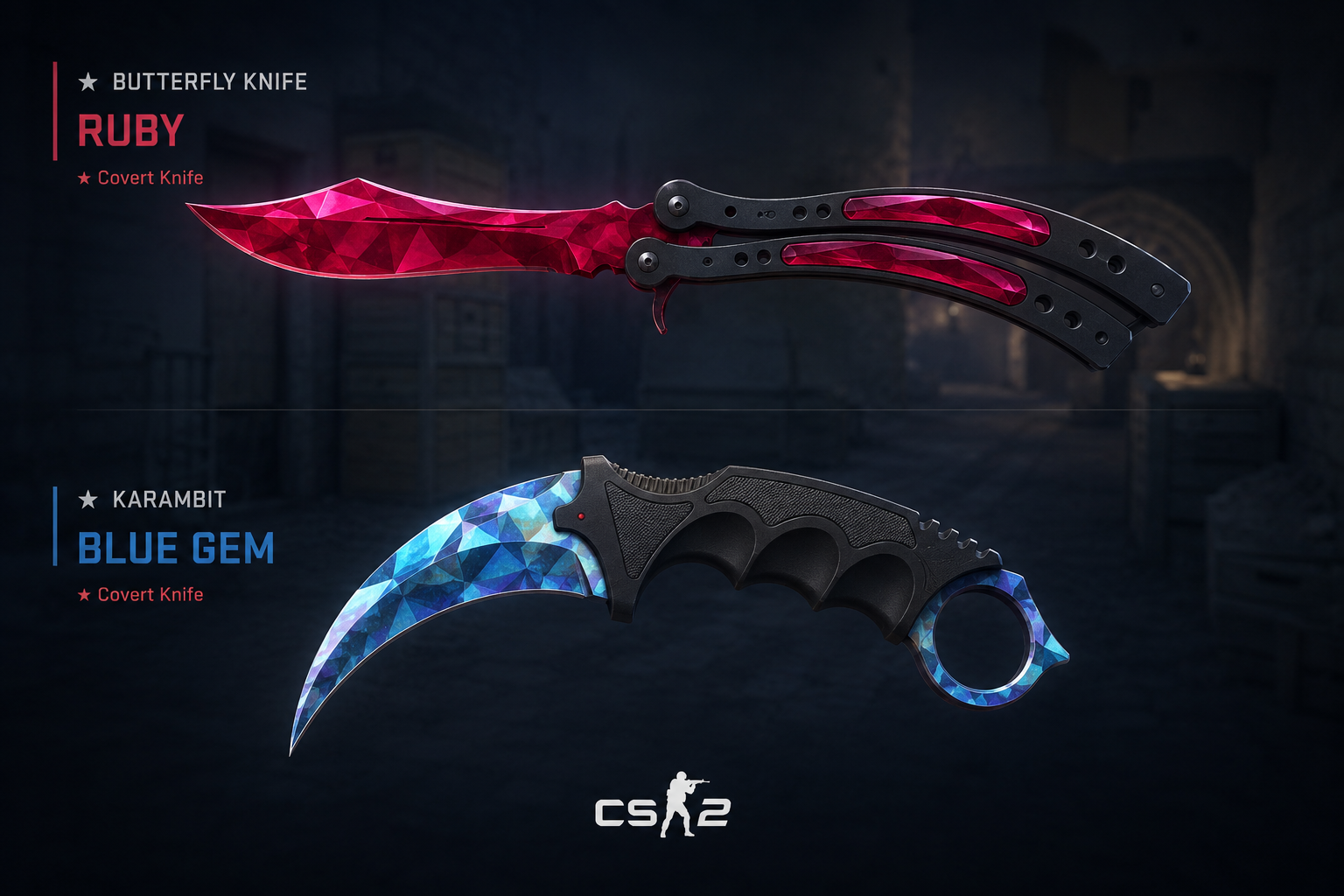
The crash didn't hit every knife in the same way. Common finishes and standard pattern seeds took most of the hit, while rare examples held their value noticeably better than the rest of the market. Case Hardened Blue Gem patterns, Doppler Sapphire and Ruby phases, Gamma Doppler Emeralds, Crimson Web knives with centered or multiple webs, and ultra-low-float versions of iconic finishes remained in a separate collector segment. A trade-up can add more knives from a collection, but it can't target a specific pattern index, Doppler phase, web placement, or exact float. Those properties are rolled when the item is created, so the supply of standard knives increased much faster than the number of top-pattern and low-float examples. More ordinary knives entered circulation, while near-unique combinations of model, finish, pattern, and float stayed rare and retained a larger share of their pre-crash value.
How Knife Pricing Works in 2026
By spring 2026, knife prices no longer moved together. Common and mid-tier knives followed the prices of eligible reds and broader activity across the CS2 skin market, while rare pattern and float combinations continued to depend on collector demand. The common knife market also reacted faster to every change. When eligible reds became cheaper, the floor for craftable knives moved lower, and sellers reduced listings for basic finishes faster than for top-pattern and low-float knives. Between April 12 and June 29, the median tracked CS2 item lost around 9.1%, showing that prices were still falling months after the October patch. Mid-tier knives took another hit because more examples had entered circulation while collector demand remained concentrated on rarer versions. Their prices moved with both eligible reds and the wider decline across CS2 skins.
The Next Patch Could Move the Floor Again
October 2025 showed how quickly Valve can rewrite knife pricing with one update. The market may look calmer now, yet its rules are still controlled by patch notes. A change to eligible reds, Gold outputs, or case drop pools could trigger another round of repricing before traders have time to adjust. Knives survived the first major shake-up, and the next one may start with only a few lines from Valve.
-
 Guest Reporter
Sort by:
Comments :0