On the 17th (local time), Epic Games officially announced its next-generation engine, 'Unreal Engine 6,' and unveiled its technical details at UNREAL FEST 2026, held at McCormick Place in Chicago.
While previous Unreal Engine iterations have introduced various innovative technologies with each version number, this release feels different. Typically, the focus is on graphical advancements that provide visual proof of the engine's evolution, but this time, the conversation began with a fundamental shift in the engine's core architecture.
Indeed, the Unreal Engine 6 announcement introduced a series of profound changes that are difficult to fully grasp, such as the new programming language 'Verse' becoming the core replacement for C++, and the integration of Unreal Engine with the Unreal Editor for Fortnite (UEFN) to enable a cross-game economy. Meanwhile, the keynote concluded with various proposals, including updates to version 5.8 for development optimization and strategies to overcome the current industry crisis.
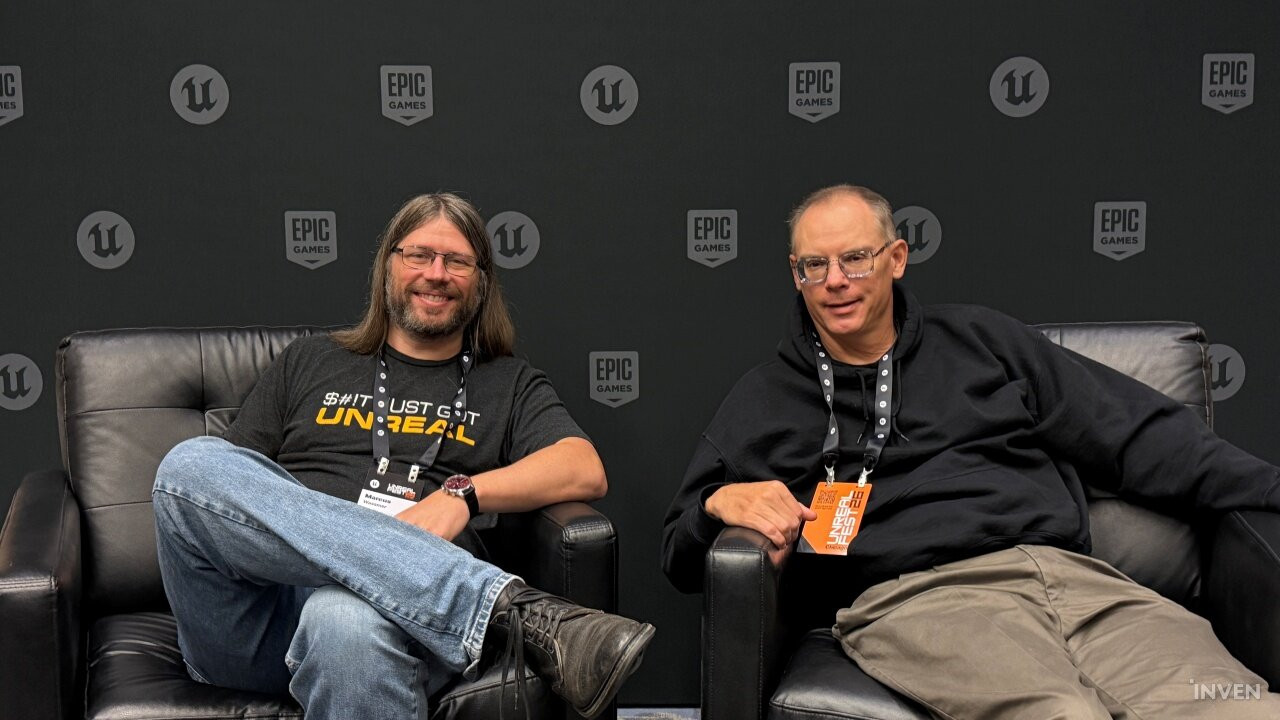
With Unreal Engine 6 currently in development for an early access release in late 2027, we sat down with Epic Games CEO Tim Sweeney and EVP of Development Marcus Wassmer at UNREAL FEST 2026 to discuss the vision behind this project in greater detail.
Although Unreal Engine 6 has been unveiled, we are still in the Unreal Engine 5 era. What were the primary issues you aimed to address in version 5.8, and what are the key features to watch for?
Marcus Wassmer = The core goal of Unreal Engine 5.8 was to bring all features to a 'production-ready' state, ensuring they can be applied directly to actual planning and release phases, while securing overall stability. We received significant feedback from the developer community stating, "The features are great, but we want better optimization for actual performance." Consequently, we dedicated our efforts to reducing frame drops and stuttering.
As announced at State of Unreal, we focused on drastically reducing the number of shaders a game calls by default. To achieve this, we applied superior shader deduplication technology and successfully suppressed the persistent 'PSO (Pipeline State Object) hitch' phenomenon.
Based on initial metrics, we are confident that version 5.8 will be the most stable Unreal Engine release to date. Furthermore, numerous features that were previously in beta are now transitioning to production. A prime example is 'IRIS,' which works with the existing replication system to support more powerful multiplayer experiences.
IRIS has already been validated through long-term use in numerous live games. It is now ready to be implemented in projects without any constraints or exceptions. We have also enhanced other core features, such as 'MegaLights,' our large-scale lighting technology. This is the core timeline for the 5.8 update, which is also packed with other exciting optimizations.
It certainly feels like this State of Unreal prioritized rebuilding the engine's foundation over graphical innovation. You specifically mentioned the ultimate integration of Unreal Engine and UEFN; I am curious how the next-generation development paradigm will shift.
Tim Sweeney = There will be three major paradigm shifts. First is the standardization of gameplay logic based on the next-generation scripting language 'Verse' and the construction of a unified engine API set. This will make content porting between different projects easier than ever. We want to ensure perfect compatibility so that a developer can take a fully realized gameplay object, asset, or subsystem library created by another developer and drop it into their own project without any errors. We expect this to maximize production efficiency across the entire development industry.
Second is the introduction of an innovative programming and networking model called 'Software Transactional Memory (STM).' We believe this will completely break the scalability limits of large-scale simulations. While Fortnite Battle Royale currently accommodates 100 players per session, we aim to create an environment that can host hundreds, thousands, or even millions of concurrent players in a single world without requiring developers to learn complex distributed server programming architectures. The key is to build these massive worlds while maintaining a simple yet powerful programming model.
While existing MMOs have used complex, error-prone network programming techniques to create such massive worlds, our goal is to democratize this high-level technology so that anyone can use it intuitively.
The third shift is the transition to global standard-based file formats and open protocols. We believe this will dramatically increase interoperability between different game engines and individual components. Gameplay systems and in-game economies will be unified, and we believe this will realize a 'cross-game economy' system where, if a developer chooses, items and assets purchased in Game A can be automatically linked and used in Game B without friction.
Epic Games has long emphasized an open ecosystem without a ruler, rather than the familiar proprietary model. Do you believe this alliance of equals will be a practical solution against the tech platform monopolies that are becoming increasingly powerful?
Tim Sweeney = Yes. An open ecosystem will provide overwhelming value to users. If a character skin or outfit purchased once can be used in every game without platform boundaries, the value of digital assets will multiply dozens of times over. I believe many companies in the industry will agree with this value and be willing to cooperate to build this ecosystem.
To add, I am not disparaging other business models. To be honest, even the current Fortnite is somewhat of a closed ecosystem. In Fortnite, creators must go through Epic Games' central review system to publish content.
In other words, until now, every company has simply done its best within the technical limitations of the previous generation. However, next-generation technology—Unreal Engine 6—will overcome these limits. We expect that by simply launching the Fortnite launcher, users will be able to expand into countless independent virtual worlds, and each company providing content will operate its services independently. Ultimately, we aim for an era where independent businesses can thrive, free from a structure where a single monopoly controls what is created or extracts revenue in the form of fees.
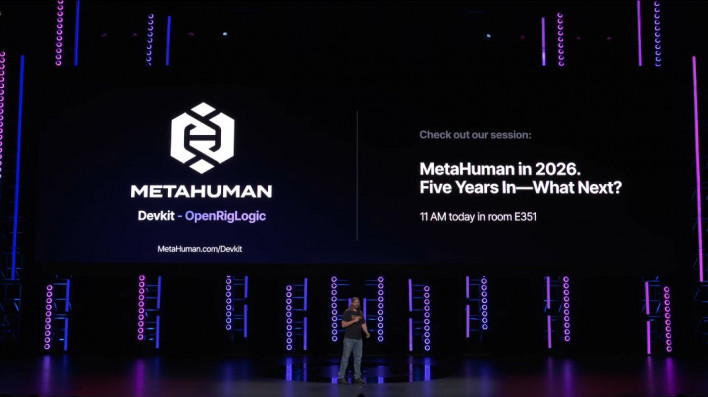
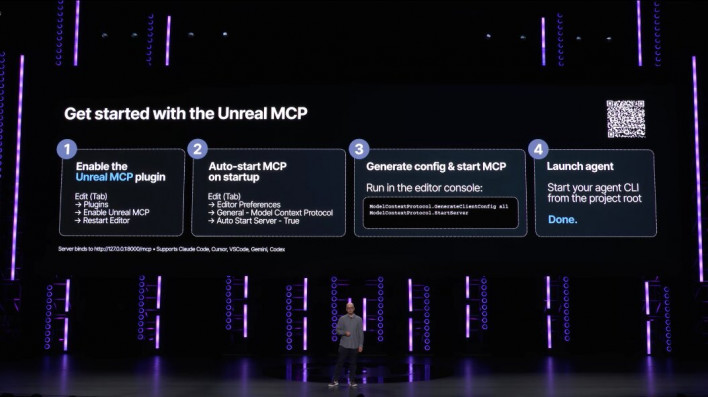
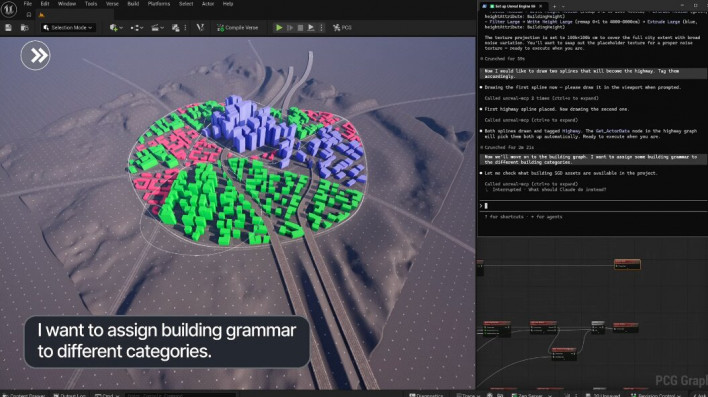
Epic Games was quite conservative about AI in the past, but it feels like you have embraced it very rapidly over the last year. What is your current internal stance on AI, and how will you utilize it within Unreal Engine?
Marcus Wassmer = That is true. However, it is also because the pace of AI development over the past year has been truly astonishing. For example, as recently as last November, AI-based source code generation tools were somewhat lacking in quality for practical use, but now they have become surprisingly sophisticated.
Our premise is to place AI in the right places as a tool that dramatically increases productivity, while thoroughly respecting and not compromising the 'creator's unique intent.' If AI-generated code is stable and performs well, isn't that a win-win for everyone in terms of shortening the development process.
Tim Sweeney = As Marcus said, we are approaching it as a tool. If a developer can input prompts in natural language into the engine to build something one-stop, rather than manually coding and creating countless resources, wouldn't that be a fundamental innovation in the development paradigm? Pipelines and workflows will be dramatically improved, and I believe the value and productivity of technical artists and programmers will increase several times over.
You mentioned that Blueprints and Actors will be used in the early stages of Unreal Engine 6 but will not be used in the future. Are you preparing anything to minimize friction in the development pipeline during this transition?
Marcus Wassmer = That is a very important point. Our flagship title, Fortnite, is itself intertwined with hundreds of thousands of Blueprint structures. This means we have to be the first to experience this massive transition process ourselves.
Therefore, we are developing our own migration tools to safely move the massive live service that is Fortnite to the new UE6 framework, and we plan to package these tools and provide them free of charge to the global community and development studios. The core result will be the 'Blueprint-to-Verse automatic conversion tool.'
Also, as the engine's structural architecture is changing completely, we are preparing a wide range of automated helper programs to help studios safely refactor their code.
At the end of State of Unreal, you mentioned the crisis of AAA games collapsing one after another. In this situation, how much do you think reducing technical friction at the engine level will practically help the current industry situation?
Tim Sweeney = The recession and crisis currently facing the global game industry are intertwined with many complex factors. However, I believe that providing sophisticated engine tools and a close collaboration infrastructure for developers can be the decisive key to overcoming this crisis.
The biggest cause of the current crisis is that game production periods have become too long, and development costs have soared to uncontrollable levels. In particular, labor and infrastructure costs in Western markets, including the U.S., are enormous. If it costs $100 million to make a single AAA game, but the revenue floor expected in the market is only $50 million, no game company can continue this risky investment under a capitalist structure. The recent downfall and closure of many blockbusters we have witnessed are tragic results of excessive production budgets that did not consider market size.
And the moment game companies realize this method is no longer sustainable, they will stop reckless budget spending. This is where engine technological innovation can be the relief pitcher. What if we improve tool performance to increase development efficiency by just three times for the same quality game? The production cost of a project that used to cost $100 million would plummet to $33 million. Then, even if the market only generates $50 million in revenue, the structure changes to one that breaks even and leaves a clear net profit. Therefore, productivity improvement is a survival requirement for the business of game development.
Furthermore, this is ultimately linked to the essential 'quality improvement' of games. Even if a game company invests the same $100 million budget, in an ecosystem with reduced technical friction, they can create results with a density and level of perfection that cannot be compared to the previous generation. In the future, cost efficiency and breaking the limits of absolute quality will be the most intense battlefield for studios to survive in the market.
However, there is another unique barrier in the multiplayer live game ecosystem. Users tend to enjoy games with their actual friend groups, and it is nearly impossible to move that entire group of friends from an existing game to a completely new one. Only the massive mega-hits that appear once every few years succeed in this community migration. This is the decisive reason why many multiplayer new releases have failed one after another recently. Users have already formed solid human networks in Fortnite, Call of Duty, Counter-Strike, and Apex Legends; there is no reason to leave friends behind and go to a new game alone.
That is why the 'cross-game social link' feature we are trying to implement through UE6 will have tremendous business value. Users will be able to form parties via voice chatting with friends in Game B while connected to Game A, and encourage them to try a new game. If asset ownership is linked between games, rare items acquired in other games can be brought to the new game for verification, providing users with a strong economic motive and justification to play the new game. It becomes a platform-level merit beyond the realm of simple fun.
The social and economic interconnection we are designing as the core architecture of Unreal Engine 6 will not only help next-generation developers develop games much more efficiently and sophisticatedly, but will ultimately lock users in strongly, dramatically increasing the probability of global success.
The industry desperately needs this change now. Statistically, the pure gameplay time of adults over 20 is decreasing every year, while the time spent on new media video platforms like TikTok and YouTube is exploding. In other words, the current game industry is losing in a macroscopic competition with other forms of entertainment media. We must evolve one step further to win this massive media war, and I have no doubt that the next-generation development tools we provide will be powerful weapons that can overwhelm competitors outside the game industry (short-form, OTT, etc.).
You mentioned that Unreal Engine is being developed with a 2027 early access release in mind. What are the timelines and risk management plans for titles or pre-updates that Epic will release to verify the tech stack before early access and the official release?
Marcus Wassmer = That process is already underway. The key is that Fortnite's live build itself is currently perfectly synchronized and combined with the main stream source code of UE6 development.
Tim Sweeney = Simply put, it means that the current Fortnite is being built on a massive laboratory called Unreal Engine 6.
Marcus Wassmer = In fact, while developing the UE6 engine, we are simultaneously running and upgrading the Fortnite live service on top of it. Therefore, every time we conduct a large-scale update each season, we are constantly working on porting Fortnite's legacy code to the UE6 system base.
Currently, the UEFN ecosystem has already completed the transition of most of its architecture to the 'Verse' language and the next-generation spatial management infrastructure, the 'Scene Graph' system. We plan to completely migrate the main system of Fortnite Battle Royale to the UE6 Scene Graph and Verse environment in the future. Testing our first-party exclusive titles on the UE6 tech stack first and verifying them gradually is our core risk management strategy.
You have emphasized the new core of Unreal Engine 6, the programming language 'Verse,' and have been verifying it through UEFN. However, UEFN is not as popular in Korea compared to Unreal Engine. Could you introduce the strengths and features of 'Verse' a bit more?
Marcus Wassmer = We are aware of that (laughs). First, to explain the 'Verse' language, it is a language meticulously designed to stably run the 'massive interconnected metaverse game system' that Tim mentioned earlier.
The first unique strength is that Verse natively supports the 'Software Transactional Memory (STM)' structure at the engine level. Because of this, even if code is executed simultaneously in a multi-threaded environment or across numerous distributed server pools in the backend, the 'Data Race' phenomenon—the most troublesome bug in the development stage (a bug that occurs when multiple threads access shared memory simultaneously in a multi-threaded environment and at least one of them changes the data)—becomes physically impossible to occur.
This means that in a UGC ecosystem where countless users create and upload source code in real-time, we can 100% block the paradigm of fatal server crashes or bugs caused by data races at the engine level. This is a huge evolution in terms of development stability.
Also, 'Verse' was designed from the ground up with 'guaranteeing perfect backward compatibility' as its top priority. Even if the code of various creators and development studios is complexly intertwined and dependent, it perfectly prevents the misfortune of the entire project exploding due to compilation errors during engine updates or module changes. This is because the backward compatibility formula is embedded in the language rules themselves.
Tim Sweeney = The key is the structural finish of the language itself, which drives perfect backward compatibility, and the existence of a powerful 'Type Checker.' Unlike the past package game development method where source code was fixed once packaged and released, the future development environment will be a massive metaverse ecosystem where millions of creators and companies constantly update their objects and assets in real-time within a single virtual world.
For this universe to be maintained without collapsing, absolute backward compatibility trust must be guaranteed so that even if someone updates and redistributes their module, it will never cause link errors or crashes in the systems of other third-party developers who were using it. To do that, the fragmented resources of countless creators must organically interlock while complying with standard API specifications.
For example, suppose a user is connected to a game server, the 'car' they are riding was made by developer A, the 'gun' in their hand was made by B, and the 'stage world' they are standing on was built by C. These three developers have never met, have never coordinated their code, and have never conducted a joint test together.
Nevertheless, these three pieces of code must interact and work perfectly on the user's screen for that universe to function normally. Furthermore, even if A patches the source code to improve the car's performance, it must not break B's gun or C's map system to be maintained.
This is the decisive reason why we created a completely new next-generation language called 'Verse' instead of C++ or C#. Taking the existing web standard language JavaScript as an example, there is no type system itself. The reason web pages work at all is that developers finish the entire test on a fixed single-page basis and do not change the source code.
If millions of developers were to write and push their own code in JavaScript into a single massive live shared codebase operating in real-time, the entire system would explode thousands of times a day. The development tools wouldn't even be able to find which part caused the error in advance. 'Verse' is a language that blocks this metaverse-scale collaboration risk at the source.
Marcus Wassmer = In addition to the innovation of the language itself, we are redesigning the 'Actor-Component Architecture,' which has been somewhat outdated for decades since the Unreal Engine 3 era, from a blank slate to build a new next-generation gameplay framework. As we are building an extremely modular and intuitive structure while drawing out 100% of the powerful performance of the 'Verse' language, I am confident that once the technical settings are completely finished, professional developers around the world will praise it as a "clean framework that is truly fun to work with."
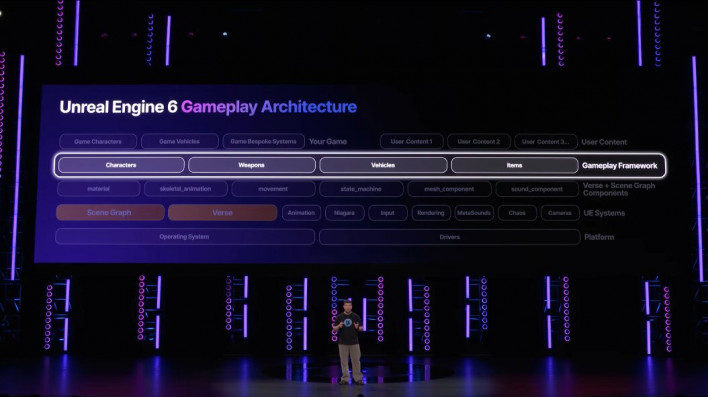
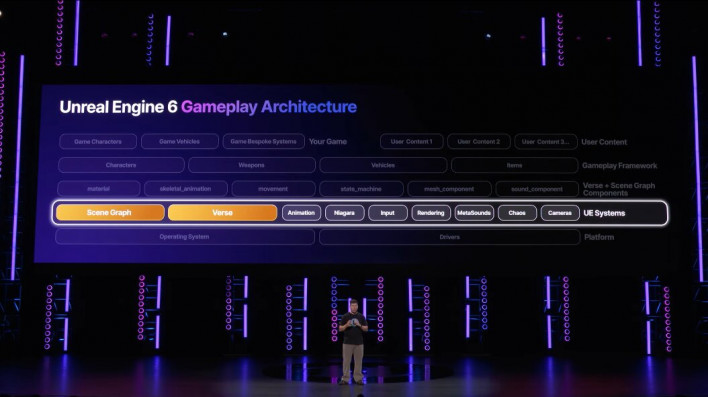
Previously, Unreal Engine's version control system was somewhat weak, making it difficult to control version updates, so many people seem to be talking about 'LORE,' which was announced at State of Unreal. What are the special features of 'LORE,' and how will it affect the game development process?
Marcus Wassmer = LORE can be called a next-generation version control and asset storage infrastructure perfectly optimized for large-scale game development. In the case of Git, the existing representative open-source version control tool, it is useful for text-based source code management, but it showed fatal performance degradation and limitations in handling large-capacity binary files such as high-resolution 3D graphic assets in gigabyte units.
On the other hand, LORE is designed to track and synchronize not only large-scale source code but also ultra-high-capacity heavy assets of AAA-class games extremely quickly and stably. In addition, LORE has tremendous scalability, so it can safely store ultra-large asset data and player log data in petabyte (PB) to exabyte (EB) units in a single backend store. This is because it is a structure that expands infinitely from small toy projects of individual developers to ultra-large infrastructure of global internet service scale.
Tim Sweeney = And this LORE infrastructure is also being fully introduced to Epic Games' entire global live service to conduct real-world verification.
Currently, the numerous online services and distribution engines operated by Epic Games are using fragmented individual storage systems. However, in the future, when users download Fortnite's main update, or when third-party-made Fortnite Island assets are streamed to user machines in real-time, or even when downloading games from the Epic Games Store or resources from the integrated asset marketplace 'FAB,' the entire backend will be integrated into a single pipeline of this LORE version control system. The essence of version control in large-scale team development is for hundreds of developers to work within one project by taking independent branches without invading each other's code, while perfectly separating and maintaining the integrity of the 'live build' currently in service and the 'next build' to be distributed next week.
In fact, as the scale of projects and development teams grows, the complexity of this branch management and merging increases exponentially. This becomes the main culprit that eats away at development speed. For example, in the current Fortnite ecosystem, global users are playing the live build distributed last week, our development team is refining the build to be distributed next week on LORE, and the core tech team is simultaneously working on the long-term UE6 integration architecture build to be applied months later. The work areas of these three groups must be thoroughly isolated and must not give even 1% of side effects to each other. Making this happen is one of the important roles of 'LORE.'
Once LORE is settled in the core engine stage of all online services, development studios will be able to easily build a perfect sandbox beta test environment before the official release on the Epic Games Store. Or they could perform perfect pre-build verification before launching their UGC content on Fortnite. In this way, the entire global metaverse ecosystem hosted by Epic Games will move organically on one huge and sophisticated single shared version control infrastructure, and LORE will have a profound impact.
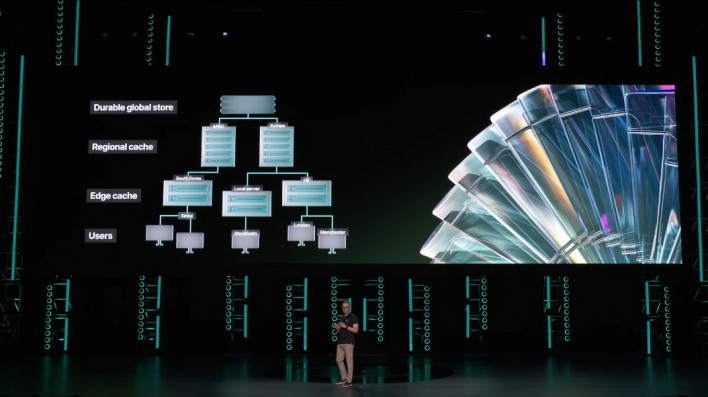
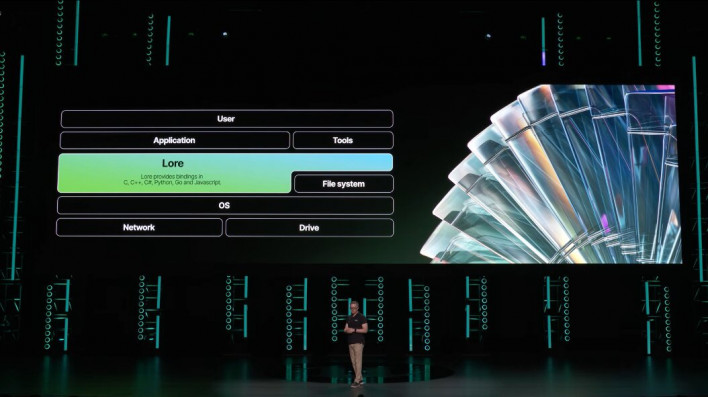
Lastly, please say a word to Korean developers.
Marcus Wassmer = I visited Korea in 2019 and last year, and I felt deep awe at the overwhelming technical capabilities and craftsmanship of Korean developers at that time. I felt thrilled every time I visited the UNREAL FEST held in Korea or individual development studios, or while seeing the quality of numerous Unreal Engine-based new projects that are under development behind the scenes.
The message I want to convey to Korean developers is simple. You are already ready to take over the market. I hope you will continue to test the limits of Unreal Engine with the best results as you do now, and continue to create wonderful games so that our engine can shine the brightest in the world. I am looking forward to the phenomenal projects I saw in person in Korea last year being released to the global market as soon as possible and shocking the world.
Tim Sweeney = Korea is the suzerain state that has already established and dominated the massive business model and concept of live service-based online games in the global game industry for a long time with various games such as 'MapleStory' and 'Lineage.'
Although you are currently facing fierce pursuit and macroscopic competition from U.S. and Chinese developers in the global market, I would say that now, when the paradigm is changing, is the opportunity. If you preemptively introduce the 'interoperable social/economic metaverse ecosystem where the boundaries of borders and platforms have collapsed' that Unreal Engine 6 will open, I expect you will be able to clearly get one generation ahead of developers in other countries.
Just as Korea dominated the paradigm of online games in the past, I believe you will once again seize the technical leadership of the next-generation ecosystem and present a completely new dimension of games to gamers around the world. I have no doubt that the protagonists of that era will be none other than Korean developers.

Sort by:
Comments :0