As the journey of 'Diablo IV' nears its three-year mark, it has entered a stable phase that feels like a plateau. From the intense anticipation before launch and the harsh criticism that followed its 2023 debut, to the numerous updates and the 'Vessel of Hatred' expansion, the past three years of Diablo IV have felt like the ongoing renovation of a mansion that was initially a disaster.
Now, at Season 12, Diablo IV has finally become a genuinely good game. Through several experiments and validations, the endgame content has been solidified, and the internal life of the game has been revitalized by changes to reward systems and milestone logic via seasonal challenges. While negative sentiment from the early days of the service still lingers, it is undeniable that Diablo IV has changed significantly compared to the past.
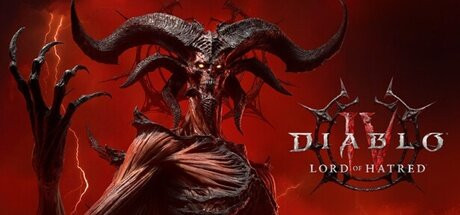
Consequently, 'Diablo IV: Lord of Hatred' (hereinafter 'Lord of Hatred') was met with a mix of apprehension and anticipation.
So much has changed. The narrative leading to the ending is naturally new, the endgame content has been overhauled once again, and above all, the overall direction of 'character progression'—the core of Diablo IV—has been completely transformed. Having experienced the chaotic period of 2023, I cannot help but feel a sense of apprehension.
This review will focus on those 'changing parts.' The notable changes and additions in 'Lord of Hatred' can be summarized as follows.
1. A narrative centered on Mephisto, who has taken over Akarat's shell
2. A completely revamped skill tree and progression direction
3. Content structure and additional features
I intend to explain 'Lord of Hatred' by focusing on these three pillars.
※ In accordance with Blizzard's review guidelines, this review will not describe the detailed narrative of 'Lord of Hatred.' However, please be aware that my impressions and opinions on the story may contain indirect spoilers (though they are not severe).
The Frustrating 'Vessel of Hatred' and the Satisfying 'Lord of Hatred'
When reviewing the previous expansion, 'Vessel of Hatred,' the part that left me most perplexed was the 'narrative.' One might wonder if a story is even important in a game like Diablo, which revolves around an infinite cycle, but narrative is absolutely essential in every game. It is the most powerful motivator for gameplay and the root of immersion.
Ironically, 'Vessel of Hatred' only covered the 'introduction' and 'development' phases of a traditional narrative arc. While chasing Neyrelle, who headed to Nahantu with the Soulstone, players tracked Mephisto and fought against corruption. In the end, Mephisto left, having taken over Akarat's shell, leaving the player with a farewell.
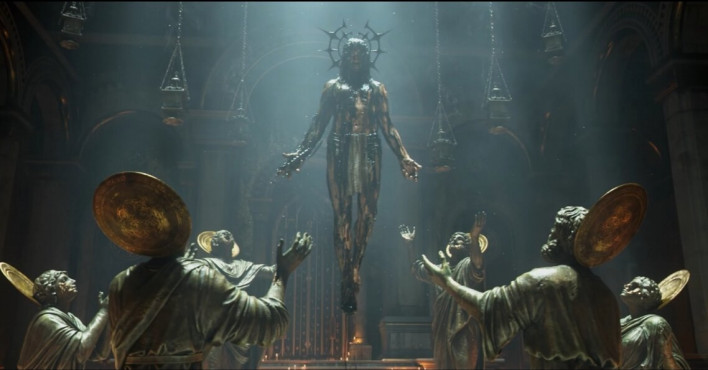
In a game where a Prime Evil is the main antagonist, players spent the entire expansion playing hide-and-seek with him without actually defeating anything. The frustration of the players could only be vented by beating up Belial, who was added in a later seasonal update.
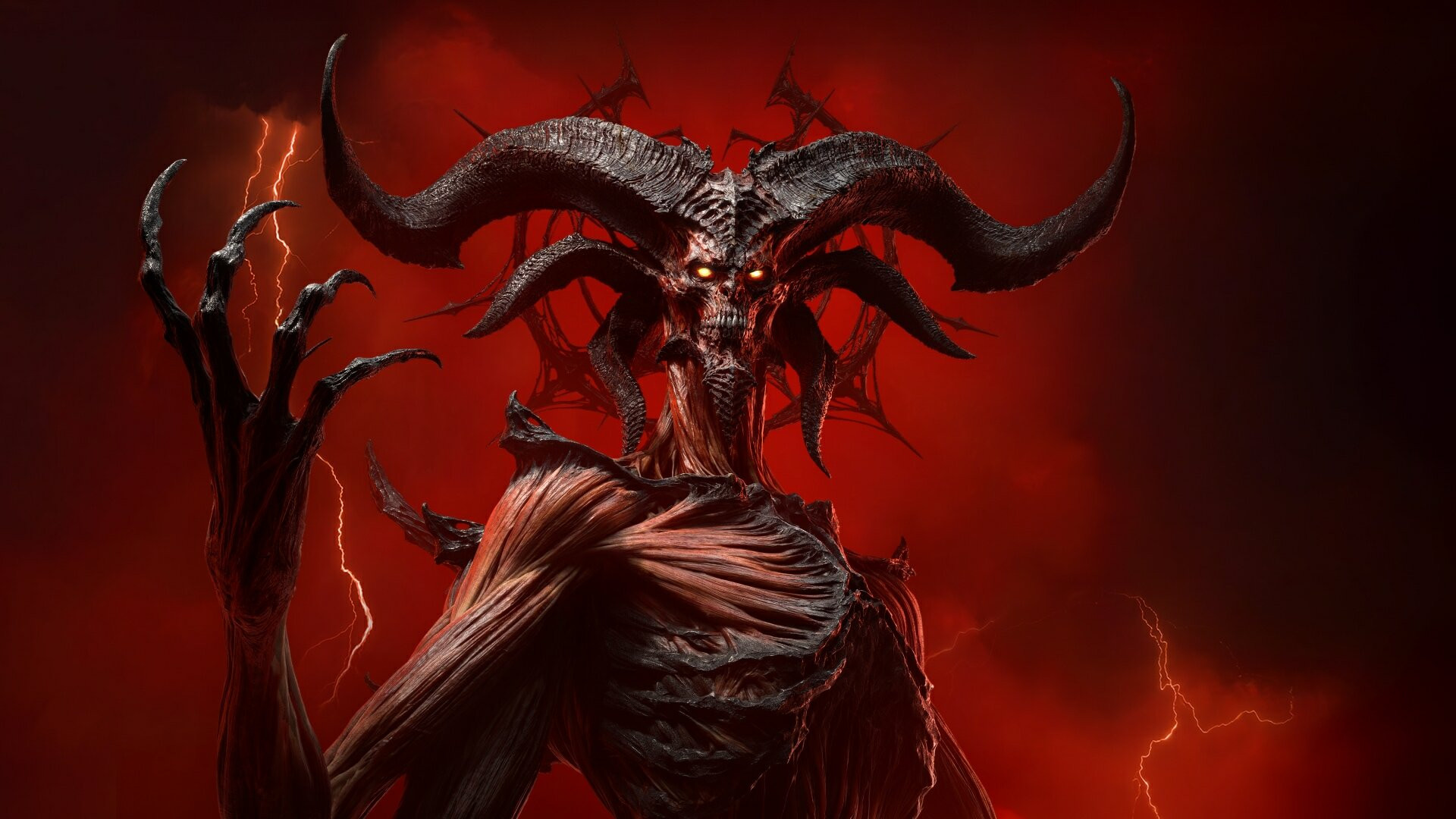
This was inevitable, as 'Vessel of Hatred' only covered the first two acts of the story. Therefore, the story continues directly into 'Lord of Hatred,' entering the 'climax' and 'resolution.' Structurally, 'Vessel of Hatred' and 'Lord of Hatred' must be combined to form a complete story. In this title, Mephisto, wearing the body of Akarat, bewitches the residents of the Skosglen Isles and the Amazons, pushing the world toward catastrophe, while the player searches for a way to end him.

As the journey unfolds, the player's focus shifts from the grand premise of the conflict between angels and demons—and Sanctuary caught between the High Heavens and the Burning Hells—to a more microscopic perspective. We explore what Lilith and Inarius meant to Sanctuary and the Nephalem, what Mephisto thinks of Sanctuary and why he opposes Lilith, and even the ideologies and perspectives of the original Horadrim.
To put it simply, the narrative of 'Lord of Hatred' is 'neat.' Through this expansion, all storylines involving Mephisto and Lilith are wrapped up very cleanly. There are a few twists, some hot moments that will stir the hearts of old fans, and occasionally some questionable segments that make you wonder, 'Is this right?', but regardless, the story reaches a definitive conclusion.
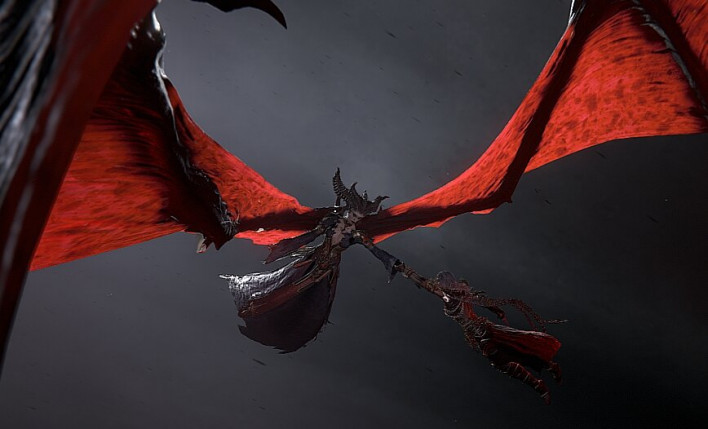
Of course, it is a stretch to call the narrative perfect; if a player lacks sufficient background knowledge or fails to understand the inner psychology of each character, there are parts that might seem to lack verisimilitude or leave one asking, 'Why are they doing that?' Nevertheless, it was a satisfying conclusion for me personally. It is frustrating that I cannot explain every detail due to the review guidelines, though.
From the perspective of 'direction,' 'Lord of Hatred' features the best 'boss fight presentation' in the series. In particular, the final battle with Mephisto goes beyond the typical boss fight pattern where the protagonist and enemy are isolated in a private arena; it begins in a space filled with unsuspecting civilians, and the game unflinchingly depicts the residents of Sanctuary being torn apart by Mephisto's attack patterns. Combined with the subsequent one-on-one phase, it is arguably the most diabolical and impressive presentation in the series.
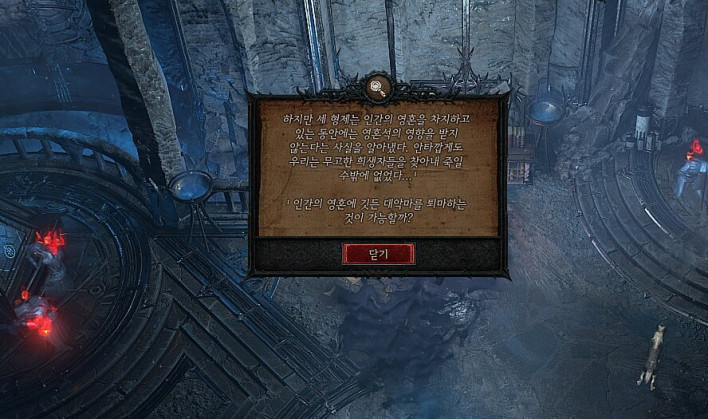
Separately, the music is absolutely killer this time. I was reminded once again that gothic dark fantasy truly needs vocal choruses to bring the atmosphere to life.
Build difficulty is ↓ Skill utility is ↑
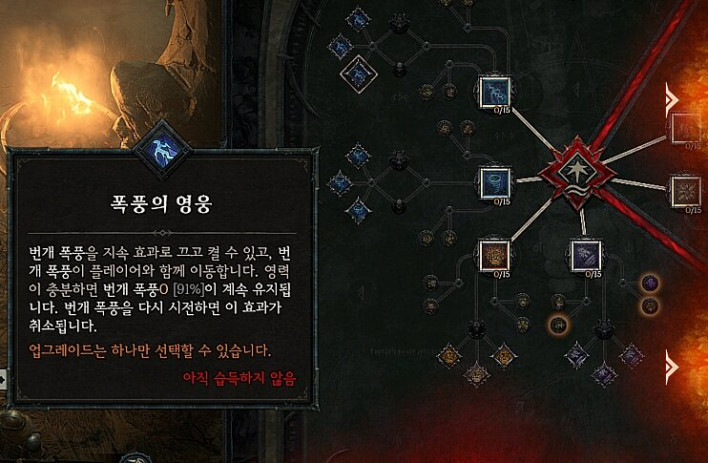
Looking at 'character progression,' there have been massive changes—so significant that you might wonder if it's okay to go this far. The most visible change is the 'skill tree.' As previously announced, the numerous passive nodes that existed for every class have been completely removed, and the Keystone Passives that defined the peak of a build have also been deleted. The skill tree now literally only affects the 'skills you actually use.' The multiplicative factors that existed in those countless passives have been moved to Legendary Aspects, the Paragon Board, and the new Runes and Amulet systems.
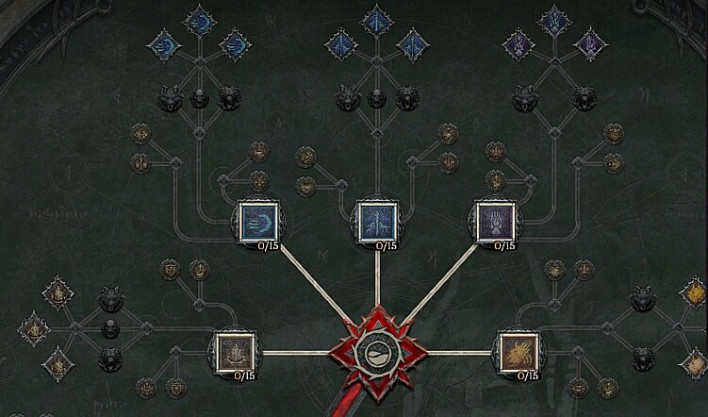
Looking at Diablo IV up to 'Vessel of Hatred,' existing skills had relatively clear floors and ceilings. The key was how well you could utilize Legendary Aspects and how strongly you were influenced by Keystone Passives; if these conditions were met, you could create a decent build.
Conversely, there were definitely skills that were 'unusable' depending on the seasonal update. However, there are no longer any 'unusable skills.' As long as you have the right Aspects and fill out your Paragon Board well, most skills now demonstrate basic performance. Of course, some skills are still less appealing due to a lack of supporting Aspects or inherent convenience issues, but that is unavoidable.
Of course, there have always been brilliant builders who could dig up and utilize skills others ignored, and it is obvious that standardized 'meta' builds will exist even after the expansion. So, what has actually changed? Simply put, the 'gap between the floor and the ceiling' has definitely narrowed.
Even after the expansion, there will naturally be top-tier builds and relatively weaker ones. However, since skills that were previously considered 'unusable' are now at least functional, the era of just following builds others have posted is over, and a golden age for crafting your own build has arrived.

In fact, while conducting this review, I experimented with all sorts of builds on the Spiritborn I raised, and most of them showed decent performance. I couldn't collect all the class-specific items, so there are many builds I couldn't try, but even without them, as long as I set up the Paragon Board well, I could keep raising the difficulty. The fact that a build I cobbled together—not being a professional builder—actually works is proof that the 'floor' for most builds has been raised significantly.
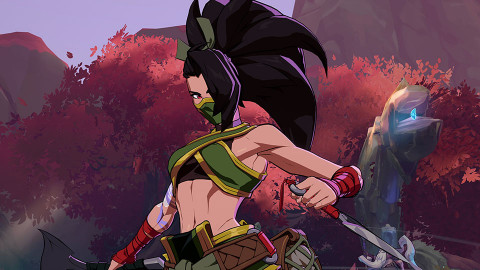
In this process, the skill trees for each class have also changed significantly. While focusing on the 'class fantasy' of each, they have increased the utility of each skill. For example, for the 'Druid,' there are now nodes for every skill that 'do not consume skill points.' Earth nature magic skills like Landslide or Boulder can now carry the 'Werebear' skill keyword, and Lightning Storm and Tornado can carry the 'Werewolf' keyword—without spending skill points.
Other classes have implemented changes where the base element itself changes. Taking the Sorcerer as an example, 'Lightning Spear' is no longer strictly a Lightning skill. You can change it to 'Flame Spear' to switch it to Fire, change 'Firewall' to a Shock skill to generate 'Crackling Energy,' turn Chain Lightning into 'Frost Chains,' or change Incinerate into a channeled Lightning skill.
During the skill tree overhaul, 'Aspects' also underwent some changes. You can no longer obtain Tier 1 Aspects by clearing specific dungeons. Since some Aspects were integrated into the skill trees and disappeared, it made more sense to remove Aspect acquisition through dungeons entirely rather than leaving holes in dungeon rewards. Instead, some Aspects were incorporated directly into the skill tree, allowing you to feel their power just by picking the skill.
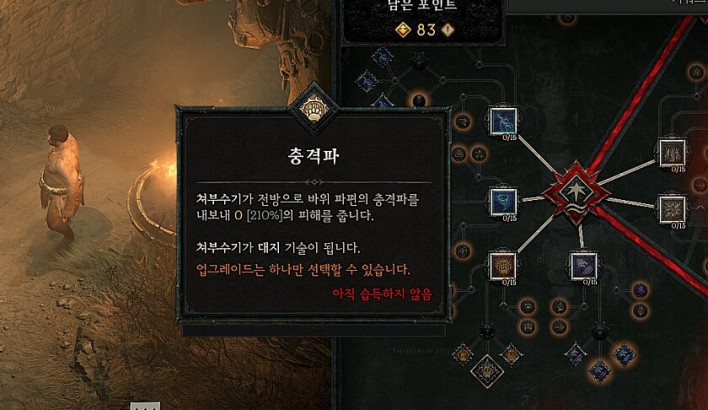
These changes show the potential for countless builds. Whether it's a Sorcerer using Firewall instead of Ball Lightning as a filler, a Wolf-Druid leading a pack of Werewolves instead of actual wolves, or a Spiritborn using Lightning Touch instead of Death Touch—even if it looks strange, it means the 'situation where you can at least try it' has been created.
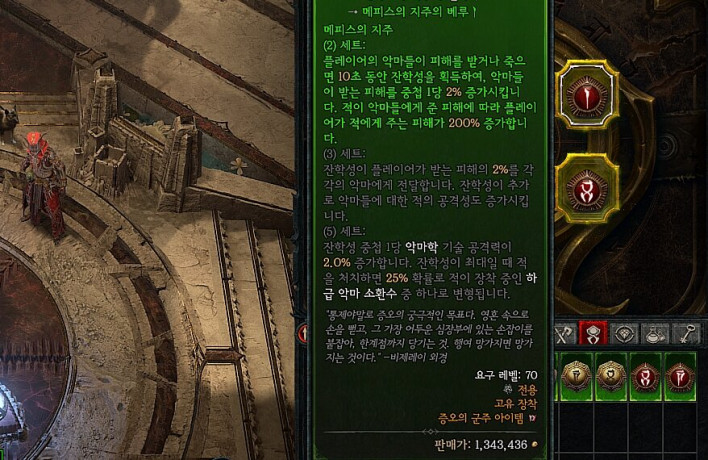
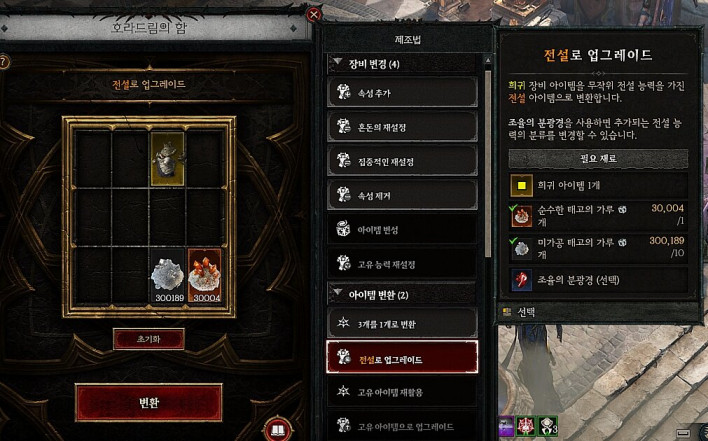
In terms of items, Unique items can now be 'Tempered.' Previously, only Masterworking was possible, and since Tempering wasn't, they sometimes fell behind Legendary items in terms of the number of affixes; now, the utility of Unique items has been further enhanced. Furthermore, by utilizing the Horadric Cube, 'item transmutation'—similar to the 'Consecration' of the previous season—adds even more affixes. As this significantly strengthens the character's base stats, the floor for the character itself is raised regardless of the build.
The Intent of the War Plan= 'Motivation'
The endgame content structure and convenience aspects are closer to improvements than changes. The existing endgame phase involves skimming through Helltides that reset every hour, and in the remaining time, running Undercity, Infernal Hordes, Bosses, Nightmare Dungeons, or the Pit as needed. This is the general flow: farming items and materials one by one, and once the build is set, either grinding the Pit or moving on to another character.
'Lord of Hatred' maintains the variety of this content but introduces 'War Plans,' a system that allows you to focus on what you want to play. Lore-wise, it's a war against the remnants left after defeating Mephisto + the local demons who have basically become residents of Sanctuary, but that's just the lore; in reality, it's a system that bundles endgame content together.
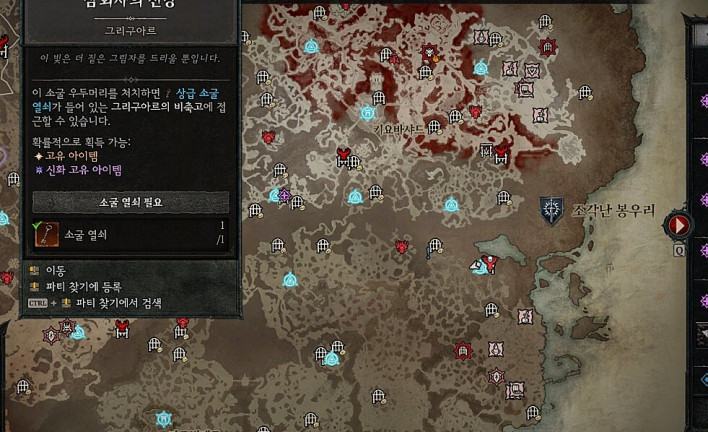
From a gamer's perspective, the purpose of War Plans is 'motivation.' Previously, endgame content existed, but it was scattered, leaving you always wondering, 'What should I do?' While there were clear goals like targeting Obducite for Masterworking or upgrading Glyphs in the Pit, there was ambiguity when you just needed 'better gear than what I have now' because the efficiency was all similar.
However, War Plans allow players to design their own play paths by offering bonus rewards, while simultaneously allowing them to deepen their engagement with each piece of endgame content, enabling 'specialization.' A build effective against multiple enemies but weak against bosses can focus on Infernal Hordes and Helltides, while a build strong against bosses can focus on bossing and still receive the necessary materials or bonus rewards.
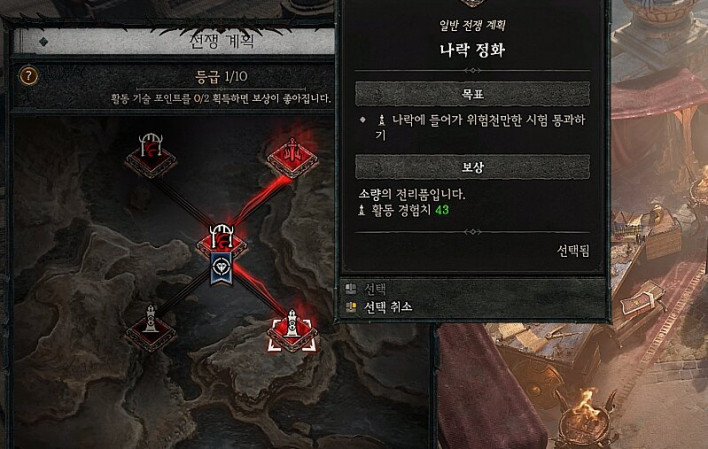
Therefore, I am tempted to think that this 'endgame content' bundle should be changed. In 'Lord of Hatred,' the true endgame content is only 'Echo of Hatred' and high-tier Pit runs; the other existing endgame activities are now more like farming content than endgame.
An addition as important as these War Plans is the 'Horadric Cube.' Anyone who played Diablo II will recognize this system, which continued as 'Kanai's Cube' in Diablo III; this strange box functions just as it did before, breaking down and processing items. Unlike the existing Occultist's Enchanting, it carries risks but changes items on a larger scale, and I suspect there are definitely hidden recipes.
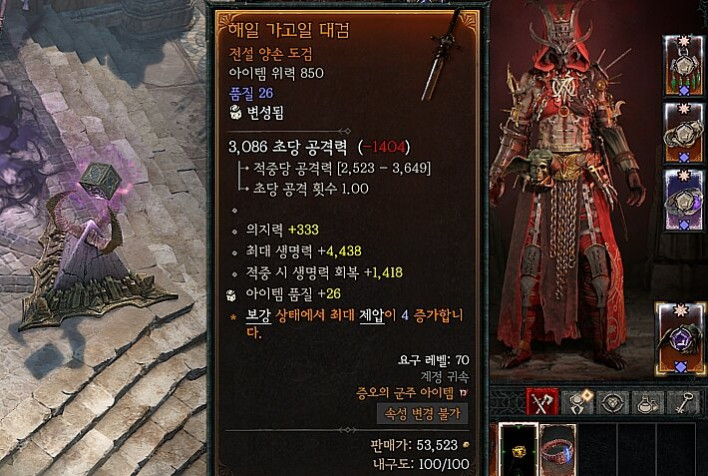
Beyond this, 'Lord of Hatred' has changed in many ways, both small and large. From the adjusted Torment difficulty levels (now 12 tiers) that focus on balance rather than just getting stronger, to the translucent minimap that appears when you press M, and the unification of boss keys into 'Dungeon Boss Keys' to avoid cluttered inventory—the direction of Diablo IV from the beginning of its service to now remains consistent: simplifying unnecessarily complex parts to reduce frustration and strengthening motivation so that gamers can enjoy the game more comfortably.
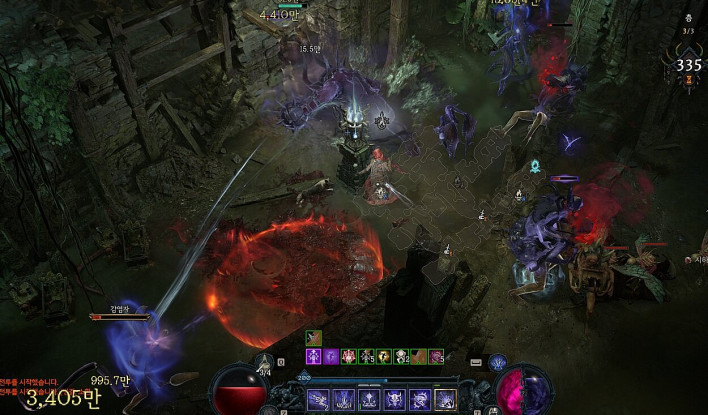
Now is the Age of Hatred. Where to next?
In terms of gameplay, 'Lord of Hatred' is an expansion that clearly shows very challenging changes. As mentioned earlier, the progression structure of each class has changed so drastically that, aside from the utility of Legendary Aspects or Unique items, almost nothing remains compatible with existing builds.
This means it could be a major revolution that breaks build stagnation if it goes well, but it could also result in the destruction of the order that was barely built if it slips. Having had only about a week to look at it, I cannot be certain what the comprehensive results of these changes will be, but the overall direction of the change was clearly aimed at breaking build stagnation and ensuring every build can pull its own weight.
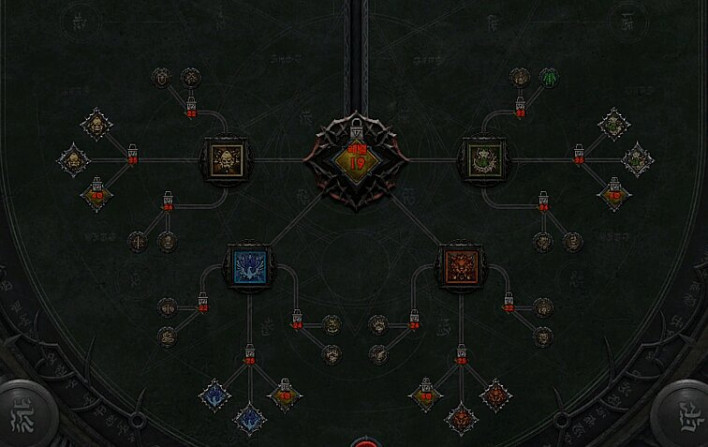
This shows the direction Blizzard envisions for Diablo IV.
The builds of every hack and slash game are bound to stagnate. Just as there is always a 'best' among great soccer players, maximum efficiency will always exist. However, if the gap between the ceiling and the floor is not large, and if there are 'relatively' less efficient but sufficiently functional options, this build bias can be reduced to a noticeable degree. At the beginning of the changes starting in late April, I don't know if this potential will be realized or if it will cause problems for other reasons, but it is certainly a good thing that this is the direction Diablo IV is moving in.
From a narrative perspective, a major chapter has concluded. Among the editions announced with this expansion, the one that includes the base game of Diablo IV is titled 'Age of Hatred.' The story of Diablo IV begins with the return of Lilith, Mephisto's daughter and the 'Daughter of Hatred,' to Sanctuary, and we seek the help of her father, Mephisto, to oppose her as she begins to turn Sanctuary upside down.
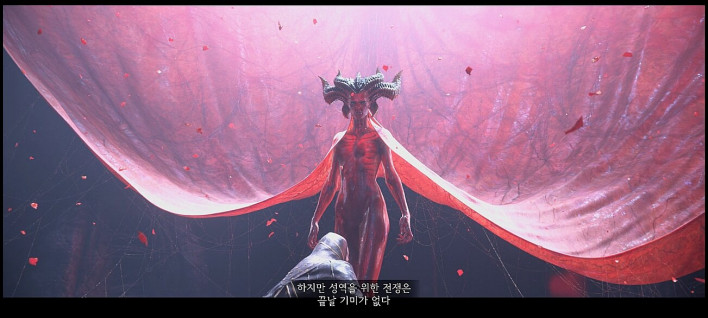
Then, the conflict with Mephisto, who revealed his true colors in the next expansion, 'Vessel of Hatred,' begins, and by 'Lord of Hatred,' all stories related to Mephisto and Lilith are neatly concluded in a trilogy. The reason the edition containing the base game, 'Vessel of Hatred,' and 'Lord of Hatred' is called 'Age of Hatred' is that the narrative spanning this trilogy is literally a story intertwined with the Lord of Hatred, Mephisto, and the Daughter of Hatred, Lilith.
It is not yet known whose age will come next. Whether it will be an 'Age of Destruction' revisiting Baal's journey from Lut Gholein, where Tal Rasha was sealed, to Mount Arreat, or an 'Age of Terror' leading from Tristram to Hell.
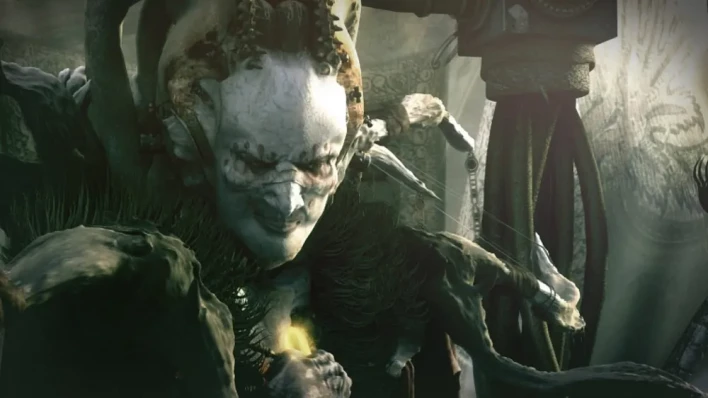
However, at this moment, I want to applaud this expansion for finishing a massive story under the single theme of 'Hatred' and for breaking through mannerisms through bold challenges. I confirmed significant changes and enjoyed 'Vessel of Hatred,' but 'Lord of Hatred' is even more novel and even more satisfying.
Thinking back to 2023, the early days of Diablo IV were full of internal contradictions despite showing immense potential. If you are a gamer, you probably remember the countless mockeries Diablo IV faced at the time and the atmosphere that even went so far as to say, 'This isn't a game.' But as time passed, Diablo IV slowly got better and improved.
And now, three years later, with 'Lord of Hatred,' Diablo IV has definitely become a 'good game.'
- A neatly concluded narrative of Hatred
- Organized endgame content
- Build crafting that is new but not difficult
- So what now? The usual stuff.
Review Platform: PC (Pre-release review build)

Sort by:
Comments :0