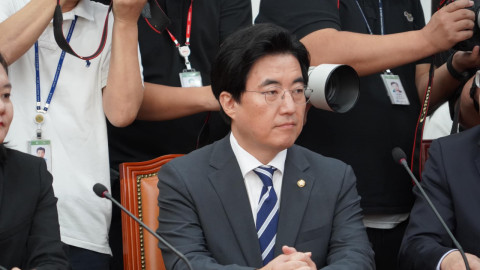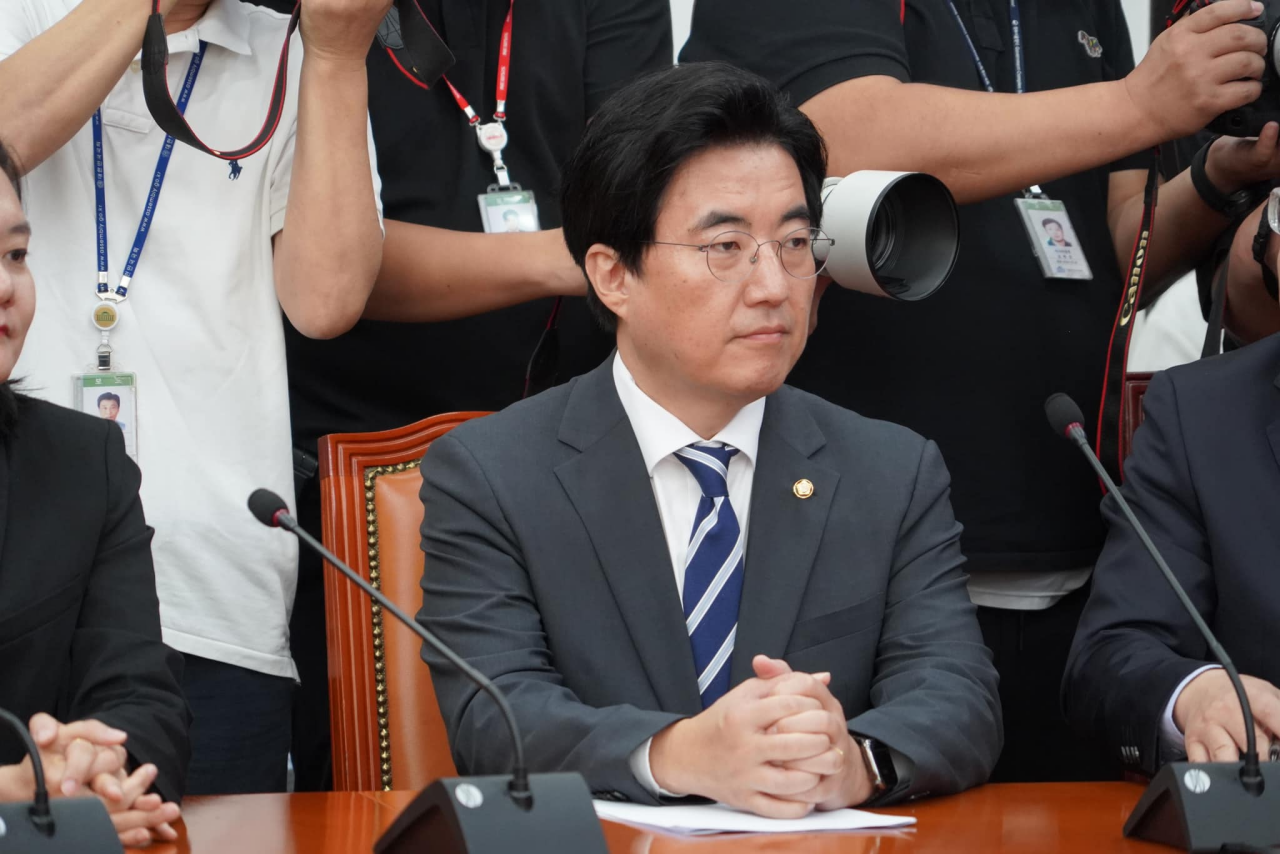
Rep. Kim Seong-hoe of the Democratic Party of Korea (Chair of the Special Committee on Games) on the 23rd formally introduced a partial amendment bill to the Game Industry Promotion Act. The proposed revision centers on imposing punitive-style penalty surcharges on game companies that omit or falsely disclose information related to probability-type items.
Under the amendment proposed by Rep. Kim, anyone who distributes probability-type items without disclosing, or while falsely disclosing, the item types and their supply probabilities would be subject to a penalty surcharge of up to 3% of sales or up to KRW 1 billion. This measure follows criticism that sanctions under the current law lack practical effectiveness. By adding a new Article 38-2, the bill establishes a legal basis to recover the economic benefits gained through unlawful conduct.
The current Game Industry Promotion Act requires that, in cases where probability information is not disclosed or is falsely disclosed, the process must first go through a corrective order issued by the Minister of Culture, Sports and Tourism. Failure to comply is punishable by up to two years in prison or a fine of up to KRW 20 million. However, both the industry and users have long criticized the system on the grounds that the expected profits from false disclosures far exceed the disadvantages of fines and other penalties—meaning violations are not being eradicated.
This legislative push aligns with President Lee Jae-myung’s directives related to the game industry issued on the 16th. During a presidential work briefing attended by the Ministry of Culture, Sports and Tourism and other relevant agencies, President Lee received a status report on probability-type items from Seo Tae-geon, Chair of the Game Rating and Administration Committee, and emphasized the need for stronger sanctions.
According to the briefing materials at the time, Chair Seo reported that since the mandatory disclosure requirement for probability-type item information took effect in August, the committee has been conducting enforcement efforts by deploying 27 dedicated monitoring personnel. Chair Seo explained that when violations are detected, roughly 95% are resolved at the first-stage “request for correction.” If a company fails to comply, the process escalates through a recommendation and then a formal order, ultimately leading to measures such as referrals for investigation or blocking actions. Over the past 18 months, the number of cases involving blocking measures and referrals for investigation due to noncompliance with corrective actions was tallied at eight.
President Lee sharply criticized the existing procedures, saying they create the impression that the regulator is “pleading” with operators to make corrections. In particular, he argued that criminal-penalty-centered enforcement is ineffective due to lengthy trial timelines and low punishment levels. He stressed that because the motive behind corporate wrongdoing lies in generating profits, what is needed is economic sanctions that cut off that incentive—what he described as “financial treatment.”
President Lee also stated that a system that imposes sanctions only when corrective requests are ignored is unreasonable. He instructed that unjust gains should be fundamentally stripped away by imposing immediate penalty surcharges for the violation itself. Rep. Kim Seong-hoe’s amendment is positioned as legislative support for this administrative stance and is expected to become a tool for swift and strong economic sanctions against manipulation of probability disclosures by game companies going forward.
This article was translated from the original that appeared on INVEN.

Sort by:
Comments :0