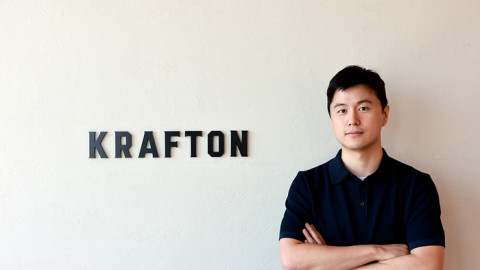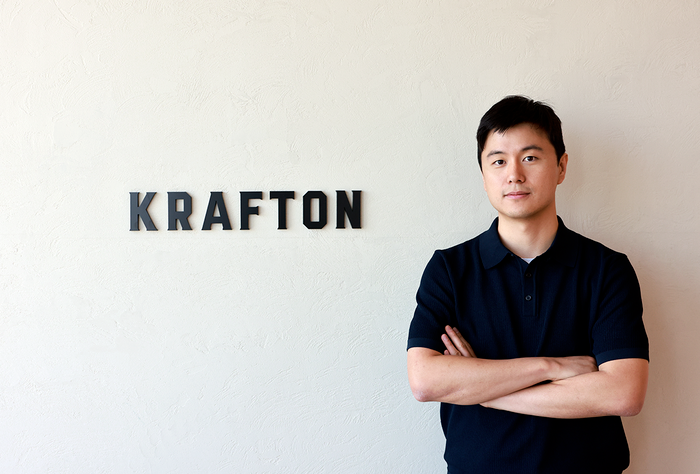
KRAFTON on the 20th unveiled a new AI agent technology called “Terminus KIRA.” Introduced directly by Lee Kang-wook, Head of AI Technology at KRAFTON, the technology is focused on addressing limitations in existing AI agents.
KRAFTON currently operates its AI research organization under two brands, KRAFTON AI and Ludo Robotics, and this marks the first time it has shared technology externally under the Ludo Robotics name. The purpose of this technology disclosure is not commercial business expansion, but rather open-source sharing among developers and contributing to the ecosystem for technological advancement.
The technology unveiled this time is an open-source project called KIRA, a repackaging of the AI agent system KRAFTON uses internally. KIRA stands for Krafton Intelligence Rookie Agent. It was implemented as a “virtual colleague” concept so that the internal AI system KRIS, which has been used by more than 1,800 employees, can be installed by anyone as a standalone desktop application.
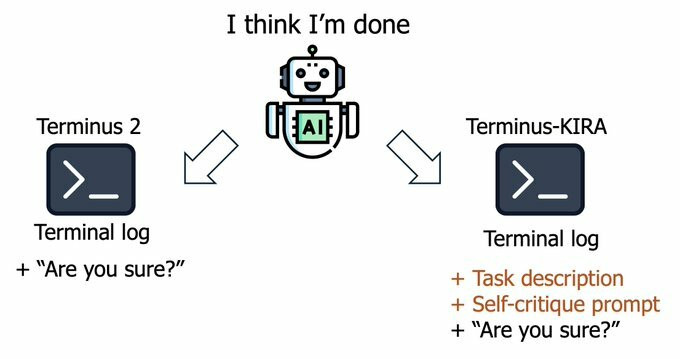
Terminus KIRA recorded a task completion rate of up to 74.8% in Terminal-Bench tests. Terminal-Bench is a benchmark used to evaluate an AI’s ability to write code and solve problems on behalf of humans in a computer terminal environment.
The previous system, Terminus 2, followed a simple process in which it checked terminal logs and then merely asked the AI whether it was confident. Terminus KIRA, by contrast, additionally provides a task description and a self-critique prompt alongside the existing terminal logs. The principle is to increase the final success rate by prompting the AI to critically review its own work history and correct errors.
Looking at the actual performance metrics, Terminus KIRA demonstrated clear performance gains over previous approaches when combined with several large language models. When run on the Gemini 3.1 Pro Thinking model, the previous-generation Terminus 2 showed a success rate of 68.5%, whereas Terminus KIRA rose to 74.8%, an increase of 6.3 percentage points. With the Opus 4.6 model applied, performance also improved from 62.9% to 74.4%, up 11.5 percentage points. In the case of the standard Gemini 3.1 Pro model, the score increased from 52.4% to 64.0%, a gain of 11.6 percentage points, confirming an overall improvement in AI problem-solving capability.
Head Lee Kang-wook emphasized through this research that AI models are optimized for an assisting role rather than completely replacing humans. In other words, the work acknowledges the reality that AI models are not yet perfect and presents a technical method for compensating for those shortcomings.
A key feature of this AI technology is that, instead of pouring massive capital into building a proprietary large-scale model, it boosts task performance in a cost-efficient way by introducing self-critique prompts to existing commercial models. This is meaningful in that a Korean game company has shared a practical, lightweight solution free of charge with the global open-source development ecosystem.
This article was translated from the original that appeared on INVEN.
Sort by:
Comments :0