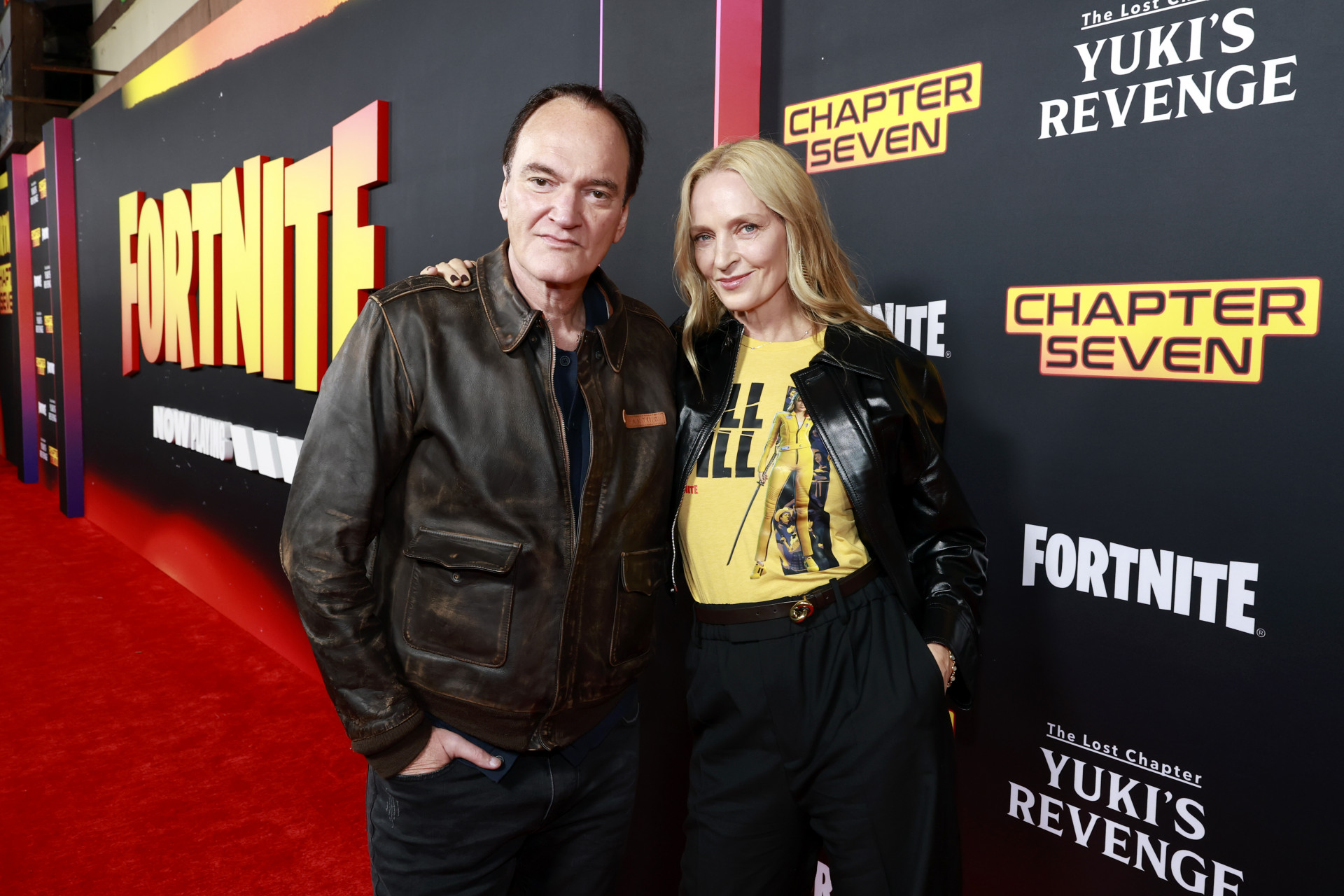
On a cool Wednesday afternoon in Los Angeles, Fortnite brought a flash of cinematic nostalgia to Hollywood.
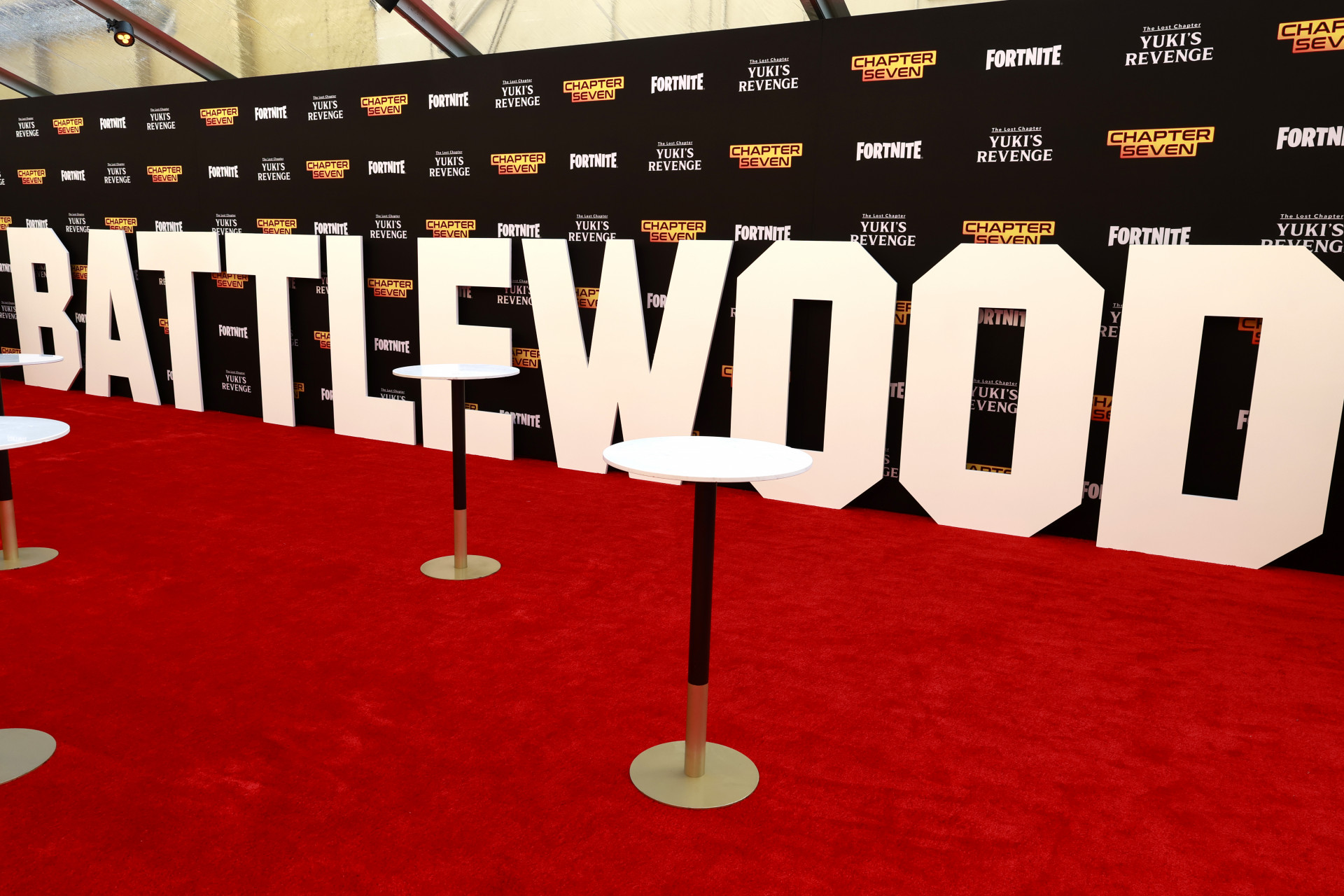
Outside the Vista Theater in Hollywood, Quentin Tarantino posed on a red carpet as Fortnite logos glowed from the marquee. A few steps away, Uma Thurman joined him—The Bride herself, returning not for a sequel, but for something stranger: the world premiere of a lost chapter of Kill Bill, reborn inside Fortnite.
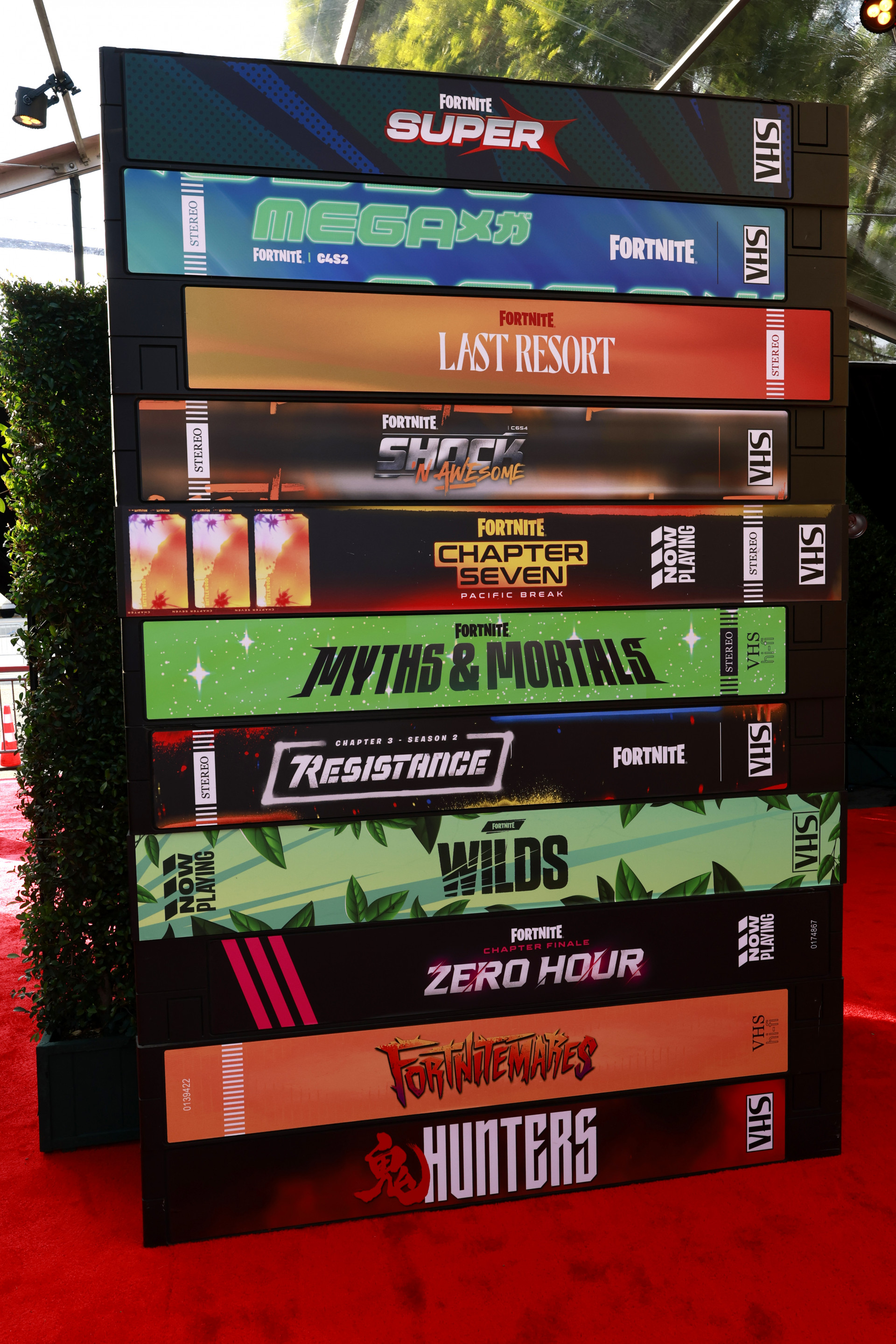
This was Fortnite: Now Playing, Epic Games’ early-access showcase for the game’s next Chapter and its headline collaboration: The Lost Chapter: Yuki’s Revenge, a long-rumored Kill Bill sequence that will finally be seen—not in cinemas first, but in Epic’s battle royale. INVEN had the opportunity to attend the event and provide on-site coverage.
A Hollywood premiere for a virtual chapter
The event began with a reception from, as guests filtered into the Vista’s lobby, a space that normally hosts repertory screenings but, for one night, doubled as Fortnite’s latest front line in its ongoing metaverse experiment. Invited media, creators, film buffs, and Fortnite community figures mingled under vintage movie posters, waiting for a premiere that belonged as much to gaming as to cinema.
On stage, an Epic Games representative welcomed the crowd and set the tone: this was not just another brand collaboration, but a full-circle moment for a generation raised on both Kill Bill posters and Fortnite battle passes. He spoke about Tarantino’s “golden story,” the two-volume revenge epic that “gave up a whole body of hair,” and how it has continued to inspire fans for over two decades.
When Epic began planning a Hollywood-inspired season for Fortnite’s next Chapter, the representative explained, the team wanted to go beyond a typical in-game concert or one-off cosmetic pack. They wanted a movie event—and there was really only one filmmaker whose work already felt like a stylized video game you could imagine picking up a controller to play. So they approached Quentin Tarantino and Uma Thurman not just to license characters, but to create something new for Fortnite.
That “something” turned out to be Yuki’s Revenge.
“Do you have 8–12 minutes?” – How Yuki returned
When Tarantino took the stage to a roar of applause, he immediately undercut the myth that this project was born in a boardroom.
He joked that he arrived at his first meeting with Epic assuming they’d talk merchandising—“license the characters, maybe put the Bride in a cool pose”—and that he’d toss out a few fun ideas. Instead, Epic pitched something wilder. Once a year, when they launch a new season, Fortnite holds a massive live event. Until now, it had always been musical: concerts, set pieces, big LOL moments.
For this California- and Hollywood-themed Chapter, they wanted to try a movie premiere inside Fortnite itself. Players would drop into a world modeled after a red-carpet event, and inside that digital cinema, watch a brand-new Quentin Tarantino film that no one had seen before.
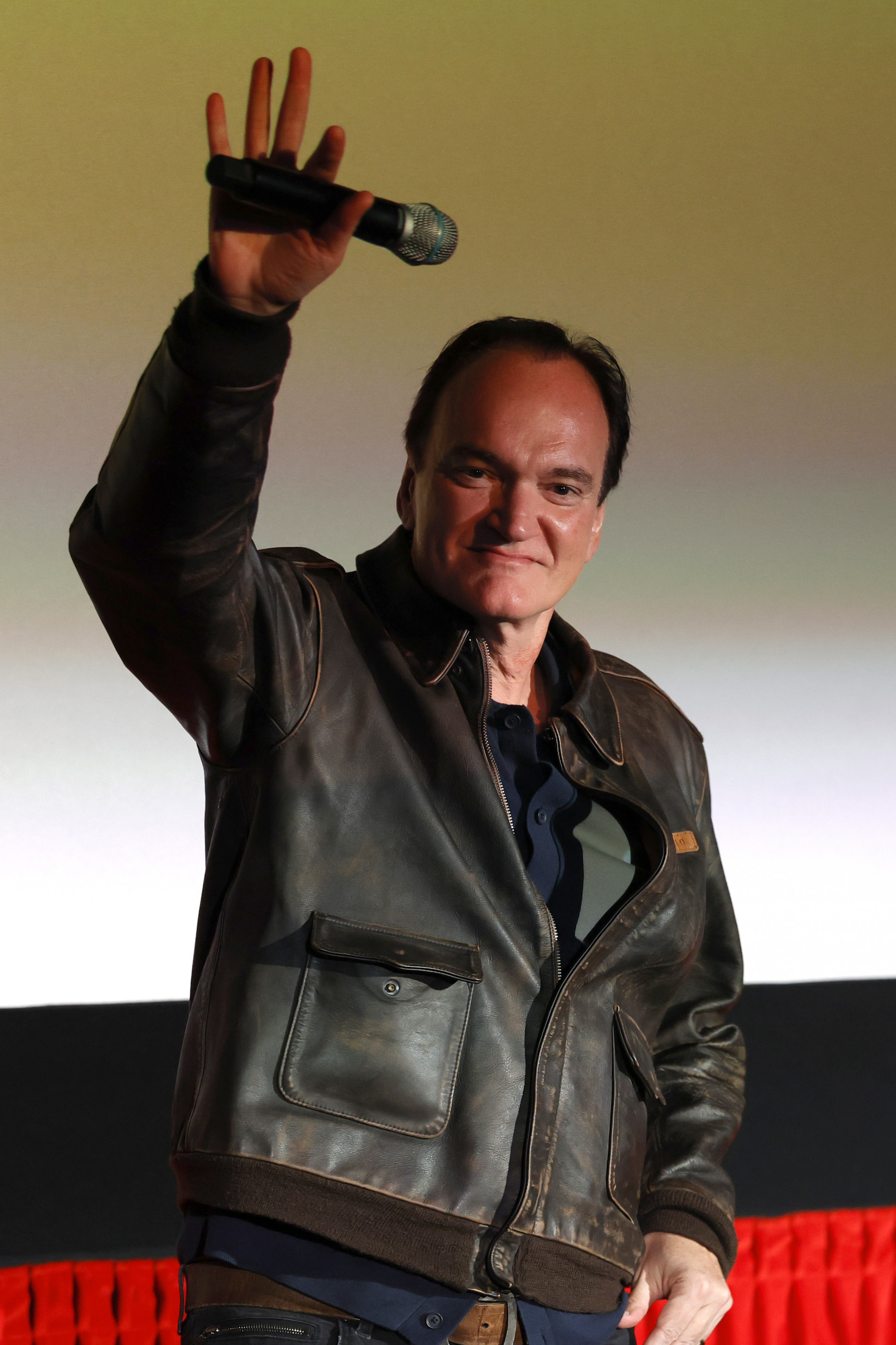
“So they asked me,” Tarantino recalled, “‘Do you have something that’s like eight to twelve minutes that could work for our program?’ They didn’t say, ‘Hey, make sure your iconic characters are wrapped up inside of that,’ but obviously that was important.”
As it turned out, he did have something.
In the original first draft of Kill Bill, Tarantino wrote an entire chapter titled “Yuki’s Revenge.” In it, Gogo Yubari—O-Ren Ishii’s sadistic, mace-swinging bodyguard from Vol. 1—has a twin sister, Yuki, who leaves the House of Blue Leaves early with a cold. After Gogo is killed by the Bride, Yuki sets off to avenge her. The chapter was brutally violent and packed with action—so much so that Tarantino ultimately removed it before the second draft.
“It was good,” he admitted. “Maybe too good. Too crazy, too violent—too much action. There was no way to do the House of Blue Leaves and this in the same movie without possibly killing the audience.”
With the film already running around four hours in early cuts, something had to go. Yuki, for all her potential, was sacrificed to pacing.
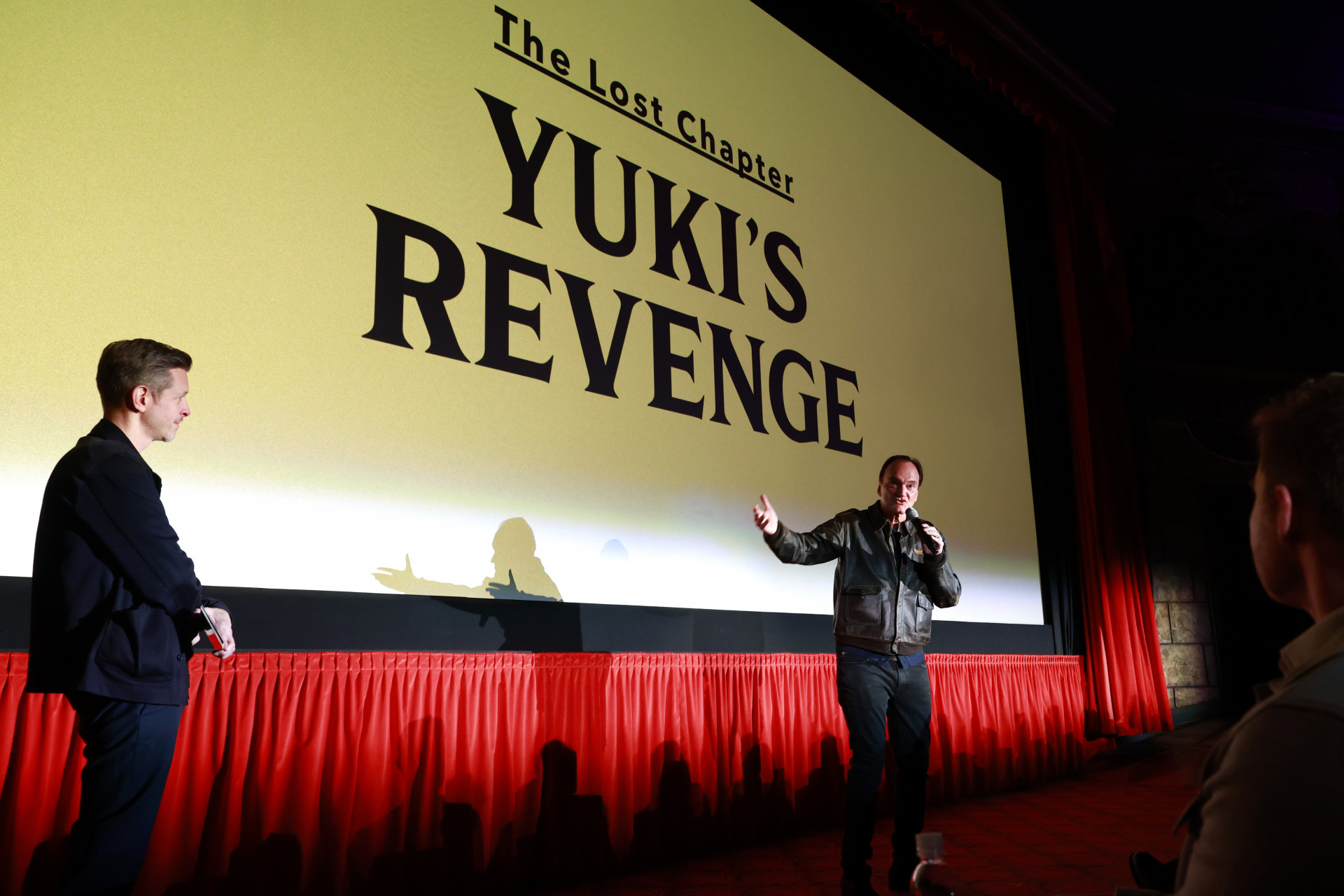
But the character never left his imagination. Tarantino joked that in the “real world running around my toy cupboard, Yuki’s Revenge happened.” He and Uma Thurman always treated it as canon; the audience just never got to see it.
“So I had the script,” he said. “I sent them the script. And they said: ‘Let’s do this.’ And here we are.”
The ice cream truck that was always Yuki
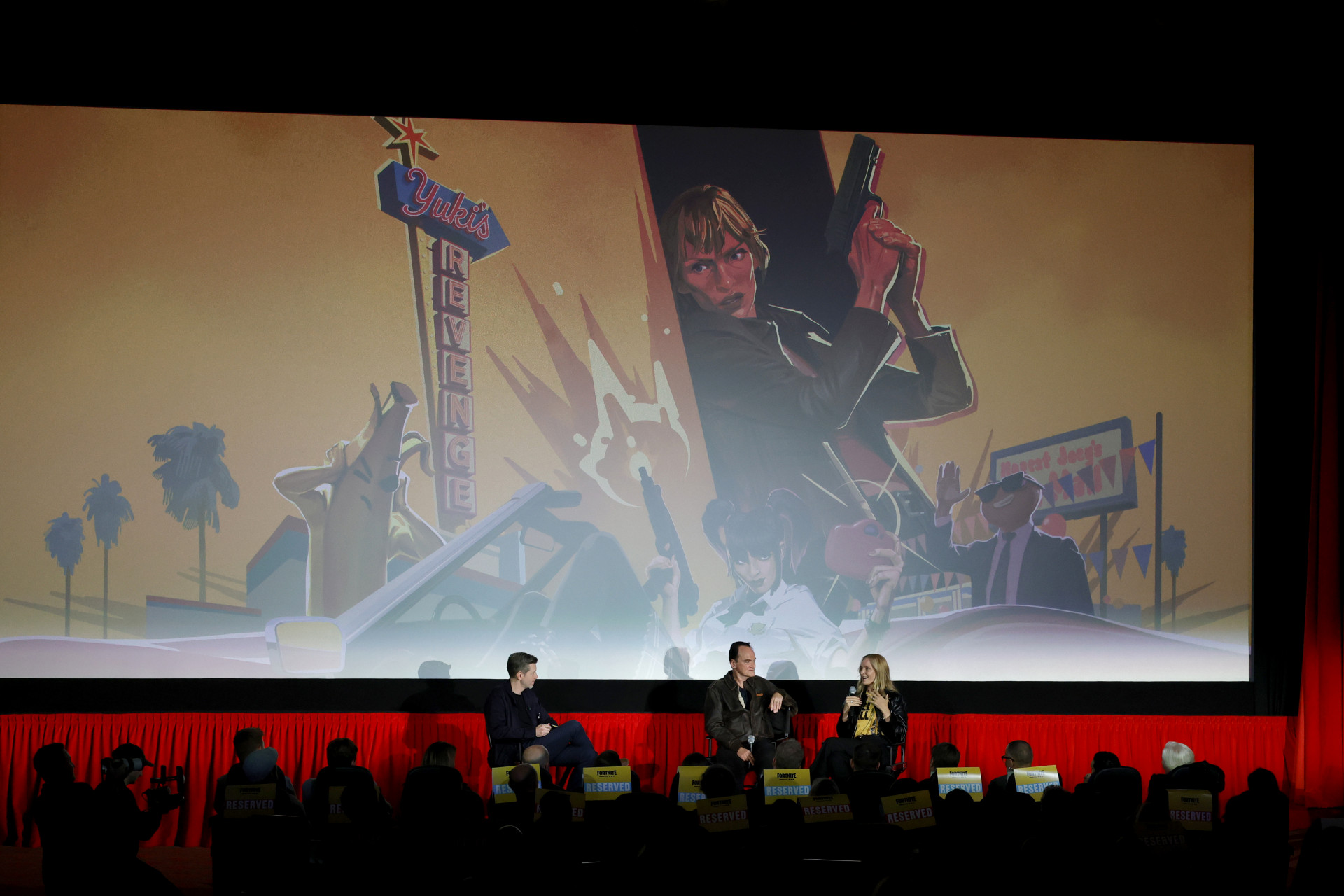
During the on-stage Q&A, moderated by the Epic Games representative, Tarantino shared one of those hyper-specific stories that only a director obsessed with his own continuity could tell.
While shooting the exterior of the Vernita Green fight—the suburban showdown that opens Kill Bill Vol. 1—Uma walks across the lawn, kids’ toys scattered in the grass, and rings the doorbell. On take four, as the crew watched playback, the unmistakable jingle of an ice cream truck drifted in from somewhere off-camera.
“In my mind, in the script, the way it was, Yuki was in an ice cream truck parked just off to the side, keeping the Bride’s house under surveillance until she shows up,” Tarantino explained. “So when I heard those bells, I went, ‘Oh my god, that’s Yuki. Take four is what we’re using.’”
That take is the one in the finished film; you can still hear the bells faintly in the background. For Tarantino, it became a tiny, invisible cameo—a trace of Yuki haunting the edges of the movie even though her chapter never made it onscreen.

Two decades later, that ghost is finally taking center stage, with Fortnite as the stage.
Unreal Engine, metahumans, and soul capture
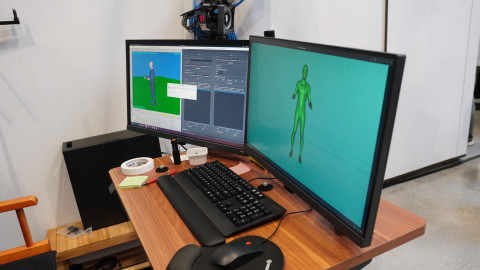
Before showing The Lost Chapter, Epic rolled a behind-the-scenes featurette that pulled the curtain back on how Yuki’s Revenge was realized with Unreal Engine and Epic’s MetaHuman technology.
Tarantino admitted on camera that he had assumed the “ship had sailed” when it came to doing substantial new Kill Bill material. Yuki had been “a figment of my imagination for over 20 years,” and the idea of pulling off a sequence at that scale again felt daunting—until Epic’s tools entered the picture.
Uma Thurman, speaking over work-in-progress footage, explained that for Tarantino, his characters “are very much alive and real and exist,” even when they never make the final cut. Yuki, in that sense, was an “unborn” character—someone whose life had been mapped out but never filmed. Letting that character finally “be birthed and come to life in this way,” she said, was genuinely exciting.
Epic’s team walked the audience through the production process. Using head-mounted cameras, they captured both the performers’ voices and facial data simultaneously. This meant each recording session fed directly into the final animation pipeline: expression, timing, and nuance flowed from Uma, Tarantino (who also voices Bill), and the other actors into their digital counterparts.
“Having Unreal’s ability to render characters in real time is a huge aid, not only for animators but performers as well,” one Epic developer explained in the clip. Actors could test poses, try different facial expressions, and immediately see what read best for the physicality they were aiming for.
The result, in their words, was an “all-encompassing, soul-capture experience,” with animators not just tracing over performances but interpreting them—stylizing, exaggerating, and translating them into Fortnite’s pop-art aesthetic while staying true to Tarantino’s intent.
Tarantino in the volume: “Pulp Fiction Quentin” again
On stage afterward, Tarantino described working with the head-mounted rigs and bare-bones sets. There was no elaborate House of Blue Leaves built this time; instead, the cast performed in a large, mostly empty space, with cameras and volumes doing the heavy lifting.
“To me, it was just like directing a scene,” he said. “We broke it down shot-for-shot, we had our shot list, and when we were ready, they were ready. There was absolutely no setup time. It was, ‘We’re ready? Then we roll.’”
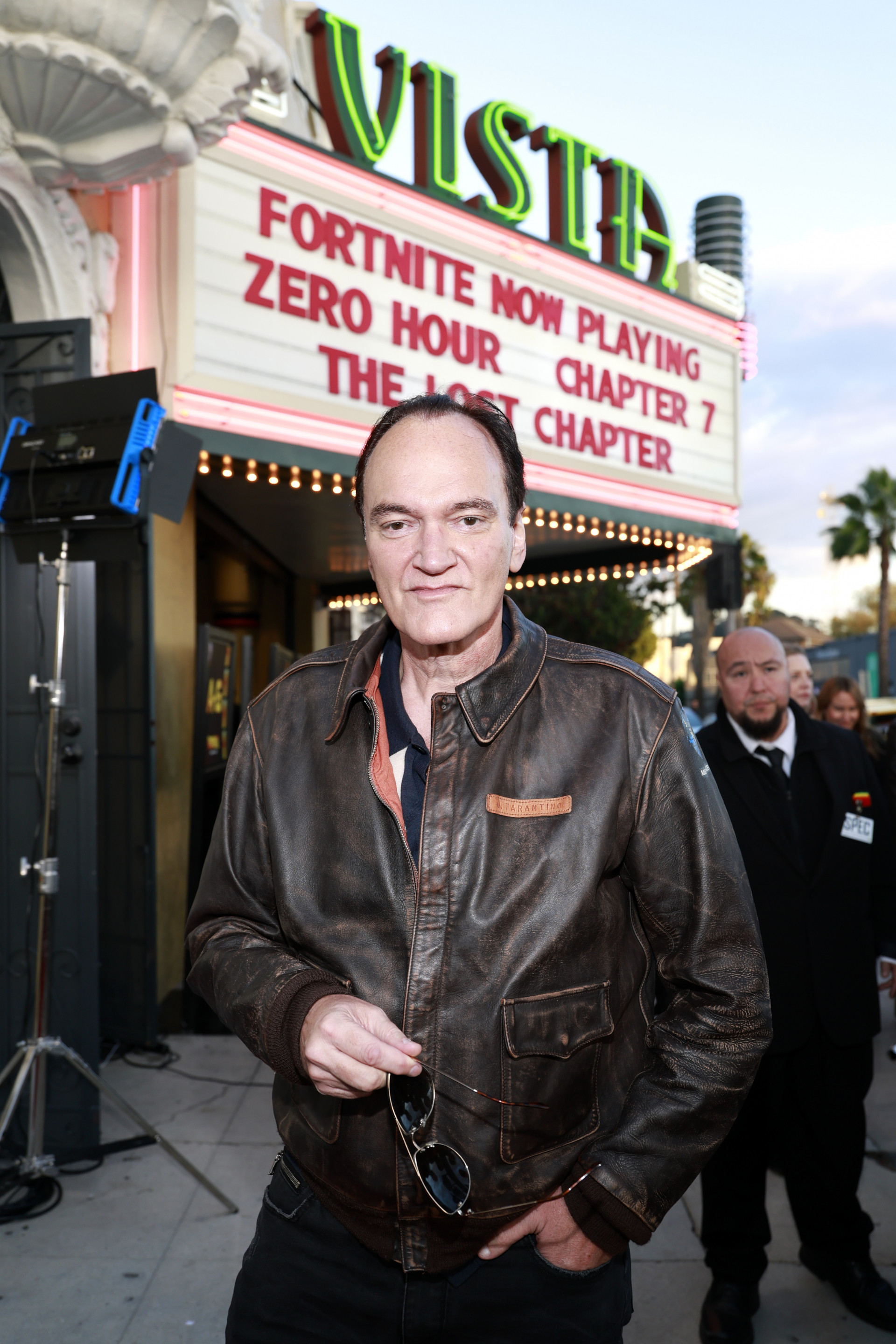
He admitted he dove in hardest on the Lucy Liu–related material, and that when he talked to Uma after that first day, she told him: “Quentin, you were like Pulp Fiction Quentin again. You weren’t as stressed as you were on Kill Bill. Everything was just about fun. Fun, fun, fun.”
Thurman, for her part, loved the strange freedom of motion capture. No makeup chair, no wigs, no blood rigs—just dialogue, physicality, and long-time collaborators.
“I loved it,” she said. “No makeup, great dialogue, friends, great artists—just everything I love about acting. You’re relying purely on your creative skills. The entrance, the room, the outfit? It’s all in your imagination and your director’s. It’s pure work.”
There was also a role reversal: Tarantino provided the voice of Bill, and at one point, Thurman found herself directing him.
“I asked, ‘How was it?’” he said, laughing. “And she goes, ‘Quentin, put your body down a little.’”
Kill Bill, Fortnite, and blue chunky stuff
One question during the Q&A cut to the heart of the whole project: what did Tarantino hope both Kill Bill fans and Fortnite players would take away from this collaboration?
He didn’t pretend there was some grand manifesto behind it.
“At the end of the day, I don’t have a super grandiose idea about it,” he said. “I want both groups—and I think there’s a tremendous amount of crossover—I want both the Kill Bill fans and the Fortnite fans to be totally, totally effing happy about this.”
For Kill Bill fans, that means finally seeing the Yuki chapter in motion—almost exactly as it was originally written and even published in part as a graphic strip years ago, now expanded with Fortnite’s own characters woven into the story. For Fortnite fans, it’s a chance to experience a new chapter of cinematic lore in a way that only the game can deliver: as a playable, interactive event tied to a Hollywood red carpet and a massive seasonal update.
There is, however, one key difference from the movies.
“With the exception of the addition of the Fortnite characters,” Tarantino said, “there’s no red blood. A lot of blue chunky stuff instead.” It’s a concession to Fortnite’s age rating, but also oddly appropriate—Kill Bill’s cartoonish ultraviolence was already flirting with cartoon game abstraction.
When asked if this opened the door to more stories in this format, Tarantino was careful not to overpromise. He joked that he has “other things to do right now,” but admitted he still carries around ideas for the Kill Bill universe, including a possible Bill origin story involving the three “godfathers** who shaped him: Pei Mei, Hattori Hanzo, and a third mentor. Whether that ever becomes animation, live-action, or another hybrid project like this is an open question.
“Will I live long enough to do that?” he shrugged. “That I don’t know.”
Uma Thurman meets a new audience
One of the most striking threads of the night was Uma Thurman’s perspective: an actress who, for many younger Fortnite players, might be encountered first as a stylized digital avatar rather than a 35mm projection.
She described the collaboration as “so cool” precisely because it introduces The Bride and the Kill Bill world to an audience that may only know the film through memes, screenshots, or references. Kill Bill already mixed live-action and anime; dropping the character into Fortnite’s stylized action, she argued, is a natural extension.
“It’s such a creative going,” she said, watching the clip again on the Vista’s screen. “We’ve had an amazing life with this movie. Some of the best. I dare anyone to have more extraordinary experiences out of a film. So to see it live again in this way—it’s obviously kind of meant to be.”"
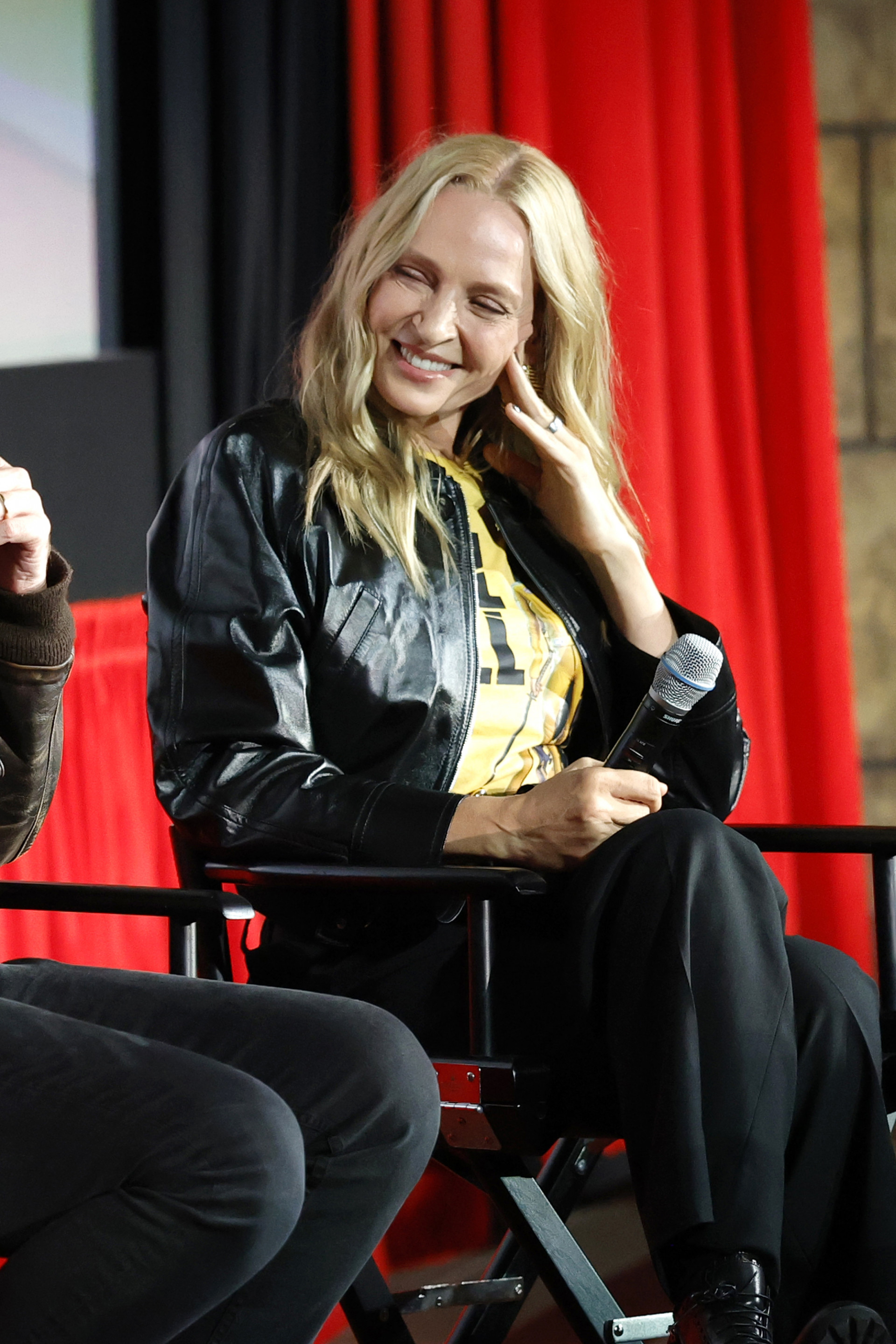
The fusion of “incredible Fortnite energy,” as she put it, with this long-gestating Kill Bill story felt like the culmination of decades of fan chatter, rumors, and Tarantino’s own offhand comments about The Whole Bloody Affair—the full, nearly five-hour cut of Kill Bill that is finally getting a limited theatrical run on December 5.
If that cut is the definitive cinematic version of the Bride’s story, Yuki’s Revenge in Fortnite is a parallel branch: canon to the creator, experienced through a controller instead of a ticket stub.
Hands-on with Fortnite’s next Hollywood chapter
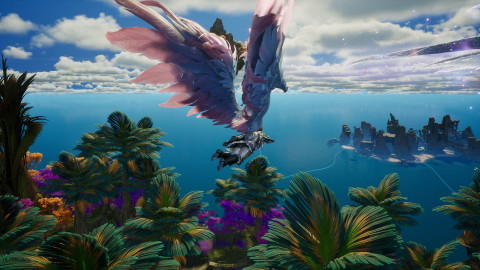
After the Q&A wrapped, the evening shifted from cinema seat to game station. At the after-party, attendees were given early hands-on access to the upcoming Chapter of Fortnite Battle Royale, the same season that will feature The Lost Chapter: Yuki’s Revenge as an in-game event on November 30.
Epic has already confirmed that the new season draws heavily from California and Hollywood imagery. The collaboration brings not just the Bride, Gogo Yubari, and new character Yuki Yubari into the game as outfits, but also iconic elements like the movie’s vehicle—reimagined in Fortnite’s style and fitting snugly into the game’s long list of pop-culture vehicles.
Fortnite is no stranger to crossovers, of course. But there’s a difference between licensing an IP and writing new canon for it. Yuki’s Revenge is not a spin-off dreamed up for the game; it’s an original chapter from 2003, finally realized in a medium Tarantino never would have predicted when he was writing Kill Bill on yellow legal pads.
That gives this collaboration a different weight. It’s not just Epic borrowing cool iconography from a beloved film; it’s Tarantino using Epic’s tools to finish a story he always believed existed.
A lost reel found in a game
For Epic Games, Fortnite: Now Playing was another demonstration that the game has evolved beyond “just” a battle royale and into a cross-media festival space. For Tarantino and Thurman, it was a reunion anchored not in nostalgia alone, but in creation—dusting off a 20-year-old chapter and finally letting it play out in motion.
For Kill Bill fans, the headline is obvious: the Yuki chapter is real now. For Fortnite players, it’s a signal that their game is increasingly a place where stories that couldn’t happen elsewhere—whether for budget, runtime, or format reasons—might find a home.
Tarantino summed up his goal simply: he wants both sides of that Venn diagram to walk away “totally effing happy.” Judging by the cheers in the Vista Theater as the credits rolled on The Lost Chapter: Yuki’s Revenge, and the rush to jump into Fortnite stations afterward, the Kill Bill–Fortnite fusion is already living up to its improbable premise.
A once-impossible chapter, shelved for being “too much,” has finally found its stage—in a game about dropping from the sky, reinventing yourself every season, and surviving against impossible odds.
Somehow, that feels exactly right for Kill Bill.
-

I write. I rap. I run. That’s pretty much it.

Sort by:
Comments :0