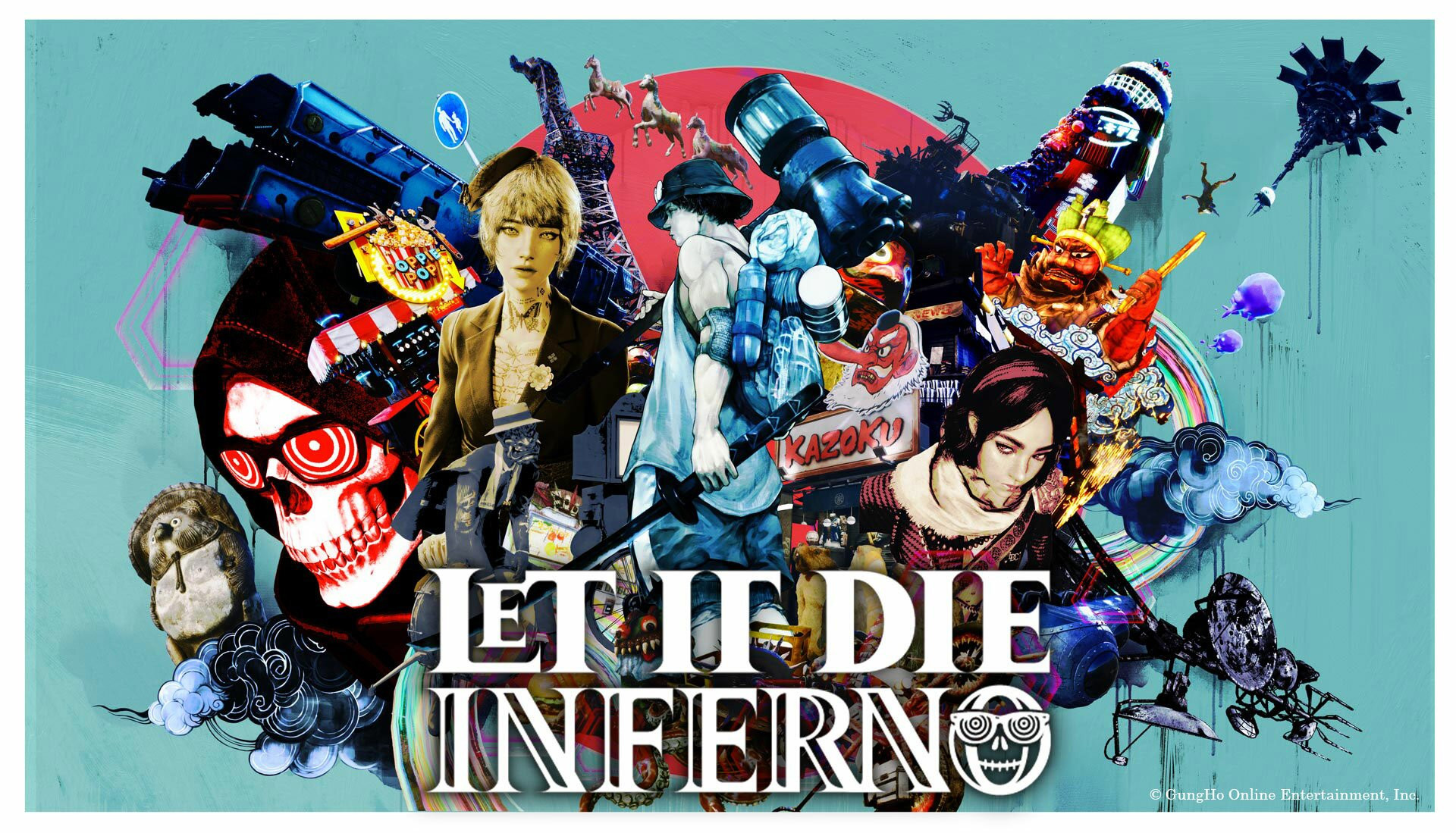
The term ‘B-grade’ carries different meanings depending on who you ask. Some interpret it as something inferior or off-mainstream; others see it as unconventional or uniquely styled—what many now call kitsch. LET IT DIE: INFERNO embraces that B-grade identity fully. You might call it tacky, but to me, it reads as deliberate kitsch.
From the moment the game starts, it makes clear—boldly—that its design sensibilities aren’t conventional. The storytelling unfolds with the crackling noise of a 1980s CRT TV, featuring bizarre scenes where a character’s spine is extracted and delivered to the base upon death, ludicrous monster designs that appear to be missing a screw somewhere, and strange weapons that lead you to think, 'Are you kidding me, fight with this?' These are sensations modern games—polished, stylized, and character-driven—rarely evoke. The exhilaration of battling and surviving within that feeling is the essence of LET IT DIE: INFERNO.
Even though they say LET IT DIE...The mission is to return alive?
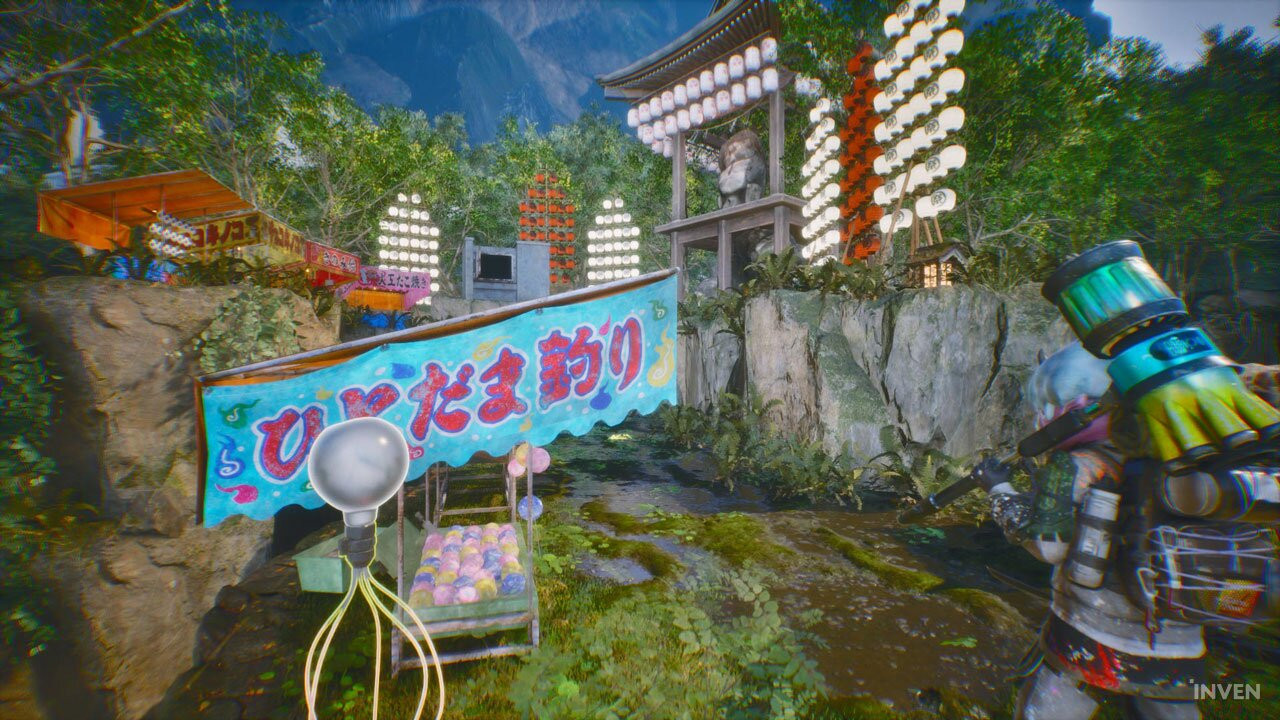
The game follows the core structure of the roguelite genre. As you play the game repeatedly, resources naturally accumulate, allowing you to use those resources to increase your character's base stats. Eventually, the game becomes easier with repeated play.
However, LET IT DIE: INFERNO adds a slight twist to the typical roguelite genre. Instead of playing until the character dies, the game provides missions for each stage, and upon completing the mission, the player can return to the base alive. When players return alive, they receive more rewards than they would from dying. All weapons held and items farmed become the player's own. The player can choose to use the rewards later or immediately.

▲ The goal of this game is to survive in a hell filled with strange monsters

▲ When they die, only the spine remains and is sent back to the base
Each stage has missions to achieve and time limits. Additionally, fighting Monsters is not easy, making it relatively difficult to complete the missions and return alive. When farming goes well, the desire to return with Equipment increases, intensifying the stress and pressure of mission accomplishment. This tension paradoxically deepens the game's immersion. While other roguelite games view death as part of the growth process, in this game, death is a painful loss. The fear of losing Weapons and Items that were hard-farmed paradoxically serves as the driving force that enhances the game's immersion.
The immersion that comes from not wanting to die grows stronger as you progress through the later stages. In the early stages, you fight bizarre Monsters in a PvE format, but as you grow stronger and reach a certain level, you must venture deeper and engage in PVP with other Players. The stress and pressure call for more immersion, and the catharsis of barely surviving and escaping through the Escape Pod back to the base becomes even greater. Because death is not trivial, returning alive is even more valuable.

▲ I am happiest when my mind is light and my body feels heavy
Why is the lock-on feature missing? It was intentionally removed. This is a psychological battle arising from simple logic
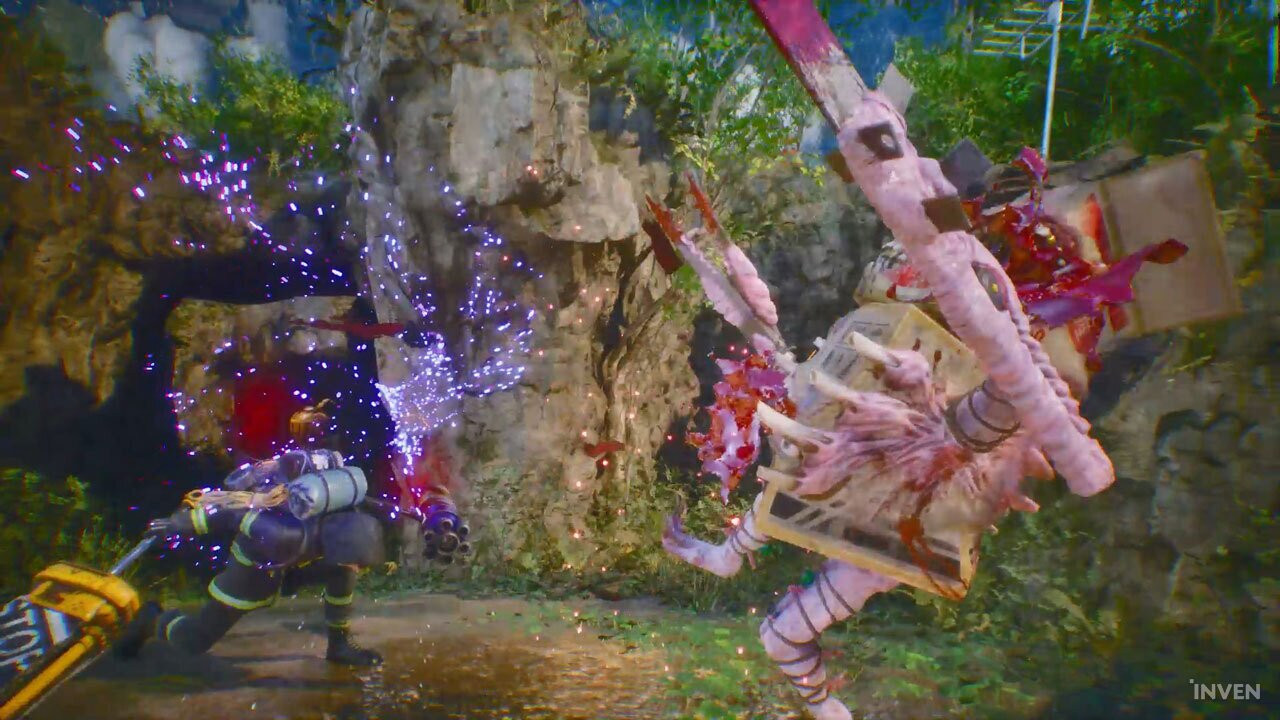
The core of this game is combat. Whether you're farming while wandering the map, riding an 'Escape Pod' to survive, or delving deeper into the abyssal hell, Players must engage in combat to obtain anything. Combat operates under one major rule: it doesn't matter if the opponent is a Monster or another Player.
The battle's offense and defense are resolved as a psychological game similar to Rock-Paper-Scissors. First, the battle begins with an attack from either side. The opponent has two options here: ① roll to evade or ② block. ① If they roll to evade, the confrontation between both sides resets, and each side must reassess the distance to decide who will attack. ② If they block, they can counterattack the opponent, though their stamina is slightly diminished.
Then, wouldn't it be enough to wait for the opponent's attack and counterattack? That's not possible. When the opponent is blocking, you can use a special technique called the ③ Guard Break Attack. This technique can ignore the opponent's guard and deal damage. However, the Guard Break Attack is slow, so even if you activate it first, you might end up taking damage from a regular attack instead.
▲ If you just block, you'll be hit by a Guard Break attack
"Guard and Counter" to overcome a regular attack, "Guard Break" to penetrate the guard, and "Normal Attack" to take advantage of the slow openings. This straightforward yet effective psychological warfare is constantly in effect, whether you're facing a regular monster, a humanoid monster, or a human. The fundamentals remain the same; only the difficulty varies for each opponent.
The depth of this combat system is enhanced by the deletion of the Lock-on system. The developers revealed in an interview that they intentionally excluded the Lock-on feature, which is a convenience function commonly taken for granted in modern 3D action games.
If there had been a Lock-On, the battles in this game would have been much easier. However, since there is no Lock-On, the Player must directly gauge and adjust the distance with their eyes. Moreover, when dodging the opponent's attack, they need to recalibrate the distance from the beginning. The ability to quickly assess the range and zero in on the target determines the outcome of the battle. The intended inconvenience serves as a measure of skill.


▲ They rushed into battle with low health and ended up being caught off guard
Fight with a cursed painting? Firecracker guns are good? Various weapons that enhance the depth of combat
▲ Diverse Weapons Add Depth to Combat
In LET IT DIE: INFERNO, weapons are not merely B-grade props. These bizarre yet diverse weapons add depth to the simple combat system. Weapons vary greatly, from ordinary baseball bats and Japanese swords to more unusual ones that make you go, "Huh?" There are fireworks guns that shoot flames, propellers that spin and shred enemies, and even weapons that involve wielding cursed paintings while taking a defensive stance.
Each weapon has a different attack speed, reach (range), and hit detection. Some weapons have a long attack delay but deal a powerful one hit, while others can deliver quick successive attacks. Weapons generally have one specific weakness each. They may be large and powerful but slow, very long and fast but with a narrow range, or very short and fast but weak. Each weapon has its own role depending on its characteristics, such as being advantageous for preemptive attacks, blocking and countering, or counter-attacking. Even the 'Unarmed' weapon possesses exceptionally strong special techniques and counterattacks.

▲ 'Arms', a rocket weapon that is good for a preemptive attack from a distance

▲ Propeller Edge, which attacks from outside the sword's short range
In fact, you might think, 'The weapons are unique, but isn't the combat system just ordinary?' So, LET IT DIE: INFERNO takes it a step further by equipping a weapon in each hand, much like playing rock-paper-scissors with both hands. Furthermore, each weapon has a different special skill, and special techniques that utilize both hands, such as Guard Break, vary depending on the combination of weapons.
Therefore, to survive in this hell, it is not enough to simply wield a good weapon. You must perfectly understand the characteristics of the weapon you possess and comprehend the synergy with the weapon your opponent wields. Only after mastering the combinations of weapons and special techniques can the true psychological battle with the opponent begin. This process is the essence of the combat offered by LET IT DIE: INFERNO, showcasing the hardcore action hidden within its B-grade appearance.
Another device that completes this battle is the sophisticated hitbox. During combat, if you visually feel contact, the impact sound inevitably rings out, and if you think you've missed, it accurately cuts through the air. Even in major games, there are instances where questions arise regarding hitbox judgments, but in LET IT DIE: INFERNO, such inconsistencies were not felt even while using various weapons. This scene showcases the know-how accumulated over ten years of the LET IT DIE series. This intricate finishing enables hardcore action without lock-on and psychological warfare through various weapons.
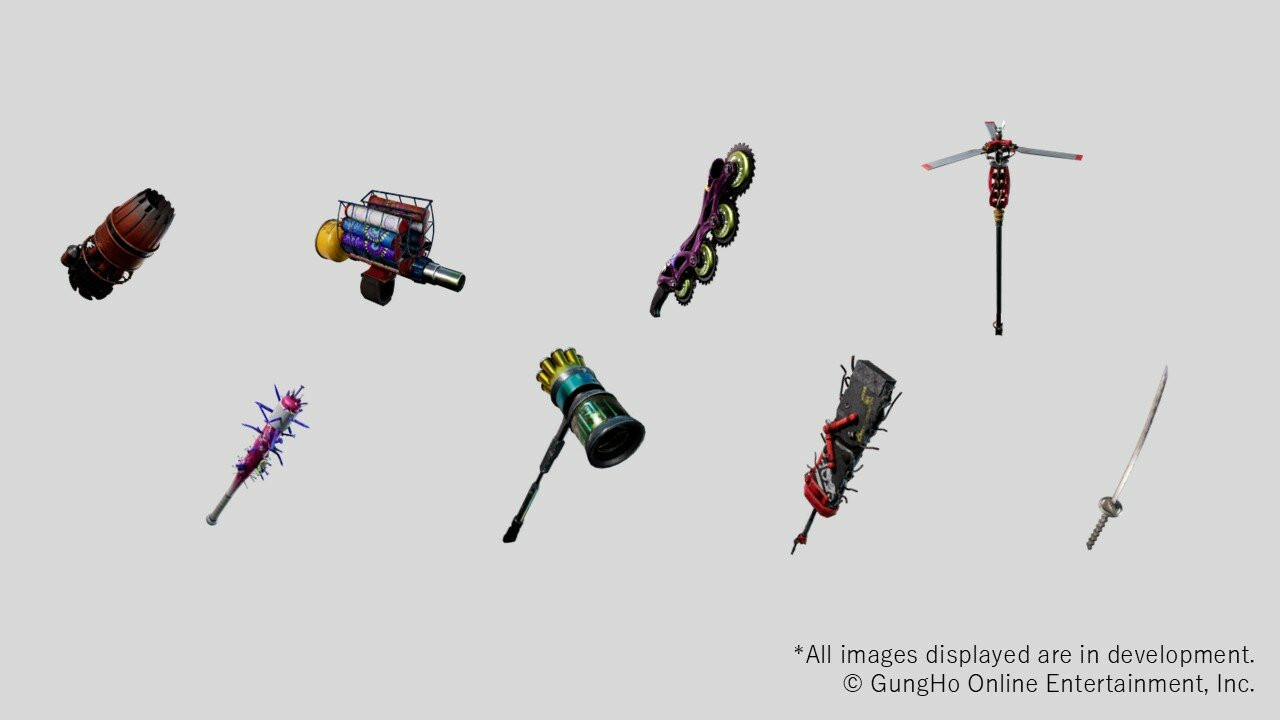
▲ Eight weapons that appear in LET IT DIE: INFERNO. Additionally, there are many more bizarre weapons hidden away.
Disappointing level design, obvious seams, and shortcomings that cannot be covered up with B-grade sentimentality
LET IT DIE: INFERNO engages players with its strengths, but there were moments when immersion was disrupted during gameplay. Firstly, it is challenging to fully grasp the mission's survival aspects solely through the game's 'tutorial.' In particular, the SP Radar within the 'Crouch' function is a crucial skill for survival, and I was unaware that it also indicates the location of the Escape Pod. As a result, I struggled to survive during the initial rounds.
There are also several parts that are not intuitive. In the case of crab burgers, which are among the 'yum-yums' that players can eat, it's intuitive that they can be caught and eaten, but at first, it was not clear whether other items, such as butterflies or moles, were edible.
These detailed aspects are very well explained in the in-game 'Help' section. From combat controls to status effects and the intricate rules of the system, it's almost at an encyclopedic level. The problem is that there aren't many players willing to read it before diving into the game. The frustration that arises from having the information but being unable to access it seems to be the biggest factor leading to early dropout.
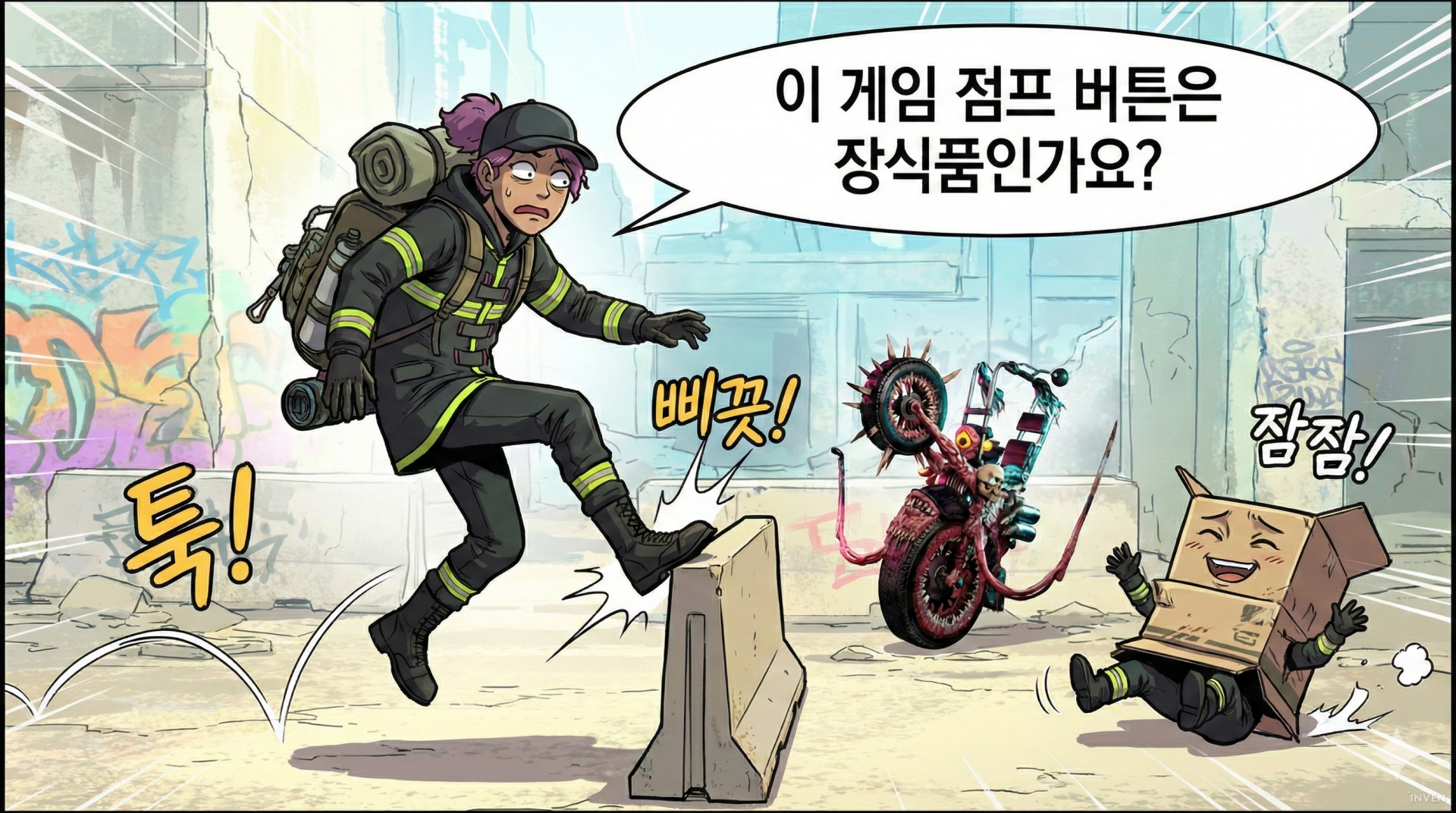
The Character's movement, especially the usefulness of the 'Jump' function, is disappointing. There is no need to jump while playing the game. Not only is the jump itself low, but it is also impossible to jump over low obstacles or use it for attacks. The jump is limited to simply overcoming low ledges or moving across the terrain, leading me to wonder, "Was there not enough time to add more functions to the jump?"
It also feels strange from a level design perspective. Once you reach around level 3, the strength of the Monsters that appear becomes excessively high. It feels like, 'Did they intentionally create hurdles to build up the specs so that the game doesn't progress too quickly?' I wonder how these aspects will change after the official release.
LET IT DIE: INFERNO is clearly not a perfect A-grade game. There are unfriendly aspects, and some parts feel harsh. Standing in stark contrast to today's gaming trends, it asserts, "This is our way," enticing players with its unique flavor. Some may be put off by it, while others will be drawn in, captivated by its distinct taste.
What is certain is that LET IT DIE: INFERNO has firmly established its own charm. The obsession with survival, the thrilling tension that arises from the process, and the captivating combat system are the driving forces that make playing this game so engaging.
If you're tired of the standardized AAA game grammar and crave the primal thrill of measuring distances and smashing enemies with your own hands, I wholeheartedly encourage you to board this hell-bound train. However, do not believe the developers when they say, "It's okay to die." You will fight to survive more than anyone else. As you struggle, you will unexpectedly find yourself laughing at the bottom of hell. That is the B-grade sentiment that LET IT DIE: INFERNO offers.


Sort by:
Comments :0