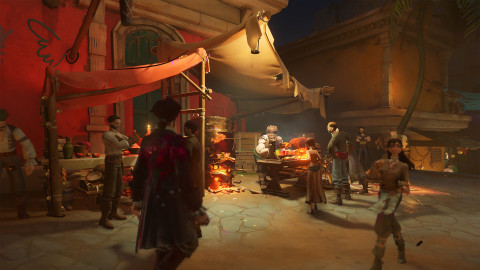
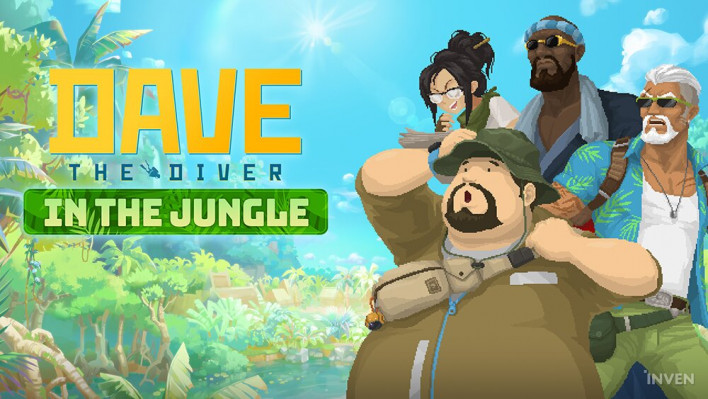
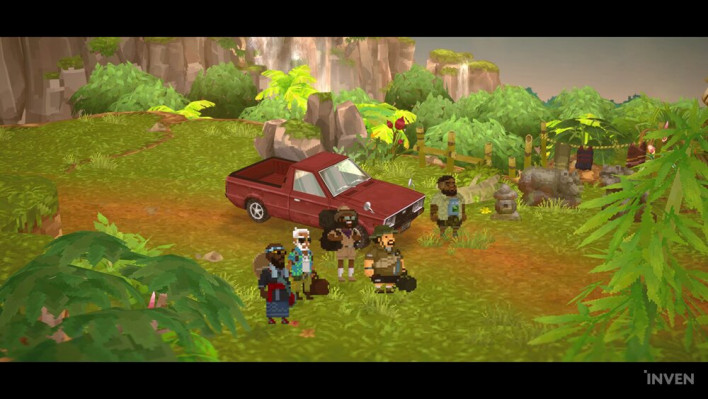
Our friendly Dave is back with a completely new look, featuring a new setting and new friends. Instead of the beautiful blue of the Blue Hole, this humorous adventure unfolds in the lush, vibrant green of the jungle, complete with the beautifully decorated Utara Village, freshwater lakes, and dangerous forests.
While it is a story DLC rather than a sequel, DAVE THE DIVER: In the Jungle is 'new' enough that almost everything—aside from the core diving and restaurant management—feels different. As a result, the game offers a fresh way to enjoy the experience while retaining the essential charm of DAVE THE DIVER.
MINTROCKET Head Hwang Jae-ho stated that this novelty is 'the result of MINTROCKET's philosophy to deliver a gameplay experience distinct from the original.' This new story for Dave, which MINTROCKET and Hwang want to showcase, is exactly what 'In the Jungle' is all about.

A Completely New DLC: In the Jungle
This DLC feels like it has the content and volume of a sequel. Is there a reason you released it as a DLC rather than DAVE THE DIVER 2.
"Most people who enjoyed DAVE THE DIVER love the sea and sushi. That is our main focus, and I believe it is our unique strength. We received a lot of praise because we did that well. However, this time, we made it with the idea of offering something different. You could say our 'geeky' nature is reflected here; we have a tendency not to repeat what people like or are already familiar with.
This time, the setting is the jungle, and we aren't making sushi. Many of the popular characters from the main game don't appear either. There is almost nothing carried over. So, while it uses the DAVE THE DIVER universe, it is essentially a different game. It is inevitable that people would ask if this should have been a sequel or a follow-up.
If we had released it as DAVE THE DIVER 2, user expectations would have been different. DAVE THE DIVER isn't a game where we keep changing the setting. It is already recognized as a game about the fun of exploring the ocean; doing something completely different there would have clashed with user expectations and wouldn't have been a good business choice. So, since we were going to do something different anyway, we thought it was more appropriate to view it as a side story. Approaching it that way actually gave us more freedom.
The development period was similar, and the core members are almost the same. Most of them came along even after the spin-off. It might look very different on the surface, but it is essentially being made by the same people.
It seems you have a clear standard for distinguishing between a sequel and a DLC.
"I was a bit worried that people might question why we were making something that wasn't a sea game. We conducted external tests, and the feedback was very positive, with many saying it felt like a DAVE THE DIVER DLC, and the scores were very high. There was praise for the fact that it was a completely different experience that didn't feel repetitive after the main game. That positive reaction to our 'transformation' was encouraging.
It has been three years since the main game launched. I played it in earnest for the first time in a while, and I was able to adapt to this DLC easily. It seems to be thanks to the new elements; was that intentional.
"That was intentional to some extent. Usually, expansion packs come with the premise that you must know the main game inside out or remember the entire story. It seems that's because they are often filled with fan service. We wanted to approach it differently. As I mentioned, we wanted to release something like a side story. We made it so that even if you don't have much accumulated assets or expertise from the main game, you can still progress sufficiently.
Most users will be playing DAVE THE DIVER again after a long time, and I didn't think we should premise it on their existing knowledge or adeptness. So, we approached it with the idea of making it completely new and teaching them again. We wanted it to look like a different game from the start.
User expectations have risen since the success of the main game. Did you pay attention to anything in the development process to meet those expectations.
"The original internal target for the main game was about 500k copies. The idea was to break even and, if we got another chance, make the next one even better. I think the team was inexperienced at the time. Most of the team, including myself, were making a console game for the first time; we had been developing mobile or PC games. It wasn't a project heavily supported by Nexon, either. We didn't have a lot of manpower, and many of us were working together for the first time.
Back then, I thought we had to do that much to sell 500k copies. But our standards turned out to be higher than we thought, and thanks to that, users saw it as a high-quality title. Now, those standards have become the team's default. There is now an expectation for the output we produce, which brings a certain amount of pressure.
When we were making the main game, my ambition was very high, but now the team members also feel that they shouldn't be ashamed of their work. I think it's positive that such a mindset exists within the team. Those working on other titles now also have high standards. We want to produce results that don't rely on name value—results we can be proud of.
Actually, it already exceeded my standards as of last week. But the team members are even more ambitious and keep refining it. We are obsessively checking optimization, and fixing details like NPC dialogue, graphical glitches, typos, and loading times. That doesn't guarantee the game's success, but I believe it ultimately increases user trust.
There was some negative feedback regarding the latter half of the main game. How did you reflect that in this DLC.
"There were opinions that the latter half of the main game lost its fun or became sluggish. We accepted that humbly. However, our intention at the time was to reduce repetition.
I thought that just repeating tycoon management and fishing could become boring. Assuming someone plays for about 12 hours, I thought the repetition might become tedious after 5 or 6 hours. I believed the latter half needed to be more fun, so I wanted to provide more story and create a structure where the repetition up to that point would feel justified as a way to unfold the story in the latter half.
However, some users took it the other way. They felt the repetitive gameplay in the beginning was fun, so why was the story suddenly interfering? That's when I realized our intention had gone slightly off-track. We strengthened the story to reduce repetition, but in doing so, the fun of catching fish and serving customers became diluted. That seems to be why the latter half was criticized for being sluggish.
On the other hand, if we had just made them do tycoon management for over 10 hours, I think our lack of depth would have been exposed. We aren't tycoon experts. I think we've become a team that is good at pacing now, but at the time, we lacked that confidence. So, we focused on throwing in various elements to maintain the flow.
What we learned then is that you shouldn't shake the foundation. We felt that users don't like it when you do other things at the expense of the core of cooking and fishing. Since we aren't story experts, there was a limit to carrying the game with just the story.
So, this DLC incorporates many elements without significantly shaking the foundation. Ultimately, you have to return to the village, keep talking to the same residents, and keep going into the lake. It's a structure where you do other things outside and then return to progress. Because we didn't change direction as drastically as before, we designed it to maintain the core fun until the end. This is the result of incorporating the lessons learned from the main game into this project.
Since there are more choices in this DLC, there is a risk of it becoming cluttered. How did you organize this.
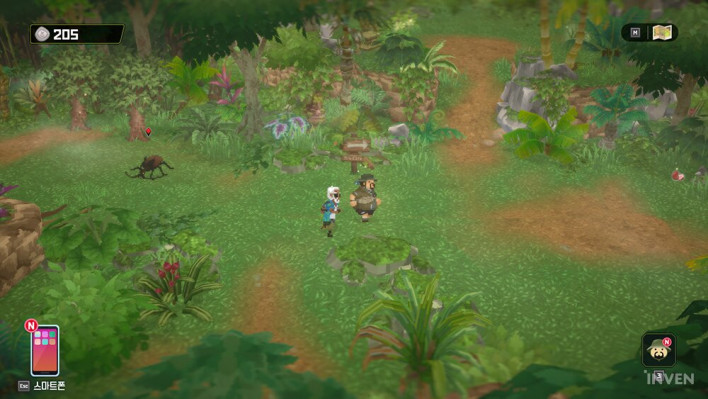
"I think it's ultimately a matter of the pace at which things are unlocked. The main game also had set timings for when the farm or fish farm would open; it was a game with quite controlled pacing. This DLC has much more to do from the start. The user can choose what to do first. Since that could lead to a cluttered experience, we inserted moments to organize things along the way. We placed moments where players can feel, "So that's why I did this," or "I came back and these people have changed like this."
At first, there were almost no forced events. It was completely open. But we realized that if we did that, the freedom would be too high, leading to a loss of direction, so we added some devices to pull them back to the main flow. We adjusted it to a structure that balances freedom and progression.
We felt this strongly in internal testing as well. We designed it so that if you go around the village clockwise, you naturally meet the characters, but no one who went the other way met anyone, and the progression broke. Conversely, users who found meeting people fun and accepted all the missions on the first day felt that the content was empty afterward. Ultimately, we made it so that no matter how you play, it converges in one direction. That was the hardest part, and at the same time, the most fun.
Leaving the Blue Hole for the Jungle: The Expanded World of DAVE THE DIVER

The setting has expanded from the Blue Hole to the jungle and Utara Village. What was the most important standard you kept in mind to maintain the 'DAVE THE DIVER' feel during that process.
"Externally, it seems DAVE THE DIVER is seen as a well-made game that utilizes the fresh themes of the sea and sushi. As a creator, I think our core lies in pacing and tempo.
There are games where you can dig deep into a specific mechanic and have fun doing just that. Soulslike games are like that, and I consider Subnautica a game that digs deep into crafting. Those games have reached the pinnacle in specific areas, and I have a lot of respect for them. On the other hand, I don't think we are a game that does one thing definitively well.
The direction we pursue is to weave together various elements to provide a definitive sense of fun. In the case of this DLC, even if there isn't one very special part, it contains a very wide variety of elements. There's talking to villagers, building affinity, RPG-like parts, growth elements, and so on. The depth of each isn't very deep. However, I think it's a game that shines when these elements appear at the right time and play the right role.
During the interim test, this pacing wasn't well-established, and we received harsh criticism. Those who played according to our intentions gave good scores, but those who didn't move as intended gave harsh criticism. That's when I realized we shouldn't leave the play of such diverse elements solely to user autonomy, but rather use our strengths to distribute them at the right time. After reassembling and testing again, the reaction improved.
In that process, I felt once again, "This is indeed what we are good at." Whether it's the jungle or the sea, I thought we could make a decent game if we refined our strengths a bit more. At the same time, I wanted to avoid it looking like we just put a jungle skin on the sea. We removed a lot of the repetitive parts. Ultimately, I saw that we could maintain the pacing and rhythm while continuing to throw new things at the player.
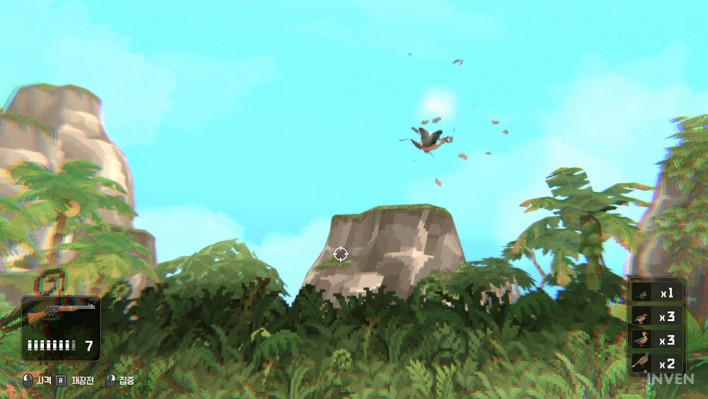
You can play while building affinity, but there are quite a lot of minigames. However, after playing, I noticed there were no forced elements; why did you include so many.
"This is also a game-design choice. I have great respect for Hades. Roguelites are bound to be repetitive, but Hades reduced that repetition with the overwhelming strength of its narrative.
We don't have that narrative strength. Our strength is pacing. We can't dig deep into one thing, but we can arrange various elements in a fun way. I felt in the main game that throwing in a minigame when the fun starts to drop acts as a refresh.
There weren't many forced minigames in the main game, but users found elements like the gas cutter in the Dave mission more fun than I expected. I thought suddenly making them do other things might be a hindrance, but the reaction wasn't bad. The gambling hall in the Sea People village was also accepted well. So, we made this one similarly.
There are minigames that come from the base, and there are minigames that you don't necessarily have to do, but are fun if you do. They are often attached to outsiders. Outsiders appear as customers, and minigames are included when unfolding stories with them. That's why the quantity increased.
However, the minigames didn't harm the essence. The Vietnam team made the minigames quickly and well, and it was a way of attaching those results effectively. It's not that we couldn't do essential development because we were making minigames.
The most impressive part was definitely the bug battle. How can one get good at it.
"The bug battle is basically based on rock-paper-scissors. The characteristics of the bug don't mean it throws a specific hand more often. For example, it's a structure where if a bug with a 'scissors' characteristic wins with scissors, the damage or recovery amount increases. That explanation might feel insufficient.
Actually, there are parts of the bug battle that I thought needed to be raised further compared to the cost invested. But in external tests, the bug battle was among the top two favorite elements. So that's how it ended up here. I think there is an essential fun in collecting bugs. We even researched global data to include rhinoceros beetles.
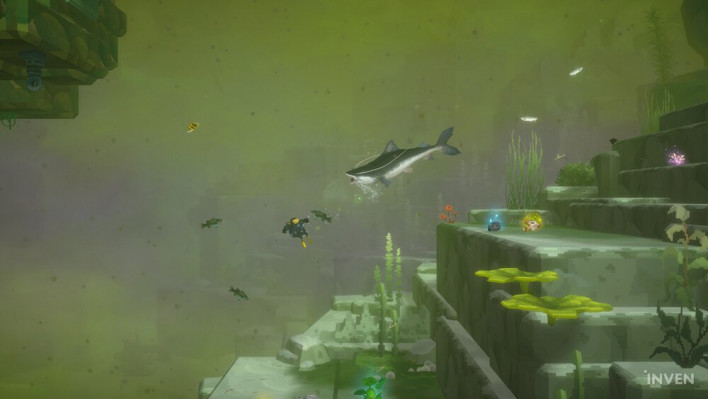
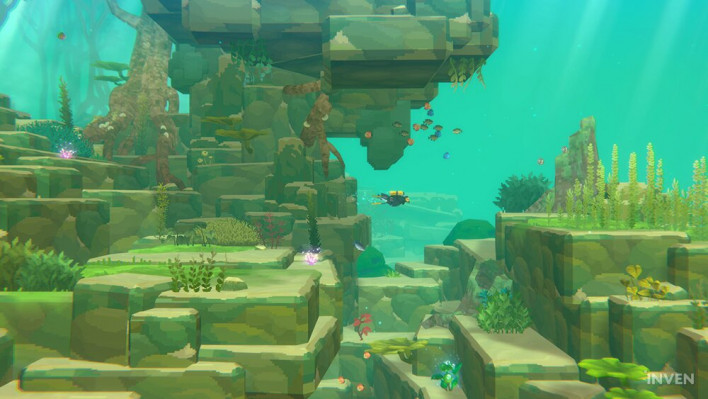
This time, the freshwater ecosystem is the focus. What kind of design did you use to provide a different gameplay feel from the sea.
"A difficult point when making the main game was that the actions sea creatures can take are more limited than I thought. Even if a shark looks scary, it eventually just bites or charges. A thresher shark also eventually charges. The tail attack of a thresher shark is a fantasy element we added.
On the other hand, if you look at freshwater, especially Amazon monster fish, there are many creatures that look truly scary. They have strong teeth, and there are many vicious creatures that can give a jungle feel. Piranhas are like that too. So, I thought a lot about how to implement these creatures.
One of them is the interaction between ecosystems. For example, if a fish is shot and bleeds, piranhas smell the blood and attack that fish. If an electric eel emits electricity, surrounding fish also take damage. I really wanted to try having creatures interact with each other like this. However, I couldn't include too much.
Still, we included various patterns that we couldn't in the main game. Catfish have a swallowing pattern, and electric eels emit electricity. Sturgeons shoot stones from their mouths. Because freshwater creatures look so bizarre and are strong, we could include more daring actions. There is a sea under the lake, and if you go deep, there are ancient fish. We put a lot of strange elements there too.
With the introduction of the Jungle Gun, the randomness in the diving process seems to have decreased. Is this to provide stability.
"There was an intention to reduce randomness. This can also be seen as a part where our geeky side was applied. You can return to the main game by pressing a button, so I wondered if it was necessary to make them go through the same experience again. So, I thought about changing the firearms.
This time, I wanted to give the fun of the user preparing before entering and rotating various firearms to suit the situation. To this end, we intentionally placed fish that can respond to various guns. For enemies that approach in close range, a shotgun is good, and for enemies that charge quickly from a distance, you respond with a sniper rifle. For non-lethal species or enemies that swarm like piranhas, you can deal with them all at once with a net gun. The fish placement itself was divided in that way.
We also put effort into the firearm upgrade tree so that they can be upgraded in the desired direction. I wanted to create the fun of bringing several prepared guns and rotating them according to the situation. In boss battles, we aimed for actions like using a shotgun for close-range attacks, a sniper rifle for long-range, and the basic gun or harpoon when out of ammo. It's a method many action games have used, and I wanted to create that fun within Dave.

What are the biggest features or differentiators of Bancho Grill.
"The biggest difference in Bancho Grill is that there are no regular customers. This time, all customers are villagers. Wouldn't the village residents need to meet a certain number of visitors for the business to operate? The shop can't run with just one or two people. That's why we released many residents early on and even threw missions at them to the point of being burdensome. Afterward, we adjusted the pacing.
The fact that customers don't come if you don't get close to them is a fun but also burdensome element. You have to raise affinity at the right time for Bancho Grill to grow. I think the structure of gaining the residents' affinity and serving the food they like is the biggest differentiator from Bancho Sushi.
If you treat outsiders well, they also join as staff. That possibility has increased much more than in the main game. When you finish an outsider's story, that person remains in the village and works as a Bancho Grill staff member.
Many unique recipes appear; I'm curious about how they come about.
"Originally, I thought of the Amazon as the background. I created an image like an Amazon village seen in documentaries, but when implemented in 2D, it was duller than I thought. A screen with a lot of dirt floors and vines didn't look pretty. Since many users liked DAVE THE DIVER because the Blue Hole was pretty, the aesthetic part was important.
Meanwhile, I went to Bali, Indonesia for about two weeks, and the planning team leader also went to Indonesia that same year. The planning team leader even took a cooking class. When I went to Bali, there were many culturally referential elements. So, although I don't say it's Indonesia directly, I set it up like that region. I referred to the image of dangerous forests like Borneo as well as Bali. I wanted to give a resort-like feel inside the village, and a dangerous feel like the Amazon or Borneo when going outside.
For the cooking, I referred to recipe books bought in Indonesia and materials obtained from cooking classes. I looked at cooking methods using coconut milk, palm sugar, and banana leaves. I also referred to ingredients actually used as food materials like crocodile or piranha, and watched a lot of YouTube materials.
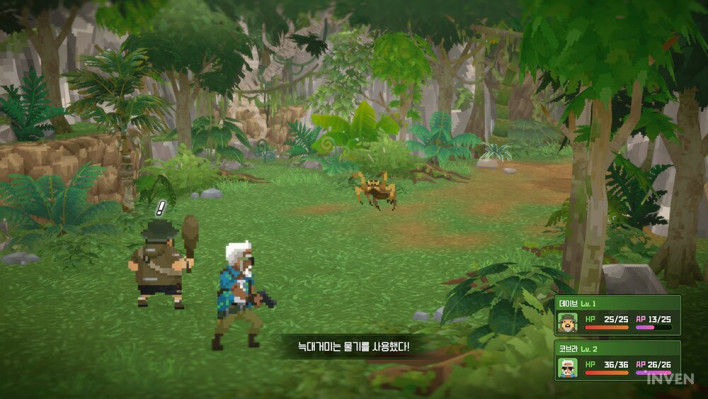
The jungle exploration and combat have a strong feel of masterpiece JRPGs, including Dragon Quest. Was this intentional.
"I like Dragon Quest and Mario RPG very much, so I referred to them a lot. Actually, I wanted to make a JRPG, and I wanted to give it a lot of JRPG feel. When I actually made it, it was harder than I thought. Party member combinations, the way enemies appear, combat balance—these parts were not easy. It was a good experience. Still, I think it was completed not too badly as a result.
Over 20 New Characters and Story

It seems Dave's role has changed from the main game.
"Dave in the main game was closer to a passive character. The points were Bancho Sushi and the boat, and it was a structure where characters came to Dave and talked to him. Users felt the freedom was high because they could ignore those tasks, but the structure itself was actually linear. It was just a game that didn't penalize you.
This time, there are many residents, and the user chooses who to talk to first. Instead, if you don't move actively, the game doesn't progress. Dave has also become a bit more of a hero from the lazy middle-aged man he was after going through the main game. This time, Dave goes around, talks to people, listens to their stories, and performs tasks, and their stories are set to unfold. I wanted to give the feeling of helping the village by moving actively like that. This is the difference in the character of Dave and the difference in the game structure in this DLC.
Is the reason for changing the game's main focus to real-time exploration the same.
"That's right. I wanted to use Dave a bit more actively, and I also wanted to try different mechanics. But that was harder than I thought. Catching a non-linear structure was easy, but it wasn't very fun. I learned that controlling this is not easy, and our strengths are also diluted. It was harder to handle than I thought. So, I think we spent almost three months just improving the residents' affinity system.
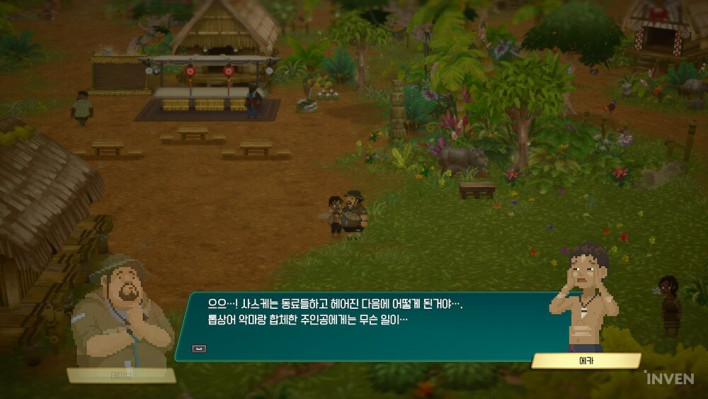
The affinity system is definitely a big change. But for raising affinity to be fun, the character of the villagers is important; what efforts did you make for this.
"There are almost 20 new characters appearing this time. There are outsider characters, and there are also surprising cameos. You can also meet major game IPs brought in through our deep friendships.
However, in the case of jungle residents, their personality isn't well-revealed in their appearance, so it wasn't easy to capture the characters. Unlike existing characters where you can see the character at a glance, jungle residents wear traditional clothing, so it was difficult to give a big difference in appearance. So, I had to write the dialogue a bit stronger. Of course, I toned down the parts that were too strong.
Still, there are characters whose personalities are captured more strongly than in the main game. In a way, they are one-dimensional, but they are that clear. There is a husband who is henpecked by his wife but wants to gamble behind her back, a child who doesn't receive love from his gambling father, and a character with excessive confidence. Since there are many characters, I thought that if I made them multi-faceted, the story could be rich, but the characters wouldn't stand out as much. So, I chose to go with a relatively flat but clear direction for most.
Personally, I like the husband character who is henpecked by his wife. I incorporated many human archetypes of married men around me. It includes stories of being henpecked by his wife but wanting to play secretly behind her back, secretly playing games, gambling, or earning pocket money.
There was a resident who likes Wuthering Waves goods; is it an official collaboration? I was surprised by the cameo.
"It's an official collaboration. I proceeded with it because I have a friendship with the Wuthering Waves side. Besides Wuthering Waves, many collaboration elements such as Muse Dash, Human: Fall Flat, Terraria, Vampire Survivors, and Two Point Museum are included.
Then did you contact everyone to proceed with the collaboration.
"This collaboration was not done for business reasons, but in many cases, it was included loosely based on friendships. I think we built friendships with overseas developers better than I thought. I don't think the respect overseas developers show us is simply because the game was successful. I think it's closer to the respect shown to someone who created something creatively specific.
I don't think we are a team that makes 'likes' of something. Of course, there are parts where we borrowed various legacies made by our seniors, but I think they see that we have built a unique domain for DAVE THE DIVER. So, there are cases where they respect us a lot in the West or China and want to collaborate.
Personally, the sense of pride coming from that part is greater than the sales volume. There is a feeling of being recognized as a creator. I think a well-made creator and a creator who made something new are different. Success belongs to the whole team, and my honor seems to be this side. It's the recognition that I made something new.
I also see the emergence of 'Dave-likes' as good in that context. I don't think they copied it just because someone referred to it. I feel that our game had an influence, and it was recognized structurally. The emergence of Dave-likes is one of my goals as a creator.
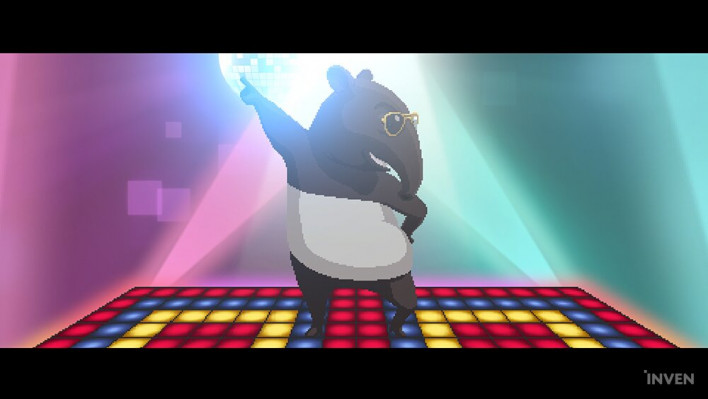
When it comes to DAVE THE DIVER, B-grade sensibility is representative. But it's really difficult to keep the line with B-grade sensibility. How did you balance freshness and excess.
"I think it's important to build a unique domain. There aren't as many games that use B-grade sensibility as I thought. During the recent SGF period, games were introduced through various showcases all week, but there were many dark, heavy, and serious games. There weren't relatively many games that looked cheerful. I think that part is also an area we are good at.
However, B-grade sensibility is definitely difficult to handle. If A-grade is a matter of how well you build and implement a set answer, B-grade humor is closer to a joke. If you tell the same joke once, it's funny, but if you repeat it two or three times, it becomes unfunny. But our game has repetition. They are elements at completely opposite poles. I think matching this well is really important. If the game is repetitive and the jokes are repetitive, it immediately becomes unfunny.
Honestly, I think this is an area that has to be left to sense. The role of Kim Jun-hak, who made the cutscenes, is big. He made all the cutscenes alone, and he is a person with excellent directing and many ideas. This time, he wanted to make many cool cutscenes that give a jungle feel. Of course, I think the humorous cutscenes came out really fun.
Personally, I like the cutscene that comes out in the mission where the narcissism character I introduced earlier is influenced by Bancho's cooking the most. It's a scene where a character who hated dirty things and the smell of fish changes through Bancho's cooking, and that cutscene was especially good.
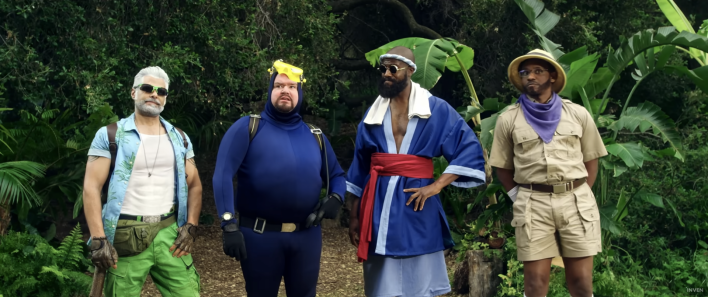
It's a story that continues from B-grade sensibility, but you collaborated on a short film with The Asylum. I'm sure you've already checked it, but I'm curious how it is.
"The short film is already finished, and we even had a screening at the company. It's a short video of about 10 minutes. I like it.
You contacted The Asylum directly to collaborate. Are there any behind-the-scenes stories.
"Since we've been showing the trailer for DAVE THE DIVER for four years already, I felt it lacked freshness. I thought the impact would be less if the next trailer went out similarly. So, I thought of doing something new, live-action.
I've tried live-action trailers before, but it wasn't easy. And this time, it wasn't for promotion, but I wanted to make a live-action version with DAVE THE DIVER. Then, because I like The Asylum, I thought I should contact them.
At first, it wasn't easy to get in touch. I contacted them since the end of last year, but there was no answer, so I even prepared Plan B. Just as I was about to give up, they contacted me. And the director of Sharknado didn't know DAVE THE DIVER well at first, but after introducing the game, he directed it himself.
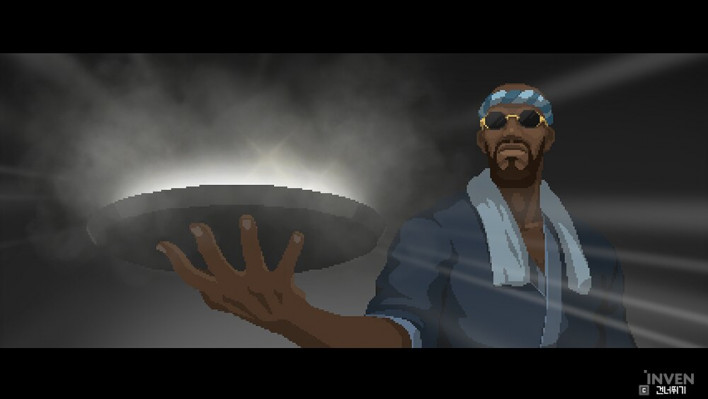
The work process was much more detailed than I thought. From actor casting to costumes, props, and hairstyles, I had to check them myself. Because it's a pixel character, the details aren't clear, so we had to check small elements like Cobra's glasses or character costumes one by one. The video also went back and forth more than 10 times, and we checked everything including recording and dialogue.
There are a few behind-the-scenes stories here. One is about Cobra. The actor who played Cobra was really good at acting and was too good, but his physique was a bit regrettable. I thought Cobra's character shouldn't be broken, so I cautiously asked if he could wear a belly band. But even with the belly band, the feel didn't come alive. So, in the end, it cost quite a bit, but we corrected the physique through CG.
There was also an incident where the village chief's name was mispronounced and re-recorded. However, the tone of the field and the re-recorded audio didn't match, so we ended up re-recording that part in the studio. It's not that difficult to fix a game if you patch it. Haven't we lived that kind of life? But live-action is something that can never be modified once it passes. It was a really fun yet new experience.
Are there any plans for another story DLC or sequel for DAVE THE DIVER.
"I think I won't do DAVE THE DIVER 2, or if I do, I'll do it later. I have a desire to do DLC. However, I don't know if users will find it fun to keep releasing DLC. If there's something they might find fun, I can do it. However, I don't think I'll do a story DLC.
Personally, I couldn't do collaboration DLC for a long time because I was focusing on the jungle. I think collaboration is fun because it can be included like a mini-episode without significantly shaking the flow of the main game. There was talk that the Yakuza DLC had less volume for the price, and I couldn't put much effort into it at the time. Since I'll have some leeway after this DLC is over, personally, I'd like to try one more collaboration DLC.
Lastly, is there anything you want to say to the users waiting for DAVE THE DIVER: In the Jungle.
"There is quite a bit of pressure because the expectations are high. Still, I think I made it to meet those expectations. If there is anyone who doesn't feel that way, I will listen to their opinions humbly.
DAVE THE DIVER also had some ambiguous parts at first because we were inexperienced, but I think it sublimated into a good game by fixing a lot during the Early Access period. I hope you enjoy this one too, and if there are any lacking parts, I hope you tell us without hesitation. I intend to raise the quality even if it means modifying it more.
The intention of this DLC was to create a different experience that gives as much fun as DAVE THE DIVER. I hope you enjoy it so that it doesn't end with our intention. Anyway, I think DAVE THE DIVER is one of the works that represents Korea's single A-grade games without knowing it. I made it with that sense of responsibility.


Sort by:
Comments :0