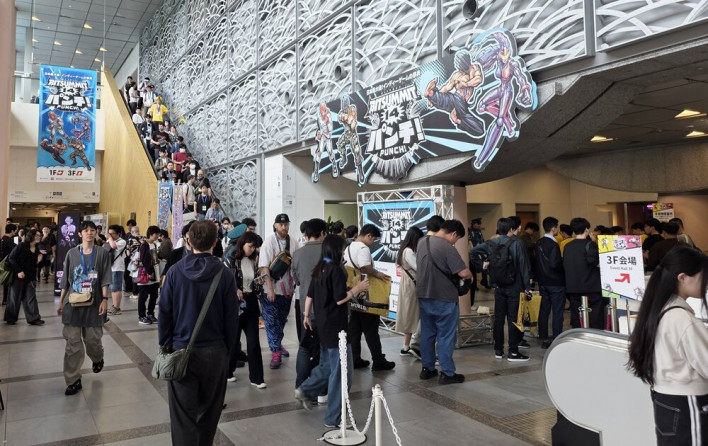
'BitSummit,' Japan's largest indie game exhibition, marked its 14th edition this year and was successfully held at Miyako Messe in Kyoto. Beyond a simple exhibition, BitSummit is a global indie game festival where developers, media, sponsors, publishers, and fans from around the world gather in one place to communicate directly. In particular, as Inven participated as the official media partner of BitSummit this year, we visited the site in Kyoto in person to vividly capture the forefront of indie games, filled with fresh ideas and passion. Behind the success of this massive festival in firmly establishing itself as a global event lies a key figure who deeply understands the hearts of both the exhibitors and the organizers. That figure is Masahiko Murakami, a director of the Japan Independent Game Association (JIGA), the organizer of BitSummit, and the CEO of Skeleton Crew Studio. He possesses a unique background, having participated in BitSummit in 2014 as a general developer and winning the Grand Prize with "Modern Zombie Taxi Driver," before joining the event's management team the following year in 2015. Understanding the creators' perspective better than anyone, he has played a pivotal role in developing BitSummit into a "true platform for exchange for developers." Over its 13-year journey, BitSummit has grown from a small-scale meetup of 200 people into a massive event attended by approximately 60,000. What exactly does Kyoto's unique indie game ecosystem look like, distinct from the Tokyo Game Show? At the BitSummit venue, which was filled with excitement, I met Director Murakami in person and had a detailed conversation about the event's philosophy and vision, as well as the direction of positive exchanges with the Korean indie game industry.
Masahiko Murakami, Director of the Japan Independent Game Association (JIGA), the organizer of BitSummit ©INVEN Reporter Jiyeon Kim
Q. Please briefly introduce BitSummit for Korean game industry professionals and gamers who are not yet familiar with the event.
BitSummit is the largest indie game exhibition in Japan. It is held annually at Miyako Messe in Kyoto, and this year marks its 14th edition. It is a global event where developers, media, sponsors, publishers, and game fans gather not only in Japan but also from all over the world. During last year's 13th event, nearly 60,000 people visited over the three days.
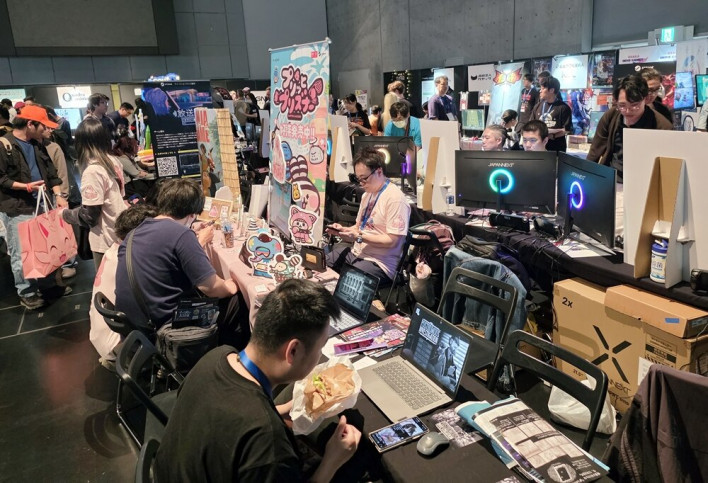
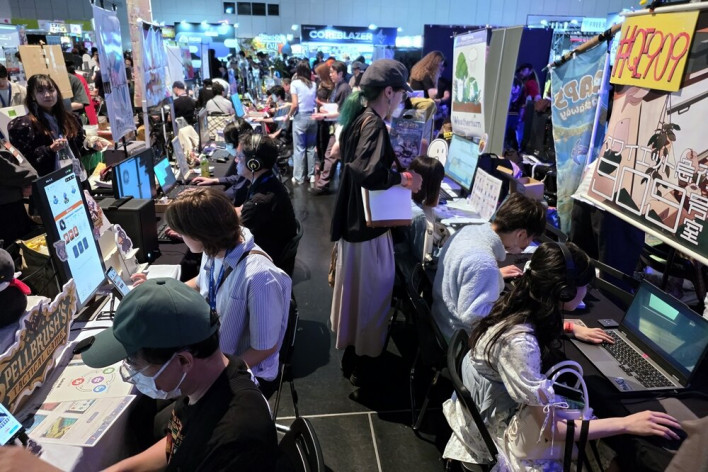
The most important point is that it is not merely an event for exhibiting games, but an 'event for developers' where game developers can directly introduce and promote their works to the assembled audience. The venue is broadly divided into sponsor booths, publisher booths, and developer booths. In particular, the developer booths are designed so that individuals can reserve tables and interact directly with a diverse range of people. Q. I heard that you were originally a contestant, but after winning the Grand Prize at BitSummit 2014 with 'Modern Zombie Taxi Driver,' you joined the management team in 2015. As someone who has experienced both roles as a contestant and an organizer, I am curious to know how you view BitSummit.
Speaking from the perspective of a contestant (developer), it is realistically quite difficult to have one's game introduced to the media, to converse directly with publishers, or to promote the game to sponsors. Even sending emails doesn't easily lead to results. However, the fact that you can meet and converse with industry insiders in person and have your game demonstrated at an offline event like this holds great significance. Furthermore, receiving favorable reviews or winning awards on a stage like this, which is known to fans worldwide, creates value that goes beyond simply "making games" to allow for communication with many people on a higher level. Since games often evolve in a better direction through feedback, I hope that every developer will participate or take part in person to experience the power of the community. From the perspective of the organizers, we initially started this operation with the desire to "introduce interesting Japanese games that are not yet known to the world to the whole world." I believe that the very fact that numerous publishers and media representatives from around the globe come all the way to Kyoto holds immense value for developers. "As we continue for the next 15 or 16 years, we are constantly and intensely contemplating how we can provide more 'chances' to creators."
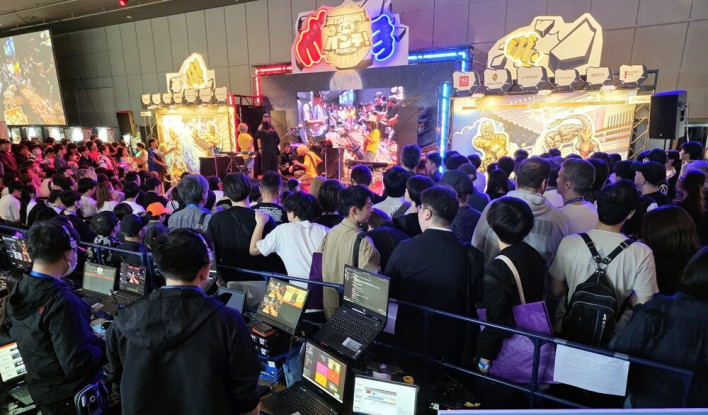
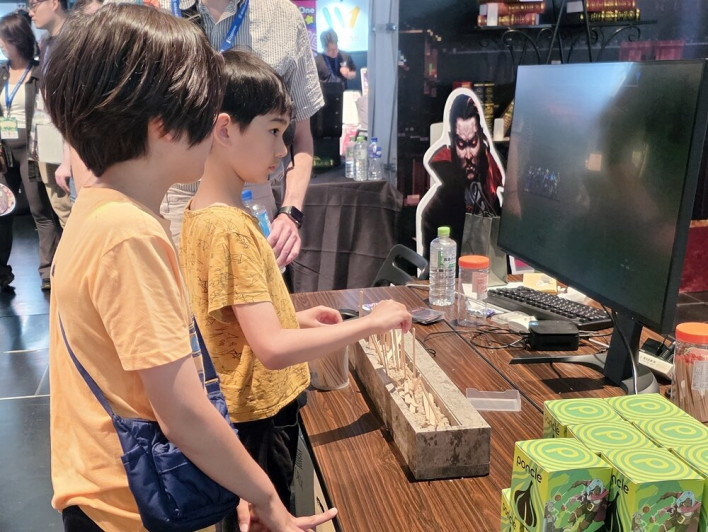
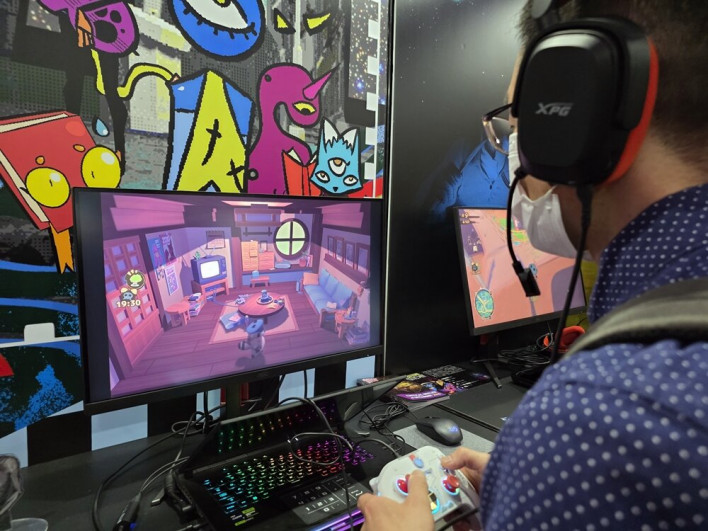
'BitSummit' is a venue where developers, gamers, students, and others all gather to play games together and share opinions. ©INVEN Reporter Kim Ji-yeon
Q. BitSummit started with about 200 people in 2013 and has grown into an event attended by over 60,000 people by 2025. When did you feel was the biggest turning point during your 13-year journey, and what do you think enabled it to establish itself as Japan's largest indie game event?
I think there were several turning points, but the first was definitely the creation of an 'organization.' Originally, it felt like a single company was running it internally like a meetup, but the establishment of 'JIGA (Japan Independent Game Association)' was a major factor in solidifying the resolve to properly organize and run the event.
Another factor was the continuous participation of major sponsors like Nintendo and Sony as sponsors for developers releasing games on their platforms. I believe Nintendo joined around 2015, and I think that was the timing when it definitely began to be recognized as an 'event worth participating in.'
And although it was really difficult, one thing that was actually good was that the coronavirus There was a time when we were completely unable to hold offline events during the peak of the trend. By hosting the event online at that time, we were able to break free from the constraint that one could not enjoy BitSummit unless they physically visited this location in Kyoto at this time, allowing us to reach a wider audience. Since then, we have poured significant effort into the online side. Although visiting the venue is the best option, we were able to establish a system where information can be effectively conveyed even without it, thanks to our online efforts during the COVID-19 period in 2020. I believe this was the timing of the most significant changes in many respects.
In terms of growth, we became known very gradually, step by step. However, as I mentioned earlier, since this is an event that highly values game developers, those who participated or competed once returned to their home countries and spread the word, saying, "It was really great." I believe this is the result of such positive feedback accumulating.
Nintendo, participating again this year ©INVEN Reporter Kim Ji-yeon
Q. Although Japan has a major event called the Tokyo Game Show, BitSummit has consistently maintained its identity as an "indie-focused festival held in Kyoto." I am curious to know how the indie game ecosystem of Kyoto itself influences BitSummit, and how it is creating an identity unique to BitSummit that is distinct from Tokyo.
I believe Tokyo could also do something similar in terms of its ecosystem, but Kyoto is a very "compact" city, so there is an atmosphere where people are close and seem to know each other. For a city of this size, there are a surprisingly large number of art universities and institutions. There are so many schools and students that it is called a 'city of university students.'
Furthermore, administrative (local government) agencies are very close to us. In Tokyo, administrative agencies would have to look after countless people, but in Kyoto, they can focus on a few key points, so the distance to the administration is very close. Also, because Nintendo is here, there are many small development companies. There are many developers and students, and the administrative agencies are cooperative and close.
Another point is that Kyoto itself is a city that foreigners 'want to visit or live in,' so there are relatively many global talents nearby. So, initially, I really liked the fact that we were able to come together as a single community in an instant when we held this event, and we continue to conduct events in collaboration with local developers, administrative agencies, and local schools.
In that sense, if we tried to do something like this in Tokyo, people would be scattered, making it quite difficult to gather everyone together. I believe the reason we were able to cooperate and achieve this, even back when we had no money, was thanks to Kyoto's unique cozy size, the intimacy with the people, and the close proximity between the administration, schools, and developers.
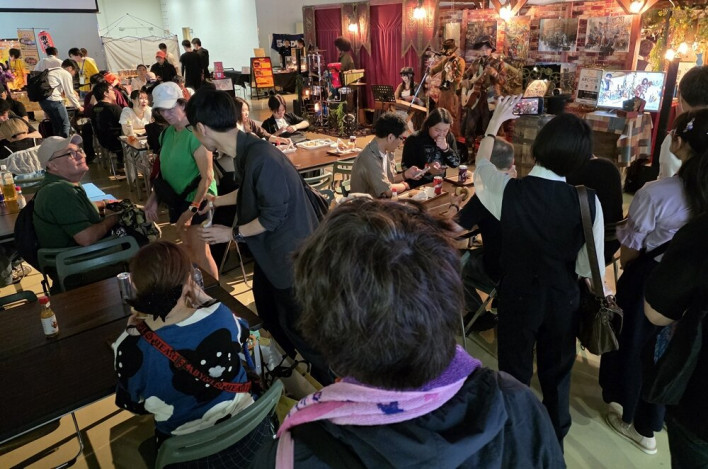
Q. The title of this year's BitSummit is 'BitSummit Punch' and the theme is 'High Impact'. I am curious about the background behind choosing this concept, and I would also like to hear if there are any new additions or enhancements compared to last year. BitSummit highlights specific game genres every year, and this year's theme genre is 'Fighting Games.' Since around last year, the global gaming industry has somewhat contracted, leading to a lot of depressing news such as studio closures and mass layoffs. Amidst this stagnant atmosphere, we wanted to convey a message of 'support' to break down rigid walls and breathe new life into the industry by showing the world that "Japanese games are this fun!" We aimed to deliver a positive message by giving strength not only to the games but also to the content itself. Regarding the differences between last year and this year, last year we significantly expanded the scale by utilizing the entire venue for the first time; however, since it was our first time, there were some aspects of operation that were not quite smooth. Therefore, this year, based on the expanded stage, we [intended to] improve the 'quality' of our new endeavors We focused on this. For example, we prepared booths where visitors can enjoy 'game culture' itself, such as analog games or board games. We also newly introduced or significantly enhanced experiential game booths utilizing special sensors or devices, food booths decorated with a fantasy world tavern concept, and dedicated booths where influencers can broadcast live from the site. Fantasy music is being played in a space decorated with a fantasy worldview. ©INVEN Reporter Kim Ji-yeon Q. I heard that you selected about 120 titles out of approximately 600 general applications this year. Please tell us about the criteria for selecting these titles or if there is a philosophy unique to BitSummit. In fact, the number of submissions this year increased slightly compared to last year, with approximately 650 titles received. We have collaborators around the world who assist with our evaluation process; they personally play the games thoroughly and leave evaluations and comments. We base our final selection on these voting results, but we also incorporate the "BitSummit spirit" into the mix. Here, the "BitSummit spirit" does not simply mean selecting games with high polish and that are already famous. We look into the developer's background story and the philosophy behind their creation to strike a balance. In other words, we carefully consider and deliberate to ensure that opportunities are distributed as fairly as possible to people with diverse backgrounds. BitSummit is not just a simple fan event; through its Business Day on the first day, it emphasizes a business matching function that connects publishers, media, and sponsors with indie developers. Please introduce any cases where entries from the Business Day actually led to publishing contracts or overseas expansion, or any success stories that BitSummit can be proud of. Regarding B2B (business matching), rather than the organizers getting deeply involved, we actually keep the environment open for participants to interact freely. After all, we cannot be involved in every single contract. However, tangible results are consistently emerging. Works such as the past mega-hit 'Of Rice and Ruin' and the recently話題-generating 'Urban Legend Deconstruction Center' are good examples where developers initially entered BitSummit as individual developers, hit it off with a publisher right here, and grew into excellent games before launching. It is a great reward for us to see good connections made on-site lead to wonderful stories. Q. Korea's BIC or You are collaborating with various organizations, including KOCCA. How is the Korean indie game market maintaining its exchange with BitSummit? We have maintained a partnership and exchange since the launch of BIC (Busan Indie Connect Festival) in Korea. At the time, the founding members, including the Chairman of the BIC Organizing Committee, visited BitSummit in person and told us that they were inspired. Since then, we have communicated closely and maintained a strong partnership for a long time, engaging in activities such as setting up cross-event booths and sending developers from both countries to each other's events. As Asian nations with similar cultural backgrounds, Korea and Japan are building a positive relationship where they cooperate and support one another. In particular, in addition to this institution-led cooperation, various attempts at exchange encompassing the private sector and offline venues have recently been continuing. For example, there was a time when a Japanese game pop-up store was held at Mario Outlet in Seoul, Korea. At the time, I personally provided assistance in various aspects, such as networking and local coordination, to ensure the event was successfully held and ran smoothly. I believe it is very meaningful that opportunities for users from both countries to experience and interact with each other's game cultures firsthand are increasing in this way. Q. Korea has its own game events such as G-STAR and BIC, and the indie scene is growing rapidly. Nevertheless, why should the Korean game industry and indie developers pay attention to BitSummit, and what do you see as the unique value or differentiator that only BitSummit can offer? I believe that the Korean indie market is in a situation where 'overseas expansion' is essential because the population is relatively small and the number of publishers is limited. However, jumping directly into extremely competitive markets like North America or Europe from the start carries a high risk. Therefore, I recommend trying out the 'Japanese market' first, which is geographically close, has no time difference, and offers a high level of cultural understanding. Taking natural steps—such as testing the waters there, gaining media exposure, and building a fanbase—will be a highly advantageous strategy for Korean developers. Q. Finally, do you have any message you would like to convey to Korean users and industry stakeholders? We would like to showcase excellent Korean indie games, especially the passionate works created by Korean developers, to more Japanese users. Furthermore, we sincerely hope that positive initiatives such as 'Korea-Japan joint projects,' where Korean and Japanese creators collaborate on new games or invest in each other's funding, will flourish more actively in both countries in the future.

Sort by:
Comments :0